





Passive Components Blog
No Result
View All Result
  • Home
  • NewsFilter
    • All
    • Aerospace & Defence
    • Antenna
    • Applications
    • Automotive
    • Capacitors
    • Circuit Protection Devices
    • electro-mechanical news
    • Filters
    • Fuses
    • Inductors
    • Industrial
    • Integrated Passives
    • inter-connect news
    • Market & Supply Chain
    • Market Insights
    • Medical
    • Modelling and Simulation
    • New Materials & Supply
    • New Technologies
    • Non-linear Passives
    • Oscillators
    • Passive Sensors News
    • Resistors
    • RF & Microwave
    • Telecommunication
    • Weekly Digest

    Bourns Introduces LTCC GNSS L‑Band Diplexer for Compact RF Front Ends

    TT Electronics: How Qualification Underpins Reliable Selection of Thick‑Film Resistors

    Modelithics Extends Models for Microchip PIN and Varactor Diodes

    Exxelia Offers 1200V Capacitors and Magnetics for 800V Aerospace Platforms

    Wk 28 Electronics Supply Chain Digest

    Bourns Introduces Automotive BMS Signal Transformer with Integrated Common Mode Chokes

    Itelcond Introduces High‑Voltage Aluminium Capacitors for Modern IGBT DC‑links

    Bourns Introduces Automotive Shielded Power Inductors for Compact DC‑DC Converters

    EMC Design Fundamentals: Safe Use of Varistors and Common Mode Chokes in Mains and Data-Line Filters

    Trending Tags

    • Ripple Current
    • RF
    • Leakage Current
    • Tantalum vs Ceramic
    • Snubber
    • Low ESR
    • Feedthrough
    • Derating
    • Dielectric Constant
    • New Products
    • Market Reports
  • VideoFilter
    • All
    • Antenna videos
    • Capacitor videos
    • Circuit Protection Video
    • Filter videos
    • Fuse videos
    • Inductor videos
    • Inter-Connect Video
    • Non-linear passives videos
    • Oscillator videos
    • Passive sensors videos
    • Resistor videos

    EMC Design Fundamentals: Safe Use of Varistors and Common Mode Chokes in Mains and Data-Line Filters

    Ferrite versus Nanocrystalline Power Inductor Cores: Turns, Gap and Size

    KYOCERA AVX Presents Antenna Integrator Studio Tutorial for Antenna Placement and RF Design

    Power Design Simulation Tools for Faster Inductor Selection and Loss Optimization

    EMC‑Compliant PCB and Connector Design Guidelines

    Why Isolated DC/DC Power Supplies Fail Late, Würth Elektronik Podcast

    Designing 800 V DC EMC Filters: Calculation, Simulation and Measurement

    Current Sense Transformer Datasheet and Design‑in Guide

    Designing a USB Type‑C Flyback Planar Transformer with Frenetic’s Planar Tool

    Trending Tags

    • Capacitors explained
    • Inductors explained
    • Resistors explained
    • Filters explained
    • Application Video Guidelines
    • EMC
    • New Products
    • Ripple Current
    • Simulation
    • Tantalum vs Ceramic
  • Knowledge Blog
  • Dossiers
    • AI Hardware Dossier
    • Power Converter Dossier
    • Automotive Dossier
    • Capacitor Dossier
    • Resistor Dossier
    • Inductor Dossier
    • Circuit Protection Dossier
  • Suppliers
    • Who is Who
  • PCNS
    • PCNS 2025
    • PCNS 2023
    • PCNS 2021
    • PCNS 2019
    • PCNS 2017
  • Events
  • Home
  • NewsFilter
    • All
    • Aerospace & Defence
    • Antenna
    • Applications
    • Automotive
    • Capacitors
    • Circuit Protection Devices
    • electro-mechanical news
    • Filters
    • Fuses
    • Inductors
    • Industrial
    • Integrated Passives
    • inter-connect news
    • Market & Supply Chain
    • Market Insights
    • Medical
    • Modelling and Simulation
    • New Materials & Supply
    • New Technologies
    • Non-linear Passives
    • Oscillators
    • Passive Sensors News
    • Resistors
    • RF & Microwave
    • Telecommunication
    • Weekly Digest

    Bourns Introduces LTCC GNSS L‑Band Diplexer for Compact RF Front Ends

    TT Electronics: How Qualification Underpins Reliable Selection of Thick‑Film Resistors

    Modelithics Extends Models for Microchip PIN and Varactor Diodes

    Exxelia Offers 1200V Capacitors and Magnetics for 800V Aerospace Platforms

    Wk 28 Electronics Supply Chain Digest

    Bourns Introduces Automotive BMS Signal Transformer with Integrated Common Mode Chokes

    Itelcond Introduces High‑Voltage Aluminium Capacitors for Modern IGBT DC‑links

    Bourns Introduces Automotive Shielded Power Inductors for Compact DC‑DC Converters

    EMC Design Fundamentals: Safe Use of Varistors and Common Mode Chokes in Mains and Data-Line Filters

    Trending Tags

    • Ripple Current
    • RF
    • Leakage Current
    • Tantalum vs Ceramic
    • Snubber
    • Low ESR
    • Feedthrough
    • Derating
    • Dielectric Constant
    • New Products
    • Market Reports
  • VideoFilter
    • All
    • Antenna videos
    • Capacitor videos
    • Circuit Protection Video
    • Filter videos
    • Fuse videos
    • Inductor videos
    • Inter-Connect Video
    • Non-linear passives videos
    • Oscillator videos
    • Passive sensors videos
    • Resistor videos

    EMC Design Fundamentals: Safe Use of Varistors and Common Mode Chokes in Mains and Data-Line Filters

    Ferrite versus Nanocrystalline Power Inductor Cores: Turns, Gap and Size

    KYOCERA AVX Presents Antenna Integrator Studio Tutorial for Antenna Placement and RF Design

    Power Design Simulation Tools for Faster Inductor Selection and Loss Optimization

    EMC‑Compliant PCB and Connector Design Guidelines

    Why Isolated DC/DC Power Supplies Fail Late, Würth Elektronik Podcast

    Designing 800 V DC EMC Filters: Calculation, Simulation and Measurement

    Current Sense Transformer Datasheet and Design‑in Guide

    Designing a USB Type‑C Flyback Planar Transformer with Frenetic’s Planar Tool

    Trending Tags

    • Capacitors explained
    • Inductors explained
    • Resistors explained
    • Filters explained
    • Application Video Guidelines
    • EMC
    • New Products
    • Ripple Current
    • Simulation
    • Tantalum vs Ceramic
  • Knowledge Blog
  • Dossiers
    • AI Hardware Dossier
    • Power Converter Dossier
    • Automotive Dossier
    • Capacitor Dossier
    • Resistor Dossier
    • Inductor Dossier
    • Circuit Protection Dossier
  • Suppliers
    • Who is Who
  • PCNS
    • PCNS 2025
    • PCNS 2023
    • PCNS 2021
    • PCNS 2019
    • PCNS 2017
  • Events
No Result
View All Result
Passive Components Blog
No Result
View All Result

Tantalum Supply Chain is Stronger Than Ever

1.6.2021
Reading Time: 4 mins read
A A

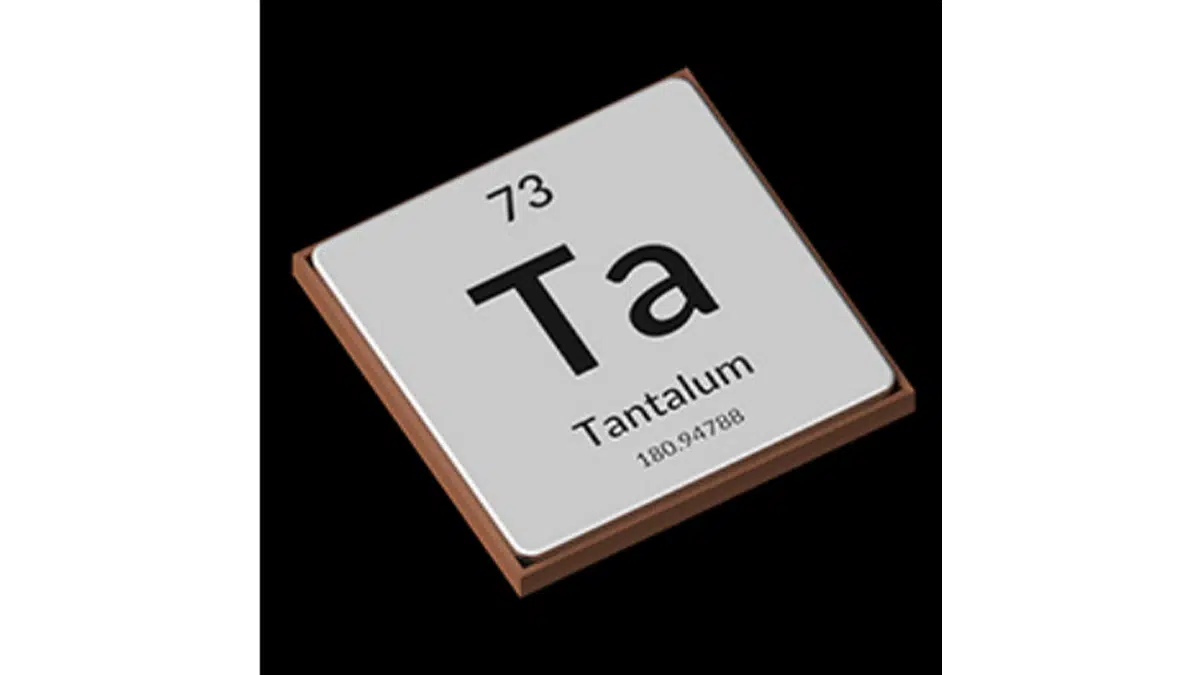
Despite the current market situation and high demand for electronic components, tantalum supply chain is getting stronger according to industry sources.

Tantalum for a lifetime

RelatedPosts

Flaked Tantalum Powders: High Capacitance Powders for High Reliable Tantalum Capacitors

Lithium Mines Impact to Tantalum Supply

Tantalum for Next-Generation Electronics

Current shortages and concerns over stable supply of critical commodities such as rare earths, cobalt, and nickel are weighing heavily on the downstream electronics, aerospace, automotive and appliance industries. Tantalum ore supply on the other hand is stronger than ever and ready to support increasing demand1 from tantalum capacitor makers, semiconductor manufacturers and other industries.

This is primarily due to: 

  • Co-product mining: as demand for lithium continues to rise driven by electric vehicle demand, so too does the volume of tantalum extracted as a co-product of this lithium production. Lithium and tantalum frequently co-exist in hard rock mines in Western Australia, South America, Africa and elsewhere. This tantalum co-product is extracted with relatively minimal incremental environmental impact2, predictable economics, and rising volumes.
  • Traceable “conflict-free” artisanal mining: Trade in elements such as tantalum, tin, tungsten and gold from Central African countries is complicated by fear that such trade could fund and perpetuate conflict in that region. For over a decade, robust traceability programs, from mine source through to OEM product delivery have been implemented. These programs are mature, transparent3, are fully understood throughout the tantalum supply chain, and have opened up market for legitimate trade in minerals, including tantalum, from this region.
  • Regional supply balance: historically, tantalum ore supply has been skewed towards one region or another. Until the mid-2010s, Western Australia was the largest source: a stable industrial scale source that became relatively expensive. This was entirely replaced by supply from Central Africa: an artisanal scale source that is more economical but supply is less stable. Tantalum as a co-product of lithium mining re-introduces industrial scale stability, does so economically, and should result in a balanced global supply without over-reliance on any one region. There is an increasingly healthy balance of tantalum supply from Australia, South America, Central Africa (also other African nations such as Mozambique), China, and emerging supply sources elsewhere. Disruption in any one location should, therefore, not have an oversized impact on global supply of tantalum.
  • Established recycling: each year approximately 30% of all tantalum sold to end users comes from high purity recycled tantalum material. Tantalum recycling is long-established and the material is actively traded and much sought after by processors.
  • Demand stability/supply confidence: fluctuating demand disrupts the upstream supply chain, which in turn creates further demand instability. The supply chain “Bullwhip Effect”4 can be exaggerated when downstream players fear upstream supply shortages. Double ordering or, worse, “design out” occurs. ABT5 has been a refrain in the tantalum industry in the past as a result of this type of instability. In recent years however, end user confidence has been restored. Tantalum demand has stabilized, tantalum is being “designed in” and no one end-use segment dominates. Stable demand begets stable supply which further encourages demand growth.

Quoting Roskill Information Services, a metal market and analyst company, “In the long-term, we expect the (tantalum) industry to see limited deficits and surpluses that will not amount to more than a few weeks of demand in any given year and that will be smoothed out by inventory in most cases.”

Tantalum has indispensable properties when used in electronic components, aircraft engines, medical implants and countless other applications.  Historically, the industry’s Achilles’ heel6 has been intermittent (real or perceived) supply chain disruptions. Existing and emerging stable tantalum sources should alleviate supply concerns.

1 Consumption is currently at approx. 2200 tonnes per year and predicted to grow 3-4% per year through 2029.

2 The tantalum is contained in the same ore body as lithium. To meet the ever increasing demand for electric vehicles, lithium will be mined whether the tantalum is extracted as a co-product or not. So no initial extra mining activity is required to extract the tantalum ore from the mine pit.

3 For example, tantalum and other mineral smelters (a.k.a. processors) are audited annually by the Responsible Minerals Initiative. There are currently approx. 37 tantalum suppliers conformant to this audit protocol. Conformant Tantalum Smelters (responsiblemineralsinitiative.org).

4 The term “Bullwhip Effect” was coined by Stanford University Professor Hau Lee. The Bullwhip Effect in Supply Chains (mit.edu)

5 Anything But Tantalum!6  Achilles’ mom held his heel and dipped him in the River Styx , the river’s water making him invulnerable. She forgot to dip one part of the poor kid – his heel!


Related

Source: GAM Global Advanced Metals

Recent Posts

Exxelia Offers 1200V Capacitors and Magnetics for 800V Aerospace Platforms

22.7.2026
53

Itelcond Introduces High‑Voltage Aluminium Capacitors for Modern IGBT DC‑links

17.7.2026
90

Murata Unveils Lead Disc Ceramic Capacitors for Automotive Safety and EMI Suppression

15.7.2026
81

Square-Wave Harmonics and RMS Currents in Power Converters

14.7.2026
84

LeanBOM: Practical Cross‑Technology Capacitor Search by Real Working Conditions

14.7.2026
97

In the Age of AI, Every Watt Counts: Implications for Components

13.7.2026
123

RF Filters and Passive Components Enabling the 7 Missile RF Subsystems

9.7.2026
72

From DCL to SSC: Bridging Electrical Symptoms and Structural Indicators in Tantalum Capacitors

7.7.2026
76

High-Q RF & Microwave MLCCs: A Cross-Vendor Benchmark

2.7.2026
125

Upcoming Events

Jul 28
8:00 - 11:00 CEST

Post Procurement Testing of EEE Components for LEO Space Applications

Jul 29
17:30 - 18:30 CEST

To Ferrite or to Nanocrystalline in Transformer Design

Sep 29
16:00 - 17:00 CEST

Cybersecurity 2026

View Calendar

Popular Posts

  • Boost Converter Design and Calculation

    0 shares
    Share 0 Tweet 0
  • Buck Converter Design and Calculation

    0 shares
    Share 0 Tweet 0
  • YAGEO Announces July 2026 Capacitor Price Increase

    0 shares
    Share 0 Tweet 0
  • Flyback Converter Design and Calculation

    0 shares
    Share 0 Tweet 0
  • LLC Resonant Converter Design and Calculation

    0 shares
    Share 0 Tweet 0
  • MLCCs in the Age of AI: Q2 2026 Market Tightness

    0 shares
    Share 0 Tweet 0
  • MLCC and Ceramic Capacitors

    0 shares
    Share 0 Tweet 0
  • Earthing Systems and IEC Classification Explained

    0 shares
    Share 0 Tweet 0
  • Nvidia Vera Rubin: Why One AI Rack Needs So Many More MLCC Capacitors

    0 shares
    Share 0 Tweet 0
  • Dual Active Bridge (DAB) Topology

    0 shares
    Share 0 Tweet 0

Newsletter Subscription


Passive Components Blog

© EPCI - Leading Passive Components Educational and Information Site

  • Home
  • Privacy Policy
  • EPCI Membership & Advertisement
  • About

No Result
View All Result
  • Home
  • Knowledge Blog
  • Dossiers
  • PCNS

© EPCI - Leading Passive Components Educational and Information Site

This website uses cookies. By continuing to use this website you are giving consent to cookies being used. Visit our Privacy and Cookie Policy.