
Passive Components Blog
No Result
View All Result
  • Home
  • News
    • All
    • Aerospace & Defence
    • Antenna
    • Applications
    • Automotive
    • Capacitors
    • Circuit Protection Devices
    • electro-mechanical news
    • Filters
    • Fuses
    • Inductors
    • Industrial
    • Integrated Passives
    • inter-connect news
    • Market & Supply Chain
    • Market Insights
    • Medical
    • Modelling and Simulation
    • New Materials & Supply
    • New Technologies
    • Non-linear Passives
    • Oscillators
    • Passive Sensors News
    • Resistors
    • RF & Microwave
    • Telecommunication
    • Weekly Digest
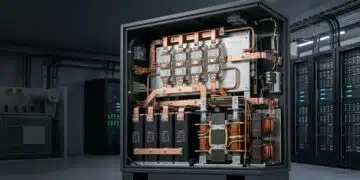
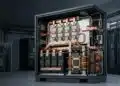
    onsemi solid-state transformer concept for 800 V HVDC AI data center power conversion with SiC modules, DC-link capacitors and high-frequency magnetics

    Solid-State Transformers for 800 V AI Data Centers: Passive Component Design Considerations

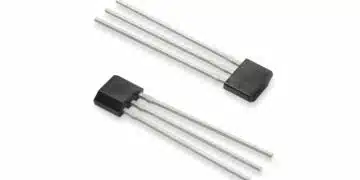
    Littelfuse TX00AT314AMA omnipolar TMR magnetic switch sensor in a leaded TO-92-3 through-hole package

    Littelfuse Expands Omnipolar TMR Switch with Leaded TO-92 Package Option

    SCHURTER THT DIP Switches Support Hardware-Level Configuration

    TDK CN series 10 µF 100 V X7R soft-termination multilayer ceramic capacitor in 3225 EIA 1210 package

    TDK Releases 100 V Soft-Termination X7R MLCCs 10 uF in 3225 Package

    Compact inductive rotary position encoder sensor near a motor shaft, representing the Vishay RAIK045I MP encoder category

    Vishay Introduces 16-Bit Inductive Encoder for Motor-Adjacent Position Sensing

    Hirose FH51 automotive FPC/FFC connector with low-profile receptacle construction and top-and-bottom contact arrangement

    Hirose Automotive FPC/FFC Connector Adds One-Action Mating up to 125°C

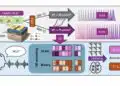
    Overview of fabricated ferroelectric capacitors improving hyperdimensional computing task learning accuracy. a The experimental work reported in this study comprises ferroelectric capacitor (FeCAP) device fabrication, structural and electrical characterization, analog state identification and their reliability study. b The computational part of the work explores the benefits of using characteristics from the fabricated devices in a hyperdimensional computing scheme; source: authors

    High-Precision Hyperdimensional Computing with Multi-Level Ferroelectric HZO Capacitors

    Coilcraft Introduces Automotive Common Mode Chokes Target CISPR 25 Class 5 EMC Compliance

    Murata Expands Automotive Metal Power Inductor Range

    Trending Tags

    • Ripple Current
    • RF
    • Leakage Current
    • Tantalum vs Ceramic
    • Snubber
    • Low ESR
    • Feedthrough
    • Derating
    • Dielectric Constant
    • New Products
    • Market Reports
  • Knowledge Blog
  • Dossiers
    • AI Hardware Dossier
    • Automotive Dossier
    • Industrial Robotics Dossier
    • Power Converter Dossier
    • Capacitor Dossier
    • Resistor Dossier
    • Inductor Dossier
    • Circuit Protection Dossier
  • Suppliers
    • Who is Who
  • PCNS
    • PCNS 2025
    • PCNS 2023
    • PCNS 2021
    • PCNS 2019
    • PCNS 2017
  • Events
  • Home
  • News
    • All
    • Aerospace & Defence
    • Antenna
    • Applications
    • Automotive
    • Capacitors
    • Circuit Protection Devices
    • electro-mechanical news
    • Filters
    • Fuses
    • Inductors
    • Industrial
    • Integrated Passives
    • inter-connect news
    • Market & Supply Chain
    • Market Insights
    • Medical
    • Modelling and Simulation
    • New Materials & Supply
    • New Technologies
    • Non-linear Passives
    • Oscillators
    • Passive Sensors News
    • Resistors
    • RF & Microwave
    • Telecommunication
    • Weekly Digest
    onsemi solid-state transformer concept for 800 V HVDC AI data center power conversion with SiC modules, DC-link capacitors and high-frequency magnetics

    Solid-State Transformers for 800 V AI Data Centers: Passive Component Design Considerations

    Littelfuse TX00AT314AMA omnipolar TMR magnetic switch sensor in a leaded TO-92-3 through-hole package

    Littelfuse Expands Omnipolar TMR Switch with Leaded TO-92 Package Option

    SCHURTER THT DIP Switches Support Hardware-Level Configuration

    TDK CN series 10 µF 100 V X7R soft-termination multilayer ceramic capacitor in 3225 EIA 1210 package

    TDK Releases 100 V Soft-Termination X7R MLCCs 10 uF in 3225 Package

    Compact inductive rotary position encoder sensor near a motor shaft, representing the Vishay RAIK045I MP encoder category

    Vishay Introduces 16-Bit Inductive Encoder for Motor-Adjacent Position Sensing

    Hirose FH51 automotive FPC/FFC connector with low-profile receptacle construction and top-and-bottom contact arrangement

    Hirose Automotive FPC/FFC Connector Adds One-Action Mating up to 125°C

    Overview of fabricated ferroelectric capacitors improving hyperdimensional computing task learning accuracy. a The experimental work reported in this study comprises ferroelectric capacitor (FeCAP) device fabrication, structural and electrical characterization, analog state identification and their reliability study. b The computational part of the work explores the benefits of using characteristics from the fabricated devices in a hyperdimensional computing scheme; source: authors

    High-Precision Hyperdimensional Computing with Multi-Level Ferroelectric HZO Capacitors

    Coilcraft Introduces Automotive Common Mode Chokes Target CISPR 25 Class 5 EMC Compliance

    Murata Expands Automotive Metal Power Inductor Range

    Trending Tags

    • Ripple Current
    • RF
    • Leakage Current
    • Tantalum vs Ceramic
    • Snubber
    • Low ESR
    • Feedthrough
    • Derating
    • Dielectric Constant
    • New Products
    • Market Reports
  • Knowledge Blog
  • Dossiers
    • AI Hardware Dossier
    • Automotive Dossier
    • Industrial Robotics Dossier
    • Power Converter Dossier
    • Capacitor Dossier
    • Resistor Dossier
    • Inductor Dossier
    • Circuit Protection Dossier
  • Suppliers
    • Who is Who
  • PCNS
    • PCNS 2025
    • PCNS 2023
    • PCNS 2021
    • PCNS 2019
    • PCNS 2017
  • Events
No Result
View All Result
Passive Components Blog
No Result
View All Result

Skeleton Technologies and European Space Agency to Send Ultracapacitors into Orbit

5.5.2017
Reading Time: 2 mins read
A A

source: Skeleton news

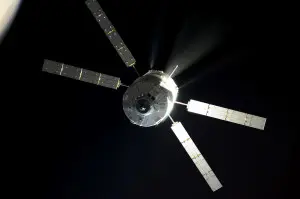
A new energy storage technology capable of providing surges of power on satellites and other spacecraft has been chosen by the European Space Agency (ESA) for possible orbit in 2018. Developed by Skeleton Technologies, this market-leading ultracapacitor technology is 60 times lighter and 30 times more efficient than the batteries it will replace.

RelatedPosts

Solid-State Transformers for 800 V AI Data Centers: Passive Component Design Considerations

Littelfuse Expands Omnipolar TMR Switch with Leaded TO-92 Package Option

SCHURTER THT DIP Switches Support Hardware-Level Configuration

Ultracapacitors store energy in an electric field rather than in a chemical reaction. This makes them highly efficient at delivering sudden surges of energy and allows them to charge and discharge over a million times. The technology is gaining market share in industries ranging from automotive to smart grid, but Skeleton Technologies’ cells will be the first ever used in the European space programme.

While spacecraft, such as satellites, harvest their energy with solar cells, they do have to spend some of the time on the “night side” where they rely on stored energy. This function is currently undertaken by lithium-ion batteries. Although batteries can store more energy than ultracapacitors, they are slow to charge and discharge, lose 30% of their energy through heat alone and require frequent replacement.

Ultracapacitors can charge almost instantly and deliver significantly more power for weight compared to batteries. Using ultracapacitors for tasks such as adjusting antennae and moving solar arrays will considerably reduce the amount of weight and room required for energy storage. With every pound of payload put into space currently costing around €9,000, adopting Skeleton Technologies’ ultracapacitors is expected to achieve significant efficiency savings for the European Space Agency.

Bernard Zufferey, PECS Manager at the European Space Agency commented: “Ultracapacitor technology has the potential to increase mission safety while reducing mission costs. Skeleton Technologies’ SpaceCap cells will allow us to package a large amount of power into a very small space, creating opportunities for new applications. The contract with Skeleton Technologies contributes to the successful integration of Estonian industry with European large systems integrators.”

Skeleton Technologies is a European startup based in Estonia that has achieved breakthrough product performance through the use of patented nanoporous carbide-derived carbon (CDC), also known as curved graphene. The company’s product range delivers twice the energy density and 5 times the power density of other ultracapacitor manufacturers. The SpaceCap cells chosen by the ESA offer over five times power/weight advantage and considerably outperform the ultracapacitor cells previously tested by NASA.

“Our deal with the European Space Agency will see ultracapacitors used in the European space programme for the first time, solving a key challenge in space transportation by reducing weight and cost,” explains Skeleton Technologies CEO Taavi Madiberk. “This deployment will provide an extremely high profile showcase for our technology’s capabilities at the same time as we see rapidly increasing customer traction and growing order book down on the ground, from the motorsports industry through to renewable energy applications.”

The next stage of the project, which started in 2011, will involve advanced space-like environment testing of the ultracapacitors and developing the associated regulatory documentation for the ESA. The SpaceCap cells will be trialed under a range of conditions including in a vacuum, at working temperatures and radiation levels before being certified for space travel.

Please note: This project is funded by the Government of Estonia through an ESA Contract under the PECS (Plan for European Cooperating States). The view expressed herein can in no way be taken to reflect the official opinion of the European Space Agency.

Fetured image source: ESA
Related

Recent Posts

onsemi solid-state transformer concept for 800 V HVDC AI data center power conversion with SiC modules, DC-link capacitors and high-frequency magnetics

Solid-State Transformers for 800 V AI Data Centers: Passive Component Design Considerations

9.9.2026
10
TDK CN series 10 µF 100 V X7R soft-termination multilayer ceramic capacitor in 3225 EIA 1210 package

TDK Releases 100 V Soft-Termination X7R MLCCs 10 uF in 3225 Package

9.9.2026
3
Compact inductive rotary position encoder sensor near a motor shaft, representing the Vishay RAIK045I MP encoder category

Vishay Introduces 16-Bit Inductive Encoder for Motor-Adjacent Position Sensing

9.9.2026
2
Overview of fabricated ferroelectric capacitors improving hyperdimensional computing task learning accuracy. a The experimental work reported in this study comprises ferroelectric capacitor (FeCAP) device fabrication, structural and electrical characterization, analog state identification and their reliability study. b The computational part of the work explores the benefits of using characteristics from the fabricated devices in a hyperdimensional computing scheme; source: authors

High-Precision Hyperdimensional Computing with Multi-Level Ferroelectric HZO Capacitors

7.9.2026
18

August 2026 Interconnect, Passives and Electromechanical Components Market Insights

4.9.2026
35

Knowles Cornell Dubilier 105C Flatpack Aluminum Electrolytic Capacitors Target Low-Profile High-Density Power Designs

4.9.2026
31

Vishay Thin Film Chip Resistors Combine up to 50 GHz Operation with High Power Density

3.9.2026
15

Samsung Electro-Mechanics Secures KRW 1.0722 Trillion AI Server MLCC Supply Contract

3.9.2026
66

KYOCERA AVX Adds 0201 C0G RF MLCCs to KGU Ultra-Low-ESR Capacitor Series

3.9.2026
39

Upcoming Events

Sep 10
11:00 - 12:00 CEST

Equipment models and model strategies for Space Missions

Sep 16
17:00 - 18:00 CEST

Designing a 5 kW, 800 V-to-50 V PSFB Converter for Next-Generation Data Centers

Sep 29
16:00 - 17:00 CEST

Cybersecurity 2026

View Calendar

Popular Posts

  • Buck Converter Design and Calculation

    0 shares
    Share 0 Tweet 0
  • LLC Resonant Converter Design and Calculation

    0 shares
    Share 0 Tweet 0
  • Boost Converter Design and Calculation

    0 shares
    Share 0 Tweet 0
  • Flyback Converter Design and Calculation

    0 shares
    Share 0 Tweet 0
  • Earthing Systems and IEC Classification Explained

    0 shares
    Share 0 Tweet 0
  • MLCC and Ceramic Capacitors

    0 shares
    Share 0 Tweet 0
  • Capacitor Charging and Discharging

    0 shares
    Share 0 Tweet 0
  • Resistor Symbols

    0 shares
    Share 0 Tweet 0
  • Audio Capacitors: Choosing Capacitors for Crossover Circuits

    0 shares
    Share 0 Tweet 0
  • Thermistors Basics, NTC and PTC Thermistors

    0 shares
    Share 0 Tweet 0

Newsletter Subscription


Passive Components Blog

© 2015–2026
All rights reserved

  • Home
  • Privacy Policy
  • EPCI Membership & Advertisement
  • About

No Result
View All Result
  • Home
  • Knowledge Blog
  • Dossiers
  • PCNS

© 2015–2026
All rights reserved