







Passive Components Blog
No Result
View All Result
  • Home
  • News
    • All
    • Aerospace & Defence
    • Antenna
    • Applications
    • Automotive
    • Capacitors
    • Circuit Protection Devices
    • electro-mechanical news
    • Filters
    • Fuses
    • Inductors
    • Industrial
    • Integrated Passives
    • inter-connect news
    • Market & Supply Chain
    • Market Insights
    • Medical
    • Modelling and Simulation
    • New Materials & Supply
    • New Technologies
    • Non-linear Passives
    • Optoelectronics and Isolation
    • Oscillators
    • Passive Sensors News
    • Resistors
    • RF & Microwave
    • Telecommunication
    • Weekly Digest
    Bourns CRT-HF thin-film chip resistor family in surface-mount packages

    Bourns Thin-Film Chip Resistors Reach 70 GHz

    Reference and proposed SVG DC-side circuits showing a supercapacitor bank in series with a converter-regulated electrolytic-capacitor branch

    Hybrid capacitor topology cuts SVG supercapacitor cell count

    Amphenol Industrial Operations HDPC 64 Pin Series rectangular wire-to-board connector with central jackscrew locking

    Amphenol Introduces 64-Pin Connectors for Vehicle and Industrial Controls

    Bourns 04775x common mode choke illustration showing coupled windings and a magnetic core

    Bourns Extends Nanocrystalline Common Mode Chokes

    electronic components market survey ECIA

    ECIA October 2026: Passive Component Sales Outlook Turns Neutral

    connector-manufacturers-regional-rankings-2025

    Top 10 Connector Manufacturers by Region: 2025 Rankings

    bourns-hvma03f30a-lp8s-automotive-flyback-transformer

    Bourns Introduces HVMA03F30A-LP8S 3 W Automotive Flyback Transformer

    Amphenol Amphe-Lite HV circular power connectors with metal shells and mating interfaces

    Amphenol Releases Amphe-Lite HV Connectors for Electric Aircraft

    Conceptual illustration of Modelithics Library for MATLAB v26.6 with surface-mount capacitors, inductors and resistors on an RF PCB

    Modelithics MATLAB v26.6 Adds RF Passive Component Models

    Trending Tags

    • Ripple Current
    • RF
    • Leakage Current
    • Tantalum vs Ceramic
    • Snubber
    • Low ESR
    • Feedthrough
    • Derating
    • Dielectric Constant
    • New Products
    • Market Reports
  • Knowledge Blog
  • Dossiers
    • Aerospace and Defense Passive Components Dossier
    • AI Hardware Dossier
    • Automotive Dossier
    • Industrial Robotics Dossier
    • Power Converter Dossier
    • Capacitor Dossier
    • Circuit Protection Dossier
    • Inductor Dossier
    • Resistor Dossier
    • Silicon Capacitors and Integrated Passives Dossier
  • Suppliers
    • Who is Who
  • PCNS
    • PCNS 2025
    • PCNS 2023
    • PCNS 2021
    • PCNS 2019
    • PCNS 2017
  • Events
No Result
View All Result
Passive Components Blog
No Result
View All Result

Zinc-ion Hybrid Capacitors with Ideal Anions in the Electrolyte Show Low Self-Discharge and Extra-Long Performance

16.11.2020
Reading Time: 3 mins read
A A

Metal-ion hybrid capacitors combine the properties of capacitors and batteries. One electrode uses the capacitive mechanism, the other the battery-type redox processes. Scientists have now scrutinized the role of anions in the electrolyte. The results reveal the importance of sulfate anions. Sulfate-based electrolytes gave zinc-ion hybrid capacitors outstanding performance and extra-long operability.

Capacitors can uptake and release an enormous amount of charge in a short time, whereas batteries can store a lot of energy in a small volume. To combine both properties, scientists are investigating hybrid electrochemical cells, which contain both capacitor- and battery-type electrodes. Among these cells, researchers have identified metal-ion hybrid capacitors as especially promising devices. Here, the positive electrode includes pseudocapacitive properties, which means it can also store energy in the manner of a battery, by intercalation of the metal ions, while the negative electrode is made of a redox-active metal.

RelatedPosts

Bourns Thin-Film Chip Resistors Reach 70 GHz

Hybrid capacitor topology cuts SVG supercapacitor cell count

Amphenol Introduces 64-Pin Connectors for Vehicle and Industrial Controls

However, their electrolyte has long been neglected, says Chunyi Zhi who is investigating battery materials together with his team at the City University of Hong Kong. The researchers believe the type of electrolyte anion affects the performance of the device. “Paying more attention to the introduction of appropriate anions can effectively improve the power and energy density of a capacitor,” they say.

The researchers focused their attention on zinc-ion capacitors. This cell type consists of a zinc metal anode and a cathode made of titanium nitride nanofibers. The nanofibers are robust, and their porous surface allows the electrolyte to infiltrate. The scientists argue that the electrolyte anions, when attached to the titanium nitride surface, make the material more conductive. Moreover, the adsorbed anions may directly contribute to the charging process. The charging of the hybrid capacitor involves the extraction of the intercalated zinc ions.
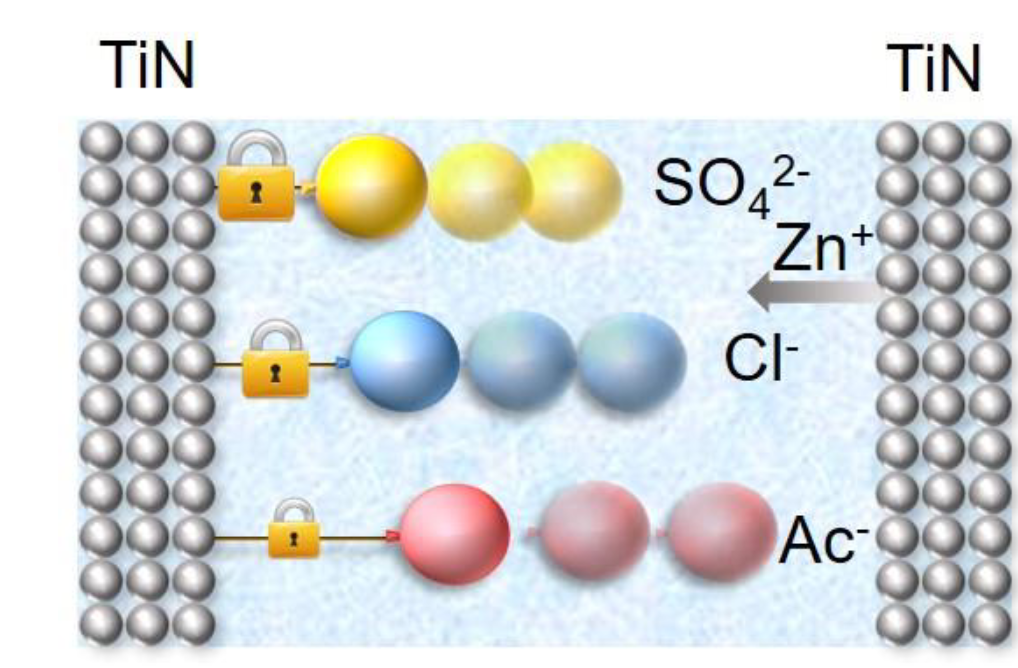
Schematic illustration of the difference of self-discharge behaviors of TiN-based supercapacitors with different electrolytes, the yellow, blue and red balloons represented SO42-, Cl-and Ac-, respectively. Source: Authors

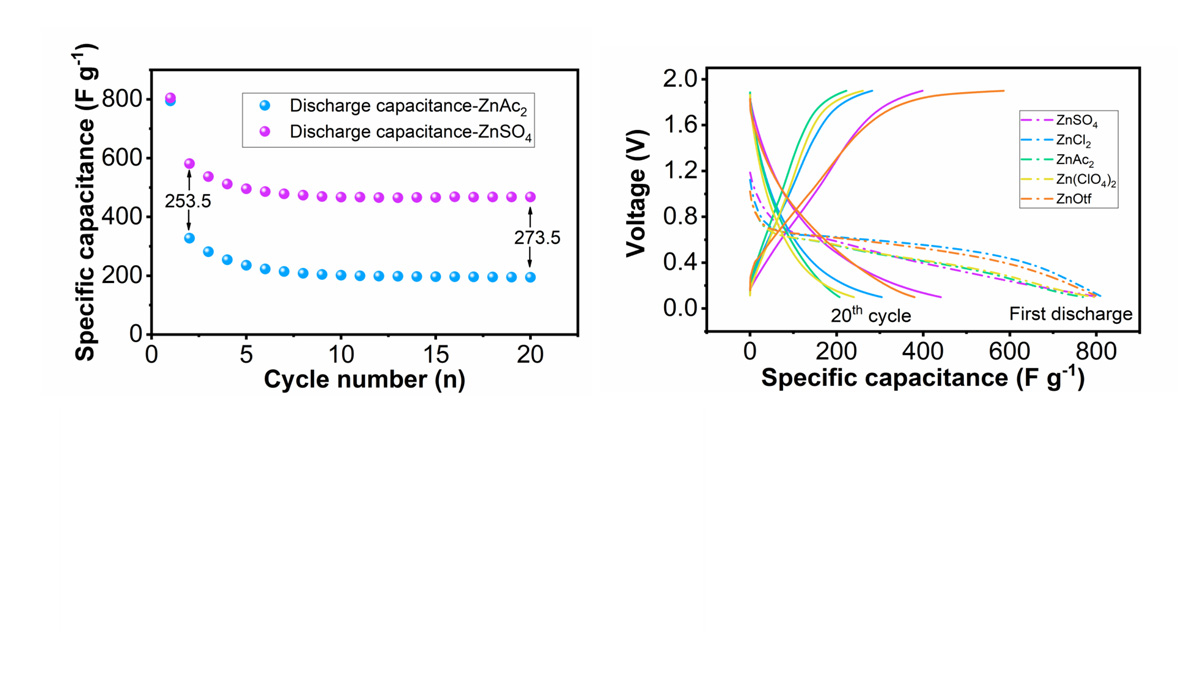
Pseudocapacitive behavior and ion hybrid capacitors can improve the energy density of supercapacitors, but research has only considered the reaction of cations during the electrochemical process, leading to a flawed mechanistic understanding. Here, the effects of various anions carriers on the electrochemical behaviors of titanium nitride‐based zinc ion capacitor (Zn‐TiN capacitor) were explored. DFT calculations revealed the stable structure of TiN‐SO4 after adsorbed process, enabling SO42− participate in the electrochemical process and construct a two‐step adsorption and intercalation energy storage mechanism, improving the capacitance and anti‐self‐discharge ability of the Zn‐TiN capacitor, which delivered an ultrahigh capacitance of 489.8 F g−1 and retained 83.92 % of capacitance even after 500 h resting time. An energy storage system involving anions in the electrochemical process can improve capacitance and anti‐self‐discharge ability of ion hybrid capacitors.

Zhi and his colleagues compared the effects of three electrolyte anions: sulfate, acetate, and chloride. They looked at both their binding to the electrode surface and the performances of the electrochemical cells. It was a clear result.

The scientists reported that the sulfate anions stood out among the three anions. They observed that cells based on a zinc sulfate electrolyte performed best, and the sulfates bound stronger to the titanium nitride surface than the other anions. Moreover, sulfate-treated electrodes showed the lowest self-discharging. The authors attributed the findings to the electronic effects of sulfate. Its electron-pulling nature provides tight binding to the surface atoms and prevents the electrode from self-discharging, the authors concluded.

For a zinc-sulfate-based zinc-ion hybrid capacitor, the scientists reported high-performance operation for more than nine months. Moreover, these devices are flexible, which is especially useful for portable electronics. The scientists tested the device in an electronic watch and found excellent performance.

Journal Reference:

  1. Zhaodong Huang, Tairan Wang, Hao Song, Xinliang Li, Guojin Liang, Donghong Wang, Qi Yang, Ze Chen, Longtao Ma, Zhuoxin Liu, Biao Gao, Jun Fan, Chunyi Zhi. Effects of Anion Carriers on Capacitance and Self‐Discharge Behaviors of Zinc Ion Capacitors. Angewandte Chemie International Edition, 2020; DOI: 10.1002/anie.202012202

Related

Source: Science Daily

Recent Posts

Reference and proposed SVG DC-side circuits showing a supercapacitor bank in series with a converter-regulated electrolytic-capacitor branch

Hybrid capacitor topology cuts SVG supercapacitor cell count

25.11.2026
24
Conceptual illustration of Modelithics Library for MATLAB v26.6 with surface-mount capacitors, inductors and resistors on an RF PCB

Modelithics MATLAB v26.6 Adds RF Passive Component Models

24.11.2026
15
Hybrid 2:1 switched-capacitor converter schematic showing a flying capacitor, four switches, an output inductor and a diode freewheeling path

Hybrid Switched-Capacitor Converters: Lower-Loss Regulation

23.11.2026
27
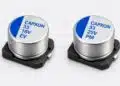
CapXon PM and EV surface-mount capacitors with cylindrical cans and rectangular mounting bases

CapXon Extends Polymer and SMD Aluminum Capacitors

20.11.2026
37
YAGEO Group KEMET VW80808 automotive MLCC illustration with rectangular ceramic bodies and metal end terminations

YAGEO Expands VW80808 Automotive MLCCs with X8R, X8G and C0G

20.11.2026
42
Vishay VJ series surface-mount ceramic safety capacitors with rectangular bodies and metal end terminations

Vishay Introduces X1 Safety MLCCs for AC Line Filtering

20.11.2026
24

Samsung Introduces 630V X7T Molded Frame Capacitor for Automotive

19.11.2026
64

Exxelia Presents Disc Capacitors and Integrated Magnetics for Space

18.11.2026
53
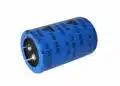
Vishay 259 PHM-SI cylindrical aluminum electrolytic capacitors with blue insulating sleeves and snap-in terminals

Vishay Adds 550 V and 600 V Snap-In Capacitors

18.11.2026
35

Upcoming Events

Dec 1
16:00 - 17:00 CET

Developing low-noise mixed-signal systems

Dec 8
16:00 - 17:00 CET

WE-CCMF: Design Principles, Layout Guidelines and Measurement Results for High-Speed EMI Filtering

Dec 8
16:00 - 17:00 CET

Design Principles, Layout Guidelines and Measurement Results for High-Speed EMI Filtering

View Calendar

Popular Posts

  • Buck Converter Design and Calculation

    0 shares
    Share 0 Tweet 0
  • Boost Converter Design and Calculation

    0 shares
    Share 0 Tweet 0
  • Capacitor Charging and Discharging

    0 shares
    Share 0 Tweet 0
  • RF Connector Types: How To Choose the Right One

    0 shares
    Share 0 Tweet 0
  • Passive Low Pass Filters: Fundamentals and EMI Design

    0 shares
    Share 0 Tweet 0
  • Basic Filter Circuits Explained

    0 shares
    Share 0 Tweet 0
  • LLC Resonant Converter Design and Calculation

    0 shares
    Share 0 Tweet 0
  • Flyback Converter Design and Calculation

    0 shares
    Share 0 Tweet 0
  • Dual Active Bridge (DAB) Topology

    0 shares
    Share 0 Tweet 0
  • Capacitance and its Calculation

    0 shares
    Share 0 Tweet 0

Newsletter Subscription


Passive Components Blog

© 2015–2026
All rights reserved

  • Home
  • Privacy Policy
  • EPCI Membership & Advertisement
  • About

No Result
View All Result
  • Home
  • Knowledge Blog
  • Dossiers
  • PCNS

© 2015–2026
All rights reserved