



Passive Components Blog
No Result
View All Result
  • Home
  • News
    • All
    • Aerospace & Defence
    • Antenna
    • Applications
    • Automotive
    • Capacitors
    • Circuit Protection Devices
    • electro-mechanical news
    • Filters
    • Fuses
    • Inductors
    • Industrial
    • Integrated Passives
    • inter-connect news
    • Market & Supply Chain
    • Market Insights
    • Medical
    • Modelling and Simulation
    • New Materials & Supply
    • New Technologies
    • Non-linear Passives
    • Optoelectronics and Isolation
    • Oscillators
    • Passive Sensors News
    • Resistors
    • RF & Microwave
    • Telecommunication
    • Weekly Digest
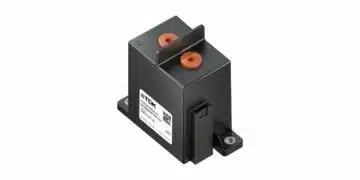
    TDK HVC28 and HVC29 high-voltage DC contactors with black housings and main power terminals

    TDK Introduces Gas-Filled High-Voltage DC Contactors up to 600 A

    Murata SWL RF coaxial switch connector measurement diagram and SWL-to-SWJ board-area comparison.

    Murata RF Switch Connectors Cut PCB Test-Point Area

    Elektra Awards 2026: Passive Components and Interconnect Finalists Showcase Advances in Power Integrity, Precision and Reliability

    Mathematical state-space illustration of a series-connected memcapacitor oscillator with two constrained memory coordinates

    Memcapacitor chaos in a six-state series-connected model

    Exxelia capacitor and magnetics innovations for Electronica 2026, including CM-HVLP and CF-PP140 capacitors

    Exxelia Brings High-Temperature Passives to Electronica 2026

    IP&E Market Outlook: AI Demand Tightens Supply and Supports Higher Pricing into 2027

    Samsung Electro-Mechanics CL05Z106MS66PN automotive MLCC illustration with a rectangular ceramic body and metal end terminations

    Samsung Adds 0402 10 µF X7T MLCC for ADAS Power Rails

    Bourns PTVS03-450E-H power TVS diode in a surface-mount DFN package

    Bourns Releases 450 V Power TVS for DC Bus Clamping

    MLCC construction image

    Samsung Electro-Mechanics Patent Targets to Reduce Moisture and Cracks in High-Capacity MLCCs

    Trending Tags

    • Ripple Current
    • RF
    • Leakage Current
    • Tantalum vs Ceramic
    • Snubber
    • Low ESR
    • Feedthrough
    • Derating
    • Dielectric Constant
    • New Products
    • Market Reports
  • Knowledge Blog
  • Dossiers
    • Aerospace and Defense Passive Components Dossier
    • AI Hardware Dossier
    • Automotive Dossier
    • Industrial Robotics Dossier
    • Power Converter Dossier
    • Capacitor Dossier
    • Circuit Protection Dossier
    • Inductor Dossier
    • Resistor Dossier
    • Silicon Capacitors and Integrated Passives Dossier
  • Suppliers
    • Who is Who
  • PCNS
    • PCNS 2025
    • PCNS 2023
    • PCNS 2021
    • PCNS 2019
    • PCNS 2017
  • Events
No Result
View All Result
Passive Components Blog
No Result
View All Result

Nawa ultra-capacitor hybrid radically boosts power and efficiency of lithium batteries

11.6.2018
Reading Time: 6 mins read
A A

Source: New Atlas article

Combining the unique strengths of lithium batteries with crazy-fast charging, carbon ultra-capacitors could save a ton of weight and add significant range and power to electric vehicles, according to Nawa Technologies. Based outside Marseilles, this fascinating French startup is working on a new type of battery it believes could offer some huge advantages in the EV space, among many others.

RelatedPosts

TDK Introduces Gas-Filled High-Voltage DC Contactors up to 600 A

Murata RF Switch Connectors Cut PCB Test-Point Area

Elektra Awards 2026: Passive Components and Interconnect Finalists Showcase Advances in Power Integrity, Precision and Reliability

Nawa Technologies’ core product is a new type of carbon ultra-capacitor with a set of remarkable advantages over typical lithium-ion battery cells.

Advantages of the Nawa carbon ultra-capacitor
Ultra-capacitor advantages
To start with, as a capacitor, its charge and discharge rates are absolutely spectacular compared with batteries – up to 1,000 times faster. We’re talking about charging an entire car battery in a matter of seconds, maybe three times quicker than filling a tank with fossil fuel.
And since there’s no chemical reaction taking place, merely a physical separation of protons and electrons, super-fast charging doesn’t cause any heat build-up or swelling of the battery. That gives the carbon ultra-capacitor an exceptionally long lifetime, up to a million charge cycles.
The ultra-capacitor’s monster discharge rate also offers another advantage over lithium batteries. In high-powered EVs, the slow discharge rate of the batteries often means you need to up battery capacity in order to add performance. The Tesla Model S, for example, wouldn’t be able to activate its Ludicrous speed mode with a smaller battery pack, because the slow discharge rates of the batteries would cause a power bottleneck. That’s absolutely not a problem with an ultra-capacitor; these things discharge fast enough to output enormous power with a very small battery.
It’s also very cheap and simple to manufacture, using a process that Nawa Founder and COO Pascal Boulanger describes to us over the phone as “the same process used to create photovoltaic panels. It’s industry proven, highly efficient and cost effective.”
But these remarkable advantages are not the key driver for Boulanger. He believes the carbon ultra-capacitor’s environmental benefits are its biggest calling card.
“For me, the dream comes from the fact that we’re not using lithium, cobalt, rare earth metals,” says Boulanger. “These materials are polluting, and very complicated to extract from the Earth. We’re moving from a society where we extract oil to put in the car, to the same theme, but extracting metals and minerals to put in electric cars. It’s not good, because we’re destroying our planet.
“Nawa’s ultra-capacitors only use carbon and aluminum. Our carbon comes from natural, sustainable sources. We don’t need to mine. When I created Nawa, that was what I wanted to promote: a real, sustainable way. That’s the dream. Building safer and cleaner batteries.”
Could you run a vehicle completely on Nawa’s carbon technology? Yes, says Nawa CEO Ulrik Grape.
“People looking for small cars that are used mainly for small drives, like around city centers, our technology would be perfect,” Grape says. “You can do 50 to 100 kilometers (31 to 62 mi) on our technology alone, and you can recharge the car in less than 10 or 20 seconds. It’s perfect for a fleet of electric cars for sharing.”
But this ultra-capacitor technology does have drawbacks.
Nawa's ultra-capacitors charge up to 1,000 times faster than a lithium battery, last up to a...
Drawbacks and the hybrid solution
For starters, while power density (the amount of power output per unit of weight) is off the charts, energy density doesn’t compete with lithium. An ultra-capacitor will only hold about 25 percent of the energy per unit of weight that a lithium battery can manage, so a car battery with the same sized ultra-capacitor would have only a quarter the range.
Secondly, capacitors suck at long-term energy storage. Leave your car charged up in your garage, and you could expect to leak around 10-20 percent of your energy out each day.
The Nawa team believes that the full potential of the ultra-capacitor, at least in the EV space, becomes unlocked when it’s combined with a lithium battery.
A hybrid lithium/carbon battery system could offer the best of both worlds – long-range continuous driving and long-term power storage thanks to the lithium unit, plus ultra-fast partial charging and extreme power output thanks to the ultra-capacitor.
This kind of hybrid system has another hidden advantage: regenerative braking would become about 450 percent better at recouping energy. Current re-gen systems are forced to throw away the vast majority of energy generated back through the wheels under braking simply because lithium charges so slowly that there’s nowhere to put it all.
“Most of the energy in regenerative braking is lost as heat, maybe 80 percent,” says Grape.
“Perhaps 20 percent is recouped. The electric motors are very efficient at generating that power, but the battery just can’t accept the charge rate. If you combine our technology with the lithium battery, we can accept up to 90 percent of that energy.”
In a regular driving situation, that could handily extend your battery range. In an electric race car, this kind of system would be even more effective, storing almost all of your braking energy coming into a corner, and then pumping it back out at a massive rate for huge acceleration out of the turn.
“For example, let’s take Formula E racing,” says Grape. “If you look at the batteries they have on those cars, we’ve done a simulation using data from a co-operation partner of ours, and we’ve analyzed it. When you combine our technology with the lithium battery, we could reduce the size and weight of the battery pack from 300 kg (661 lb) to about 200 kg (441 lb) – and you’d have a longer driving distance as well, because we’re much more efficient.”
We’re fairly sure we don’t need to point out what an enormous advantage a 100-kg (220-lb) weight saving would be in a racing application; it would significantly extend your range and acceleration figures, while adding the extra power of that enormous discharge rate.
The advantages could also carry over into electric trucking applications.
“There’s so much energy there to be harvested when a truck is going downhill or braking, and the energy recovery systems on those vehicles just can’t handle all the energy that’s coming back,” says Grape.

Other applications

There are plenty of other places a carbon ultra-capacitor could come in handy. Nawa is working with industrial power tool manufacturers who see the ultra-fast-charging capabilities and long cycle lives as opportunities to build longer-life tools for production line use that would charge in seconds between jobs. Then there’s factory and warehouse robots.

“We have a project where we’re working on AGV solutions – Automatic Guided Vehicles like you might see in warehouses,” says Grape. “These small, robot things that are running about picking up packages and moving them around. You can think of companies like Amazon, large warehouses. We’re working on a project with a European AGV manufacturer to demonstrate this in that kind of an application.”

The carbon ultra-capacitors might find uses in an Internet of Things type application as well.

“In the IoT domain, people are talking about battery-free sensors,” says Boulanger. “You have an energy source inside the sensors, and the sensors need to take some kind of measurement, then transmit the information. You need a very short buffer. Our technology is absolutely fantastic for that.”

And back in the automotive world, there are no limits on how you might charge these things, opening up some interesting ideas for inductive charging. Imagine simply driving your car over a surface at a charge station, paying for a top-up and driving away 10-20 seconds later. The range of an electric car would become almost irrelevant if you could charge it so quickly.

“If you want to take that a little further, you could imagine having ultra-capacitors buried under the road surface,” says Grape. “And when a bus passes over, it could charge very rapidly. And the ultra-capacitor itself could charge more slowly off the grid while the next bus is coming.”

Another key benefit: structural batteries

One final thing we haven’t yet touched on is the outstanding mechanical properties of the carbon ultra-capacitor. It’s lightweight and super-strong, opening up the opportunity to build ultra-capacitors into the very structure of an item in ways lithium simply can’t be used.

“We had a project with Airbus where we tested our technology to see how it would act from a mechanical point of view and for storage,” says Boulanger. “We can integrate a battery into any carbon fiber structure.”

“The mechanical property of our electrode is very, very strong, adds Grape. “It can be used to enforce the mechanical structure of a composite. You can integrate the battery into the shell of a car. The chassis, the doors, the roof, wherever you like.”

Indeed, the idea of a vehicle with no discrete battery unit to speak of is very much possible.

Nawa is currently testing and working with prototype units, but the team says by the second half of 2019, the company will have a full-scale production line in operation not far from Marseilles. The potential of these super-fast carbon ultra-capacitors sounds terrific. We look forward to seeing Nawa’s technology tested in earnest.

featured image and images credit: Nawa Technologies
 

Related

Recent Posts

TDK HVC28 and HVC29 high-voltage DC contactors with black housings and main power terminals

TDK Introduces Gas-Filled High-Voltage DC Contactors up to 600 A

29.10.2026
0

Elektra Awards 2026: Passive Components and Interconnect Finalists Showcase Advances in Power Integrity, Precision and Reliability

28.10.2026
10
Mathematical state-space illustration of a series-connected memcapacitor oscillator with two constrained memory coordinates

Memcapacitor chaos in a six-state series-connected model

28.10.2026
4
Exxelia capacitor and magnetics innovations for Electronica 2026, including CM-HVLP and CF-PP140 capacitors

Exxelia Brings High-Temperature Passives to Electronica 2026

29.10.2026
13

IP&E Market Outlook: AI Demand Tightens Supply and Supports Higher Pricing into 2027

28.10.2026
12
Samsung Electro-Mechanics CL05Z106MS66PN automotive MLCC illustration with a rectangular ceramic body and metal end terminations

Samsung Adds 0402 10 µF X7T MLCC for ADAS Power Rails

27.10.2026
12
Bourns PTVS03-450E-H power TVS diode in a surface-mount DFN package

Bourns Releases 450 V Power TVS for DC Bus Clamping

27.10.2026
14
MLCC construction image

Samsung Electro-Mechanics Patent Targets to Reduce Moisture and Cracks in High-Capacity MLCCs

26.10.2026
35
Samsung Electro-Mechanics MFC molded frame ceramic capacitor with epoxy encapsulation and external metal frame

Samsung 100V Molded Frame MLCC Targets 48V AI Server PSUs

26.10.2026
21

Upcoming Events

Nov 24
16:00 - 17:00 CET

Select the Correct Components for Your DC/DC Converter

Dec 1
16:00 - 17:00 CET

Developing low-noise mixed-signal systems

Dec 8
16:00 - 17:00 CET

WE-CCMF: Design Principles, Layout Guidelines and Measurement Results for High-Speed EMI Filtering

View Calendar

Popular Posts

  • Buck Converter Design and Calculation

    0 shares
    Share 0 Tweet 0
  • Boost Converter Design and Calculation

    0 shares
    Share 0 Tweet 0
  • September 2026 Interconnect, Passives and Electromechanical Components Market Insights

    0 shares
    Share 0 Tweet 0
  • LLC Resonant Converter Design and Calculation

    0 shares
    Share 0 Tweet 0
  • Capacitor Charging and Discharging

    0 shares
    Share 0 Tweet 0
  • Flyback Converter Design and Calculation

    0 shares
    Share 0 Tweet 0
  • MLCC and Ceramic Capacitors

    0 shares
    Share 0 Tweet 0
  • RF Connector Types: How To Choose the Right One

    0 shares
    Share 0 Tweet 0
  • Passive Low Pass Filters: Fundamentals and EMI Design

    0 shares
    Share 0 Tweet 0
  • Audio Capacitors: Choosing Capacitors for Crossover Circuits

    0 shares
    Share 0 Tweet 0

Newsletter Subscription


Passive Components Blog

© 2015–2026
All rights reserved

  • Home
  • Privacy Policy
  • EPCI Membership & Advertisement
  • About

No Result
View All Result
  • Home
  • Knowledge Blog
  • Dossiers
  • PCNS

© 2015–2026
All rights reserved