



Samsung Electro-Mechanics has reported solid Q4 2025 and full‑year results, driven largely by demand in AI infrastructure, servers and automotive electronics.
For engineers and purchasing teams, the interesting part is not the earnings per se, but what they signal about future availability and focus of multilayer ceramic capacitors and other passive components for high‑reliability applications.
Business context relevant to component users
Samsung Electro-Mechanics reported year‑on‑year growth in both revenue and operating profit, supported by increased shipments of high‑end components into AI, server and automotive platforms. The company explicitly highlights plans to expand supply of high‑value, high‑performance components for these sectors, including strengthening its automotive MLCC lineup with high‑capacitance and high‑voltage types.
For design and sourcing teams this implies:
- Greater emphasis on MLCCs optimized for AI servers, networking and data‑center power delivery.
- Continued investment in automotive‑grade MLCCs (high voltage, high temperature, AEC‑Q qualified).
- Ongoing ramp‑up of manufacturing capacity aimed at high‑margin, high‑reliability products rather than commodity IT capacitors.
Key themes for MLCC and passive component roadmaps
While the earnings release is financial in nature, it confirms several technical and roadmap trends that matter when you are designing in capacitors today for production in the 2026–2028 window.
Focus on AI and server power architectures
Demand from AI and server applications is a primary growth driver. This typically translates into:
- MLCCs supporting high ripple current and low ESR for point‑of‑load regulators on GPUs, CPUs and accelerators.
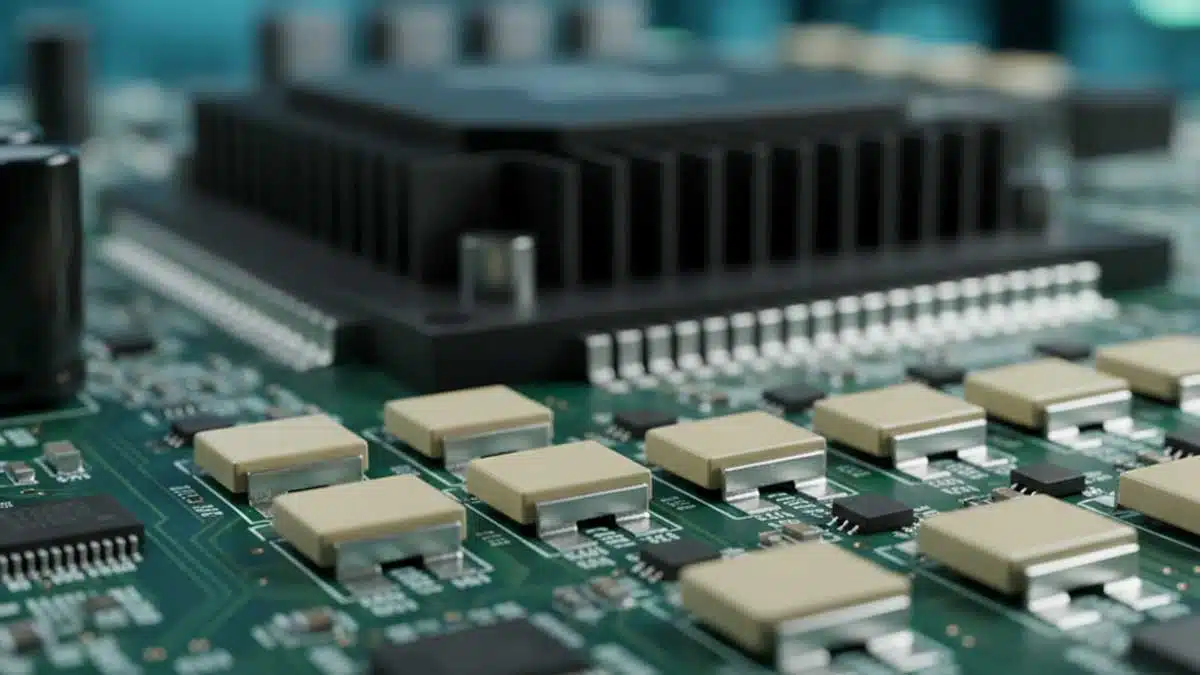
- High‑capacitance parts in small case sizes for dense power stages on advanced boards and substrates.
- Components optimized for thermal stability in high airflow but elevated ambient environments in racks and OCP‑style chassis.
For engineers, this is a signal that high‑performance MLCCs tailored to AI/accelerated computing reference designs are likely to remain strategic, with decent continuity of supply.
Expansion of automotive MLCC lineup
Samsung Electro-Mechanics states an intention to further strengthen its automotive MLCC lineup, specifically referencing high‑capacitance and high‑voltage products. In the wider portfolio, the company is already active in:
- High‑voltage MLCCs for on‑board chargers, DC‑link and battery systems in EVs (630 V, 1000 V and beyond, according to the manufacturer datasheet and related releases).
- Components for ADAS, body and chassis, and infotainment ECUs, including ultra‑compact and high‑capacitance types in small case sizes.
Purchasing teams can read this as continued strategic commitment to automotive‑grade MLCC manufacturing, including material development and capacity expansion for high‑reliability lines.
Technical highlights and expectations
The trends described in the Q4 2025 communication are most relevant to designs in the following areas:
- AI servers and accelerator platforms: VRM decoupling, bulk capacitance around GPUs/ASICs, high‑density power stages on mainboards and accelerator cards.
- Data‑center networking and storage: switch and router power supplies, high‑speed SerDes rails, clock and timing circuits where low‑ESL MLCCs are preferred.
- Electric vehicles and xEV: on‑board chargers, DC‑DC converters, battery management systems and inverter control, where high voltage and AEC‑Q‑qualified MLCCs are needed.
- ADAS and automated driving: sensor power filtering (radar, camera, LiDAR), domain controllers, and high‑speed communication ECUs.
If your designs fall into any of these segments, the company’s stated focus areas align with long‑term demand for high‑end passives rather than short‑lived niche products.
In practice, engineers can expect:
- Ongoing development of MLCCs with higher capacitance per volume at elevated voltages for EV and industrial drives.
- High‑temperature capable MLCCs for automotive and industrial (often targeting 125 °C to 150 °C operation ranges, according to manufacturer datasheet).
- Continued refinement of ceramic materials and internal electrode structures to support both high voltage endurance and miniaturization.
For current projects, it is advisable to use the latest Samsung Electro-Mechanics parametric search and datasheets, as product codes and maximum ratings evolve rapidly with each generation.
Source
This article is based on information published in the Samsung Electro-Mechanics official newsroom Q4 2025 earnings and outlook communication, complemented by general context from the company’s public statements on its automotive and AI/server MLCC strategy.