




Passive Components Blog
No Result
View All Result
  • Home
  • News
    • All
    • Aerospace & Defence
    • Antenna
    • Applications
    • Automotive
    • Capacitors
    • Circuit Protection Devices
    • electro-mechanical news
    • Filters
    • Fuses
    • Inductors
    • Industrial
    • Integrated Passives
    • inter-connect news
    • Market & Supply Chain
    • Market Insights
    • Medical
    • Modelling and Simulation
    • New Materials & Supply
    • New Technologies
    • Non-linear Passives
    • Optoelectronics and Isolation
    • Oscillators
    • Passive Sensors News
    • Resistors
    • RF & Microwave
    • Telecommunication
    • Weekly Digest
    Exxelia PM film capacitor and passive-component technologies for BepiColombo space electronics

    Exxelia Passive Components Support BepiColombo Mission

    TT Electronics OPI1268T green through-hole phototransistor optocoupler used for optical isolation in power systems.

    Optocoupler Reliability: Designing Optical Isolation for 25-Year Grid Assets

    TDK B43657 and B43658 ultra-compact snap-in aluminum electrolytic capacitors for 500 V DC power-supply and DC-link applications

    TDK Extends Compact Snap-In Capacitors to 500 V for AI Servers

    Stackpole RNAN aluminium nitride thin-film chip resistors in 0603, 0805, 1206 and 2512 package sizes for precision high-power electronics

    Stackpole RNAN AlN Thin-Film Resistors Reach 6 W

    binder angled M12-A midmount panel-mount PCB connector for centric board mounting, showing compact front-facing industrial connector geometry

    binder Adds Midmount M12-A PCB Connectors for Slim Sensors

    Bourns PST065 and PST10 Series compact incremental potentiometers with hollow shafts for rotary position feedback

    Bourns Expands Compact Incremental Potentiometer Offering

    Wk 35 Electronics Supply Chain Digest

    Samsung MLCC Revenue Seen Above KRW 8T by 2027, Murata EOL Actions Reshape Supply

    ROHM SDR01 high anti-surge thick-film chip resistor in 1005 metric 0402 package with 0.33 W rated power

    ROHM Introduces Anti-Surge 0402 Resistors Rated at 0.33 W

    Trending Tags

    • Ripple Current
    • RF
    • Leakage Current
    • Tantalum vs Ceramic
    • Snubber
    • Low ESR
    • Feedthrough
    • Derating
    • Dielectric Constant
    • New Products
    • Market Reports
  • Knowledge Blog
  • Dossiers
    • AI Hardware Dossier
    • Automotive Dossier
    • Industrial Robotics Dossier
    • Power Converter Dossier
    • Capacitor Dossier
    • Resistor Dossier
    • Inductor Dossier
    • Circuit Protection Dossier
  • Suppliers
    • Who is Who
  • PCNS
    • PCNS 2025
    • PCNS 2023
    • PCNS 2021
    • PCNS 2019
    • PCNS 2017
  • Events
  • Home
  • News
    • All
    • Aerospace & Defence
    • Antenna
    • Applications
    • Automotive
    • Capacitors
    • Circuit Protection Devices
    • electro-mechanical news
    • Filters
    • Fuses
    • Inductors
    • Industrial
    • Integrated Passives
    • inter-connect news
    • Market & Supply Chain
    • Market Insights
    • Medical
    • Modelling and Simulation
    • New Materials & Supply
    • New Technologies
    • Non-linear Passives
    • Optoelectronics and Isolation
    • Oscillators
    • Passive Sensors News
    • Resistors
    • RF & Microwave
    • Telecommunication
    • Weekly Digest
    Exxelia PM film capacitor and passive-component technologies for BepiColombo space electronics

    Exxelia Passive Components Support BepiColombo Mission

    TT Electronics OPI1268T green through-hole phototransistor optocoupler used for optical isolation in power systems.

    Optocoupler Reliability: Designing Optical Isolation for 25-Year Grid Assets

    TDK B43657 and B43658 ultra-compact snap-in aluminum electrolytic capacitors for 500 V DC power-supply and DC-link applications

    TDK Extends Compact Snap-In Capacitors to 500 V for AI Servers

    Stackpole RNAN aluminium nitride thin-film chip resistors in 0603, 0805, 1206 and 2512 package sizes for precision high-power electronics

    Stackpole RNAN AlN Thin-Film Resistors Reach 6 W

    binder angled M12-A midmount panel-mount PCB connector for centric board mounting, showing compact front-facing industrial connector geometry

    binder Adds Midmount M12-A PCB Connectors for Slim Sensors

    Bourns PST065 and PST10 Series compact incremental potentiometers with hollow shafts for rotary position feedback

    Bourns Expands Compact Incremental Potentiometer Offering

    Wk 35 Electronics Supply Chain Digest

    Samsung MLCC Revenue Seen Above KRW 8T by 2027, Murata EOL Actions Reshape Supply

    ROHM SDR01 high anti-surge thick-film chip resistor in 1005 metric 0402 package with 0.33 W rated power

    ROHM Introduces Anti-Surge 0402 Resistors Rated at 0.33 W

    Trending Tags

    • Ripple Current
    • RF
    • Leakage Current
    • Tantalum vs Ceramic
    • Snubber
    • Low ESR
    • Feedthrough
    • Derating
    • Dielectric Constant
    • New Products
    • Market Reports
  • Knowledge Blog
  • Dossiers
    • AI Hardware Dossier
    • Automotive Dossier
    • Industrial Robotics Dossier
    • Power Converter Dossier
    • Capacitor Dossier
    • Resistor Dossier
    • Inductor Dossier
    • Circuit Protection Dossier
  • Suppliers
    • Who is Who
  • PCNS
    • PCNS 2025
    • PCNS 2023
    • PCNS 2021
    • PCNS 2019
    • PCNS 2017
  • Events
No Result
View All Result
Passive Components Blog
No Result
View All Result

Researchers Demonstrated Supercapacitor Charged by Light

6.9.2024
Reading Time: 3 mins read
A A

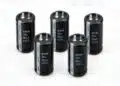
Indian IISc researchers from Department of Instrumentation and Applied Physics (IAP) Bengaluru and their collaborators have designed a new supercapacitor that can be charged by shining light on it.

Such supercapacitors can be used in various devices, including streetlights and self-powered electronic devices such as sensors.

RelatedPosts

Exxelia Passive Components Support BepiColombo Mission

Optocoupler Reliability: Designing Optical Isolation for 25-Year Grid Assets

TDK Extends Compact Snap-In Capacitors to 500 V for AI Servers

Supercapacitors are upgraded versions of capacitors – they exploit electrochemical phenomena to store more energy,” Abha Misra, professor, IAP and corresponding author of the study published in the Journal of Materials Chemistry A, said.

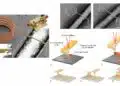
The electrodes of the new supercapacitor were made of Zinc Oxide (ZnO) nanorods grown directly on Fluorine-doped Tin Oxide (FTO), which is transparent. It was synthesised by Pankaj Singh Chauhan, first author and CV Raman postdoctoral fellow in Misra’s group at IISc.

“Both ZnO and FTO are semiconductors with appropriately aligned energy levels, enabling superior performance of the photo-rechargeable supercapacitor. FTO, being transparent, allows light to fall on the optically active ZnO nanorods, which charge the supercapacitor,” IISc said.

Chauhan explained that two electrolytes — a liquid and a semi-solid gel — were used as the conducting medium between the electrodes. The capacity for storing charges (capacitance) is inversely proportional to the distance between the electrodes, IISc said.

“As the distance becomes very small, the capacitance shoots up,” Misra said. In electrostatic capacitors, maintaining a small distance between electrodes is difficult. However, in a supercapacitor, the electrodes’ charges attract the electrolyte’s oppositely charged ions, resulting in the formation of a charge layer just atoms away from each other — called an electric double layer or EDL. This results in the high capacitance of supercapacitors.

“When researchers shined ultraviolet (UV) light on their supercapacitor, they noticed a huge increase in the capacitance, several times higher than previously reported supercapacitors. They also noticed two unusual properties,” IISc said.

It added that first, while capacitance generally decreases as the voltage increases, they found the reverse — their supercapacitor’s capacitance under light illumination actually increased with increasing voltage.

“We call it the necking behaviour. This may be due to the high porosity of the electrodes. Second, the energy stored within the supercapacitor typically decreases when it is charged faster, because the ions in the electrolyte do not move fast enough to respond to the increased charging rate. However, with the liquid electrolyte, the team found that the energy stored in the supercapacitor surprisingly increased upon fast charging under UV light,” said AM Rao, Professor at Clemson University, USA, and co-author.

Mihir Parekh, a postdoctoral researcher in Rao’s group, developed theoretical models to explain these novel observations. The findings open the doors to developing simultaneously fast-charging and energy-dense supercapacitors, he suggests.

To design their present supercapacitor, the team explored two key ideas. “First, the surface area of the electrodes was increased by combining two optically active semiconductor interfaces in a way that maximises interaction with light, leading to higher charge generation. Second, a liquid electrolyte was used to ensure an effective EDL. Together, these resulted in superior performance,” IISc said.

Misra said that the ideas were simple. “…but when combined together, they worked very well.” She added that tweaking the design of the supercapacitor can enable its charging with visible and infrared light as well. The IISc-Clemson team aims to further explore and better understand the novel phenomena observed to design better supercapacitors.

Supercapacitors have lots of applications, Misra said. For example, they can potentially replace solar cells used in streetlights. They have high power density, so they can release charge more quickly than batteries. They can also be used to power chips in electronic devices like cell phones. “We have miniaturised supercapacitors to the micron scale so that they can be integrated along with these microelectronic chips,” Misra adds.

Reference Journal

Influence of electrolyte on the photo-charging capability of a ZnO–FTO supercapacitor; Journal of Materials Chemistry

Related

Recent Posts

Exxelia PM film capacitor and passive-component technologies for BepiColombo space electronics

Exxelia Passive Components Support BepiColombo Mission

16.9.2026
6
TDK B43657 and B43658 ultra-compact snap-in aluminum electrolytic capacitors for 500 V DC power-supply and DC-link applications

TDK Extends Compact Snap-In Capacitors to 500 V for AI Servers

16.9.2026
3

Samsung MLCC Revenue Seen Above KRW 8T by 2027, Murata EOL Actions Reshape Supply

11.9.2026
44

LG Innotek Demonstrates FC-BGA Substrates With Embedded Silicon Capacitors for AI Power Delivery

10.9.2026
41

On-Chip 3D-Printed Copper Microinductors: A New Route to Compact RF Electronics

10.9.2026
27

Emerging Capacitor Markets in Fusion Energy

10.9.2026
53
onsemi solid-state transformer concept for 800 V HVDC AI data center power conversion with SiC modules, DC-link capacitors and high-frequency magnetics

Solid-State Transformers for 800 V AI Data Centers: Passive Component Design Considerations

9.9.2026
111
TDK CN series 10 µF 100 V X7R soft-termination multilayer ceramic capacitor in 3225 EIA 1210 package

TDK Releases 100 V Soft-Termination X7R MLCCs 10 uF in 3225 Package

9.9.2026
31
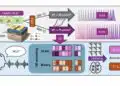
Overview of fabricated ferroelectric capacitors improving hyperdimensional computing task learning accuracy. a The experimental work reported in this study comprises ferroelectric capacitor (FeCAP) device fabrication, structural and electrical characterization, analog state identification and their reliability study. b The computational part of the work explores the benefits of using characteristics from the fabricated devices in a hyperdimensional computing scheme; source: authors

High-Precision Hyperdimensional Computing with Multi-Level Ferroelectric HZO Capacitors

7.9.2026
23

Upcoming Events

Sep 29
16:00 - 17:00 CEST

Cybersecurity 2026

Nov 24
16:00 - 17:00 CET

Component selection with the WE REDEXPERT® DC-DC Converter Designer Tool

View Calendar

Popular Posts

  • Buck Converter Design and Calculation

    0 shares
    Share 0 Tweet 0
  • LLC Resonant Converter Design and Calculation

    0 shares
    Share 0 Tweet 0
  • Boost Converter Design and Calculation

    0 shares
    Share 0 Tweet 0
  • Flyback Converter Design and Calculation

    0 shares
    Share 0 Tweet 0
  • Earthing Systems and IEC Classification Explained

    0 shares
    Share 0 Tweet 0
  • MLCC and Ceramic Capacitors

    0 shares
    Share 0 Tweet 0
  • Resistor Symbols

    0 shares
    Share 0 Tweet 0
  • Capacitor Charging and Discharging

    0 shares
    Share 0 Tweet 0
  • Audio Capacitors: Choosing Capacitors for Crossover Circuits

    0 shares
    Share 0 Tweet 0
  • Capacitor Symbols

    0 shares
    Share 0 Tweet 0

Newsletter Subscription


Passive Components Blog

© 2015–2026
All rights reserved

  • Home
  • Privacy Policy
  • EPCI Membership & Advertisement
  • About

No Result
View All Result
  • Home
  • Knowledge Blog
  • Dossiers
  • PCNS

© 2015–2026
All rights reserved