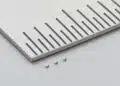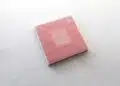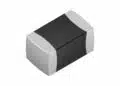


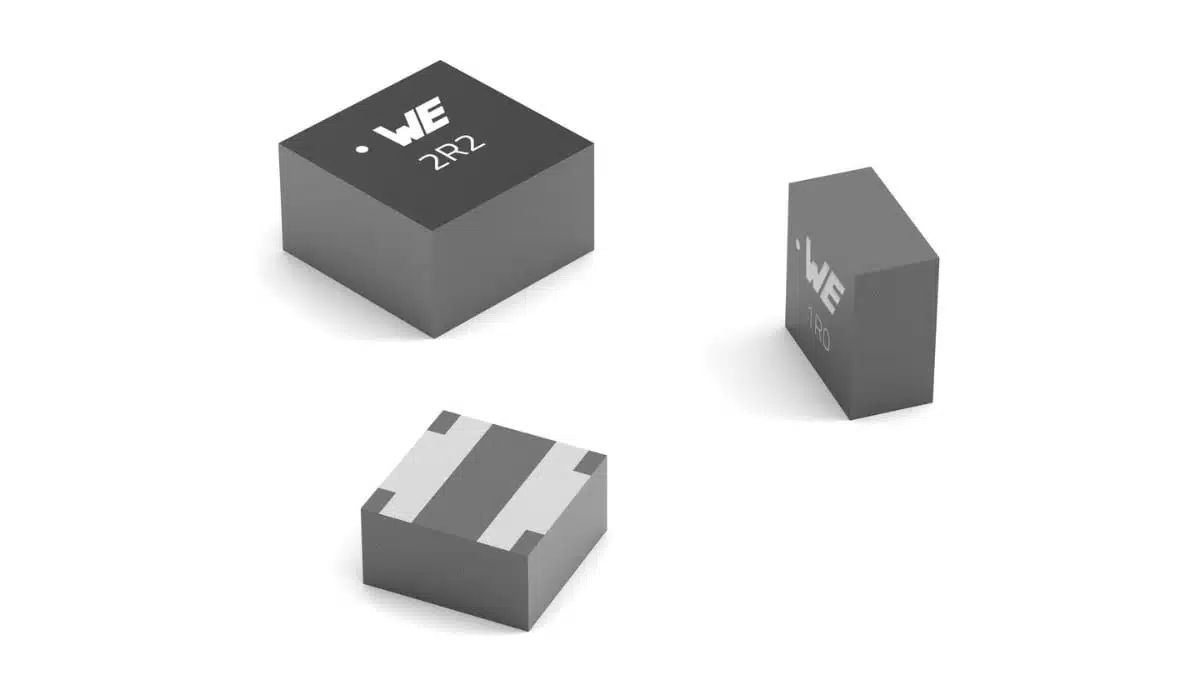
Würth Elektronik has introduced the WE-MXGA, a new series of AEC-Q200-qualified SMT power inductors for automotive applications that combine very low DC resistance with exceptionally high saturation current.
The components are optimized for modern high-frequency switch-mode power supplies, including designs based on GaN and SiC devices, where efficiency, current capability and compact size are critical.
Key features and benefits
The Würth Elektronik WE-MXGA is a magnetically shielded storage inductor designed for demanding automotive and industrial power electronics.
- AEC-Q200-qualified for automotive applications, supporting use in ECUs and other safety- and reliability-critical systems.
- Ultra-low RDC, up to around one quarter lower than comparable inductors according to the manufacturer, helping to reduce conduction losses and self-heating.
- Saturation current increased by up to approximately half versus similar market offerings, providing more design headroom for transient loads and peak currents.
- Magnetically shielded construction to reduce stray fields and minimize coupling into nearby sensitive circuits, which is important in dense automotive control units.
- Compact SMT form factors (4020 and 5030) that support high power density where PCB area is limited.
- Optimized wire geometry and a pressed nanocrystalline powder core material to achieve high efficiency at switching frequencies typical of modern DC/DC converters.
In practice, the combination of low DCR resistance and high saturation current allows designers to either increase output power at a given footprint or reduce component size without sacrificing efficiency.
Typical applications
The WE-MXGA series targets a broad range of automotive and transportation power systems, as well as other high-performance power electronics.
- Automotive lighting, including LED headlight drivers where compact, thermally efficient inductors are needed.
- Infotainment and multimedia control units requiring low-EMI power stages in confined spaces.
- 48 V to 12 V DC/DC converters in mild-hybrid systems and other multi-voltage vehicle architectures.
- Battery management systems that must handle high currents and transient loads while maintaining efficiency.
- Advanced driver assistance systems (ADAS) modules with densely packed electronics and tight EMC requirements.
- General high-frequency switch-mode power supplies using GaN or SiC switches in automotive or industrial environments.
For many of these use cases, the magnetic shielding and low losses of the inductor help simplify thermal design and reduce the risk of noise issues in mixed-signal boards.
Technical highlights
The WE-MXGA family is initially offered in two mechanical sizes with different inductance ranges, addressing a wide variety of converter topologies and operating points.
Form factors and inductance range
- WE-MXGA 4020: nominal 4.0 × 2.0 mm class footprint with inductance values from 0.16 µH up to 4.7 µH, suitable for high-current low-inductance roles such as high-frequency buck converters.
- WE-MXGA 5030: nominal 5.0 × 3.0 mm class footprint with inductance values from 0.22 µH up to 15 µH, covering a broader range of converter designs where higher inductance is required.
Exact mechanical dimensions and inductance tolerances should be taken directly from the current manufacturer datasheet for the specific part number.
Electrical and environmental ratings
- Current capability up to 28 A, depending on inductance value and case size.
- Operating voltage up to 80 V DC, enabling use in 48 V systems and other higher-voltage automotive rails with adequate margin.
- Operating temperature range from -40 °C to 125 °C, matching typical automotive ambient and under-hood requirements.
The nanocrystalline core material provides low core losses at high switching frequencies, which is particularly beneficial in GaN- and SiC-based converters that operate well into the hundreds of kilohertz or beyond.
Availability and part numbers
According to Würth Elektronik, WE-MXGA 4020 and WE-MXGA 5030 inductors are now available from stock through the company’s distribution channels. Sample quantities can be requested free of charge, which can simplify early design evaluation and comparison with existing inductor choices.
For exact ordering codes, including detailed inductance values, tolerances and current ratings, designers should refer to the official WE-MXGA product pages and datasheets provided by the manufacturer. This ensures that the selected component meets the required derating criteria for the specific application conditions.
Design-in notes for engineers
When designing with the WE-MXGA series, a few practical points can help to fully leverage its strengths:
- Check both DC and AC losses: the low RDC helps reduce copper losses, but at high switching frequencies the core loss contribution should be verified using the manufacturer’s data and the actual converter waveform.
- Use appropriate derating: even with high saturation current capability, select the inductor so that the peak current remains comfortably below the specified saturation current at the operating temperature.
- Consider EMI and layout: the magnetically shielded construction reduces stray flux, but good PCB layout practices (short current loops, solid ground return, proper placement relative to sensitive nodes) are still essential.
- Thermal management: while lower losses reduce self-heating, thermal simulations or measurements are recommended, especially in enclosed automotive housings or near hot components.
- Size selection: the 4020 variants suit compact, space-constrained designs, whereas the 5030 versions are better where higher inductance or extra current margin is needed.
Early evaluation using the available free samples and reference designs from Würth Elektronik can help shorten design cycles and ensure that the chosen inductance, case size and thermal performance align with system requirements.
Source
This article is based on information from an official Würth Elektronik press release on the WE-MXGA automotive power inductor series and associated product documentation provided by the manufacturer.