










Murata Manufacturing has announced the construction of a new production building at its Yokaichi Plant in Higashiomi, Shiga, Japan, with work scheduled to start in May 2026.
The new facility is dedicated to thermistor products and is intended to strengthen Murata’s production system, expand capacity, and respond to rising medium‑ to long‑term demand.
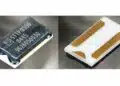
Thermistors in Modern Electronics
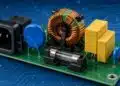
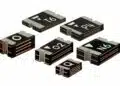
Thermistors are temperature‑dependent resistive components widely used for temperature sensing, monitoring, and protection across a broad range of electronic systems. In power electronics, NTC thermistors are commonly used for inrush current limiting at the input of AC‑DC power supplies and converters, as well as for monitoring heatsink and module temperatures.
In battery systems and electric vehicles, thermistors provide essential feedback for cell and pack temperature, charger supervision, and cooling system control, where simplicity, robustness, and cost remain key considerations. They complement integrated circuit temperature sensors and other technologies by offering a compact, passive, and often safety‑critical sensing solution.
Details of Murata’s Yokaichi Expansion
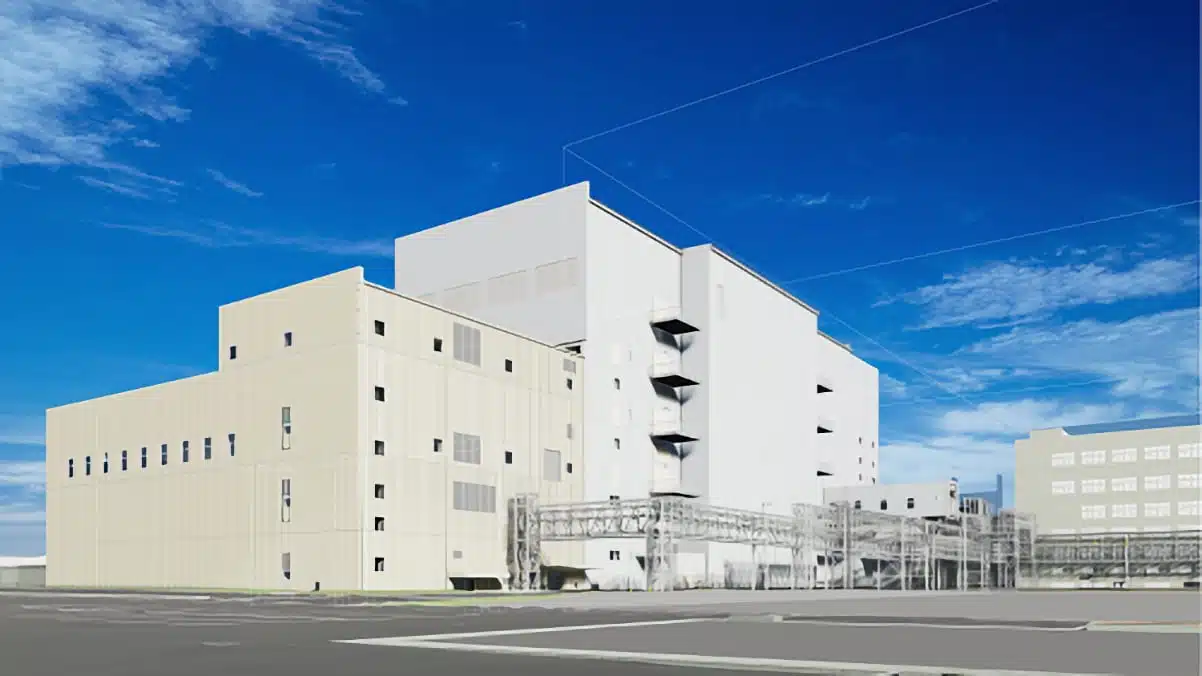
The new thermistor production building at Yokaichi will be a steel‑frame structure with five stories. The planned building area is approximately 2,951 m², providing a total floor area of about 18,010 m² distributed across the five levels. Murata reports a total investment of around 16.9 billion yen for the building itself, underlining the strategic importance of this capacity expansion.
Construction is scheduled to start in May 2026 with a tentative completion date in August 2028, positioning the facility as a medium‑ to long‑term response to growing thermistor demand rather than a short‑term capacity adjustment. The building will be located within the existing Yokaichi Plant site at 4‑4‑1 Higashiokino, Higashiomi‑shi, Shiga, Japan, and will be dedicated to the production of thermistor products.
Market Drivers and Strategic Context
Murata’s decision to invest in a dedicated thermistor production building reflects the increasing importance of temperature sensing and protection in modern electronics. Electrification trends in automotive platforms drive higher demand for temperature monitoring in traction inverters, on‑board chargers, DC‑DC converters, and, most critically, in traction battery systems. Each new EV platform introduces multiple temperature nodes where thermistor‑based sensing remains a cost‑effective and robust option.
Beyond automotive, higher power density in industrial equipment, data‑center power systems, and renewable energy inverters increases thermal stress, making reliable temperature monitoring and inrush protection essential. At the same time, tightening safety and functional safety requirements raise the number of monitored points in a system, which often translates into more thermistors on each board or module.
While semiconductor temperature sensors and RTDs offer advantages in accuracy or digital interfacing, thermistors continue to dominate many high‑volume sensing points due to their low cost, small size, flexibility in resistance‑temperature curves, and ease of integration into existing analog monitoring circuits. Murata’s expansion signals confidence that these use cases will continue to grow across power and energy‑related applications.
Implications for Passive Components and Design Engineers
For the passive components market, a sizable new thermistor production facility from a major supplier suggests that thermistors will remain a strategic product class alongside mainstream components such as MLCCs and chip resistors. Increased capacity can help support both volume growth and diversification of product portfolios, for example expanded resistance curves, package styles, and higher temperature ratings targeted at automotive and industrial environments.
From a design engineer’s perspective, capacity expansion at Yokaichi may translate into improved long‑term availability and more options for second‑sourcing and platform lifetime planning. When selecting thermistors, engineers should continue to pay attention to parameters such as AEC‑Q200 qualification, maximum operating temperature, surge and inrush characteristics, mounting style, and long‑term stability under thermal cycling. Aligning these parameters with a supplier’s long‑term capacity and investment roadmap helps reduce risk for EV, industrial, and energy infrastructure designs.
Outlook
With completion of the new building targeted for August 2028, the capacity impact of this project will be felt primarily in the second half of this decade. Over that period, continued growth in electric vehicles, renewable energy systems, and power‑dense industrial equipment is likely to sustain demand for robust, passive temperature sensing and protection components. Thermistors are well positioned to support this demand where simplicity, cost efficiency, and proven behavior under harsh conditions are more important than digital integration.
As more manufacturers invest in thermistor and related passive technologies, design engineers can expect a broader range of application‑specific devices tuned for high voltage, high temperature, and safety‑critical environments.
Source
This article is based primarily on information provided by Murata Manufacturing in its official press release announcing the construction of a new thermistor production building at the Yokaichi Plant in Higashiomi, Shiga, Japan, combined with independent technical and market commentary aimed at power electronics and automotive design engineers.