




Passive Components Blog
No Result
View All Result
  • Home
  • News
    • All
    • Aerospace & Defence
    • Antenna
    • Applications
    • Automotive
    • Capacitors
    • Circuit Protection Devices
    • electro-mechanical news
    • Filters
    • Fuses
    • Inductors
    • Industrial
    • Integrated Passives
    • inter-connect news
    • Market & Supply Chain
    • Market Insights
    • Medical
    • Modelling and Simulation
    • New Materials & Supply
    • New Technologies
    • Non-linear Passives
    • Oscillators
    • Passive Sensors News
    • Resistors
    • RF & Microwave
    • Telecommunication
    • Weekly Digest
    Bourns PST065 and PST10 Series compact incremental potentiometers with hollow shafts for rotary position feedback

    Bourns Expands Compact Incremental Potentiometer Offering

    Wk 35 Electronics Supply Chain Digest

    Samsung MLCC Revenue Seen Above KRW 8T by 2027, Murata EOL Actions Reshape Supply

    ROHM SDR01 high anti-surge thick-film chip resistor in 1005 metric 0402 package with 0.33 W rated power

    ROHM Introduces Anti-Surge 0402 Resistors Rated at 0.33 W

    ECIA Industry Pulse Q3 2026 chart showing passive components, semiconductors and electro-mechanical component market sentiment and lead-time pressure

    ECIA Industry Pulse Moderates as Passive Lead Times Tighten

    LG Innotek Demonstrates FC-BGA Substrates With Embedded Silicon Capacitors for AI Power Delivery

    On-Chip 3D-Printed Copper Microinductors: A New Route to Compact RF Electronics

    Emerging Capacitor Markets in Fusion Energy

    Murata DLW32SH_MF 1210 surface-mount common mode choke coil with metal terminals for automotive CAN FD signal-line noise suppression

    Murata Introduces Common Mode Chokes for Automotive CAN FD up to 150°C

    Trending Tags

    • Ripple Current
    • RF
    • Leakage Current
    • Tantalum vs Ceramic
    • Snubber
    • Low ESR
    • Feedthrough
    • Derating
    • Dielectric Constant
    • New Products
    • Market Reports
  • Knowledge Blog
  • Dossiers
    • AI Hardware Dossier
    • Automotive Dossier
    • Industrial Robotics Dossier
    • Power Converter Dossier
    • Capacitor Dossier
    • Resistor Dossier
    • Inductor Dossier
    • Circuit Protection Dossier
  • Suppliers
    • Who is Who
  • PCNS
    • PCNS 2025
    • PCNS 2023
    • PCNS 2021
    • PCNS 2019
    • PCNS 2017
  • Events
  • Home
  • News
    • All
    • Aerospace & Defence
    • Antenna
    • Applications
    • Automotive
    • Capacitors
    • Circuit Protection Devices
    • electro-mechanical news
    • Filters
    • Fuses
    • Inductors
    • Industrial
    • Integrated Passives
    • inter-connect news
    • Market & Supply Chain
    • Market Insights
    • Medical
    • Modelling and Simulation
    • New Materials & Supply
    • New Technologies
    • Non-linear Passives
    • Oscillators
    • Passive Sensors News
    • Resistors
    • RF & Microwave
    • Telecommunication
    • Weekly Digest
    Bourns PST065 and PST10 Series compact incremental potentiometers with hollow shafts for rotary position feedback

    Bourns Expands Compact Incremental Potentiometer Offering

    Wk 35 Electronics Supply Chain Digest

    Samsung MLCC Revenue Seen Above KRW 8T by 2027, Murata EOL Actions Reshape Supply

    ROHM SDR01 high anti-surge thick-film chip resistor in 1005 metric 0402 package with 0.33 W rated power

    ROHM Introduces Anti-Surge 0402 Resistors Rated at 0.33 W

    ECIA Industry Pulse Q3 2026 chart showing passive components, semiconductors and electro-mechanical component market sentiment and lead-time pressure

    ECIA Industry Pulse Moderates as Passive Lead Times Tighten

    LG Innotek Demonstrates FC-BGA Substrates With Embedded Silicon Capacitors for AI Power Delivery

    On-Chip 3D-Printed Copper Microinductors: A New Route to Compact RF Electronics

    Emerging Capacitor Markets in Fusion Energy

    Murata DLW32SH_MF 1210 surface-mount common mode choke coil with metal terminals for automotive CAN FD signal-line noise suppression

    Murata Introduces Common Mode Chokes for Automotive CAN FD up to 150°C

    Trending Tags

    • Ripple Current
    • RF
    • Leakage Current
    • Tantalum vs Ceramic
    • Snubber
    • Low ESR
    • Feedthrough
    • Derating
    • Dielectric Constant
    • New Products
    • Market Reports
  • Knowledge Blog
  • Dossiers
    • AI Hardware Dossier
    • Automotive Dossier
    • Industrial Robotics Dossier
    • Power Converter Dossier
    • Capacitor Dossier
    • Resistor Dossier
    • Inductor Dossier
    • Circuit Protection Dossier
  • Suppliers
    • Who is Who
  • PCNS
    • PCNS 2025
    • PCNS 2023
    • PCNS 2021
    • PCNS 2019
    • PCNS 2017
  • Events
No Result
View All Result
Passive Components Blog
No Result
View All Result

Space Relays Failures Occurring & Lessons Learnt at ESA

5.2.2025
Reading Time: 3 mins read
A A

source: ESA ESTEC; ESA SPCD 2018 Symposium

EPCI e-symposium library article

RelatedPosts

ESA SPCD 26 Registration Open

High-Density PCB Assemblies For Space Applications

Solid State Polymer Multilayer Capacitors For High Temperature Application

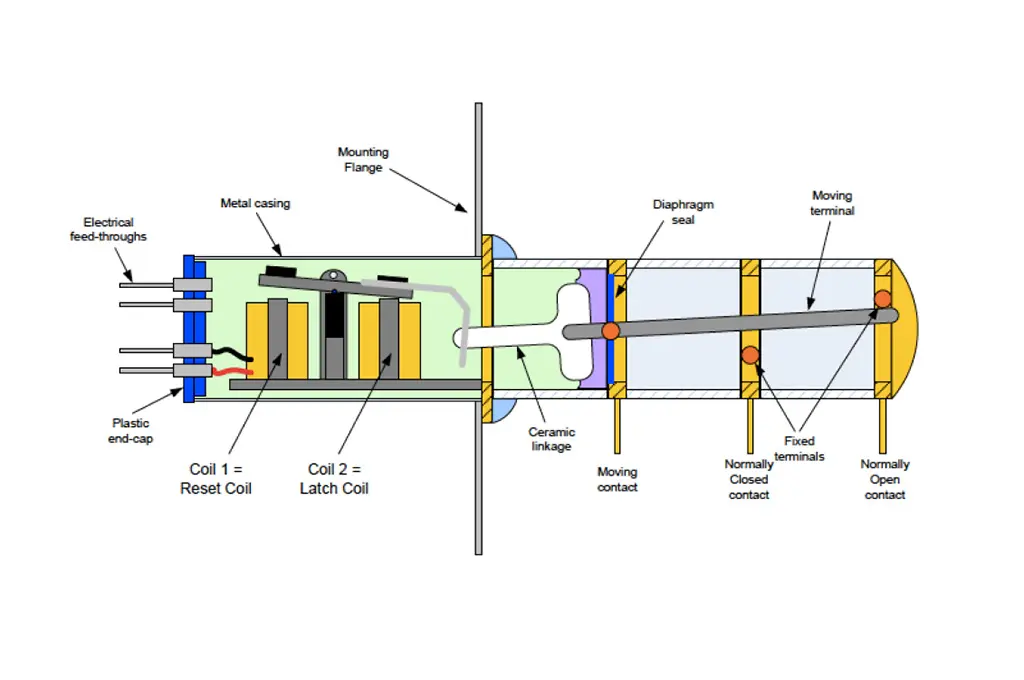
ESA component engineers Dr.Denis Lacombe and Dr.Léo Farhat are introducing their presentation on space relays failures and lessons learnt.

published by EPCI under approval of ESA SPCD 2018 organizing committee.


Title: Relays Failures Occurring & Lessons Learnt
Author(s): Dr.Denis Lacombe and Dr.Léo Farhat
Organisation(s): ESA ESTEC, The Netherlands
Symposium: ESA SPCD 2018
Reference: Lessons Learned and In-flight Experiences
ISBN: N/A
e-Sessions Applications: Aerospace
e-Sessions Scope Components: Relays, Inductors
e-Sessions Topics: Technology, Materials, Quality & Reliability


INTRODUCTION

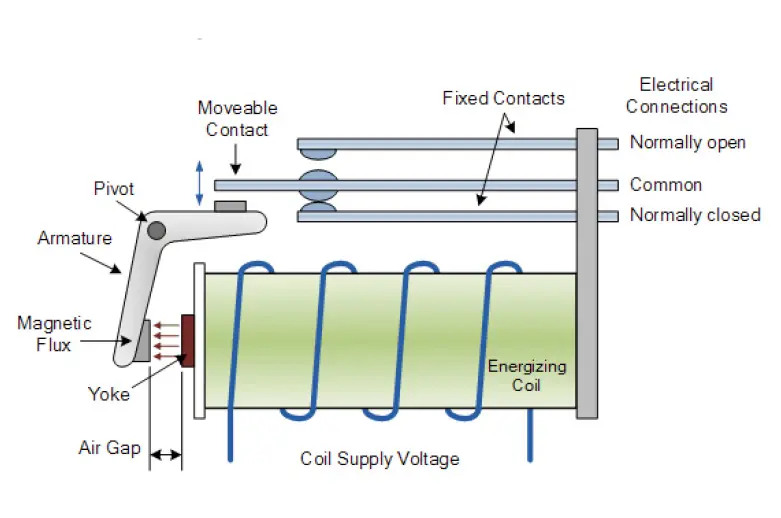
“An electromechanical relay is an electrical switching device. Its function corresponds to a mechanical switch, which is electrically actuated. The main advantages of electromechanical relays are the electrical isolation of the driving system and the load side, the insulation resistance of open contacts, as well as the low resistance of the closed contacts.”
Contact Material
The choice of the contact material depends on the switching capability of the relays. In general, a trade off is made between low resistance material and abrasive resistance. In space application, contact are usually made with silver for low current, silver oxide for high current and tungsten for high voltage.
Tuning and arcing
The settings of the relays are based on the Holm curves and take into account several elements like the contact materials, the contacts gap, the internal gas inside the cavity, the pressure, etc.
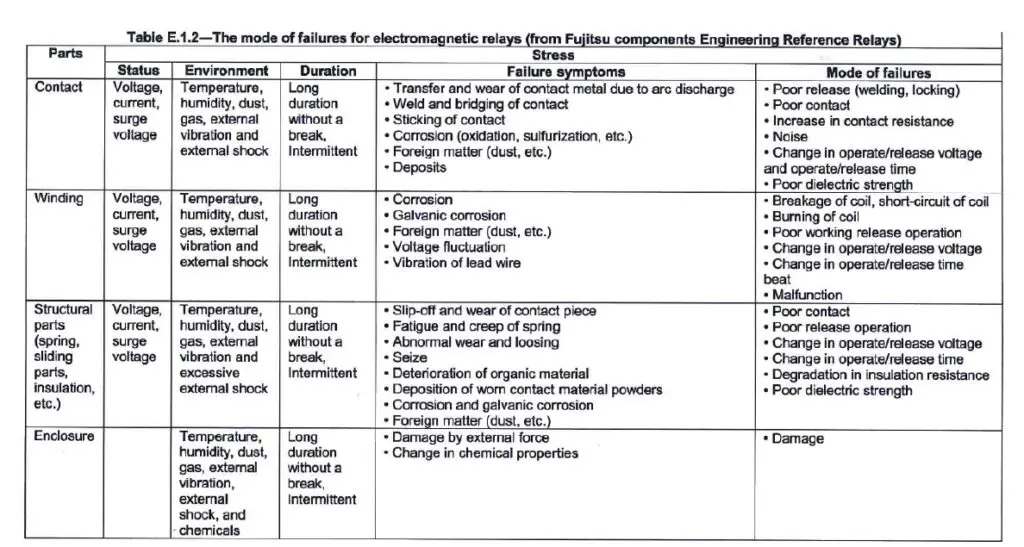
Relay Failures
High voltage relay: increase of latch voltage
Actuator side not in hermetic package then vacuum may induce displacement but also cleaning process may cause damage to the gel.
Failure analysis
Failures’ analysis of relays are tricky
  • Complex device with many pieces’part (40 to more than 100)
  • Risk of losing the defect
  • Interest of new methods (Xray, tomography, FIB)

Root cause of observed failures

On 13 observed failures:

  • 3 are due to bad commands
  • 1 is due to bad handling of the relay (soldering)
  • 5 mechanical stress are either the cause or a contributing factor
  • 8 real failures of the relay

5 (≈40%) of the observed failures may have been avoided if better knowledge of relay was used.

… see more at the full presentation link below…

CONCLUSION

ESA alert recommendations

New procurement of ESCC qualified TL26 relays:

  • parts with DC1611 or later shall be preferred.
  • Stock Parts shall be 100% screened by five (5) Monitored Temperature Cycles (-65°C/+125°C) followed by electrical tests at 25 °C as per table 2 of ESCC Detail Specification No. 3602/002.
  • Mounted parts with lot Date Codes identified as Category 2 in Annex 3 shall be subjected to thermal cycling as specified
    below:

    • Minimum 5 cycles
    • Minimum delta temperature of 70°C measured on the relay case. For example, thermal cycles at board level between -20°C to 50°C, Lower delta temperature values are not relevant
    • Duration and transition rate of cycles are not considered as important parameters.
    • The relay shall be switched at high and low temperature during the last cycle of the sequence.

Lesson learnt and recommendations

  • Bad command signal: do not use latch and reset voltage limit
  • Beware of mechanical stress: relay are more sensitive in certain direction then try to use this information to place the relay
  • No switching failure may be intermittent: implement the possibilities to send command signal several times
  • Failure analysis is difficult and need to be carried with care using up to date investigation methods

see the full presentation here:



Related

Recent Posts

On-Chip 3D-Printed Copper Microinductors: A New Route to Compact RF Electronics

10.9.2026
21
Murata DLW32SH_MF 1210 surface-mount common mode choke coil with metal terminals for automotive CAN FD signal-line noise suppression

Murata Introduces Common Mode Chokes for Automotive CAN FD up to 150°C

10.9.2026
13
onsemi solid-state transformer concept for 800 V HVDC AI data center power conversion with SiC modules, DC-link capacitors and high-frequency magnetics

Solid-State Transformers for 800 V AI Data Centers: Passive Component Design Considerations

9.9.2026
81
Compact inductive rotary position encoder sensor near a motor shaft, representing the Vishay RAIK045I MP encoder category

Vishay Introduces 16-Bit Inductive Encoder for Motor-Adjacent Position Sensing

9.9.2026
16

Coilcraft Introduces Automotive Common Mode Chokes Target CISPR 25 Class 5 EMC Compliance

7.9.2026
17

Murata Expands Automotive Metal Power Inductor Range

7.9.2026
39

August 2026 Interconnect, Passives and Electromechanical Components Market Insights

4.9.2026
54

Knowles Cornell Dubilier 105C Flatpack Aluminum Electrolytic Capacitors Target Low-Profile High-Density Power Designs

4.9.2026
44

Vishay Thin Film Chip Resistors Combine up to 50 GHz Operation with High Power Density

3.9.2026
17

Upcoming Events

Sep 16
17:00 - 18:00 CEST

Designing a 5 kW, 800 V-to-50 V PSFB Converter for Next-Generation Data Centers

Sep 29
16:00 - 17:00 CEST

Cybersecurity 2026

Nov 24
16:00 - 17:00 CET

Component selection with the WE REDEXPERT® DC-DC Converter Designer Tool

View Calendar

Popular Posts

  • Buck Converter Design and Calculation

    0 shares
    Share 0 Tweet 0
  • LLC Resonant Converter Design and Calculation

    0 shares
    Share 0 Tweet 0
  • Boost Converter Design and Calculation

    0 shares
    Share 0 Tweet 0
  • Flyback Converter Design and Calculation

    0 shares
    Share 0 Tweet 0
  • Earthing Systems and IEC Classification Explained

    0 shares
    Share 0 Tweet 0
  • MLCC and Ceramic Capacitors

    0 shares
    Share 0 Tweet 0
  • Resistor Symbols

    0 shares
    Share 0 Tweet 0
  • Capacitor Charging and Discharging

    0 shares
    Share 0 Tweet 0
  • Audio Capacitors: Choosing Capacitors for Crossover Circuits

    0 shares
    Share 0 Tweet 0
  • Thermistors Basics, NTC and PTC Thermistors

    0 shares
    Share 0 Tweet 0

Newsletter Subscription


Passive Components Blog

© 2015–2026
All rights reserved

  • Home
  • Privacy Policy
  • EPCI Membership & Advertisement
  • About

No Result
View All Result
  • Home
  • Knowledge Blog
  • Dossiers
  • PCNS

© 2015–2026
All rights reserved