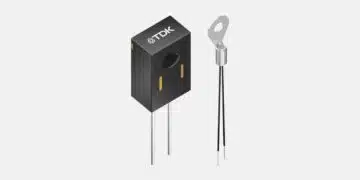




TDK has introduced the MAF0603GWY series of ultra‑small noise suppression filters for audio lines in compact consumer devices such as smartphones and wearables.
These components address the growing challenge of high‑frequency EMI in densely packed RF platforms while preserving audio quality, making them relevant for both hardware design engineers and purchasing teams working on next‑generation mobile and wearable designs.
Key features and benefits
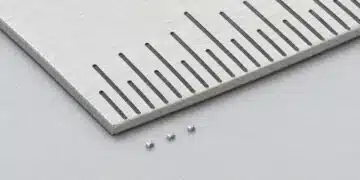
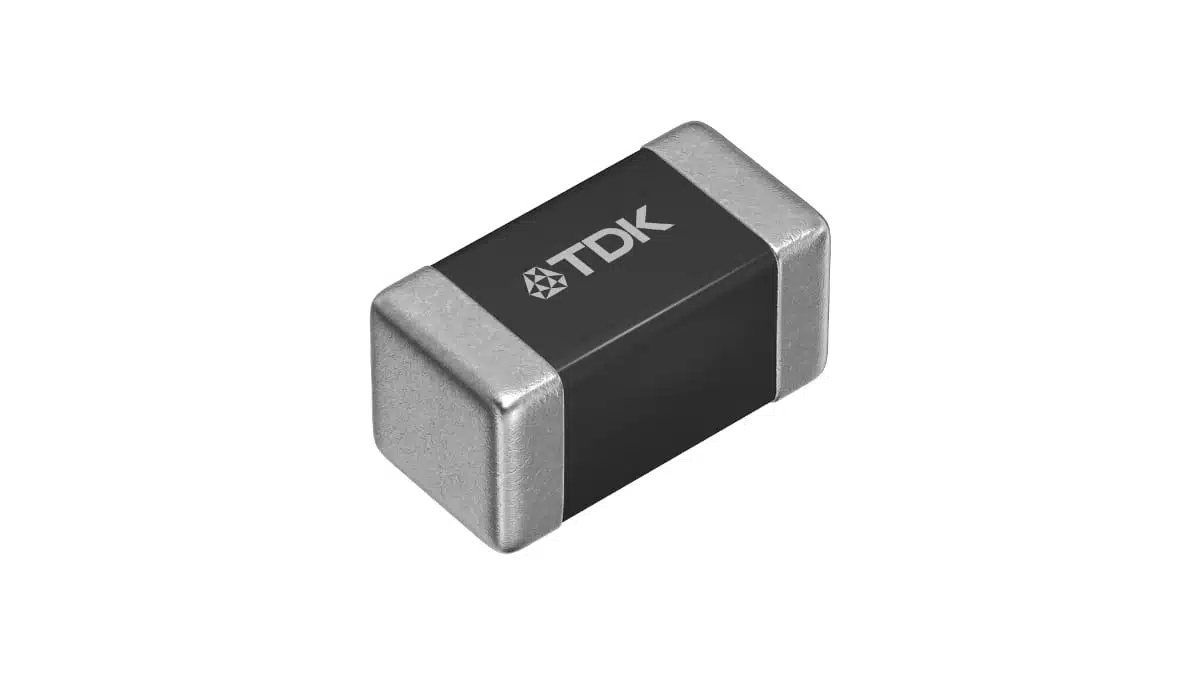
The MAF0603GWY series is a family of common‑mode EMI noise suppression filters optimized for audio lines in small mobile devices. They are supplied in an 0603 metric package measuring 0.6 mm × 0.3 mm × 0.3 mm (L × W × H), making them suitable where board space and component height are tightly constrained.
Key characteristics include:
- Industry‑leading high‑frequency attenuation in the 5 GHz band, with impedance up to 3220 Ω at 5 GHz depending on the part number.
- Newly developed low‑distortion ferrite material that minimizes changes to audio line characteristics and significantly reduces audio distortion compared to typical chip bead solutions.
- Lower DC resistance than conventional products, which helps reduce attenuation of the wanted audio signal and supports a wide dynamic range.
- Form factor compatible with high‑density audio/RF sections in smartphones, tablets, and wearable devices where routing of audio signals often runs close to antennas.
In practice, the combination of high impedance at 5 GHz and low DC resistance helps designers maintain audio signal integrity while suppressing radiated noise that would otherwise couple into Bluetooth, Wi‑Fi, or cellular antennas.
Typical applications
The primary use case for the MAF0603GWY series is EMI suppression on audio lines in mobile and wearable platforms that integrate multiple RF subsystems. Typical applications include:
- Audio lines in smartphones and tablets, especially near Bluetooth and Wi‑Fi front‑ends in the 2.4 GHz, 5 GHz, and 6 GHz bands.
- Headset and speaker outputs in wearable devices such as smartwatches and true wireless earbuds, where antenna coexistence is critical.
- Audio interfaces in devices prepared for current and emerging wireless standards, including 5G Sub‑6 and future 6G systems.
These EMI filters are particularly relevant where conventional chip beads have been used on audio lines but have led to audible degradation in sound quality or reduced dynamic range.
Technical highlights
The series currently comprises three catalog part numbers with different impedance levels and current ratings at the same compact size:
| Part number | Impedance typ. @ 900 MHz | Impedance typ. @ 5 GHz | DC resistance typ. | DC resistance max. | Rated current max. |
|---|---|---|---|---|---|
| MAF0603GWY211AT000 | 210 Ω | 1370 Ω | 0.89 Ω | 1.30 Ω | 0.15 A |
| MAF0603GWY301AT000 | 300 Ω | 1890 Ω | 1.15 Ω | 1.50 Ω | 0.14 A |
| MAF0603GWY551AT000 | 550 Ω | 3220 Ω | 1.81 Ω | 2.20 Ω | 0.125 A |
From a design perspective:
- Higher impedance options (such as the 550 Ω type) provide stronger attenuation at 5 GHz, which can help in particularly noisy layouts or where antennas are very close to audio traces.
- The relatively low rated currents (up to 0.15 A) are appropriate for typical audio line loads in mobile devices and help keep the component size extremely small.
- DC resistance values below approximately 2 Ω limit insertion loss on the audio line, supporting high dynamic range audio paths.
The newly developed low‑distortion ferrite material is central to maintaining linearity in the audio frequency band while still providing strong impedance at RF frequencies, which is often a trade‑off with conventional ferrites or chip beads.
Design‑in notes for engineers
When replacing chip beads on audio lines, the MAF0603GWY devices can be considered where EMI at 5 GHz and above is problematic and audio quality cannot be compromised.
Practical design‑in considerations:
- Place the filter as close as possible to the noise source or to the connector/codec pin to minimize the length of unfiltered trace acting as an antenna.
- Consider starting with the mid‑range impedance type (for example, 300 Ω typ. at 900 MHz) and evaluate both EMI performance and audio distortion in the actual layout before switching to higher or lower impedance variants.
- Use the datasheet impedance vs. frequency plots to match the filter’s peak attenuation region to the dominant interference bands in your design (for example, Wi‑Fi at 5 GHz or 6 GHz).
- Check rated current and derating curves against the maximum expected load current and any DC bias conditions on the audio line.
From a layout and sourcing perspective:
- The 0603 metric footprint (0.6 × 0.3 mm) requires tight assembly tolerances; coordinate with the PCB and manufacturing teams regarding pad design, solder mask openings, and inspection.
- Ensure the procurement team differentiates the GWY material variant from other MAF0603 families, since the low‑distortion ferrite material is a key feature for audio performance and should not be substituted without engineering approval.
Engineers should also review TDK’s application notes and technical support documents on noise suppression filters for audio lines to understand recommended evaluation methods, including audio distortion measurements and radiated EMI tests around 5 GHz.
Source
This article is based on the official TDK Corporation press release on the MAF0603GWY series noise suppression filters and the associated product documentation, with additional editorial context added for design engineers and component buyers.