




Passive Components Blog
No Result
View All Result
  • Home
  • NewsFilter
    • All
    • Aerospace & Defence
    • Antenna
    • Applications
    • Automotive
    • Capacitors
    • Circuit Protection Devices
    • electro-mechanical news
    • Filters
    • Fuses
    • Inductors
    • Industrial
    • Integrated Passives
    • inter-connect news
    • Market & Supply Chain
    • Market Insights
    • Medical
    • Modelling and Simulation
    • New Materials & Supply
    • New Technologies
    • Non-linear Passives
    • Oscillators
    • Passive Sensors News
    • Resistors
    • RF & Microwave
    • Telecommunication
    • Weekly Digest

    Vishay Introduced Thin Film Submount Platform for Optical and RF Modules

    Murata Introduces Crystal and NTC Set for Automotive UWB Timing

    Kyocera Developed Multilayer Ceramic Core Substrate for AI Packages

    Modeling Fringing Field Losses in Inductors & Transformers

    YMIN Introduces Polymer Tantalum Capacitors for AI Server SSDs

    Littelfuse Expands High-Voltage TVS Diodes

    DigiKey Adds 31k New In‑Stock Parts in Q1 2026

    Miniaturization of Tantalum Capacitors: Structural Limit Under Constant Rating

    Heatsink Design and Thermal Interface Materials for Reliable Electronics

    Trending Tags

    • Ripple Current
    • RF
    • Leakage Current
    • Tantalum vs Ceramic
    • Snubber
    • Low ESR
    • Feedthrough
    • Derating
    • Dielectric Constant
    • New Products
    • Market Reports
  • VideoFilter
    • All
    • Antenna videos
    • Capacitor videos
    • Circuit Protection Video
    • Filter videos
    • Fuse videos
    • Inductor videos
    • Inter-Connect Video
    • Non-linear passives videos
    • Oscillator videos
    • Passive sensors videos
    • Resistor videos

    Modeling Fringing Field Losses in Inductors & Transformers

    Why Power Inductors Use a Ferrite Core With an Air Gap

    Transformer-Based Power-Line Harvester Magnetic Design

    Thermal Modeling of Magnetics

    Standard vs Planar LLC transformers Comparison for Battery Chargers

    How Modern Tools Model Magnetic Components for Power Electronics

    Advanced Loss Modeling for Planar Magnetics in the Frenetic Planar Tool

    2026 Power Magnetics Design Trends: Flyback, DAB and Planar

    Enabling Software‑Defined Vehicle Architectures: Automotive Ethernet and Zonal Smart Power

    Trending Tags

    • Capacitors explained
    • Inductors explained
    • Resistors explained
    • Filters explained
    • Application Video Guidelines
    • EMC
    • New Products
    • Ripple Current
    • Simulation
    • Tantalum vs Ceramic
  • Knowledge Blog
  • DossiersNew
  • Suppliers
    • Who is Who
  • PCNS
    • PCNS 2025
    • PCNS 2023
    • PCNS 2021
    • PCNS 2019
    • PCNS 2017
  • Events
  • Home
  • NewsFilter
    • All
    • Aerospace & Defence
    • Antenna
    • Applications
    • Automotive
    • Capacitors
    • Circuit Protection Devices
    • electro-mechanical news
    • Filters
    • Fuses
    • Inductors
    • Industrial
    • Integrated Passives
    • inter-connect news
    • Market & Supply Chain
    • Market Insights
    • Medical
    • Modelling and Simulation
    • New Materials & Supply
    • New Technologies
    • Non-linear Passives
    • Oscillators
    • Passive Sensors News
    • Resistors
    • RF & Microwave
    • Telecommunication
    • Weekly Digest

    Vishay Introduced Thin Film Submount Platform for Optical and RF Modules

    Murata Introduces Crystal and NTC Set for Automotive UWB Timing

    Kyocera Developed Multilayer Ceramic Core Substrate for AI Packages

    Modeling Fringing Field Losses in Inductors & Transformers

    YMIN Introduces Polymer Tantalum Capacitors for AI Server SSDs

    Littelfuse Expands High-Voltage TVS Diodes

    DigiKey Adds 31k New In‑Stock Parts in Q1 2026

    Miniaturization of Tantalum Capacitors: Structural Limit Under Constant Rating

    Heatsink Design and Thermal Interface Materials for Reliable Electronics

    Trending Tags

    • Ripple Current
    • RF
    • Leakage Current
    • Tantalum vs Ceramic
    • Snubber
    • Low ESR
    • Feedthrough
    • Derating
    • Dielectric Constant
    • New Products
    • Market Reports
  • VideoFilter
    • All
    • Antenna videos
    • Capacitor videos
    • Circuit Protection Video
    • Filter videos
    • Fuse videos
    • Inductor videos
    • Inter-Connect Video
    • Non-linear passives videos
    • Oscillator videos
    • Passive sensors videos
    • Resistor videos

    Modeling Fringing Field Losses in Inductors & Transformers

    Why Power Inductors Use a Ferrite Core With an Air Gap

    Transformer-Based Power-Line Harvester Magnetic Design

    Thermal Modeling of Magnetics

    Standard vs Planar LLC transformers Comparison for Battery Chargers

    How Modern Tools Model Magnetic Components for Power Electronics

    Advanced Loss Modeling for Planar Magnetics in the Frenetic Planar Tool

    2026 Power Magnetics Design Trends: Flyback, DAB and Planar

    Enabling Software‑Defined Vehicle Architectures: Automotive Ethernet and Zonal Smart Power

    Trending Tags

    • Capacitors explained
    • Inductors explained
    • Resistors explained
    • Filters explained
    • Application Video Guidelines
    • EMC
    • New Products
    • Ripple Current
    • Simulation
    • Tantalum vs Ceramic
  • Knowledge Blog
  • DossiersNew
  • Suppliers
    • Who is Who
  • PCNS
    • PCNS 2025
    • PCNS 2023
    • PCNS 2021
    • PCNS 2019
    • PCNS 2017
  • Events
No Result
View All Result
Passive Components Blog
No Result
View All Result

GoPro limited on consumer camera sales due to MLCC shortage

21.3.2019
Reading Time: 2 mins read
A A
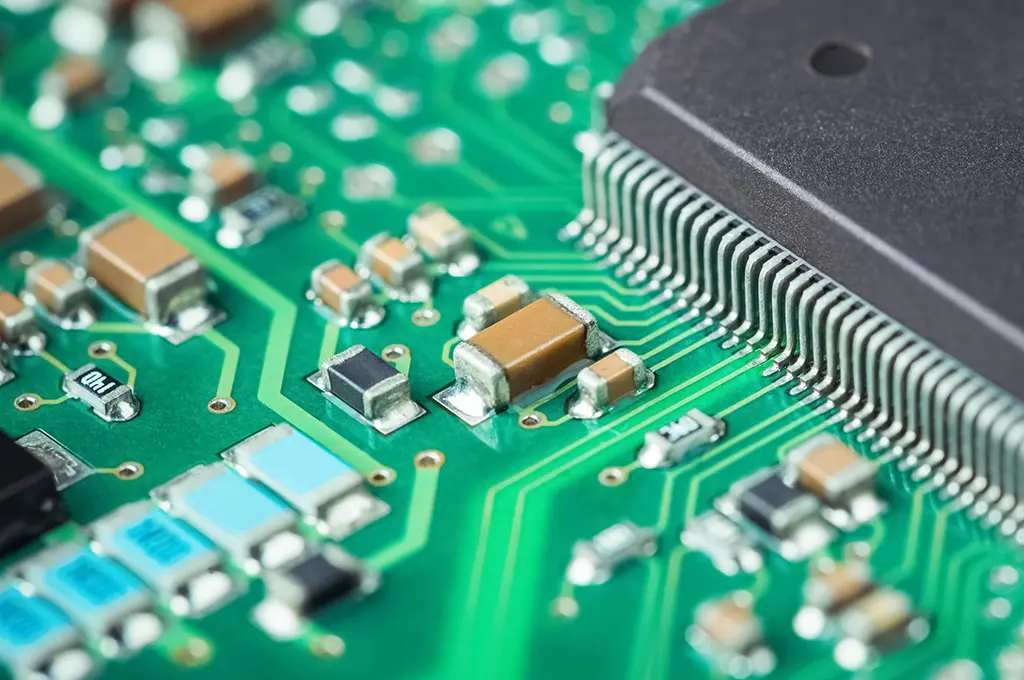
electronic board closeup , microelectronics and semiconductors industry background

electronic board closeup , microelectronics and semiconductors industry background

Source: Quartz article

by Daniel Wolfe. At a recent conference, GoPro CFO Brian McGee made an admission: His company couldn’t manufacture enough of its flagship action camera. McGee said GoPro expected it could sell 5 million cameras, but was only able to make about 4.2 million in 2018.

RelatedPosts

Vishay Introduced Thin Film Submount Platform for Optical and RF Modules

Murata Introduces Crystal and NTC Set for Automotive UWB Timing

Kyocera Developed Multilayer Ceramic Core Substrate for AI Packages

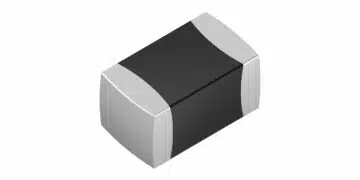
The culprit is a shortage of a tiny electronic component called an MLCC, or multi-layer ceramic capacitor. It costs less than a penny, but is indispensable to today’s products, from consumer electronics to automobiles.

A single GoPro camera contains about 320 MLCCs. Other products have thousands.

TTI Inc., a distributor of electronic components, including MLCCs, called the capacitor situation a “worldwide shortage” in a July 2018 letter to its customers. The message from manufacturers is the same: There is a shortage, has been a shortage, and will continue to be one through 2020.

Already, orders for MLCCs are backed up for nearly a year. That means supply-chain managers need to forecast demand for their products well in advance, and cannot quickly manufacture new devices if those forecasts prove low.

Demand for MLCCs has outstripped supply since 2017, mainly due to the sophistication of electronics in vehicles, the complexity of our mobile phones, and the growing market for internet-of-things devices. For instance, the latest iPhone X requires upwards of 1,000 MLCCs. That’s a 10% increase over previous models, according to the Nikkei Asian Review, and twice as many as the iPhone 6S.

A high-tech automobile like a Tesla requires 10 times more MLCCs than a phone, roughly 10,000 per vehicle. A growing need for these components by car manufacturers is boosting niche suppliers. Half of the sales at America capacitor manufacturer Kemet come from its line of ceramic capacitors, CEO William Lowe told investors during its earnings call in January. On the same call, Kemet announced 14.2% year-over-year revenue growth.

Meanwhile, suppliers have been reticent to make more MLCCs because the profit margins on the components are so slim. Even with price increases over the past year, MLCCs still cost less than half a cent. The largest manufacturer of MLCCs by market share, Murata announced a plan for a 10% increase in production. The Japanese company also increased its prices by as much as 30% in the past year.

It’s a tricky situation for manufacturers in an industry that is typically conservative with its investments. New plants are expensive. The dot-com bust left suppliers sitting on billions of dollars of inventory, causing prices to crash, according to Electronics Purchasing and the Supply Chain News.

Even companies willing to take on the risk of increased production are hampered by equipment availability. Wait times for the tooling equipment needed to set up MLCC-making machines keep growing. John Sarvis, president and CEO of component supplier AVX, told investors during its earnings call in July 2018, that the company had intended to increase production by 20% in 2018. Sarvis said AVX missed that target because of long lead times from equipment manufacturers.

 

Related

Recent Posts

Murata Introduces Crystal and NTC Set for Automotive UWB Timing

30.4.2026
4

YMIN Introduces Polymer Tantalum Capacitors for AI Server SSDs

29.4.2026
10

DigiKey Adds 31k New In‑Stock Parts in Q1 2026

29.4.2026
7

Miniaturization of Tantalum Capacitors: Structural Limit Under Constant Rating

27.4.2026
24

Murata New MLCC Bulk Case Packaging Cuts Packaging Material by 99%

27.4.2026
41

Exxelia Introduces SMD High‑Voltage Mica Capacitors

28.4.2026
19

Modelithics Releases COMPLETE v26.1 for Keysight ADS

23.4.2026
13

April 2026 Interconnect, Passives and Electromechanical Components Market Insights

22.4.2026
74

KYOCERA AVX Introduces Traction‑Grade DC Link Film Capacitors

21.4.2026
47

Upcoming Events

Apr 30
10:00 - 11:00 CDT

Programming Embedded Systems

May 5
16:00 - 17:00 CEST

Understanding and Selecting Capacitors – Fundamentals, Technologies and Latest Trends

May 7
17:00 - 18:00 CEST

From Grid to Motion: How Industrial Electrification is Redefining Power System Design

View Calendar

Popular Posts

  • Buck Converter Design and Calculation

    0 shares
    Share 0 Tweet 0
  • Boost Converter Design and Calculation

    0 shares
    Share 0 Tweet 0
  • Flyback Converter Design and Calculation

    0 shares
    Share 0 Tweet 0
  • LLC Resonant Converter Design and Calculation

    0 shares
    Share 0 Tweet 0
  • MLCC and Ceramic Capacitors

    0 shares
    Share 0 Tweet 0
  • Dual Active Bridge (DAB) Topology

    0 shares
    Share 0 Tweet 0
  • What Electronics Engineer Needs to Know About Passive Low Pass Filters

    0 shares
    Share 0 Tweet 0
  • Capacitor Charging and Discharging

    0 shares
    Share 0 Tweet 0
  • MLCC Case Sizes Standards Explained

    0 shares
    Share 0 Tweet 0
  • Ripple Current and its Effects on the Performance of Capacitors

    3 shares
    Share 3 Tweet 0

Newsletter Subscription


Passive Components Blog

© EPCI - Leading Passive Components Educational and Information Site

  • Home
  • Privacy Policy
  • EPCI Membership & Advertisement
  • About

No Result
View All Result
  • Home
  • Knowledge Blog
  • PCNS

© EPCI - Leading Passive Components Educational and Information Site

This website uses cookies. By continuing to use this website you are giving consent to cookies being used. Visit our Privacy and Cookie Policy.
Go to mobile version