







Passive Components Blog
No Result
View All Result
  • Home
  • NewsFilter
    • All
    • Aerospace & Defence
    • Antenna
    • Applications
    • Automotive
    • Capacitors
    • Circuit Protection Devices
    • electro-mechanical news
    • Filters
    • Fuses
    • Inductors
    • Industrial
    • Integrated Passives
    • inter-connect news
    • Market & Supply Chain
    • Market Insights
    • Medical
    • Modelling and Simulation
    • New Materials & Supply
    • New Technologies
    • Non-linear Passives
    • Oscillators
    • Passive Sensors News
    • Resistors
    • RF & Microwave
    • Telecommunication
    • Weekly Digest

    Circuit Protection Technology Annual Dossier

    ESA SPCD 26 Registration Open

    Capacitances of Nonlinear MLCCs: What Datasheets Don’t Tell You

    Stackpole Releases Automotive Wide‑Termination Resistors

    How a Digital Structural Twin Can Predict Tantalum Capacitor Reliability

    SCHURTER Buys Biaodi to Boost High-Voltage Protection Portfolio

    Binder Hybrid Connector Simplifies One Cable Automation

    Tapped Inductor Buck Converter Fundamentals

    TAIYO YUDEN Releases Mini Metal Power Inductors

    Trending Tags

    • Ripple Current
    • RF
    • Leakage Current
    • Tantalum vs Ceramic
    • Snubber
    • Low ESR
    • Feedthrough
    • Derating
    • Dielectric Constant
    • New Products
    • Market Reports
  • VideoFilter
    • All
    • Antenna videos
    • Capacitor videos
    • Circuit Protection Video
    • Filter videos
    • Fuse videos
    • Inductor videos
    • Inter-Connect Video
    • Non-linear passives videos
    • Oscillator videos
    • Passive sensors videos
    • Resistor videos

    Capacitances of Nonlinear MLCCs: What Datasheets Don’t Tell You

    Tapped Inductor Buck Converter Fundamentals

    Planar vs Conventional Transformer: When it Make Sense

    Modeling Fringing Field Losses in Inductors & Transformers

    Why Power Inductors Use a Ferrite Core With an Air Gap

    Transformer-Based Power-Line Harvester Magnetic Design

    Thermal Modeling of Magnetics

    Standard vs Planar LLC transformers Comparison for Battery Chargers

    How Modern Tools Model Magnetic Components for Power Electronics

    Trending Tags

    • Capacitors explained
    • Inductors explained
    • Resistors explained
    • Filters explained
    • Application Video Guidelines
    • EMC
    • New Products
    • Ripple Current
    • Simulation
    • Tantalum vs Ceramic
  • Knowledge Blog
  • DossiersNew
  • Suppliers
    • Who is Who
  • PCNS
    • PCNS 2025
    • PCNS 2023
    • PCNS 2021
    • PCNS 2019
    • PCNS 2017
  • Events
  • Home
  • NewsFilter
    • All
    • Aerospace & Defence
    • Antenna
    • Applications
    • Automotive
    • Capacitors
    • Circuit Protection Devices
    • electro-mechanical news
    • Filters
    • Fuses
    • Inductors
    • Industrial
    • Integrated Passives
    • inter-connect news
    • Market & Supply Chain
    • Market Insights
    • Medical
    • Modelling and Simulation
    • New Materials & Supply
    • New Technologies
    • Non-linear Passives
    • Oscillators
    • Passive Sensors News
    • Resistors
    • RF & Microwave
    • Telecommunication
    • Weekly Digest

    Circuit Protection Technology Annual Dossier

    ESA SPCD 26 Registration Open

    Capacitances of Nonlinear MLCCs: What Datasheets Don’t Tell You

    Stackpole Releases Automotive Wide‑Termination Resistors

    How a Digital Structural Twin Can Predict Tantalum Capacitor Reliability

    SCHURTER Buys Biaodi to Boost High-Voltage Protection Portfolio

    Binder Hybrid Connector Simplifies One Cable Automation

    Tapped Inductor Buck Converter Fundamentals

    TAIYO YUDEN Releases Mini Metal Power Inductors

    Trending Tags

    • Ripple Current
    • RF
    • Leakage Current
    • Tantalum vs Ceramic
    • Snubber
    • Low ESR
    • Feedthrough
    • Derating
    • Dielectric Constant
    • New Products
    • Market Reports
  • VideoFilter
    • All
    • Antenna videos
    • Capacitor videos
    • Circuit Protection Video
    • Filter videos
    • Fuse videos
    • Inductor videos
    • Inter-Connect Video
    • Non-linear passives videos
    • Oscillator videos
    • Passive sensors videos
    • Resistor videos

    Capacitances of Nonlinear MLCCs: What Datasheets Don’t Tell You

    Tapped Inductor Buck Converter Fundamentals

    Planar vs Conventional Transformer: When it Make Sense

    Modeling Fringing Field Losses in Inductors & Transformers

    Why Power Inductors Use a Ferrite Core With an Air Gap

    Transformer-Based Power-Line Harvester Magnetic Design

    Thermal Modeling of Magnetics

    Standard vs Planar LLC transformers Comparison for Battery Chargers

    How Modern Tools Model Magnetic Components for Power Electronics

    Trending Tags

    • Capacitors explained
    • Inductors explained
    • Resistors explained
    • Filters explained
    • Application Video Guidelines
    • EMC
    • New Products
    • Ripple Current
    • Simulation
    • Tantalum vs Ceramic
  • Knowledge Blog
  • DossiersNew
  • Suppliers
    • Who is Who
  • PCNS
    • PCNS 2025
    • PCNS 2023
    • PCNS 2021
    • PCNS 2019
    • PCNS 2017
  • Events
No Result
View All Result
Passive Components Blog
No Result
View All Result

Skeleton Ultracapacitor System Unscrambles the Power Grid

1.4.2020
Reading Time: 3 mins read
A A

Source: Skeleton news

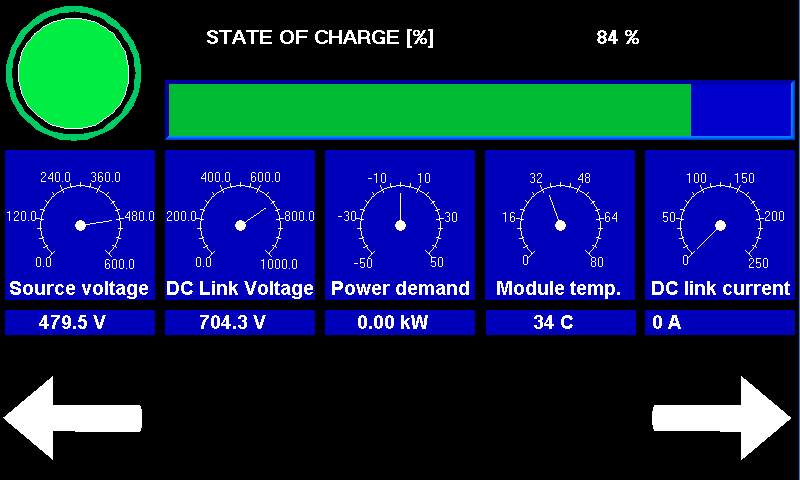
Skeleton Technologies provides rapid-response power using ultracapacitors.  A world first in the 100% renewable energy Scottish independent microgrid.

RelatedPosts

Circuit Protection Technology Annual Dossier

ESA SPCD 26 Registration Open

Capacitances of Nonlinear MLCCs: What Datasheets Don’t Tell You

SkelGrid, a fast response ultracapacitor energy storage, and uninterruptible power system, assists the Kinetic Traction flywheel as part of a demand response system to prevent Eigg’s microgrid from being totally dependent on the Lead-Acid backup battery solution in case of rapid electricity demand or supply changes.

Lead-acid batteries suffer from whiplash effects and are sensitive to high depth of discharge, this reduces the array lifetime, increases array size, and it is the costliest part of the backup system to replace.  The idea with the fast response units is to preserve the battery charge and avoid rapid charge-discharge cycles on the batteries.  In other words, shaving the peaks and troughs of the power demand.

The ultracapacitor solution brought by Skeleton Technologies’ SkelGrid allows for the frontline fast response to take place before the flywheel is activated.  This results in a much longer battery life as the power variations are taken care of by its fast response and over 1 million cycle capability.

Without the fast response system, there would be a voltage drop proportional to demand intensity and this would result in a voltage variation on Eigg’s microgrid that could trigger client systems shutdowns.  The fast response systems can alleviate this by providing the power during the first seconds.

ioe-wide-1

The flywheels and ultracapacitors of Eigg work together in ensuring that all the peaks and troughs can be taken care of before the batteries start discharging.

“We are delighted to be working with Kinetic Traction and Skeleton Technologies to implement graphene-based ultra-capacitor energy storage onto our advanced micro-grid.  We have been using the flywheel technology to support small dips in our power grid for many years already and the addition of ultra-capacitors is another improvement that will prolong the life of our batteries and increase the speed of response of the electricity grid during disturbances.” Stated Mr. Robert Wallace, Official Representative at Eigg Electric
LiveEigg

“We have been able to showcase the performance of the flywheel and ultra-capacitors on the Isle of Eigg micro-grid, we believe this combination of flywheel and ultra-capacitor in a frequency regulation application is truly a world first!  We have been working closely with Eigg Electric since the flywheel was successfully installed in 2014.  The island offers a unique opportunity to showcase new technology because of the high penetration of renewable energy and remote location with no grid connection.  The microgrid is known worldwide for having a diverse mix of renewable energy (Hydro, Wind, Solar) and the addition of fast responding ultracapacitors and flywheels makes it the most advanced Islanded Microgrid in the world.  We are exceptionally pleased that we were able to successfully complete this project and would like to thank the Islanders and Eigg Electric for their vision and support making it happen.”  Commented Andrew Goodwin, Chief Technical Officer – Kinetic Traction

Skeleton Technologies CEO, Mr. Taavi Madiberk said: – “SkelGrid has the smallest footprint and cost per kW second.  Hybrid energy storage comprising ultracapacitors coupled with other energy storage technologies such as Li-ion, lead-acid batteries or flywheels, is the future.  Today, the Isle of Eigg boasts the first ever electricity grid running totally from renewable energy.  Many still think this is not possible, Eigg and its inhabitants are proving them wrong every single day.”


Related

Recent Posts

ESA SPCD 26 Registration Open

15.5.2026
10

Capacitances of Nonlinear MLCCs: What Datasheets Don’t Tell You

14.5.2026
52

Stackpole Releases Automotive Wide‑Termination Resistors

14.5.2026
21

How a Digital Structural Twin Can Predict Tantalum Capacitor Reliability

14.5.2026
42

SCHURTER Buys Biaodi to Boost High-Voltage Protection Portfolio

14.5.2026
32

Binder Hybrid Connector Simplifies One Cable Automation

13.5.2026
16

Planar vs Conventional Transformer: When it Make Sense

11.5.2026
67

Researchers Propose Next‑Gen Compact Memory Using Ultra-thin Ferroelectric Capacitors

11.5.2026
49

Nichicon ADN Automotive Hybrid Aluminum Capacitors Now Available in EMEA

11.5.2026
38

Upcoming Events

May 19
16:00 - 17:00 CEST

Designing Qi2 Wireless Power Systems: Practical Development and EMC Optimization

Jun 2
16:00 - 17:00 CEST

Calculation, Simulation and Measurement of 800V EMC Filters

Jun 16
16:00 - 17:00 CEST

EMC with EMC – EMC‑compliant design with electromechanical connectors

View Calendar

Popular Posts

  • Buck Converter Design and Calculation

    0 shares
    Share 0 Tweet 0
  • Boost Converter Design and Calculation

    0 shares
    Share 0 Tweet 0
  • Flyback Converter Design and Calculation

    0 shares
    Share 0 Tweet 0
  • LLC Resonant Converter Design and Calculation

    0 shares
    Share 0 Tweet 0
  • MLCC and Ceramic Capacitors

    0 shares
    Share 0 Tweet 0
  • Capacitor Charging and Discharging

    0 shares
    Share 0 Tweet 0
  • What Electronics Engineer Needs to Know About Passive Low Pass Filters

    0 shares
    Share 0 Tweet 0
  • Dual Active Bridge (DAB) Topology

    0 shares
    Share 0 Tweet 0
  • Ripple Current and its Effects on the Performance of Capacitors

    3 shares
    Share 3 Tweet 0
  • MLCC Case Sizes Standards Explained

    0 shares
    Share 0 Tweet 0

Newsletter Subscription


Passive Components Blog

© EPCI - Leading Passive Components Educational and Information Site

  • Home
  • Privacy Policy
  • EPCI Membership & Advertisement
  • About

No Result
View All Result
  • Home
  • Knowledge Blog
  • PCNS

© EPCI - Leading Passive Components Educational and Information Site

This website uses cookies. By continuing to use this website you are giving consent to cookies being used. Visit our Privacy and Cookie Policy.
Go to mobile version