





Passive Components Blog
No Result
View All Result
  • Home
  • NewsFilter
    • All
    • Aerospace & Defence
    • Antenna
    • Applications
    • Automotive
    • Capacitors
    • Circuit Protection Devices
    • electro-mechanical news
    • Filters
    • Fuses
    • Inductors
    • Industrial
    • Integrated Passives
    • inter-connect news
    • Market & Supply Chain
    • Market Insights
    • Medical
    • Modelling and Simulation
    • New Materials & Supply
    • New Technologies
    • Non-linear Passives
    • Oscillators
    • Passive Sensors News
    • Resistors
    • RF & Microwave
    • Telecommunication
    • Weekly Digest

    Wk 11 Electronics Supply Chain Digest

    Binder Extends NCC Circular Connectors for Harsh Environments

    Standard vs Planar LLC transformers Comparison for Battery Chargers

    Würth Elektronik and Grinn Launch Edge AI Cooperation

    Bourns Expanded Semi-Shielded Low Profile Automotive Power Inductor

    Peak Nano to Develop Fusion Grade High Energy Film Capacitors

    Murata New Vibration Sensor Targets High‑Frequency Predictive Maintenance

    Kyocera Releases 30fs Jitter Differential Clock Oscillator

    Panasonic Expands Automotive PP Film Capacitors Voltage Range

    Trending Tags

    • Ripple Current
    • RF
    • Leakage Current
    • Tantalum vs Ceramic
    • Snubber
    • Low ESR
    • Feedthrough
    • Derating
    • Dielectric Constant
    • New Products
    • Market Reports
  • VideoFilter
    • All
    • Antenna videos
    • Capacitor videos
    • Circuit Protection Video
    • Filter videos
    • Fuse videos
    • Inductor videos
    • Inter-Connect Video
    • Non-linear passives videos
    • Oscillator videos
    • Passive sensors videos
    • Resistor videos

    Standard vs Planar LLC transformers Comparison for Battery Chargers

    How Modern Tools Model Magnetic Components for Power Electronics

    Advanced Loss Modeling for Planar Magnetics in the Frenetic Planar Tool

    2026 Power Magnetics Design Trends: Flyback, DAB and Planar

    Enabling Software‑Defined Vehicle Architectures: Automotive Ethernet and Zonal Smart Power

    Calculating Resistance Value of a Flyback RC Snubber 

    One‑Pulse Characterization of Nonlinear Power Inductors

    Thermistor Linearization Challenges

    Coaxial Connectors and How to Connect with PCB

    Trending Tags

    • Capacitors explained
    • Inductors explained
    • Resistors explained
    • Filters explained
    • Application Video Guidelines
    • EMC
    • New Products
    • Ripple Current
    • Simulation
    • Tantalum vs Ceramic
  • Knowledge Blog
  • DossiersNew
  • Suppliers
    • Who is Who
  • PCNS
    • PCNS 2025
    • PCNS 2023
    • PCNS 2021
    • PCNS 2019
    • PCNS 2017
  • Events
  • Home
  • NewsFilter
    • All
    • Aerospace & Defence
    • Antenna
    • Applications
    • Automotive
    • Capacitors
    • Circuit Protection Devices
    • electro-mechanical news
    • Filters
    • Fuses
    • Inductors
    • Industrial
    • Integrated Passives
    • inter-connect news
    • Market & Supply Chain
    • Market Insights
    • Medical
    • Modelling and Simulation
    • New Materials & Supply
    • New Technologies
    • Non-linear Passives
    • Oscillators
    • Passive Sensors News
    • Resistors
    • RF & Microwave
    • Telecommunication
    • Weekly Digest

    Wk 11 Electronics Supply Chain Digest

    Binder Extends NCC Circular Connectors for Harsh Environments

    Standard vs Planar LLC transformers Comparison for Battery Chargers

    Würth Elektronik and Grinn Launch Edge AI Cooperation

    Bourns Expanded Semi-Shielded Low Profile Automotive Power Inductor

    Peak Nano to Develop Fusion Grade High Energy Film Capacitors

    Murata New Vibration Sensor Targets High‑Frequency Predictive Maintenance

    Kyocera Releases 30fs Jitter Differential Clock Oscillator

    Panasonic Expands Automotive PP Film Capacitors Voltage Range

    Trending Tags

    • Ripple Current
    • RF
    • Leakage Current
    • Tantalum vs Ceramic
    • Snubber
    • Low ESR
    • Feedthrough
    • Derating
    • Dielectric Constant
    • New Products
    • Market Reports
  • VideoFilter
    • All
    • Antenna videos
    • Capacitor videos
    • Circuit Protection Video
    • Filter videos
    • Fuse videos
    • Inductor videos
    • Inter-Connect Video
    • Non-linear passives videos
    • Oscillator videos
    • Passive sensors videos
    • Resistor videos

    Standard vs Planar LLC transformers Comparison for Battery Chargers

    How Modern Tools Model Magnetic Components for Power Electronics

    Advanced Loss Modeling for Planar Magnetics in the Frenetic Planar Tool

    2026 Power Magnetics Design Trends: Flyback, DAB and Planar

    Enabling Software‑Defined Vehicle Architectures: Automotive Ethernet and Zonal Smart Power

    Calculating Resistance Value of a Flyback RC Snubber 

    One‑Pulse Characterization of Nonlinear Power Inductors

    Thermistor Linearization Challenges

    Coaxial Connectors and How to Connect with PCB

    Trending Tags

    • Capacitors explained
    • Inductors explained
    • Resistors explained
    • Filters explained
    • Application Video Guidelines
    • EMC
    • New Products
    • Ripple Current
    • Simulation
    • Tantalum vs Ceramic
  • Knowledge Blog
  • DossiersNew
  • Suppliers
    • Who is Who
  • PCNS
    • PCNS 2025
    • PCNS 2023
    • PCNS 2021
    • PCNS 2019
    • PCNS 2017
  • Events
No Result
View All Result
Passive Components Blog
No Result
View All Result

AVX Extends Conductive Polymer Capacitor Series With A New Case Size & Improved Energy Ratings

8.11.2016
Reading Time: 2 mins read
A A

source: AVX news

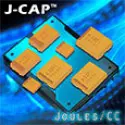
FOUNTAIN INN, S.C. (November 7, 2016) – AVX Corporation, a leading manufacturer and supplier of passive components and interconnect solutions, has extended its J-CAP™ Series conductive polymer capacitors with conductive polymer electrodes, which already delivered the highest energy per volume (Joules/cc) of any SMT capacitor available on the market, with the addition of a new case size and several improved energy ratings.

RelatedPosts

Wk 11 Electronics Supply Chain Digest

Binder Extends NCC Circular Connectors for Harsh Environments

Standard vs Planar LLC transformers Comparison for Battery Chargers

Now available in a large 7361-15 case with a low 1.5mm height profile, and capable of delivering up to an industry-leading 38.8mJ in low-profile SMD designs, J-CAP Series capacitors each feature a conductive polymer electrode that exhibits a benign failure mode under recommended use conditions, and undertab terminations that enable high both volumetric efficiency in small, low-profile case sizes and close positioning for efficient, high-density PCB layouts. These attributes, combined with the series’ high energy, low ESR (50–300mΩ at 100kHz), and low DCL (0.1CV), allow J-CAP capacitors to deliver compact and cost effective high-energy solutions ideal for backup power applications in demanding solid-state drives (SSDs)— including multilevel cells (MLCs), single-level cells (SLCs), enterprise flash drives (EFDs), and PCI Express (PCIe) drives — in addition to battery-powered portable equipment, industrial alarms, smart power meters, and other mobile devices.

“Released in response to SSD designers’ footprint concerns and high energy requirements, especially for small form factor SSDs, the J-CAP Series’ new 7361-15 case size provides a low profile (1.5mm) alternative to its 7361-20 case, which features the same maximal footprint, and the new energy ratings,” said Allen Mayar, product marketing manager at AVX. “Additionally, the energy rating of the J-Cap series now extends up to 38.8mJ, further improving the superlative volumetric efficiency for which the series is highly regarded.”

Now available in five case sizes with newly extended maximum energy ratings — EIA Metric 3528-10 (AVX “L” case, max 4.7mJ), 3528-12 (“T,” max 4.7mJ), 7343-15 (“X,” max 18.2mJ), 7361-15 (“3,” max 19.6mJ), and 7361-20 (“4,” max 38.8mJ) — J-CAP Series conductive polymer solid electrolytic capacitors currently feature capacitance values spanning 4.7µF to 1,500µF with a ±20% capacitance tolerance. Rated for operating temperatures spanning -55°C to +105°C, and 3x reflow compatible at 260°C, the series is also currently available with four voltage ratings: 6.3V, 16V, 25V, and 35V. Typical derating is 10% for ≤16V and 20% for 20V and higher voltages.

RoHS compliant and lead-free compatible, J-CAP Series capacitors are supplied with pure tin-plated terminations, and are shipped on 7” reels. Lead-time for the series is 12 weeks.


Related

Recent Posts

Binder Extends NCC Circular Connectors for Harsh Environments

13.3.2026
2

Standard vs Planar LLC transformers Comparison for Battery Chargers

13.3.2026
13

Bourns Expanded Semi-Shielded Low Profile Automotive Power Inductor

12.3.2026
13

Peak Nano to Develop Fusion Grade High Energy Film Capacitors

11.3.2026
28

Murata New Vibration Sensor Targets High‑Frequency Predictive Maintenance

10.3.2026
18

Panasonic Expands Automotive PP Film Capacitors Voltage Range

9.3.2026
23

Panasonic Extends Automotive Power Inductor Line

9.3.2026
30

February 2026 Interconnect, Passives and Electromechanical Components Market Insights

9.3.2026
55

YAGEO Presents 3.6 kW LLC Transformer Platform

6.3.2026
51

Upcoming Events

Mar 19
13:00 - 14:00 CDT

Smart Consideration of Inductor Thermal Performance

Mar 21
All day

PSMA Capacitor Workshop 2026

Apr 21
16:00 - 17:00 CEST

Heatsink Solutions: Thermal Management in electronic devices

View Calendar

Popular Posts

  • Buck Converter Design and Calculation

    0 shares
    Share 0 Tweet 0
  • Boost Converter Design and Calculation

    0 shares
    Share 0 Tweet 0
  • Flyback Converter Design and Calculation

    0 shares
    Share 0 Tweet 0
  • LLC Resonant Converter Design and Calculation

    0 shares
    Share 0 Tweet 0
  • MLCC Manufacturers Consider Price Increase as AI Demand Outpaces Supply

    0 shares
    Share 0 Tweet 0
  • Dual Active Bridge (DAB) Topology

    0 shares
    Share 0 Tweet 0
  • Ripple Current and its Effects on the Performance of Capacitors

    3 shares
    Share 3 Tweet 0
  • MLCC and Ceramic Capacitors

    0 shares
    Share 0 Tweet 0
  • MLCC Case Sizes Standards Explained

    0 shares
    Share 0 Tweet 0
  • 3-Phase EMI Filter Design, Simulation, Calculation and Test

    0 shares
    Share 0 Tweet 0

Newsletter Subscription


Passive Components Blog

© EPCI - Leading Passive Components Educational and Information Site

  • Home
  • Privacy Policy
  • EPCI Membership & Advertisement
  • About

No Result
View All Result
  • Home
  • Knowledge Blog
  • PCNS

© EPCI - Leading Passive Components Educational and Information Site

This website uses cookies. By continuing to use this website you are giving consent to cookies being used. Visit our Privacy and Cookie Policy.
Go to mobile version