


source: Intelligent Aerospace article
December 8, 2017 By Dan Friedlander retired following 44 years in component engineering
Dealing with electrical, electronic, and electromechanical (EEE) components for any application is a complex, multi-disciplinary task. Those who are specialized in engineering should be aware of their creativity cost aspects. Design-to-cost (DTC) is a cost management technique to be applied from the earliest concept decisions. Wrong cost estimation decisions in the field may later become a financial disaster. As suggested by the term design-to-cost, symbiosis between engineering and economy designs the costs “into the product.”
Cost savings is an important goal, but not at any cost. If not approached with technical reasoning, cost savings is a dangerous pitfall. Commercial competitiveness to reduce cost and improve performance relative to commercial applications can jeopardize reliability, security, or system longevity. Unbiased cost savings assessment shall be performed in order to ensure proper decision making. Of course, the penalty for the cost savings (e.g., risk, etc.) shall be assessed as well.
The military/space EEE components methodology has been developed in the ’60s, when there were no availability problems. In the ’90s, the global military/space EEE components market was massively left by the components manufacturers, following business decisions, based on low demand.
The main reason to go for EEE commercial off-the-shelf (COTS) components for military and space is market non-availability of traditional level components due to diminishing sources. In addition, the military budgets reductions had further pushed the U.S. Department of Defense (DoD) in 1994 to transit to an alternative, technically advanced, cost-effective methodology of use of EEE COTS components in military applications.
Military applications can benefit from cost saving, providing that the EEE COTS components are used “as is” (as purchased). After two-plus decades of use of EEE COTS components in military applications the transit decision has been proved as a right one.
The space applications differ from the military ones. EEE COTS components cannot be used in space applications as is. The space applications are not maintainable (not yet). They have to function in exclusive environmental stresses (radiation, etc.) to be dealt with. Consequently, the risk of failure or even total loss is higher. Some extra, expensive testing is necessary.
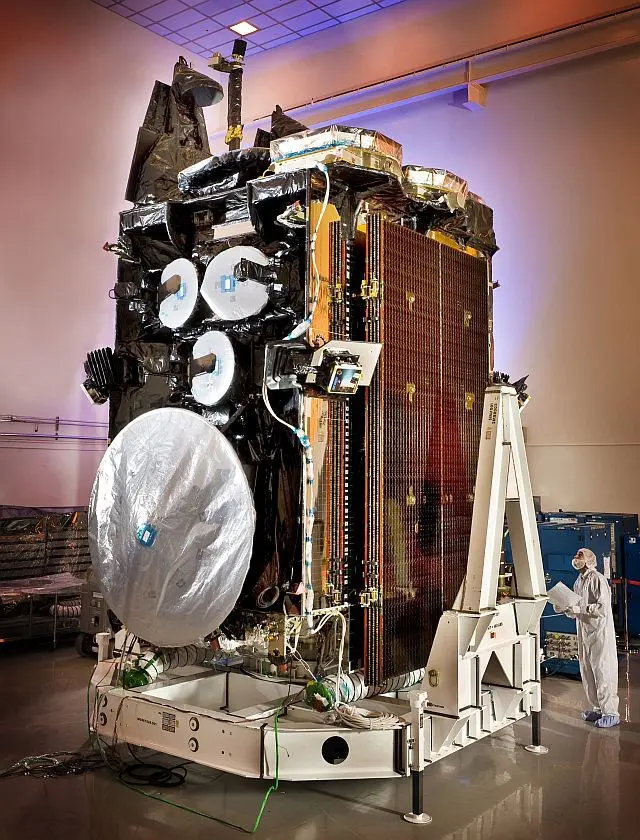
Usually, the cost of a satellite and its launch is high. Cost savings is an important factor in making the space application more affordable within the allocated budgets. The quality and the reliability of the used EEE components (regardless of using the traditional methodology or the COTS one) shall be optimized for the specific mission. The cost of quality shall be managed properly. Saying that, once again, it has to be stressed that components availability is the leading factor also in the case of space applications.
The term “COTS”
The “COTS” definition is: short for commercial off-the-shelf, an adjective that describes software or hardware products that are ready-made and available for sale to the general public. A COTS (commercial off-the-shelf) product is one that is used “as is.”
It was already mentioned that EEE COTS components cannot be used in space applications as is. Don’t be confused, when estimating cost.
When one wants to find out how much urgency and effort dedicate space agencies and others to the issue of formalizing the usage of EEE COTS components in space applications to secure their availability, s/he may be confused by huge and urgent activities dedicated by NASA and others to COTS. Don’t jump to the wrong conclusion.
This time we are talking about another term named “COTS.” This COTS definition is: Short for commercial orbital transportation services, COTS was created by NASA to mitigate the loss of launch capability for cargo and crew supply lines to the International Space Station (ISS), following the 2010 retirement of the shuttle fleet.
Although in this case, we deal with LEO space applications, even manned, but this is not a typical low-Earth-orbit (LEO) application. Those are very short-duration missions. The publicized cost savings and the less publicized EEE components policy has to be understood accordingly.
Cost of Quality (COQ)
“It’s a term that’s widely used and widely misunderstood. The “cost of quality” isn’t the price of creating a quality product. It’s the cost of NOT creating a quality product. ‘The cost of improving quality is less than the resultant savings’: W.E. Deming promoted this view,” according to Total Quality Management.
The savings result from less rework, scrap, and other direct expenses related to defects. This paved the way of continuous process improvement, best applied to COTS. There is an urgent need for the policymakers to prioritize conceptually the process control methodology as a preventive tool. “Highest quality is lowest cost” is a Japanese manufacturing aphorism.
The cost of failure detection and repair, increases with the complexity of the test object. Therefore, a shift of the test effort from component level to system final test will not reduce costs. It is estimated that the relative cost of failure is: at component level 1, at board/module level 10, final subsystem test 100, system test 1000. Regarding to the complexity of the test object, it has to be mentioned that the amount of integration of an EEE component (like system on a chip) may prohibit the user to test it efficiently at component level.
Cost comparisons
In order not to be misled by superficial, irresponsible cost comparisons, the following shall be understood. Component Ownership Cost = Component Pre-procurement Cost (NRE) + Component Procurement Cost (RE) + Component Post Procurement Cost (NRE).
The use of COTS in space is not a magic road to cost savings. In order not to misinterpret the term “cost savings” all the terms of the above equation shall be considered. When somebody reports a cost savings of “X%”, that alone is meaningless if the “100%” reference is not specified. What is the “100%” reference? I assume the COTS are compared to use of space/military traditionally processed components. Is the comparison “apple to apple” (e.g., ownership cost versus ownership cost, etc.)? Is the specified “X%” cost savings calculated at component level, board level, subsystem level, etc.?
The RE term of the equation is determined by the component manufacturer, the user’s negotiation ability and the user’s procurement strategy. The NRE term is determined by the user’s established extra testing depth, as a function of the target mission and the acceptable risk to be taken. The above NRE costs have been named by original equipment manufacturers as the most expensive part of the space EEE components budget.
Cost savings
Although this article is addressing the component level, it is worth to mention cost issues also at system, subsystem, module, board level, containing EEE COTS components. Of course, the EEE COTS components is strongly influenced by the criticality of the specific mission, by the acceptable level of risk.
Satellite:
At system level, there are several cost savings options, some in infancy stage, some in more advance stage:
Smaller satellites
The rationale for miniaturizing satellites is to reduce the cost: heavier satellites require larger rockets with greater thrust that also has greater cost to finance. In contrast, smaller and lighter satellites require smaller and cheaper launch vehicles and can sometimes be launched in multiples. They can also be launched ‘piggyback’, using excess capacity on larger launch vehicles. Miniaturized satellites allow for cheaper designs as well as ease of mass production.
Being cheaper, subject to mission criticality, higher calculated risk taking may be considered. That reduces the cost of quality. The LEO small satellites are the first candidates for massive across the board EEE COTS components usage.
Using EEE COTS components instead of space/military components can decrease the size, weight, and power (SWaP) of a satellite, resulting in cost saving.
Constellations of small satellites
Constellations reduces the cost by entering the new era of satellites mass production with all its known beneficial attributes. Constellations allow for higher calculated risk taking, considering lower satellite cost and in orbit redundancy.
Functional Disaggregation
Functional disaggregation is a space architecture concept that entails distributing capabilities across a larger number of satellite platforms. It means that functions previously contained on a single satellite are now dispersed across several smaller, less complex, and more affordable satellites. Disaggregation can increase resilience by dispersing capability to avoid single-point failures that could cause a catastrophic outage.
Such architecture allows for higher calculated risk taking, considering lower satellite cost, less vulnerability and better resilience option in critical missions (e.g. in military missions).
Block production/buys
Cost savings can be addressed by economy of scale. This means multi-satellite production for new acquisition strategies that rely on multi-satellite purchases.
At board/module/subsystem level
Transit to EEE COTS components usage opens the formal usage of COTS board/module/subsystem level. Of course a proper new COTS methodology shall be developed for such items. The methodology shall address the contained EEE COTS components as well as the entire product.
The equivalent term in the traditional methodology is Non Developmental Item (NDI). If the NDI meets the requirements of the space mission, cost savings may be achieved by no need to allocate resources for designing and manufacturing.
At component level
The EEE COTS component selection process is more complex than in the case of selecting military/space grade EEE components. The pre-procurement and the post procurement components quality-related activities incur higher costs than in the case of usage of military/space grade EEE components. These prevention costs are incurred to prevent or avoid quality problems.
Cost savings may be achieved by:
- Selecting components with available radiation data.
- Selecting components with known space heritage in similar missions.
- Standardization.
- Component Types Reduction (minimum used line items).
- Block component buys.
- Optimization of the depth of post procurement testing (electrical, environmental, DPA, radiation).
- Central/Coordinated Procurement at satellite level, run by prime contractor.
- Consolidated breadboard, prototype, qualification model (QM), proto-qualification model (PQFM), flight model (FM).
The low procurement EEE COTS components cost (RE) allows for early procurement of the same components used for all stages in non-flight and flight configuration. This is a huge benefit, not available/affordable across the board for the military/space grade EEE Components. Such a strategy may save time (time means cost) to allow for possible lot rejects and may avoid unexpected delay (delay means cost).
Satellite cost savings potential
At component level cost, following the present official policy components the EEE COTS component ownership cost is higher than the ready to be used space level components. A higher integration of COTS may alleviate such cost comparisons by taking into account the cost of all the space parts functionally replaced by them.
The EEE components cost is absolutely high. However, it has to be stressed that relatively it is a small part of a satellite cost. At present, the cost of EEE components, including semiconductors, represent only around 5 to 10 percent of total space system cost.
Looking at system level, even if the used EEE components can be obtained for free, the cost savings is too small to meet the future mass produced constellation satellite cost goals. Looking at subsystem level, the percentage is higher than at system level. Hopefully, Pareto Analysis has been performed for all the other than EEE components satellite activities to find potential cost saving, to ease the burden on the critical reliability cornerstone (EEE COTS components).
Satellite launch cost saving:
The costs of using a well-tested system to launch payloads to LEO are high. Prices range from about $4,300 per kilogram (kg) for a Proton launch to about $40,000/kg (in U.S. dollars) for a Pegasus launch (2004). Some systems under development, such as the SpaceX Falcon Heavy, offer rates as low as $1,600/kg, when the launch vehicle is transporting its maximum delivered cargo weight. As an indication for the progress made, the $1,100/kg goal stated by Musk in 2011 is 35 percent of the cost of the lowest-cost-per-pound LEO-capable launch system in a circa-2000 study. (Figures taken from Wikipedia.)
Cost savings may be achieved by:
- Decrease of satellite weight and size.
- Multi-satellites launch.
- Reusable launcher launch.
- In orbit refueling.
Conclusion
The main reason to use EEE COTS components in space applications is non-availability of ready-to-use space/military components. The diminishing of the space/military components sourcing is driven by business decisions in a market dominated 99.5% by commercial demand.
The small components demand of the space industry is not capable to sustain the diminished sourcing of components traditionally intended for its products. The longevity of the relevant market is not predictable at this stage. However, the trend is clear: The use of EEE COTS components is inevitable.
The present official commercial EEE components use policies are rather addenda to the traditional space methodology than a needed culture change.
At component-level cost, following the present official policy components the EEE COTS component ownership cost is higher than the ready to be used space level components. The selection of EEE COTS components is penalized, under “last resort” rules. It seems that the policy makers in NASA and ESA are confident that the availability is not a problem to be worried about. We learn from history that we do not learn from history. The reality speaks for itself.
Nevertheless, use of EEE COTS components within a risk management regime can lead indirectly to cost saving, especially in the SWaP (size, weight, and power) area. The technical advantage of EEE COTS components is better performance and higher integration. These features are vital to implementing speedy, highly sophisticated satellite designs. The low RE procurement cost of EEE COTS components should not lead to the illusion of big cost savings.
Author biography
The author, Dan Friedlander, graduated Engineering School/Tel Aviv University with a degree in physics (1965-1969). He has 44 years of experience in Component Engineering at MBT/Israeli Aerospace Industries (1969 to 2013), as Head of Components Engineering. As such, he was responsible for all aspects of EEE components – including policymaking, standardization at corporate level, approval, etc. – for military and space applications. Now retired, Friedlander is an industry consultancy (2013 to present).