












Passive Components Blog
No Result
View All Result
  • Home
  • NewsFilter
    • All
    • Aerospace & Defence
    • Antenna
    • Applications
    • Automotive
    • Capacitors
    • Circuit Protection Devices
    • electro-mechanical news
    • Filters
    • Fuses
    • Inductors
    • Industrial
    • Integrated Passives
    • inter-connect news
    • Market & Supply Chain
    • Market Insights
    • Medical
    • Modelling and Simulation
    • New Materials & Supply
    • New Technologies
    • Non-linear Passives
    • Oscillators
    • Passive Sensors News
    • Resistors
    • RF & Microwave
    • Telecommunication
    • Weekly Digest

    Binder Extends NCC Circular Connectors for Harsh Environments

    Standard vs Planar LLC transformers Comparison for Battery Chargers

    Würth Elektronik and Grinn Launch Edge AI Cooperation

    Bourns Expanded Semi-Shielded Low Profile Automotive Power Inductor

    Peak Nano to Develop Fusion Grade High Energy Film Capacitors

    Murata New Vibration Sensor Targets High‑Frequency Predictive Maintenance

    Kyocera Releases 30fs Jitter Differential Clock Oscillator

    Panasonic Expands Automotive PP Film Capacitors Voltage Range

    Panasonic Extends Automotive Power Inductor Line

    Trending Tags

    • Ripple Current
    • RF
    • Leakage Current
    • Tantalum vs Ceramic
    • Snubber
    • Low ESR
    • Feedthrough
    • Derating
    • Dielectric Constant
    • New Products
    • Market Reports
  • VideoFilter
    • All
    • Antenna videos
    • Capacitor videos
    • Circuit Protection Video
    • Filter videos
    • Fuse videos
    • Inductor videos
    • Inter-Connect Video
    • Non-linear passives videos
    • Oscillator videos
    • Passive sensors videos
    • Resistor videos

    Standard vs Planar LLC transformers Comparison for Battery Chargers

    How Modern Tools Model Magnetic Components for Power Electronics

    Advanced Loss Modeling for Planar Magnetics in the Frenetic Planar Tool

    2026 Power Magnetics Design Trends: Flyback, DAB and Planar

    Enabling Software‑Defined Vehicle Architectures: Automotive Ethernet and Zonal Smart Power

    Calculating Resistance Value of a Flyback RC Snubber 

    One‑Pulse Characterization of Nonlinear Power Inductors

    Thermistor Linearization Challenges

    Coaxial Connectors and How to Connect with PCB

    Trending Tags

    • Capacitors explained
    • Inductors explained
    • Resistors explained
    • Filters explained
    • Application Video Guidelines
    • EMC
    • New Products
    • Ripple Current
    • Simulation
    • Tantalum vs Ceramic
  • Knowledge Blog
  • DossiersNew
  • Suppliers
    • Who is Who
  • PCNS
    • PCNS 2025
    • PCNS 2023
    • PCNS 2021
    • PCNS 2019
    • PCNS 2017
  • Events
  • Home
  • NewsFilter
    • All
    • Aerospace & Defence
    • Antenna
    • Applications
    • Automotive
    • Capacitors
    • Circuit Protection Devices
    • electro-mechanical news
    • Filters
    • Fuses
    • Inductors
    • Industrial
    • Integrated Passives
    • inter-connect news
    • Market & Supply Chain
    • Market Insights
    • Medical
    • Modelling and Simulation
    • New Materials & Supply
    • New Technologies
    • Non-linear Passives
    • Oscillators
    • Passive Sensors News
    • Resistors
    • RF & Microwave
    • Telecommunication
    • Weekly Digest

    Binder Extends NCC Circular Connectors for Harsh Environments

    Standard vs Planar LLC transformers Comparison for Battery Chargers

    Würth Elektronik and Grinn Launch Edge AI Cooperation

    Bourns Expanded Semi-Shielded Low Profile Automotive Power Inductor

    Peak Nano to Develop Fusion Grade High Energy Film Capacitors

    Murata New Vibration Sensor Targets High‑Frequency Predictive Maintenance

    Kyocera Releases 30fs Jitter Differential Clock Oscillator

    Panasonic Expands Automotive PP Film Capacitors Voltage Range

    Panasonic Extends Automotive Power Inductor Line

    Trending Tags

    • Ripple Current
    • RF
    • Leakage Current
    • Tantalum vs Ceramic
    • Snubber
    • Low ESR
    • Feedthrough
    • Derating
    • Dielectric Constant
    • New Products
    • Market Reports
  • VideoFilter
    • All
    • Antenna videos
    • Capacitor videos
    • Circuit Protection Video
    • Filter videos
    • Fuse videos
    • Inductor videos
    • Inter-Connect Video
    • Non-linear passives videos
    • Oscillator videos
    • Passive sensors videos
    • Resistor videos

    Standard vs Planar LLC transformers Comparison for Battery Chargers

    How Modern Tools Model Magnetic Components for Power Electronics

    Advanced Loss Modeling for Planar Magnetics in the Frenetic Planar Tool

    2026 Power Magnetics Design Trends: Flyback, DAB and Planar

    Enabling Software‑Defined Vehicle Architectures: Automotive Ethernet and Zonal Smart Power

    Calculating Resistance Value of a Flyback RC Snubber 

    One‑Pulse Characterization of Nonlinear Power Inductors

    Thermistor Linearization Challenges

    Coaxial Connectors and How to Connect with PCB

    Trending Tags

    • Capacitors explained
    • Inductors explained
    • Resistors explained
    • Filters explained
    • Application Video Guidelines
    • EMC
    • New Products
    • Ripple Current
    • Simulation
    • Tantalum vs Ceramic
  • Knowledge Blog
  • DossiersNew
  • Suppliers
    • Who is Who
  • PCNS
    • PCNS 2025
    • PCNS 2023
    • PCNS 2021
    • PCNS 2019
    • PCNS 2017
  • Events
No Result
View All Result
Passive Components Blog
No Result
View All Result

Littelfuse’s First High Power Varistor to Operate at Temperatures Up to 125C with 2500V Isolation Voltage

14.11.2016
Reading Time: 2 mins read
A A

source: Littelfuse news

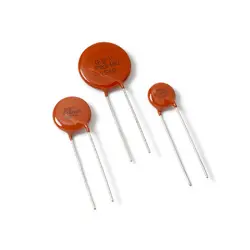
Highest performance radial-leaded varistor now on the market. CHICAGO – November 8, 2016 — Littelfuse, Inc., the global leader in circuit protection, today introduced its first varistor series designed for high power applications that can operate at ambient temperatures up to 125C with 2500V isolation voltage.

RelatedPosts

Binder Extends NCC Circular Connectors for Harsh Environments

Standard vs Planar LLC transformers Comparison for Battery Chargers

Würth Elektronik and Grinn Launch Edge AI Cooperation

The HMOV™ Varistor Series’ high operating temperature is an advance made possible through the use of a new silicone coating technology. Competitive epoxy-coated varistor designs are typically limited to maximum temperatures of just 85C. The new products were announced at the company’s booth (Hall A6-Booth 153) during Electronica, the international trade fair for electronic components, systems and applications, held November 8-11, 2016, at the Munich Trade Fair Center.

The HMOV™ Varistor Series’ high operating temperature makes it possible to reduce end-product production costs by eliminating the need for an additional heat sink or potting process. The combination of high operating temperature, high surge current absorption of up to 10kA (8/20µs), reliability confirmed by a 1000-cycle thermal stress test, and high isolation voltage (2500V) make the HMOV™ Varistor Series the highest performance radial-leaded varistor series currently on the market. The series is available in disc diameters of 10mm, 14mm and 20mm.

The HMOV™ Varistor Series is best-suited for high temperature and high power DC or AC applications including:

• industrial automation controls,
• solar power inverters,
• security systems,
• fire alarm and smoke detectors,
• smart meters,
• outdoor LED lighting,
• base transceiver station (BTS) power supplies, and
• harsh environment/outdoor power supplies

“The HMOV™ Varistor Series combines the ability to operate at ambient temperatures up to 125C with superior surge current handling capability,” said Johnny Chang, Littelfuse product manager for the HMOV™ Series Varistor line. “That allows it to provide the safest, most reliable, energy-efficient and cost-saving circuit protection solution available for DC and AC applications that require higher power in extremely hot indoor and outdoor environments.”

The HMOV™ Varistor Series offers these key benefits:

  • High operating temperature of 125ºC allows the high power end products into which it’s built to run safely at higher ambient temperatures and saves costs by eliminating the need for an additional heat sink or potting process.
  • High isolation voltage (2500V) eliminates the need for additional insulation material and helps minimize PCB size by reducing the space required between the varistor and other components on the board.
  • Thermal shock testing (1000 cycles from -55ºC to +125ºC) offers enhanced reliability that can extend the lifetime of the end products.
  • Meets UL 1449 and IEC 60950-1, which supports worldwide compliance for end products.

Availability
HMOV™ Series Varistors are available in bulk, tape and reel, and ammo packaging. Depending on the rating chosen, they are available in minimum order quantities of 1,200 to 5,000 pieces. Sample requests can be placed through authorized Littelfuse distributors worldwide. For a listing of Littelfuse distributors, please visit Littelfuse.com.

Related

Recent Posts

Binder Extends NCC Circular Connectors for Harsh Environments

13.3.2026
0

Standard vs Planar LLC transformers Comparison for Battery Chargers

13.3.2026
3

Bourns Expanded Semi-Shielded Low Profile Automotive Power Inductor

12.3.2026
8

Peak Nano to Develop Fusion Grade High Energy Film Capacitors

11.3.2026
19

Murata New Vibration Sensor Targets High‑Frequency Predictive Maintenance

10.3.2026
13

Panasonic Expands Automotive PP Film Capacitors Voltage Range

9.3.2026
21

Panasonic Extends Automotive Power Inductor Line

9.3.2026
24

February 2026 Interconnect, Passives and Electromechanical Components Market Insights

9.3.2026
41

YAGEO Presents 3.6 kW LLC Transformer Platform

6.3.2026
43

Upcoming Events

Mar 19
13:00 - 14:00 CDT

Smart Consideration of Inductor Thermal Performance

Mar 21
All day

PSMA Capacitor Workshop 2026

Apr 21
16:00 - 17:00 CEST

Heatsink Solutions: Thermal Management in electronic devices

View Calendar

Popular Posts

  • Buck Converter Design and Calculation

    0 shares
    Share 0 Tweet 0
  • Boost Converter Design and Calculation

    0 shares
    Share 0 Tweet 0
  • Flyback Converter Design and Calculation

    0 shares
    Share 0 Tweet 0
  • LLC Resonant Converter Design and Calculation

    0 shares
    Share 0 Tweet 0
  • MLCC Manufacturers Consider Price Increase as AI Demand Outpaces Supply

    0 shares
    Share 0 Tweet 0
  • Dual Active Bridge (DAB) Topology

    0 shares
    Share 0 Tweet 0
  • Ripple Current and its Effects on the Performance of Capacitors

    3 shares
    Share 3 Tweet 0
  • MLCC and Ceramic Capacitors

    0 shares
    Share 0 Tweet 0
  • MLCC Case Sizes Standards Explained

    0 shares
    Share 0 Tweet 0
  • What is a Dielectric Constant and DF of Plastic Materials?

    4 shares
    Share 4 Tweet 0

Newsletter Subscription


Passive Components Blog

© EPCI - Leading Passive Components Educational and Information Site

  • Home
  • Privacy Policy
  • EPCI Membership & Advertisement
  • About

No Result
View All Result
  • Home
  • Knowledge Blog
  • PCNS

© EPCI - Leading Passive Components Educational and Information Site

This website uses cookies. By continuing to use this website you are giving consent to cookies being used. Visit our Privacy and Cookie Policy.
Go to mobile version