





Passive Components Blog
No Result
View All Result
  • Home
  • NewsFilter
    • All
    • Aerospace & Defence
    • Antenna
    • Applications
    • Automotive
    • Capacitors
    • Circuit Protection Devices
    • electro-mechanical news
    • Filters
    • Fuses
    • Inductors
    • Industrial
    • Integrated Passives
    • inter-connect news
    • Market & Supply Chain
    • Market Insights
    • Medical
    • Modelling and Simulation
    • New Materials & Supply
    • New Technologies
    • Non-linear Passives
    • Oscillators
    • Passive Sensors News
    • Resistors
    • RF & Microwave
    • Telecommunication
    • Weekly Digest

    Bourns Offers Custom Magnetics for 3‑Phase Flying Capacitor Inverters

    YAGEO Releases Cost Efficient Pt‑RTD Sensors with Ni wires

    Nvidia Vera Rubin: Why One AI Rack Needs So Many More MLCC Capacitors

    Stackpole Introduces 1400A Busbar Shunt Resistors

    Tecate Unveils High‑temp 105C Supercapacitors for Harsh‑Environment Designs

    Bourns Expands 1000V High‑Power Fuses for Semiconductor and Battery Protection

    Passive Components in 2026: From Invisible Commodity to Design Parameter

    Bourns Introduces High Current Chip Ferrite Beads for Dense Power Rails

    Wk 22 Electronics Supply Chain Digest

    Trending Tags

    • Ripple Current
    • RF
    • Leakage Current
    • Tantalum vs Ceramic
    • Snubber
    • Low ESR
    • Feedthrough
    • Derating
    • Dielectric Constant
    • New Products
    • Market Reports
  • VideoFilter
    • All
    • Antenna videos
    • Capacitor videos
    • Circuit Protection Video
    • Filter videos
    • Fuse videos
    • Inductor videos
    • Inter-Connect Video
    • Non-linear passives videos
    • Oscillator videos
    • Passive sensors videos
    • Resistor videos

    Current Sense Transformer Datasheet and Design‑in Guide

    Designing a USB Type‑C Flyback Planar Transformer with Frenetic’s Planar Tool

    Magnetics Design in High‑Frequency GaN Converters

    Qi2 Wireless Charging: Inductors, Capacitors and EMC Filters

    Two‑capacitor paradox explained for engineers

    Capacitances of Nonlinear MLCCs: What Datasheets Don’t Tell You

    Tapped Inductor Buck Converter Fundamentals

    Planar vs Conventional Transformer: When it Make Sense

    Modeling Fringing Field Losses in Inductors & Transformers

    Trending Tags

    • Capacitors explained
    • Inductors explained
    • Resistors explained
    • Filters explained
    • Application Video Guidelines
    • EMC
    • New Products
    • Ripple Current
    • Simulation
    • Tantalum vs Ceramic
  • Knowledge Blog
  • DossiersNew
  • Suppliers
    • Who is Who
  • PCNS
    • PCNS 2025
    • PCNS 2023
    • PCNS 2021
    • PCNS 2019
    • PCNS 2017
  • Events
  • Home
  • NewsFilter
    • All
    • Aerospace & Defence
    • Antenna
    • Applications
    • Automotive
    • Capacitors
    • Circuit Protection Devices
    • electro-mechanical news
    • Filters
    • Fuses
    • Inductors
    • Industrial
    • Integrated Passives
    • inter-connect news
    • Market & Supply Chain
    • Market Insights
    • Medical
    • Modelling and Simulation
    • New Materials & Supply
    • New Technologies
    • Non-linear Passives
    • Oscillators
    • Passive Sensors News
    • Resistors
    • RF & Microwave
    • Telecommunication
    • Weekly Digest

    Bourns Offers Custom Magnetics for 3‑Phase Flying Capacitor Inverters

    YAGEO Releases Cost Efficient Pt‑RTD Sensors with Ni wires

    Nvidia Vera Rubin: Why One AI Rack Needs So Many More MLCC Capacitors

    Stackpole Introduces 1400A Busbar Shunt Resistors

    Tecate Unveils High‑temp 105C Supercapacitors for Harsh‑Environment Designs

    Bourns Expands 1000V High‑Power Fuses for Semiconductor and Battery Protection

    Passive Components in 2026: From Invisible Commodity to Design Parameter

    Bourns Introduces High Current Chip Ferrite Beads for Dense Power Rails

    Wk 22 Electronics Supply Chain Digest

    Trending Tags

    • Ripple Current
    • RF
    • Leakage Current
    • Tantalum vs Ceramic
    • Snubber
    • Low ESR
    • Feedthrough
    • Derating
    • Dielectric Constant
    • New Products
    • Market Reports
  • VideoFilter
    • All
    • Antenna videos
    • Capacitor videos
    • Circuit Protection Video
    • Filter videos
    • Fuse videos
    • Inductor videos
    • Inter-Connect Video
    • Non-linear passives videos
    • Oscillator videos
    • Passive sensors videos
    • Resistor videos

    Current Sense Transformer Datasheet and Design‑in Guide

    Designing a USB Type‑C Flyback Planar Transformer with Frenetic’s Planar Tool

    Magnetics Design in High‑Frequency GaN Converters

    Qi2 Wireless Charging: Inductors, Capacitors and EMC Filters

    Two‑capacitor paradox explained for engineers

    Capacitances of Nonlinear MLCCs: What Datasheets Don’t Tell You

    Tapped Inductor Buck Converter Fundamentals

    Planar vs Conventional Transformer: When it Make Sense

    Modeling Fringing Field Losses in Inductors & Transformers

    Trending Tags

    • Capacitors explained
    • Inductors explained
    • Resistors explained
    • Filters explained
    • Application Video Guidelines
    • EMC
    • New Products
    • Ripple Current
    • Simulation
    • Tantalum vs Ceramic
  • Knowledge Blog
  • DossiersNew
  • Suppliers
    • Who is Who
  • PCNS
    • PCNS 2025
    • PCNS 2023
    • PCNS 2021
    • PCNS 2019
    • PCNS 2017
  • Events
No Result
View All Result
Passive Components Blog
No Result
View All Result

Low-grade coal nano-particles can power super-capacitors: says study

6.7.2017
Reading Time: 2 mins read
A A

source: Energy World news

Kolkata: Nanoparticles derived from low-grade coal from northeast India can be used to make supercapacitors — devices that can store tremendous amount of energy, say Indian researchers. This will also help reduce imports leading to further economic development, they aver.

RelatedPosts

Bourns Offers Custom Magnetics for 3‑Phase Flying Capacitor Inverters

YAGEO Releases Cost Efficient Pt‑RTD Sensors with Ni wires

Nvidia Vera Rubin: Why One AI Rack Needs So Many More MLCC Capacitors

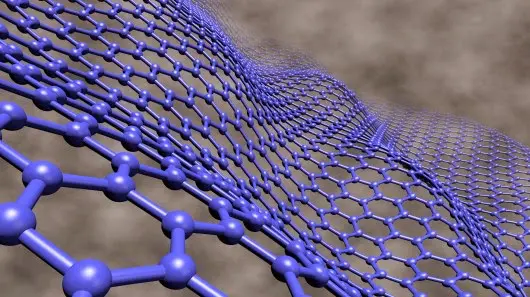
To utilise the reserves of low-grade coals which can’t be harnessed directly in power plants, a team of scientists led by Binoy K. Saikia from the Council of Scientific and Industrial Research-North East Institute of Science & Technology (CSIR-NEIST), Jorhat, Assam, developed a process for converting the coal feedstock into carbon nanosheets.

“These nanosheets were utilised as supercapacitor electrode materials, which is a high-performance energy storage device. Our process is low-cost, easy and has eco-friendly aspects,” Saikia told IANS.

Supercapacitators are some of the best devices for delivering a quick surge of power and are noted for excellent abilities to store and discharge energy.

Supercapacitors or ultra capacitors are also used in high-end cars, luxury buses, high-speed trains, heavy-lifting cranes and speedy elevators in tall skyscrapers as regenerative braking, short-term energy storage.

Northeast India has vast reserves of low-grade coal that are typically different and cheap as compared to coal from other part of the country.

“Because of its high sulphur content, this coal cannot be directly utilised in power plants. It needs beneficiation and value addition,” said Saikia, of CSIR-NEIST’s Polymer Petroleum and Coal Chemistry Group, Materials Science and Technology Division.

“We have been working on value addition of low-grade northeast Indian coal into high-value materials like humic acid (soil conditioner), carbon nanomaterials, nano-composite and the like.”

He said the idea is to reduce dependency on imports.

“The world market for supercapacitors has been growing rapidly and India has been importing this energy device. If the abundantly available low-grade coal could be a source of supercapacitor electrode materials, there will be import substitution leading to economic development of India,” he said.

The total addressable market for supercapacitors in India is 1.3 billion units by 2020. In defence applications, the market size is projected to be between Rs 20 crore to Rs 50 crore over the next four years.

Significant yield of supercapacitor electrode materials can be obtained from coal to make a device of more than 125 Farad/gram capacity, said Saikia.

“The energy storage capacity of the supercapacitor (driven by the low-grade coal nanosheet) is one lakh times higher than the capacitor used in any domestic electronics such as ceiling fan, motors etc.”

The research is part of a study published in the journal Microporous and Mesoporous Materials in June. Tonkeswar Das, Himani Chauhan, Sasanka Deka, Shanky Chaudhary and Ratan Boruah are the co-authors.

Related

Recent Posts

Bourns Offers Custom Magnetics for 3‑Phase Flying Capacitor Inverters

3.6.2026
4

YAGEO Releases Cost Efficient Pt‑RTD Sensors with Ni wires

3.6.2026
2

Nvidia Vera Rubin: Why One AI Rack Needs So Many More MLCC Capacitors

2.6.2026
40

Stackpole Introduces 1400A Busbar Shunt Resistors

2.6.2026
10

Tecate Unveils High‑temp 105C Supercapacitors for Harsh‑Environment Designs

2.6.2026
10

Bourns Expands 1000V High‑Power Fuses for Semiconductor and Battery Protection

2.6.2026
7

Passive Components in 2026: From Invisible Commodity to Design Parameter

2.6.2026
20

Bourns Introduces High Current Chip Ferrite Beads for Dense Power Rails

1.6.2026
12

Vishay Releases High‑Current Radial Inductors up to 209 A

29.5.2026
24

Upcoming Events

Jun 16
16:00 - 17:00 CEST

EMC with EMC – EMC‑compliant design with electromechanical connectors

View Calendar

Popular Posts

  • Buck Converter Design and Calculation

    0 shares
    Share 0 Tweet 0
  • Boost Converter Design and Calculation

    0 shares
    Share 0 Tweet 0
  • Flyback Converter Design and Calculation

    0 shares
    Share 0 Tweet 0
  • MLCC and Ceramic Capacitors

    0 shares
    Share 0 Tweet 0
  • LLC Resonant Converter Design and Calculation

    0 shares
    Share 0 Tweet 0
  • Capacitor Charging and Discharging

    0 shares
    Share 0 Tweet 0
  • What Electronics Engineer Needs to Know About Passive Low Pass Filters

    0 shares
    Share 0 Tweet 0
  • Dual Active Bridge (DAB) Topology

    0 shares
    Share 0 Tweet 0
  • Ripple Current and its Effects on the Performance of Capacitors

    3 shares
    Share 3 Tweet 0
  • SEPIC Converter Design and Calculation

    0 shares
    Share 0 Tweet 0

Newsletter Subscription


Passive Components Blog

© EPCI - Leading Passive Components Educational and Information Site

  • Home
  • Privacy Policy
  • EPCI Membership & Advertisement
  • About

No Result
View All Result
  • Home
  • Knowledge Blog
  • Dossiers
  • PCNS

© EPCI - Leading Passive Components Educational and Information Site

This website uses cookies. By continuing to use this website you are giving consent to cookies being used. Visit our Privacy and Cookie Policy.
Go to mobile version