





Passive Components Blog
No Result
View All Result
  • Home
  • NewsFilter
    • All
    • Aerospace & Defence
    • Antenna
    • Applications
    • Automotive
    • Capacitors
    • Circuit Protection Devices
    • electro-mechanical news
    • Filters
    • Fuses
    • Inductors
    • Industrial
    • Integrated Passives
    • inter-connect news
    • Market & Supply Chain
    • Market Insights
    • Medical
    • Modelling and Simulation
    • New Materials & Supply
    • New Technologies
    • Non-linear Passives
    • Oscillators
    • Passive Sensors News
    • Resistors
    • RF & Microwave
    • Telecommunication
    • Weekly Digest

    Murata Unveils Lead Disc Ceramic Capacitors for Automotive Safety and EMI Suppression

    SCHURTER Releases Intelligent Three‑Terminal Fuses for Safer Li‑ion Battery Systems

    Can Copper Conductive Inks Displace Silver in Hybrid Electronics?

    Square-Wave Harmonics and RMS Currents in Power Converters

    LeanBOM: Practical Cross‑Technology Capacitor Search by Real Working Conditions

    In the Age of AI, Every Watt Counts: Implications for Components

    Stackpole Extends Resistance Range of 2512 High‑Power Current Sense Resistors

    Wk 27 Electronics Supply Chain Digest

    Littelfuse Announced TVS Diodes for 48 V Automotive Systems

    Trending Tags

    • Ripple Current
    • RF
    • Leakage Current
    • Tantalum vs Ceramic
    • Snubber
    • Low ESR
    • Feedthrough
    • Derating
    • Dielectric Constant
    • New Products
    • Market Reports
  • VideoFilter
    • All
    • Antenna videos
    • Capacitor videos
    • Circuit Protection Video
    • Filter videos
    • Fuse videos
    • Inductor videos
    • Inter-Connect Video
    • Non-linear passives videos
    • Oscillator videos
    • Passive sensors videos
    • Resistor videos

    Ferrite versus Nanocrystalline Power Inductor Cores: Turns, Gap and Size

    KYOCERA AVX Presents Antenna Integrator Studio Tutorial for Antenna Placement and RF Design

    Power Design Simulation Tools for Faster Inductor Selection and Loss Optimization

    EMC‑Compliant PCB and Connector Design Guidelines

    Why Isolated DC/DC Power Supplies Fail Late, Würth Elektronik Podcast

    Designing 800 V DC EMC Filters: Calculation, Simulation and Measurement

    Current Sense Transformer Datasheet and Design‑in Guide

    Designing a USB Type‑C Flyback Planar Transformer with Frenetic’s Planar Tool

    Magnetics Design in High‑Frequency GaN Converters

    Trending Tags

    • Capacitors explained
    • Inductors explained
    • Resistors explained
    • Filters explained
    • Application Video Guidelines
    • EMC
    • New Products
    • Ripple Current
    • Simulation
    • Tantalum vs Ceramic
  • Knowledge Blog
  • Dossiers
    • AI Hardware Dossier
    • Power Converter Dossier
    • Automotive Dossier
    • Capacitor Dossier
    • Resistor Dossier
    • Inductor Dossier
    • Circuit Protection Dossier
  • Suppliers
    • Who is Who
  • PCNS
    • PCNS 2025
    • PCNS 2023
    • PCNS 2021
    • PCNS 2019
    • PCNS 2017
  • Events
  • Home
  • NewsFilter
    • All
    • Aerospace & Defence
    • Antenna
    • Applications
    • Automotive
    • Capacitors
    • Circuit Protection Devices
    • electro-mechanical news
    • Filters
    • Fuses
    • Inductors
    • Industrial
    • Integrated Passives
    • inter-connect news
    • Market & Supply Chain
    • Market Insights
    • Medical
    • Modelling and Simulation
    • New Materials & Supply
    • New Technologies
    • Non-linear Passives
    • Oscillators
    • Passive Sensors News
    • Resistors
    • RF & Microwave
    • Telecommunication
    • Weekly Digest

    Murata Unveils Lead Disc Ceramic Capacitors for Automotive Safety and EMI Suppression

    SCHURTER Releases Intelligent Three‑Terminal Fuses for Safer Li‑ion Battery Systems

    Can Copper Conductive Inks Displace Silver in Hybrid Electronics?

    Square-Wave Harmonics and RMS Currents in Power Converters

    LeanBOM: Practical Cross‑Technology Capacitor Search by Real Working Conditions

    In the Age of AI, Every Watt Counts: Implications for Components

    Stackpole Extends Resistance Range of 2512 High‑Power Current Sense Resistors

    Wk 27 Electronics Supply Chain Digest

    Littelfuse Announced TVS Diodes for 48 V Automotive Systems

    Trending Tags

    • Ripple Current
    • RF
    • Leakage Current
    • Tantalum vs Ceramic
    • Snubber
    • Low ESR
    • Feedthrough
    • Derating
    • Dielectric Constant
    • New Products
    • Market Reports
  • VideoFilter
    • All
    • Antenna videos
    • Capacitor videos
    • Circuit Protection Video
    • Filter videos
    • Fuse videos
    • Inductor videos
    • Inter-Connect Video
    • Non-linear passives videos
    • Oscillator videos
    • Passive sensors videos
    • Resistor videos

    Ferrite versus Nanocrystalline Power Inductor Cores: Turns, Gap and Size

    KYOCERA AVX Presents Antenna Integrator Studio Tutorial for Antenna Placement and RF Design

    Power Design Simulation Tools for Faster Inductor Selection and Loss Optimization

    EMC‑Compliant PCB and Connector Design Guidelines

    Why Isolated DC/DC Power Supplies Fail Late, Würth Elektronik Podcast

    Designing 800 V DC EMC Filters: Calculation, Simulation and Measurement

    Current Sense Transformer Datasheet and Design‑in Guide

    Designing a USB Type‑C Flyback Planar Transformer with Frenetic’s Planar Tool

    Magnetics Design in High‑Frequency GaN Converters

    Trending Tags

    • Capacitors explained
    • Inductors explained
    • Resistors explained
    • Filters explained
    • Application Video Guidelines
    • EMC
    • New Products
    • Ripple Current
    • Simulation
    • Tantalum vs Ceramic
  • Knowledge Blog
  • Dossiers
    • AI Hardware Dossier
    • Power Converter Dossier
    • Automotive Dossier
    • Capacitor Dossier
    • Resistor Dossier
    • Inductor Dossier
    • Circuit Protection Dossier
  • Suppliers
    • Who is Who
  • PCNS
    • PCNS 2025
    • PCNS 2023
    • PCNS 2021
    • PCNS 2019
    • PCNS 2017
  • Events
No Result
View All Result
Passive Components Blog
No Result
View All Result

Reliability and Sustainability of Passive Components; PCNS Theme Interview with TPC Members; #3 Saverio Latorrata, Politecnico di Milano

9.3.2021
Reading Time: 5 mins read
A A

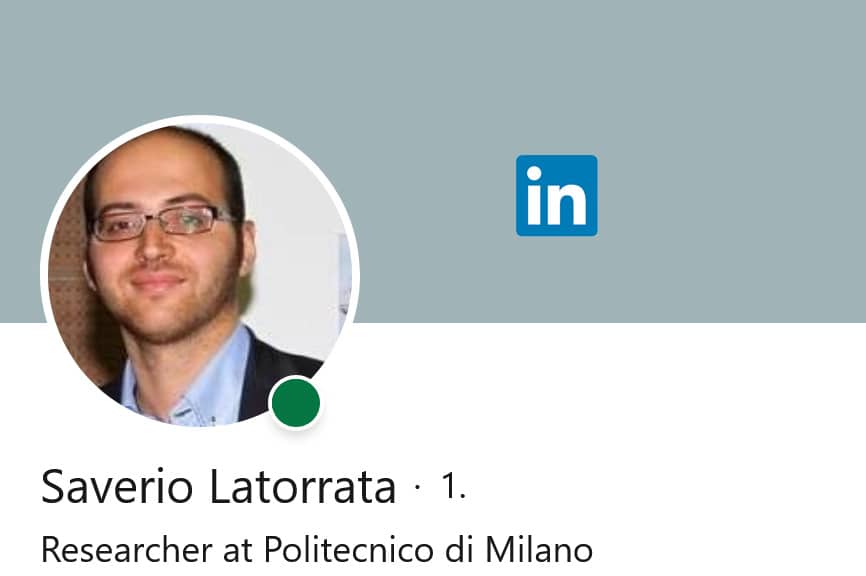
TPC Technical Program Committee of the next 3rd PCNS Passive Components Networking Symposium scheduled for Sep 7-10th 2021 in Milano, Italy selected theme of the symposium: RELIABILITY & SUSTAINABILITY of PASSIVE COMPONENTS that will be elaborated in conference Workshop, Hot Topic Panel Discussion, Keynote and papers selection preferences. EPCI, the main PCNS organizer, questioned TPC members why they consider the theme so important for today’s passive electronic components and what shall be discussed within this topic in depth. The next interview #3 is with TPC academic member, Dr. Saverio Latorrata, PhD (SL), Researcher/Lecturer at Materials for Energy and Environment Laboratory, Department of Chemistry, Materials and Chemical Engineering “Giulio Natta”; Politecnico di Milano.

EPCI: What ideas, issues, concerns, directions has raised on your mind when TPC selected „Reliability & Sustainability of Passive Components“ as the 3rd PCNS theme ?

RelatedPosts

Murata Unveils Lead Disc Ceramic Capacitors for Automotive Safety and EMI Suppression

SCHURTER Releases Intelligent Three‑Terminal Fuses for Safer Li‑ion Battery Systems

Can Copper Conductive Inks Displace Silver in Hybrid Electronics?

SL: Recently, issues related to environmental sustainability have become important in various areas of everyday life, obviously including scientific and technological research, as well as industrial production. Therefore, I believe it is important to discuss such topics in a broad and multidisciplinary forum, in our case applied to fundamental electronic devices such as passive components.

I also believe it would be essential to have a standardized way of assessing the impacts that the production of these components can have on the environment and how to reduce materials degradation influencing such impacts.

EPCI: What topic you would recommend for the Hot Panel Discussion and Why ?

SL: I would recommend a discussion on the relationship between durability of materials within devices and their macroscopic impact on the environment in order to address more responsible advancements that in any case do not penalize the effectiveness of the devices themselves. 

EPCI: You are representing academia in PCNS TPC members and hosting university. Can you comment what is hot/upcoming from your position at the university relevant to the TPC theme?

SL: As a material science scholar, I believe it is important to analyze the chemical-physical mechanisms that contribute to the degradation of materials and the reduction of the reliability of components of any device.

Ultimately it is always necessary to seek a relationship between microscopic and macroscopic entities with the aim of predicting reduction of devices efficiency.

For some years this aspect has been considering strictly related to ecological and environmental sustainability. Furthermore, also working with students, I see an increasing need to create skills and awareness related to these issues that have been a bit lacking in the past. 

EPCI: How is your university going to address this topic during PCNS ?

Some of our classrooms will host the conference, if the health situation will make possible to be in person, as all of us hope of course. Otherwise we will give the necessary support for the organization of an online event. In addition, some of our researchers will organize the pre-event workshop.

Politecnico di Milano is a proud hosting university of the 3rd PCNS ! We would like to invite everyone related to passive electronic components to join us. Laboratory tour will be part of the pre-event if we go live that we all hope for.

EPCI: Thank you Saverio and lets hope in best that we can meet live at PCNS in Milano in September

Dr. Saverio Latorrata, PhD can be reached at his Linked In profile or Materials for Energy and Environment lab Instagram profile or department website.
see more about PCNS on its website:

PCNS website

be active in passives ! join us and submit your paper abstract online:

Call for Papers Announced ! Abstract Deadline April 2nd 2021

About

PCNS Passive Components Networking Symposium is a bi-annual international symposium organized by EPCI European Passive Components Institute in co-operation with an European university. 3rd edition of the PCNS Passive Components Networking Days Symposium scheduled for September 7-10th, 2021 in Milano, Italy is hosted by Department of Chemistry, Materials and Chemical Engineering “Giulio Natta” and Department of Electronics, Information and Bioengineering of Politecnico di Milano. It is intended as a live event with speakers present with streaming options for virtual attendees. In worst case, the PCNS will move to virtual event; all registered attendees will get hard printed ISBN Proceedings (by mail post in virtual case).

Saverio Latorrata received his M.Sc. degree in Chemical Engineering (2008) and PhD in Materials Engineering (2014) at Politecnico di Milano, Italy. Currently he is Researcher at the Department of Chemistry, Materials and Chemical Engineering of the same institution. His research interests are mainly related to materials for electrochemical energy generators and electronic devices with a special focus on their sustainability and mitigating mechanisms of degradation. He is also Lecturer, teaching the course of “Materials for electrical applications” to students of electrical and materials engineering and laboratory supervisor of several master students and PhD candidates. He collaborates with companies on research projects on electronic devices and materials for wastewater treatment.


Related

Source: EPCI

Recent Posts

Murata Unveils Lead Disc Ceramic Capacitors for Automotive Safety and EMI Suppression

15.7.2026
7

Square-Wave Harmonics and RMS Currents in Power Converters

14.7.2026
22

LeanBOM: Practical Cross‑Technology Capacitor Search by Real Working Conditions

14.7.2026
28

In the Age of AI, Every Watt Counts: Implications for Components

13.7.2026
36

Stackpole Extends Resistance Range of 2512 High‑Power Current Sense Resistors

13.7.2026
16

Spectrum Controls Joins Modelithics Program to Offer High‑Fidelity RF Models for Resistors, Attenuators and Terminations

10.7.2026
17

RF Filters and Passive Components Enabling the 7 Missile RF Subsystems

9.7.2026
49

Ferrite versus Nanocrystalline Power Inductor Cores: Turns, Gap and Size

9.7.2026
77

YAGEO Presents NANOMET Soft Magnetic Cores for High‑Density Power Conversion

8.7.2026
118

Upcoming Events

Jul 21
16:00 - 17:00 CEST

Safety by design: X and Y Interference suppression capacitors for power line filters

Jul 28
8:00 - 11:00 CEST

Post Procurement Testing of EEE Components for LEO Space Applications

Jul 29
17:30 - 18:30 CEST

To Ferrite or to Nanocrystalline in Transformer Design

View Calendar

Popular Posts

  • Boost Converter Design and Calculation

    0 shares
    Share 0 Tweet 0
  • Buck Converter Design and Calculation

    0 shares
    Share 0 Tweet 0
  • Flyback Converter Design and Calculation

    0 shares
    Share 0 Tweet 0
  • LLC Resonant Converter Design and Calculation

    0 shares
    Share 0 Tweet 0
  • YAGEO Announces July 2026 Capacitor Price Increase

    0 shares
    Share 0 Tweet 0
  • MLCC and Ceramic Capacitors

    0 shares
    Share 0 Tweet 0
  • Earthing Systems and IEC Classification Explained

    0 shares
    Share 0 Tweet 0
  • Nvidia Vera Rubin: Why One AI Rack Needs So Many More MLCC Capacitors

    0 shares
    Share 0 Tweet 0
  • MLCCs in the Age of AI: Q2 2026 Market Tightness

    0 shares
    Share 0 Tweet 0
  • Dual Active Bridge (DAB) Topology

    0 shares
    Share 0 Tweet 0

Newsletter Subscription


Passive Components Blog

© EPCI - Leading Passive Components Educational and Information Site

  • Home
  • Privacy Policy
  • EPCI Membership & Advertisement
  • About

No Result
View All Result
  • Home
  • Knowledge Blog
  • Dossiers
  • PCNS

© EPCI - Leading Passive Components Educational and Information Site

This website uses cookies. By continuing to use this website you are giving consent to cookies being used. Visit our Privacy and Cookie Policy.
Go to mobile version