










Passive Components Blog
No Result
View All Result
  • Home
  • News
    • All
    • Aerospace & Defence
    • Antenna
    • Applications
    • Automotive
    • Capacitors
    • Circuit Protection Devices
    • electro-mechanical news
    • Filters
    • Fuses
    • Inductors
    • Industrial
    • Integrated Passives
    • inter-connect news
    • Market & Supply Chain
    • Market Insights
    • Medical
    • Modelling and Simulation
    • New Materials & Supply
    • New Technologies
    • Non-linear Passives
    • Oscillators
    • Passive Sensors News
    • Resistors
    • RF & Microwave
    • Telecommunication
    • Weekly Digest
    Hirose FH51 automotive FPC/FFC connector with low-profile receptacle construction and top-and-bottom contact arrangement

    Hirose Automotive FPC/FFC Connector Adds One-Action Mating up to 125°C

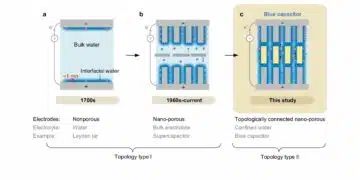
    Overview of fabricated ferroelectric capacitors improving hyperdimensional computing task learning accuracy. a The experimental work reported in this study comprises ferroelectric capacitor (FeCAP) device fabrication, structural and electrical characterization, analog state identification and their reliability study. b The computational part of the work explores the benefits of using characteristics from the fabricated devices in a hyperdimensional computing scheme; source: authors

    High-Precision Hyperdimensional Computing with Multi-Level Ferroelectric HZO Capacitors

    Coilcraft Introduces Automotive Common Mode Chokes Target CISPR 25 Class 5 EMC Compliance

    Murata Expands Automotive Metal Power Inductor Range

    Modelithics Qorvo GaN Library v26.5.11 Adds 200 W RF Transistor Model

    Bourns Releases Low-Profile Incremental Ring Encoder Targets Compact Industrial HMIs

    Wk 34 Electronics Supply Chain Digest

    August 2026 Interconnect, Passives and Electromechanical Components Market Insights

    AEM Introduced High-Power Fuses for Compact Automotive and Industrial Overcurrent Protection

    Trending Tags

    • Ripple Current
    • RF
    • Leakage Current
    • Tantalum vs Ceramic
    • Snubber
    • Low ESR
    • Feedthrough
    • Derating
    • Dielectric Constant
    • New Products
    • Market Reports
  • Knowledge Blog
  • Dossiers
    • AI Hardware Dossier
    • Automotive Dossier
    • Industrial Robotics Dossier
    • Power Converter Dossier
    • Capacitor Dossier
    • Resistor Dossier
    • Inductor Dossier
    • Circuit Protection Dossier
  • Suppliers
    • Who is Who
  • PCNS
    • PCNS 2025
    • PCNS 2023
    • PCNS 2021
    • PCNS 2019
    • PCNS 2017
  • Events
  • Home
  • News
    • All
    • Aerospace & Defence
    • Antenna
    • Applications
    • Automotive
    • Capacitors
    • Circuit Protection Devices
    • electro-mechanical news
    • Filters
    • Fuses
    • Inductors
    • Industrial
    • Integrated Passives
    • inter-connect news
    • Market & Supply Chain
    • Market Insights
    • Medical
    • Modelling and Simulation
    • New Materials & Supply
    • New Technologies
    • Non-linear Passives
    • Oscillators
    • Passive Sensors News
    • Resistors
    • RF & Microwave
    • Telecommunication
    • Weekly Digest
    Hirose FH51 automotive FPC/FFC connector with low-profile receptacle construction and top-and-bottom contact arrangement

    Hirose Automotive FPC/FFC Connector Adds One-Action Mating up to 125°C

    Overview of fabricated ferroelectric capacitors improving hyperdimensional computing task learning accuracy. a The experimental work reported in this study comprises ferroelectric capacitor (FeCAP) device fabrication, structural and electrical characterization, analog state identification and their reliability study. b The computational part of the work explores the benefits of using characteristics from the fabricated devices in a hyperdimensional computing scheme; source: authors

    High-Precision Hyperdimensional Computing with Multi-Level Ferroelectric HZO Capacitors

    Coilcraft Introduces Automotive Common Mode Chokes Target CISPR 25 Class 5 EMC Compliance

    Murata Expands Automotive Metal Power Inductor Range

    Modelithics Qorvo GaN Library v26.5.11 Adds 200 W RF Transistor Model

    Bourns Releases Low-Profile Incremental Ring Encoder Targets Compact Industrial HMIs

    Wk 34 Electronics Supply Chain Digest

    August 2026 Interconnect, Passives and Electromechanical Components Market Insights

    AEM Introduced High-Power Fuses for Compact Automotive and Industrial Overcurrent Protection

    Trending Tags

    • Ripple Current
    • RF
    • Leakage Current
    • Tantalum vs Ceramic
    • Snubber
    • Low ESR
    • Feedthrough
    • Derating
    • Dielectric Constant
    • New Products
    • Market Reports
  • Knowledge Blog
  • Dossiers
    • AI Hardware Dossier
    • Automotive Dossier
    • Industrial Robotics Dossier
    • Power Converter Dossier
    • Capacitor Dossier
    • Resistor Dossier
    • Inductor Dossier
    • Circuit Protection Dossier
  • Suppliers
    • Who is Who
  • PCNS
    • PCNS 2025
    • PCNS 2023
    • PCNS 2021
    • PCNS 2019
    • PCNS 2017
  • Events
No Result
View All Result
Passive Components Blog
No Result
View All Result

YAGEO’s Role in Powering the AI Revolution

7.8.2023
Reading Time: 4 mins read
A A

As AI applications demand ever-increasing computational intensity, YAGEO, a prominent electronic component manufacturer, is stepping up to address the need for specialized components to power AI servers and devices according to Dr. Philip Lessner, CTO of Yageo Group in article published by TTI Market Eye.

Artificial Intelligence (AI) has taken the world by storm, transforming various industries such as Industry 4.0, Smart Farming, healthcare, and finance, to name a few. AI is revolutionizing how we interact with technology; from language translation to autonomous vehicles, it is rapidly becoming an integral part of our daily lives. However, the widespread adoption of AI comes with unique challenges, particularly in high-power Computing.

RelatedPosts

KEMET HRA X7R High-Reliability MLCCs Target Higher Capacitance in Defense and Aerospace Electronics

YAGEO Expands Aluminum Polymer Capacitors for High-Temperature AI Server Power Rails

YAGEO Adds X8 Flexible-Termination Automotive MLCCs for 150°C Designs

Understanding AI and Its Relevance

AI refers to the development of software for machines to perform tasks that typically require human intelligence. This development involves training models using vast amounts of data and then utilizing those trained models to carry out specific tasks or provide answers to various questions. The scope of AI has expanded significantly from narrow tasks to more generalized models like Chat GPT, which can engage in diverse conversations and provide comprehensive responses.

AI that empowers applications like Chat GPT and Autonomous Vehicles (AV) requires massive computing power. As AI technologies advance and find broader applications, the demand for advanced hardware components, such as GPUs, has surged, increasing the need for specialized electronic components.

The AI Boom: Why Now?

While AI models have existed for quite some time, the recent boom can be attributed to their increasing sophistication and broader adoption. The ability to train these AI models and deploy them in real time was enabled by the continuing advances in computational power made over the last 60 years (Moore’s Law). As AI tasks evolve from simple to complex like the advanced capabilities of Chat GPT, the demand for unparalleled computing power has reached unprecedented levels. This surge in AI-driven applications is responsible for the current need for cutting-edge electronic components to support the growing AI infrastructure.

YAGEO’s Participation in the AI Revolution

As AI applications necessitate substantial computing power for training and deployment, the demand for electronic components, including YAGEO products, has risen significantly. This demand is because ‘substantial computing power’ translates into significant electrical power that needs to be provided to the computing engine and supporting systems. YAGEO actively participates in the AI revolution by supporting the power needs of AI-driven hardware devices, such as the widely used GPUs.

While it is challenging to quantify the exact percentage of YAGEO’s business directly attributable to AI, the impact of AI can be seen across multiple segments, particularly in Automotive (23% of total YAGEO revenues) and Computing (19%). AI’s influence extends beyond these segments, impacting IoT growth by analyzing massive data sets, leading to an expansion of sensor products and edge computing devices.

Catering to the AI Market: YAGEO’s Approach

The demands of higher computing power necessitate electronic components with specific attributes. YAGEO is actively developing capabilities across all its product roadmaps and technologies to meet these demanding requirements. High power means that any parasitic losses in the components are magnified, so capacitive and magnetic components with ultra-low loss are needed. Meanwhile, these components must have high reliability under harsh conditions. Since many more components are needed to support the AI processors, component miniaturization is also essential.

As AI continues to push the boundaries of computing power, specific specialized components like higher voltage capacitors, capacitors with higher capacitance and energy density such as U2J and C0G dielectrics with KONNEKT™️, and inductors based on advanced materials like NANOMET® are experiencing accelerated adoption by design engineers. Additionally, there are two key areas where resistors play a significant role in advancing computing power: voltage monitoring and current sensing.

Accelerating the Pace of Innovation

AI has brought about a profound revolution in engineering, effectively shortening design cycles and the need for custom, specialized components. Amidst this ever-evolving technological landscape, YAGEO leads the charge with its comprehensive Easy-To-Design-In (E2Di) solutions suite. These solutions encompass a wide range of offerings, including tailored test support, swift product sampling, access to application experts, and digital tools for extensive component simulations. With a clear focus on expediting design cycles and fostering innovation in AI, YAGEO empowers design engineers through cutting-edge technical content, advanced tools, and top-notch services. By dismantling barriers and facilitating the seamless integration of groundbreaking solutions, YAGEO plays a pivotal role in driving advancements in AI technology.

YAGEO’s AI Customers and Future Outlook

The AI ecosystem consists of CPU/GPU OEMs such as Nvidia, AMD, and Intel, power converter suppliers such as Infineon, ADI, and Renesas, and end users such as Google, Amazon, and Tesla. YAGEO actively collaborates with all these industry leaders, participating in their growth plans and custom electronic components and maintaining solid relationships with them.

YAGEO’s focus on serving the AI market is expected to remain steadfast. As AI applications continue to proliferate and influence segments like Automotive and Computing, YAGEO is poised to grow alongside these industries, supplying essential electronic components to power the AI revolution.

Conclusion

Artificial Intelligence is transforming the world and driving the need for higher computing power. YAGEO, as a leading electronic component manufacturer, is at the forefront of addressing the unique requirements of the AI market. With its advanced components specifically designed to power high-power AI servers and devices, YAGEO plays a vital role in the AI revolution, supporting cutting-edge applications across diverse industries and making AI accessible to billions of users worldwide.

Related

Source: TTI Market Eye. Yageo

Recent Posts

Overview of fabricated ferroelectric capacitors improving hyperdimensional computing task learning accuracy. a The experimental work reported in this study comprises ferroelectric capacitor (FeCAP) device fabrication, structural and electrical characterization, analog state identification and their reliability study. b The computational part of the work explores the benefits of using characteristics from the fabricated devices in a hyperdimensional computing scheme; source: authors

High-Precision Hyperdimensional Computing with Multi-Level Ferroelectric HZO Capacitors

7.9.2026
13

Coilcraft Introduces Automotive Common Mode Chokes Target CISPR 25 Class 5 EMC Compliance

7.9.2026
9

Murata Expands Automotive Metal Power Inductor Range

7.9.2026
23

Bourns Releases Low-Profile Incremental Ring Encoder Targets Compact Industrial HMIs

7.9.2026
1

August 2026 Interconnect, Passives and Electromechanical Components Market Insights

4.9.2026
34

AEM Introduced High-Power Fuses for Compact Automotive and Industrial Overcurrent Protection

4.9.2026
7

Knowles Cornell Dubilier 105C Flatpack Aluminum Electrolytic Capacitors Target Low-Profile High-Density Power Designs

4.9.2026
30

Vishay Thin Film Chip Resistors Combine up to 50 GHz Operation with High Power Density

3.9.2026
14

Samsung Electro-Mechanics Secures KRW 1.0722 Trillion AI Server MLCC Supply Contract

3.9.2026
59

Upcoming Events

Sep 10
11:00 - 12:00 CEST

Equipment models and model strategies for Space Missions

Sep 16
17:00 - 18:00 CEST

Designing a 5 kW, 800 V-to-50 V PSFB Converter for Next-Generation Data Centers

Sep 29
16:00 - 17:00 CEST

Cybersecurity 2026

View Calendar

Popular Posts

  • Buck Converter Design and Calculation

    0 shares
    Share 0 Tweet 0
  • LLC Resonant Converter Design and Calculation

    0 shares
    Share 0 Tweet 0
  • Boost Converter Design and Calculation

    0 shares
    Share 0 Tweet 0
  • Flyback Converter Design and Calculation

    0 shares
    Share 0 Tweet 0
  • Earthing Systems and IEC Classification Explained

    0 shares
    Share 0 Tweet 0
  • MLCC and Ceramic Capacitors

    0 shares
    Share 0 Tweet 0
  • Capacitor Charging and Discharging

    0 shares
    Share 0 Tweet 0
  • Resistor Symbols

    0 shares
    Share 0 Tweet 0
  • Audio Capacitors: Choosing Capacitors for Crossover Circuits

    0 shares
    Share 0 Tweet 0
  • Thermistors Basics, NTC and PTC Thermistors

    0 shares
    Share 0 Tweet 0

Newsletter Subscription


Passive Components Blog

© 2015–2026
All rights reserved

  • Home
  • Privacy Policy
  • EPCI Membership & Advertisement
  • About

No Result
View All Result
  • Home
  • Knowledge Blog
  • Dossiers
  • PCNS

© 2015–2026
All rights reserved