







Passive Components Blog
No Result
View All Result
  • Home
  • NewsFilter
    • All
    • Aerospace & Defence
    • Antenna
    • Applications
    • Automotive
    • Capacitors
    • Circuit Protection Devices
    • electro-mechanical news
    • Filters
    • Fuses
    • Inductors
    • Industrial
    • Integrated Passives
    • inter-connect news
    • Market & Supply Chain
    • Market Insights
    • Medical
    • Modelling and Simulation
    • New Materials & Supply
    • New Technologies
    • Non-linear Passives
    • Oscillators
    • Passive Sensors News
    • Resistors
    • RF & Microwave
    • Telecommunication
    • Weekly Digest

    Power Converter Dossier: Passive Components Design and Selection Guide 2026

    Evans Group Unifies Four High-Rel Capacitor Leaders

    Skeleton Releases Graphene‑Based UPS for AI Data Centers

    Designing 800 V DC EMC Filters: Calculation, Simulation and Measurement

    TDK Releases DC-link Film Capacitors with Ultra-low Inductance for SiC Power Converters

    Murata Introduces World First 2.2uF 100V Soft‑Term MLCC in 0805 Size for Automotive

    Murata and Xona Partner on LEO Satellite Navigation for Industrial Applications

    Bourns Offers Custom Magnetics for 3‑Phase Flying Capacitor Inverters

    YAGEO Releases Cost Efficient Pt‑RTD Sensors with Ni wires

    Trending Tags

    • Ripple Current
    • RF
    • Leakage Current
    • Tantalum vs Ceramic
    • Snubber
    • Low ESR
    • Feedthrough
    • Derating
    • Dielectric Constant
    • New Products
    • Market Reports
  • VideoFilter
    • All
    • Antenna videos
    • Capacitor videos
    • Circuit Protection Video
    • Filter videos
    • Fuse videos
    • Inductor videos
    • Inter-Connect Video
    • Non-linear passives videos
    • Oscillator videos
    • Passive sensors videos
    • Resistor videos

    Designing 800 V DC EMC Filters: Calculation, Simulation and Measurement

    Current Sense Transformer Datasheet and Design‑in Guide

    Designing a USB Type‑C Flyback Planar Transformer with Frenetic’s Planar Tool

    Magnetics Design in High‑Frequency GaN Converters

    Qi2 Wireless Charging: Inductors, Capacitors and EMC Filters

    Two‑capacitor paradox explained for engineers

    Capacitances of Nonlinear MLCCs: What Datasheets Don’t Tell You

    Tapped Inductor Buck Converter Fundamentals

    Planar vs Conventional Transformer: When it Make Sense

    Trending Tags

    • Capacitors explained
    • Inductors explained
    • Resistors explained
    • Filters explained
    • Application Video Guidelines
    • EMC
    • New Products
    • Ripple Current
    • Simulation
    • Tantalum vs Ceramic
  • Knowledge Blog
  • DossiersNew
  • Suppliers
    • Who is Who
  • PCNS
    • PCNS 2025
    • PCNS 2023
    • PCNS 2021
    • PCNS 2019
    • PCNS 2017
  • Events
  • Home
  • NewsFilter
    • All
    • Aerospace & Defence
    • Antenna
    • Applications
    • Automotive
    • Capacitors
    • Circuit Protection Devices
    • electro-mechanical news
    • Filters
    • Fuses
    • Inductors
    • Industrial
    • Integrated Passives
    • inter-connect news
    • Market & Supply Chain
    • Market Insights
    • Medical
    • Modelling and Simulation
    • New Materials & Supply
    • New Technologies
    • Non-linear Passives
    • Oscillators
    • Passive Sensors News
    • Resistors
    • RF & Microwave
    • Telecommunication
    • Weekly Digest

    Power Converter Dossier: Passive Components Design and Selection Guide 2026

    Evans Group Unifies Four High-Rel Capacitor Leaders

    Skeleton Releases Graphene‑Based UPS for AI Data Centers

    Designing 800 V DC EMC Filters: Calculation, Simulation and Measurement

    TDK Releases DC-link Film Capacitors with Ultra-low Inductance for SiC Power Converters

    Murata Introduces World First 2.2uF 100V Soft‑Term MLCC in 0805 Size for Automotive

    Murata and Xona Partner on LEO Satellite Navigation for Industrial Applications

    Bourns Offers Custom Magnetics for 3‑Phase Flying Capacitor Inverters

    YAGEO Releases Cost Efficient Pt‑RTD Sensors with Ni wires

    Trending Tags

    • Ripple Current
    • RF
    • Leakage Current
    • Tantalum vs Ceramic
    • Snubber
    • Low ESR
    • Feedthrough
    • Derating
    • Dielectric Constant
    • New Products
    • Market Reports
  • VideoFilter
    • All
    • Antenna videos
    • Capacitor videos
    • Circuit Protection Video
    • Filter videos
    • Fuse videos
    • Inductor videos
    • Inter-Connect Video
    • Non-linear passives videos
    • Oscillator videos
    • Passive sensors videos
    • Resistor videos

    Designing 800 V DC EMC Filters: Calculation, Simulation and Measurement

    Current Sense Transformer Datasheet and Design‑in Guide

    Designing a USB Type‑C Flyback Planar Transformer with Frenetic’s Planar Tool

    Magnetics Design in High‑Frequency GaN Converters

    Qi2 Wireless Charging: Inductors, Capacitors and EMC Filters

    Two‑capacitor paradox explained for engineers

    Capacitances of Nonlinear MLCCs: What Datasheets Don’t Tell You

    Tapped Inductor Buck Converter Fundamentals

    Planar vs Conventional Transformer: When it Make Sense

    Trending Tags

    • Capacitors explained
    • Inductors explained
    • Resistors explained
    • Filters explained
    • Application Video Guidelines
    • EMC
    • New Products
    • Ripple Current
    • Simulation
    • Tantalum vs Ceramic
  • Knowledge Blog
  • DossiersNew
  • Suppliers
    • Who is Who
  • PCNS
    • PCNS 2025
    • PCNS 2023
    • PCNS 2021
    • PCNS 2019
    • PCNS 2017
  • Events
No Result
View All Result
Passive Components Blog
No Result
View All Result

EMI Suppression in Spacecrafts

20.10.2021
Reading Time: 7 mins read
A A

NASA is ramping up efforts in space travel with the Mars Perseverance Rover, the Artemis program, and ultimately humans landing on Mars. This article by Steve Taranovich published by Electronic Design discuss a possible concern in space travel that’s not often mentioned: EMI in spacecraft.

Electromagnetic interference (EMI) can be a nuisance and even approach disastrous levels in outer space. NASA engineers take every precaution to verify any kind of flight hardware that goes into space.

RelatedPosts

Power Converter Dossier: Passive Components Design and Selection Guide 2026

Evans Group Unifies Four High-Rel Capacitor Leaders

Skeleton Releases Graphene‑Based UPS for AI Data Centers

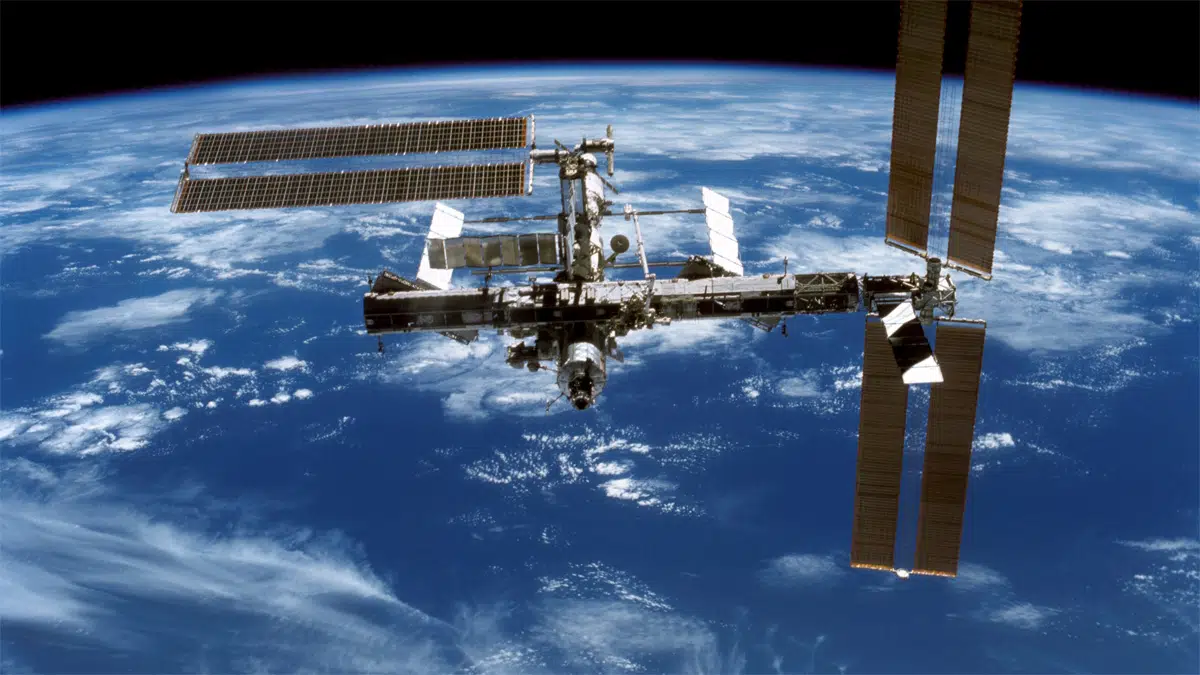
EMI on the International Space Station (ISS)

Back in the Space Shuttle program, the contact potential between the ISS and the Space Shuttle had been monitored on all docking missions. Langmuir probes, mounted on the ISS, had monitored contact potential between the ISS and any docking vehicle. No serious EMI effects were ever noted on any ISS or Space Shuttle equipment after docking.

NASA also published “Analysis of Radiated EMI from ESD events caused by Space Charging.” This effort used modeling to analyze conducted and radiated EMI caused by electrostatic-discharge (ESD) events in space. NASA engineers looked at surface charging, which could develop on the exterior of satellite surfaces, due to the interaction between those surfaces and the space plasma environment. NASA’s extensive research assessed charging mechanisms present when dielectric surfaces of any spacecraft become exposed to the space plasma environment, usually at geosynchronous Earth orbit (GEO) and POLAR orbits.

When ESD happens, stored charges are released. These create a discharge current that may generate conducted emissions, which happen when a replacement current originating as a charge is blown off a dielectric surface. This induces a replacement current flowing from a satellite or spacecraft structure.

Radiated emissions are generated by the ESD current pulse. When a rapid surface potential changes, the effect is noise induced in circuitry via capacitive coupling. Also, discharge currents can inductively induce a signal into a victim circuit. These inductive, capacitive, and field-to-circuit couplings are manifestations of transient radiated and conducted EMI.

ISS Power Filter Design for Conducted Emissions

Power-line conducted emissions also need to be controlled on the ISS to protect power quality, limit electric-field radiation, and control noise currents on vehicle structures. Because the ISS doesn’t use the radio-frequency (RF) spectrum below 100 MHz, there are no radiated emissions limits imposed on payloads below that frequency.

A manufacturer-designed filter Figure 1, prior to the publication of MIL-STD-461D, had a test source impedance using 10-mF feed-through capacitors. This filter is known as the 461B filter.
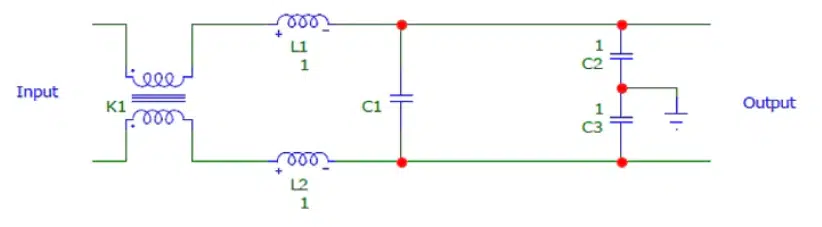
Figure1. The ISS 461B filter to suppress conducted emissions

The filter design shown in Figure 2 came after the publication of MIL-STD-461D, where the source impedance had two 50-mH line impedance stabilization networks (LISNs). This filter is known as the 461D filter, which had both Y (line-to-ground) capacitors (C5 and C6) and an X (line-to-line) capacitor (C4) as its first elements, providing a mismatch with the high source impedance.
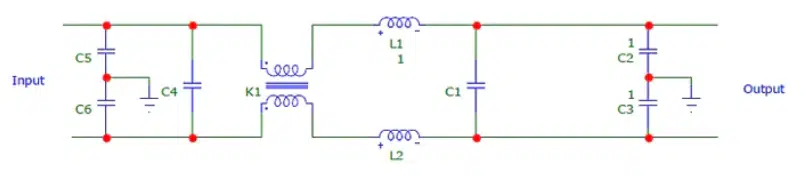
Figure 2. The 461D filter targeted to suppress conducted emissions

Mars Rover EMI

Power-conversion architectures on the Mars Rover include isolated dc-dc converters, point-of-load dc-dc converters, and EMI filters that power the camera system and processing on the Mars 2020 Rover.

Just about all of the data collected by NASA Mars Rovers returns to Earth through a relay link from the Mars surface to a Mars Reconnaissance Orbiter circling Mars. All of this science data comes from omnidirectional antennas for simplicity. However, this system is quite susceptible to RF interference coming from nearby science payloads and spacecraft subsystems, which downgrades link performance by a factor of 2+.

Most of the interference generates from Fourier overtones via switching power supplies, data lines, stepper motors, and clocks. This EMI on the spacecraft is pretty stable in frequency; however, the EMI tones’ complements will vary as the spacecraft operating mode changes.

An Adaptive EMI Mitigation study has developed computationally efficient algorithms that enable characterization and elimination of major tone interference. Such interference would degrade the data return performance from the Rover on the Mars surface to the relay orbiters overhead.

CubeSat Antenna EMI

Designing a monopole wire antenna is pretty simple for communication use on a CubeSat. A wire needs to be cut to a quarter-wavelength and a perpendicular half-wavelength ground plane must be created.

A 17.5-cm monopole is best for the CubeSat and will need a 35-cm ground plane formed by a parallel satellite surface. This ground plane would be too large for a CubeSat, so designers have to tune that wire antenna by cutting off small lengths until a desired return loss is achieved (monopole antennas can be very forgiving in reaching a desired return loss).

The perpendicular half-wavelength ground plane, which can be built using satellite external panels, needs to be constructed to provide electrical connectivity. Because RF current will flow through these panels, designers can expect a higher level of EMI influencing internal and external electronics for satellite operations. This influence will be most prevalent during transmission and will make sensor readings and bus voltages (especially I2C bus) unreliable. This may also affect transmitter electronics as well as microcontroller control of the transmitter. Installing proper electromagnetic shielding in place will help mitigate these effects.

Using a dipole antenna for the UHF band will provide overall better performance. However, the EMI problems will still exist if shielding isn’t properly applied.

CubeSats also may have an RF power supply to drive an electrothermal plasma micro-thruster. One example of such a power supply could be a 13.8-MHz, 14-V-input, 15-W design using air core inductors (Figure 3.).
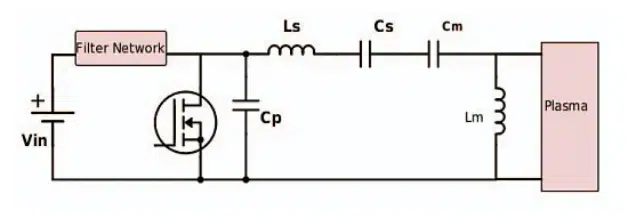
Figure 3. Plasma inverter for a plasma load with a matching network

Air-core inductors are perfect for operation in a harsh environment because they don’t use magnetic cores, thus saving space. Faraday shielding is usually added to minimize radiated EMI. Conducted EMI may be minimized via a multi-resonant input filter using PCB inductors. Reference 5 goes into much greater detail for designers.

Summary

All of the vehicles that NASA sends into space must undergo extensive EMI testing. Many of the vehicles are huge while some are much smaller, but all of these electronic systems require testing in the environment in which they will operate—the cold vacuum void of outer space. NASA has constructed such test facilities to simulate this environment at their Glenn Research Center.

The space vehicles greatly vary in size from small satellites and CubeSats to vehicles such as the Mars Rover and other large launch vehicles. All of these spacecraft have electronic devices that need to operate properly in space with a very low failure rate.

Human life, of course, must be protected against any catastrophic failures that may be caused by EMI as the prime objective. The secondary objective is to protect the very expensive space vehicles against failures due to EMI radiation from electronics within these vehicles, as well as any possible EMI from spacecraft docking with other spacecraft. NASA has been very successful in these efforts.

References

1. Electromagnetic Interference Laboratory, Glenn Research Center, NASA

2. EMI from Spacecraft Docking Systems, NASA

3. Electromagnetic Compatibility Considerations for International Space Station Payload Developers, NASA Marshall Space Flight Center

4. Analysis of Radiated EMI from ESD events caused by Space Charging, NASA

5. A compact RF power inverter with reduced EMI for a CubeSat electrothermal micro-thruster, IEEE Xplore 2017


Related

Source: Electronic Design

Recent Posts

Evans Group Unifies Four High-Rel Capacitor Leaders

5.6.2026
8

Designing 800 V DC EMC Filters: Calculation, Simulation and Measurement

4.6.2026
44

Murata and Xona Partner on LEO Satellite Navigation for Industrial Applications

3.6.2026
31

Passive Components Enable Safe and Reliable ADAS Architectures

28.5.2026
72

Current Sense Transformer Datasheet and Design‑in Guide

27.5.2026
73

Designing a USB Type‑C Flyback Planar Transformer with Frenetic’s Planar Tool

27.5.2026
34

Exxelia Extends Temperature Range of its PP Film Capacitors to 140C

1.6.2026
48

How Long-Term Storage Causes Aging in Electronic Components

26.5.2026
129

Mechanical SSC Testing as a Structural Diagnostic Tool for Tantalum Capacitor Anodes

25.5.2026
62

Upcoming Events

Jun 16
16:00 - 17:00 CEST

EMC with EMC – EMC‑compliant design with electromechanical connectors

View Calendar

Popular Posts

  • Buck Converter Design and Calculation

    0 shares
    Share 0 Tweet 0
  • Boost Converter Design and Calculation

    0 shares
    Share 0 Tweet 0
  • MLCC and Ceramic Capacitors

    0 shares
    Share 0 Tweet 0
  • Flyback Converter Design and Calculation

    0 shares
    Share 0 Tweet 0
  • LLC Resonant Converter Design and Calculation

    0 shares
    Share 0 Tweet 0
  • Dual Active Bridge (DAB) Topology

    0 shares
    Share 0 Tweet 0
  • What Electronics Engineer Needs to Know About Passive Low Pass Filters

    0 shares
    Share 0 Tweet 0
  • Capacitor Charging and Discharging

    0 shares
    Share 0 Tweet 0
  • SEPIC Converter Design and Calculation

    0 shares
    Share 0 Tweet 0
  • Earthing Systems and IEC Classification Explained

    0 shares
    Share 0 Tweet 0

Newsletter Subscription


Passive Components Blog

© EPCI - Leading Passive Components Educational and Information Site

  • Home
  • Privacy Policy
  • EPCI Membership & Advertisement
  • About

No Result
View All Result
  • Home
  • Knowledge Blog
  • Dossiers
  • PCNS

© EPCI - Leading Passive Components Educational and Information Site

This website uses cookies. By continuing to use this website you are giving consent to cookies being used. Visit our Privacy and Cookie Policy.
Go to mobile version