















- This event has passed.
Magnetic Modeling – How Frenetic Models Magnetics
How Frenetic Models Magnetics — a transparent deep-dive
Wednesday, February 25, 4:00 PM
What actually happens when Frenetic simulates a magnetic component?
Behind every inductance value, loss estimation, and thermal prediction, there is a modeling approach built on physical assumptions. Understanding how those models work — and where they reach their limits — is essential for designing with confidence.
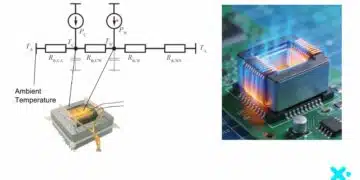
In this 30-minute session, Jonas Mühlethaler, CTO of Frenetic and Professor of Electrical Engineering at Lucerne University of Applied Sciences and Arts (HSLU), will break down Frenetic’s modeling approach step by step — from reluctance and loss calculations to thermal predictions — illustrated with a concrete example.
He will also explain where analytical models reach their limits, and why planar magnetics often call for FEM due to their geometric complexity and strong coupling effects.
What you’ll learn:
- How Frenetic builds magnetic circuit models using reluctance methods
- How core and copper losses are calculated
- How thermal predictions are derived
- Where analytical models perform reliably
- Why certain geometries — especially planar magnetics — challenge simplified assumptions
This session is not about comparing modeling tools.
It’s a transparent look at how physical modeling is applied in real magnetic design.
