






Passive Components Blog
No Result
View All Result
  • Home
  • NewsFilter
    • All
    • Aerospace & Defence
    • Antenna
    • Applications
    • Automotive
    • Capacitors
    • Circuit Protection Devices
    • electro-mechanical news
    • Filters
    • Fuses
    • Inductors
    • Industrial
    • Integrated Passives
    • inter-connect news
    • Market & Supply Chain
    • Market Insights
    • Medical
    • Modelling and Simulation
    • New Materials & Supply
    • New Technologies
    • Non-linear Passives
    • Oscillators
    • Passive Sensors News
    • Resistors
    • RF & Microwave
    • Telecommunication
    • Weekly Digest

    Murata and Xona Partner on LEO Satellite Navigation for Industrial Applications

    Bourns Offers Custom Magnetics for 3‑Phase Flying Capacitor Inverters

    YAGEO Releases Cost Efficient Pt‑RTD Sensors with Ni wires

    Nvidia Vera Rubin: Why One AI Rack Needs So Many More MLCC Capacitors

    Stackpole Introduces 1400A Busbar Shunt Resistors

    Tecate Unveils High‑temp 105C Supercapacitors for Harsh‑Environment Designs

    Bourns Expands 1000V High‑Power Fuses for Semiconductor and Battery Protection

    Passive Components in 2026: From Invisible Commodity to Design Parameter

    Bourns Introduces High Current Chip Ferrite Beads for Dense Power Rails

    Trending Tags

    • Ripple Current
    • RF
    • Leakage Current
    • Tantalum vs Ceramic
    • Snubber
    • Low ESR
    • Feedthrough
    • Derating
    • Dielectric Constant
    • New Products
    • Market Reports
  • VideoFilter
    • All
    • Antenna videos
    • Capacitor videos
    • Circuit Protection Video
    • Filter videos
    • Fuse videos
    • Inductor videos
    • Inter-Connect Video
    • Non-linear passives videos
    • Oscillator videos
    • Passive sensors videos
    • Resistor videos

    Current Sense Transformer Datasheet and Design‑in Guide

    Designing a USB Type‑C Flyback Planar Transformer with Frenetic’s Planar Tool

    Magnetics Design in High‑Frequency GaN Converters

    Qi2 Wireless Charging: Inductors, Capacitors and EMC Filters

    Two‑capacitor paradox explained for engineers

    Capacitances of Nonlinear MLCCs: What Datasheets Don’t Tell You

    Tapped Inductor Buck Converter Fundamentals

    Planar vs Conventional Transformer: When it Make Sense

    Modeling Fringing Field Losses in Inductors & Transformers

    Trending Tags

    • Capacitors explained
    • Inductors explained
    • Resistors explained
    • Filters explained
    • Application Video Guidelines
    • EMC
    • New Products
    • Ripple Current
    • Simulation
    • Tantalum vs Ceramic
  • Knowledge Blog
  • DossiersNew
  • Suppliers
    • Who is Who
  • PCNS
    • PCNS 2025
    • PCNS 2023
    • PCNS 2021
    • PCNS 2019
    • PCNS 2017
  • Events
  • Home
  • NewsFilter
    • All
    • Aerospace & Defence
    • Antenna
    • Applications
    • Automotive
    • Capacitors
    • Circuit Protection Devices
    • electro-mechanical news
    • Filters
    • Fuses
    • Inductors
    • Industrial
    • Integrated Passives
    • inter-connect news
    • Market & Supply Chain
    • Market Insights
    • Medical
    • Modelling and Simulation
    • New Materials & Supply
    • New Technologies
    • Non-linear Passives
    • Oscillators
    • Passive Sensors News
    • Resistors
    • RF & Microwave
    • Telecommunication
    • Weekly Digest

    Murata and Xona Partner on LEO Satellite Navigation for Industrial Applications

    Bourns Offers Custom Magnetics for 3‑Phase Flying Capacitor Inverters

    YAGEO Releases Cost Efficient Pt‑RTD Sensors with Ni wires

    Nvidia Vera Rubin: Why One AI Rack Needs So Many More MLCC Capacitors

    Stackpole Introduces 1400A Busbar Shunt Resistors

    Tecate Unveils High‑temp 105C Supercapacitors for Harsh‑Environment Designs

    Bourns Expands 1000V High‑Power Fuses for Semiconductor and Battery Protection

    Passive Components in 2026: From Invisible Commodity to Design Parameter

    Bourns Introduces High Current Chip Ferrite Beads for Dense Power Rails

    Trending Tags

    • Ripple Current
    • RF
    • Leakage Current
    • Tantalum vs Ceramic
    • Snubber
    • Low ESR
    • Feedthrough
    • Derating
    • Dielectric Constant
    • New Products
    • Market Reports
  • VideoFilter
    • All
    • Antenna videos
    • Capacitor videos
    • Circuit Protection Video
    • Filter videos
    • Fuse videos
    • Inductor videos
    • Inter-Connect Video
    • Non-linear passives videos
    • Oscillator videos
    • Passive sensors videos
    • Resistor videos

    Current Sense Transformer Datasheet and Design‑in Guide

    Designing a USB Type‑C Flyback Planar Transformer with Frenetic’s Planar Tool

    Magnetics Design in High‑Frequency GaN Converters

    Qi2 Wireless Charging: Inductors, Capacitors and EMC Filters

    Two‑capacitor paradox explained for engineers

    Capacitances of Nonlinear MLCCs: What Datasheets Don’t Tell You

    Tapped Inductor Buck Converter Fundamentals

    Planar vs Conventional Transformer: When it Make Sense

    Modeling Fringing Field Losses in Inductors & Transformers

    Trending Tags

    • Capacitors explained
    • Inductors explained
    • Resistors explained
    • Filters explained
    • Application Video Guidelines
    • EMC
    • New Products
    • Ripple Current
    • Simulation
    • Tantalum vs Ceramic
  • Knowledge Blog
  • DossiersNew
  • Suppliers
    • Who is Who
  • PCNS
    • PCNS 2025
    • PCNS 2023
    • PCNS 2021
    • PCNS 2019
    • PCNS 2017
  • Events
No Result
View All Result
Passive Components Blog
No Result
View All Result

Exxelia to Exhibits Space & Military Grade Passives at CMSE – booth # B13 –

19.4.2018
Reading Time: 2 mins read
A A

source: Exxelia news

April 19th, 2018 – Longwood, FL, USA – Exxelia, manufacturer of hi-rel passive components and electromechanical solutions, will be showcasing Military and Space-qualified passive components (ESA QPL, MIL, DSCC, etc.) at the 2018 Components for Military and Space Electronics conference (CMSE) – booth# 13 – at the Sheraton Four Point Hotel in Los Angeles on May 7-10, 2018.

RelatedPosts

Murata and Xona Partner on LEO Satellite Navigation for Industrial Applications

Bourns Offers Custom Magnetics for 3‑Phase Flying Capacitor Inverters

YAGEO Releases Cost Efficient Pt‑RTD Sensors with Ni wires

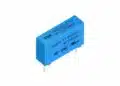
CMSE is one of the most recognized conference dedicated to the use of component in military and space systems. As a key supplier of highly reliable passive components, Exxelia will be displaying in booth B13, a wide variety of military and space-qualified capacitors (ceramic, tantalum, film, electrolytic aluminum), wound magnetics solutions and EMI/RFI filters.

Two new ranges of MIL-qualified tantalum capacitors: MIL39006/22 & MIL39006/25

The recently introduced ranges of MIL-qualified tantalum capacitors will be showcased on the company booth (B13). MIL 39006/22 and MIL 39006/25 respectively equivalent to CLR79 and CLR81 types feature hermetically sealed cylindrical tantalum cases and axial leads are available in T1, T2 T3 and T4 cases with extended capacitance and voltage ratings. MIL 39006/22 is qualified for voltages from 6V to 125V and provides from 1200µF @ 6V to 56 µF @ 125V. MIL 39006/25 is qualified for voltages from 25V to 125V and delivers from 680µF @ 25V to 82 µF @ 125V. Both ranges combine high energy density with a large operating temperature range of -55°C – +125°C and H vibrations and shocks resistance.

Alsic 20G, Aluminum Electrolytic capacitors with large operating temperatures

Alsic 20G is a range of radial leaded aluminum electrolytic capacitors for typical use in military and aerospace high frequency switch-mode power supplies requiring advanced performance under all operating conditions. Alsic 20G operational rated life is 8,000 hours at rated voltage and 105°C, and provides from 330µF @ 500V to 80 000μF @16V. The range features ruggedized design with insulating aluminum case and tin coated leads. With capacitance stability at high temperature, low inductance and impedance, competitive ESR and high ripple current, these capacitors are perfectly adapted for mission-critical applications.

C48X dielectric: NPO and X7R advantages combined

Under working voltage, C48X dielectric provides equivalent capacitance values to an X7R material with the advantage of a very low dissipation factor (less than 5.10-4). It can also withstand very high dV/dt, up to 10kV/µs which makes it perfect for pulse and charge/discharge applications for firing units. Exxelia’s C48X capacitors, available from 200V to 5kV with EIA sizes from 1812 to 16080, are ideally suited for power applications where heat dissipation may be detrimental to performances and reliability, such as 400Hz Aircraft, Ignition systems, and Space, or as Precision/filtering capacitance in thermally challenged environment for AC or DC voltage.
Related

Recent Posts

Murata and Xona Partner on LEO Satellite Navigation for Industrial Applications

3.6.2026
12

Nvidia Vera Rubin: Why One AI Rack Needs So Many More MLCC Capacitors

2.6.2026
52

Tecate Unveils High‑temp 105C Supercapacitors for Harsh‑Environment Designs

2.6.2026
13

Passive Components in 2026: From Invisible Commodity to Design Parameter

2.6.2026
21

May 2026 Interconnect, Passives and Electromechanical Components Market Insights

29.5.2026
94

Passive Components Enable Safe and Reliable ADAS Architectures

28.5.2026
68

YMIN Releases Square Supercapacitors for AI Server Power System

27.5.2026
51

Exxelia Extends Temperature Range of its PP Film Capacitors to 140C

1.6.2026
47

How Long-Term Storage Causes Aging in Electronic Components

26.5.2026
118

Upcoming Events

Jun 16
16:00 - 17:00 CEST

EMC with EMC – EMC‑compliant design with electromechanical connectors

View Calendar

Popular Posts

  • Buck Converter Design and Calculation

    0 shares
    Share 0 Tweet 0
  • Boost Converter Design and Calculation

    0 shares
    Share 0 Tweet 0
  • Flyback Converter Design and Calculation

    0 shares
    Share 0 Tweet 0
  • MLCC and Ceramic Capacitors

    0 shares
    Share 0 Tweet 0
  • LLC Resonant Converter Design and Calculation

    0 shares
    Share 0 Tweet 0
  • Capacitor Charging and Discharging

    0 shares
    Share 0 Tweet 0
  • What Electronics Engineer Needs to Know About Passive Low Pass Filters

    0 shares
    Share 0 Tweet 0
  • Dual Active Bridge (DAB) Topology

    0 shares
    Share 0 Tweet 0
  • Ripple Current and its Effects on the Performance of Capacitors

    3 shares
    Share 3 Tweet 0
  • SEPIC Converter Design and Calculation

    0 shares
    Share 0 Tweet 0

Newsletter Subscription


Passive Components Blog

© EPCI - Leading Passive Components Educational and Information Site

  • Home
  • Privacy Policy
  • EPCI Membership & Advertisement
  • About

No Result
View All Result
  • Home
  • Knowledge Blog
  • Dossiers
  • PCNS

© EPCI - Leading Passive Components Educational and Information Site

This website uses cookies. By continuing to use this website you are giving consent to cookies being used. Visit our Privacy and Cookie Policy.
Go to mobile version