







Passive Components Blog
No Result
View All Result
  • Home
  • NewsFilter
    • All
    • Aerospace & Defence
    • Antenna
    • Applications
    • Automotive
    • Capacitors
    • Circuit Protection Devices
    • electro-mechanical news
    • Filters
    • Fuses
    • Inductors
    • Industrial
    • Integrated Passives
    • inter-connect news
    • Market & Supply Chain
    • Market Insights
    • Medical
    • Modelling and Simulation
    • New Materials & Supply
    • New Technologies
    • Non-linear Passives
    • Oscillators
    • Passive Sensors News
    • Resistors
    • RF & Microwave
    • Telecommunication
    • Weekly Digest

    RF Inductors: Selection and Design Challenges for High-Frequency Circuits

    Wk 45 Electronics Supply Chain Digest

    Transformer Safety IEC 61558 Standard

    ESR of Capacitors, Measurements and Applications

    Murata Christophe Pottier Appointed President of EPCIA

    3-Phase EMI Filter Design, Simulation, Calculation and Test

    YAGEO Unveils Compact 2.4 GHz SMD Antenna

    KYOCERA AVX Releases Antenna for Iridium Satellite IoT Applications

    Molex Releases Industry-First Quad-Row Board-to-Board Connectors with EMI Shields

    Trending Tags

    • Ripple Current
    • RF
    • Leakage Current
    • Tantalum vs Ceramic
    • Snubber
    • Low ESR
    • Feedthrough
    • Derating
    • Dielectric Constant
    • New Products
    • Market Reports
  • VideoFilter
    • All
    • Antenna videos
    • Capacitor videos
    • Circuit Protection Video
    • Filter videos
    • Fuse videos
    • Inductor videos
    • Inter-Connect Video
    • Non-linear passives videos
    • Oscillator videos
    • Passive sensors videos
    • Resistor videos

    RF Inductors: Selection and Design Challenges for High-Frequency Circuits

    Transformer Safety IEC 61558 Standard

    3-Phase EMI Filter Design, Simulation, Calculation and Test

    Transformer Design Optimization for Power Electronics Applications

    Common Mode Chokes Selection for RF Circuits in Next-Generation Communication Systems

    Capacitor Self-balancing in a Flying-Capacitor Buck Converter

    How to Select Ferrite Bead for Filtering in Buck Boost Converter

    Power Inductors Future: Minimal Losses and Compact Designs

    Percolation Phenomenon: Degradation of Molded Power Inductors in DC/DC Converters

    Trending Tags

    • Capacitors explained
    • Inductors explained
    • Resistors explained
    • Filters explained
    • Application Video Guidelines
    • EMC
    • New Products
    • Ripple Current
    • Simulation
    • Tantalum vs Ceramic
  • Knowledge Blog
  • Suppliers
    • Who is Who
  • PCNS
    • PCNS 2025
    • PCNS 2023
    • PCNS 2021
    • PCNS 2019
    • PCNS 2017
  • Events
  • Home
  • NewsFilter
    • All
    • Aerospace & Defence
    • Antenna
    • Applications
    • Automotive
    • Capacitors
    • Circuit Protection Devices
    • electro-mechanical news
    • Filters
    • Fuses
    • Inductors
    • Industrial
    • Integrated Passives
    • inter-connect news
    • Market & Supply Chain
    • Market Insights
    • Medical
    • Modelling and Simulation
    • New Materials & Supply
    • New Technologies
    • Non-linear Passives
    • Oscillators
    • Passive Sensors News
    • Resistors
    • RF & Microwave
    • Telecommunication
    • Weekly Digest

    RF Inductors: Selection and Design Challenges for High-Frequency Circuits

    Wk 45 Electronics Supply Chain Digest

    Transformer Safety IEC 61558 Standard

    ESR of Capacitors, Measurements and Applications

    Murata Christophe Pottier Appointed President of EPCIA

    3-Phase EMI Filter Design, Simulation, Calculation and Test

    YAGEO Unveils Compact 2.4 GHz SMD Antenna

    KYOCERA AVX Releases Antenna for Iridium Satellite IoT Applications

    Molex Releases Industry-First Quad-Row Board-to-Board Connectors with EMI Shields

    Trending Tags

    • Ripple Current
    • RF
    • Leakage Current
    • Tantalum vs Ceramic
    • Snubber
    • Low ESR
    • Feedthrough
    • Derating
    • Dielectric Constant
    • New Products
    • Market Reports
  • VideoFilter
    • All
    • Antenna videos
    • Capacitor videos
    • Circuit Protection Video
    • Filter videos
    • Fuse videos
    • Inductor videos
    • Inter-Connect Video
    • Non-linear passives videos
    • Oscillator videos
    • Passive sensors videos
    • Resistor videos

    RF Inductors: Selection and Design Challenges for High-Frequency Circuits

    Transformer Safety IEC 61558 Standard

    3-Phase EMI Filter Design, Simulation, Calculation and Test

    Transformer Design Optimization for Power Electronics Applications

    Common Mode Chokes Selection for RF Circuits in Next-Generation Communication Systems

    Capacitor Self-balancing in a Flying-Capacitor Buck Converter

    How to Select Ferrite Bead for Filtering in Buck Boost Converter

    Power Inductors Future: Minimal Losses and Compact Designs

    Percolation Phenomenon: Degradation of Molded Power Inductors in DC/DC Converters

    Trending Tags

    • Capacitors explained
    • Inductors explained
    • Resistors explained
    • Filters explained
    • Application Video Guidelines
    • EMC
    • New Products
    • Ripple Current
    • Simulation
    • Tantalum vs Ceramic
  • Knowledge Blog
  • Suppliers
    • Who is Who
  • PCNS
    • PCNS 2025
    • PCNS 2023
    • PCNS 2021
    • PCNS 2019
    • PCNS 2017
  • Events
No Result
View All Result
Passive Components Blog
No Result
View All Result

Leading Electrolytic Capacitor Manufacturer Ordered to Pay $60 Million Criminal Fine for Price Fixing

8.10.2018
Reading Time: 2 mins read
A A
Judge gavel and computer keyboard on wooden vintage background

Judge gavel and computer keyboard on wooden vintage background

Source: Imperial Valley News Center news

San Francisco, California – Nippon Chemi-Con was sentenced to pay a $60 million criminal fine for its role in a conspiracy to fix prices for electrolytic capacitors sold to customers in the United States and elsewhere, the Department of Justice announced Wednesday. 

RelatedPosts

RF Inductors: Selection and Design Challenges for High-Frequency Circuits

Wk 45 Electronics Supply Chain Digest

Transformer Safety IEC 61558 Standard

The $60 million fine is the largest fine imposed in the Justice Department’s investigation into collusion in the capacitors industry.  In addition to the $60 million criminal fine, Nippon Chemi-Con was also sentenced to a five-year term of probation during which the company must implement an effective compliance program and submit annual written reports on its compliance efforts.

“Today’s sentence affirms the Antitrust Division’s commitment to holding companies, whether foreign or domestic, accountable for conspiring to cheat American consumers,” said Assistant Attorney General Makan Delrahim of the Department of Justice’s Antitrust Division.  “In addition to the significant fine, the five-year probation period promotes deterrence and will help to protect the public.”

In May 2018, Nippon Chemi-Con pleaded guilty to conspiring with others to suppress and eliminate competition for electrolytic capacitors from at least as early as November 2001 to January 2014.  Nippon Chemi-Con was charged by indictment filed in October 2017 in the U.S. District Court for the Northern District of California.  The indictment charged Nippon Chemi-Con with carrying out the conspiracy by agreeing with co-conspirators to fix prices of electrolytic capacitors during meetings and other communications.  Capacitors were then sold in accordance with these agreements.  As part of the conspiracy, Nippon Chemi-Con and its co-conspirators took steps to conceal the conspiracy, including the use of code names and providing misleading justifications for prices and bids submitted to customers in order to cover up their collusive conduct.

In total, eight companies and ten individuals have been charged for their participation in this conspiracy.  All eight companies have pleaded guilty and have been sentenced to criminal fines collectively totaling over $150 million.  Of the ten individuals charged, two have pleaded guilty, and eight remain under indictment, including four Nippon Chemi-Con executives: Takuro Isawa, Takeshi Matsuzaka, Yasutoshi Ohno, and Kaname Takahashi.

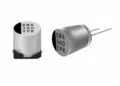
Electrolytic capacitors store and regulate electrical current in a variety of electronic products, including computers, televisions, car engine and airbag systems, home appliances, and office equipment.

This case results from ongoing federal antitrust investigations being conducted by the Antitrust Division’s San Francisco Office and the FBI’s San Francisco Field Office into price fixing, bid rigging and other anticompetitive conduct in the capacitor industry.

Related

Recent Posts

ESR of Capacitors, Measurements and Applications

7.11.2025
32

Murata Christophe Pottier Appointed President of EPCIA

7.11.2025
12

3-Phase EMI Filter Design, Simulation, Calculation and Test

6.11.2025
47

Smoltek CNF-MIM Capacitors Pass 1,000h Reliability Test

6.11.2025
12

Capacitor Lead Times: October 2025

6.11.2025
64

Paumanok Unveils Aluminum Capacitor Foils World Markets Study 2025-2030

6.11.2025
14

Microhardness — the Hidden Key to Understanding MnOx Cathode Quality in Tantalum Capacitors

3.11.2025
26

Samsung to Invest in its Philippine MLCC Facility to Meet Automotive Demand

3.11.2025
35

Lightweight Model for MLCC Appearance Defect Detection

3.11.2025
28

Upcoming Events

Nov 11
17:00 - 18:00 CET

Industrial Applications Demand More from Interconnects in Next-Gen Designs

Nov 12
11:00 - 12:00 CET

PCB Design: Impedance is for everyone!

Nov 12
November 12 @ 12:00 - November 13 @ 14:15 EST

Microelectronic Packaging Failure Modes and Analysis

View Calendar

Popular Posts

  • Buck Converter Design and Calculation

    0 shares
    Share 0 Tweet 0
  • Boost Converter Design and Calculation

    0 shares
    Share 0 Tweet 0
  • LLC Resonant Converter Design and Calculation

    0 shares
    Share 0 Tweet 0
  • Flyback Converter Design and Calculation

    0 shares
    Share 0 Tweet 0
  • Ripple Current and its Effects on the Performance of Capacitors

    3 shares
    Share 3 Tweet 0
  • MLCC and Ceramic Capacitors

    0 shares
    Share 0 Tweet 0
  • Dual Active Bridge (DAB) Topology

    0 shares
    Share 0 Tweet 0
  • SEPIC Converter Design and Calculation

    0 shares
    Share 0 Tweet 0
  • What is a Dielectric Constant and DF of Plastic Materials?

    4 shares
    Share 4 Tweet 0
  • Flying Capacitors

    0 shares
    Share 0 Tweet 0

Newsletter Subscription


Passive Components Blog

© EPCI - Leading Passive Components Educational and Information Site

  • Home
  • Privacy Policy
  • EPCI Membership & Advertisement
  • About

No Result
View All Result
  • Home
  • Knowledge Blog
  • PCNS

© EPCI - Leading Passive Components Educational and Information Site

This website uses cookies. By continuing to use this website you are giving consent to cookies being used. Visit our Privacy and Cookie Policy.
Go to mobile version