






Passive Components Blog
No Result
View All Result
  • Home
  • NewsFilter
    • All
    • Aerospace & Defence
    • Antenna
    • Applications
    • Automotive
    • Capacitors
    • Circuit Protection Devices
    • electro-mechanical news
    • Filters
    • Fuses
    • Inductors
    • Industrial
    • Integrated Passives
    • inter-connect news
    • Market & Supply Chain
    • Market Insights
    • Medical
    • Modelling and Simulation
    • New Materials & Supply
    • New Technologies
    • Non-linear Passives
    • Oscillators
    • Passive Sensors News
    • Resistors
    • RF & Microwave
    • Telecommunication
    • Weekly Digest

    Bourns Introduces Automotive BMS Signal Transformer with Integrated Common Mode Chokes

    Itelcond Introduces High‑Voltage Aluminium Capacitors for Modern IGBT DC‑links

    Bourns Introduces Automotive Shielded Power Inductors for Compact DC‑DC Converters

    EMC Design Fundamentals: Safe Use of Varistors and Common Mode Chokes in Mains and Data-Line Filters

    Murata Unveils Lead Disc Ceramic Capacitors for Automotive Safety and EMI Suppression

    SCHURTER Releases Intelligent Three‑Terminal Fuses for Safer Li‑ion Battery Systems

    Can Copper Conductive Inks Displace Silver in Hybrid Electronics?

    Square-Wave Harmonics and RMS Currents in Power Converters

    LeanBOM: Practical Cross‑Technology Capacitor Search by Real Working Conditions

    Trending Tags

    • Ripple Current
    • RF
    • Leakage Current
    • Tantalum vs Ceramic
    • Snubber
    • Low ESR
    • Feedthrough
    • Derating
    • Dielectric Constant
    • New Products
    • Market Reports
  • VideoFilter
    • All
    • Antenna videos
    • Capacitor videos
    • Circuit Protection Video
    • Filter videos
    • Fuse videos
    • Inductor videos
    • Inter-Connect Video
    • Non-linear passives videos
    • Oscillator videos
    • Passive sensors videos
    • Resistor videos

    EMC Design Fundamentals: Safe Use of Varistors and Common Mode Chokes in Mains and Data-Line Filters

    Ferrite versus Nanocrystalline Power Inductor Cores: Turns, Gap and Size

    KYOCERA AVX Presents Antenna Integrator Studio Tutorial for Antenna Placement and RF Design

    Power Design Simulation Tools for Faster Inductor Selection and Loss Optimization

    EMC‑Compliant PCB and Connector Design Guidelines

    Why Isolated DC/DC Power Supplies Fail Late, Würth Elektronik Podcast

    Designing 800 V DC EMC Filters: Calculation, Simulation and Measurement

    Current Sense Transformer Datasheet and Design‑in Guide

    Designing a USB Type‑C Flyback Planar Transformer with Frenetic’s Planar Tool

    Trending Tags

    • Capacitors explained
    • Inductors explained
    • Resistors explained
    • Filters explained
    • Application Video Guidelines
    • EMC
    • New Products
    • Ripple Current
    • Simulation
    • Tantalum vs Ceramic
  • Knowledge Blog
  • Dossiers
    • AI Hardware Dossier
    • Power Converter Dossier
    • Automotive Dossier
    • Capacitor Dossier
    • Resistor Dossier
    • Inductor Dossier
    • Circuit Protection Dossier
  • Suppliers
    • Who is Who
  • PCNS
    • PCNS 2025
    • PCNS 2023
    • PCNS 2021
    • PCNS 2019
    • PCNS 2017
  • Events
  • Home
  • NewsFilter
    • All
    • Aerospace & Defence
    • Antenna
    • Applications
    • Automotive
    • Capacitors
    • Circuit Protection Devices
    • electro-mechanical news
    • Filters
    • Fuses
    • Inductors
    • Industrial
    • Integrated Passives
    • inter-connect news
    • Market & Supply Chain
    • Market Insights
    • Medical
    • Modelling and Simulation
    • New Materials & Supply
    • New Technologies
    • Non-linear Passives
    • Oscillators
    • Passive Sensors News
    • Resistors
    • RF & Microwave
    • Telecommunication
    • Weekly Digest

    Bourns Introduces Automotive BMS Signal Transformer with Integrated Common Mode Chokes

    Itelcond Introduces High‑Voltage Aluminium Capacitors for Modern IGBT DC‑links

    Bourns Introduces Automotive Shielded Power Inductors for Compact DC‑DC Converters

    EMC Design Fundamentals: Safe Use of Varistors and Common Mode Chokes in Mains and Data-Line Filters

    Murata Unveils Lead Disc Ceramic Capacitors for Automotive Safety and EMI Suppression

    SCHURTER Releases Intelligent Three‑Terminal Fuses for Safer Li‑ion Battery Systems

    Can Copper Conductive Inks Displace Silver in Hybrid Electronics?

    Square-Wave Harmonics and RMS Currents in Power Converters

    LeanBOM: Practical Cross‑Technology Capacitor Search by Real Working Conditions

    Trending Tags

    • Ripple Current
    • RF
    • Leakage Current
    • Tantalum vs Ceramic
    • Snubber
    • Low ESR
    • Feedthrough
    • Derating
    • Dielectric Constant
    • New Products
    • Market Reports
  • VideoFilter
    • All
    • Antenna videos
    • Capacitor videos
    • Circuit Protection Video
    • Filter videos
    • Fuse videos
    • Inductor videos
    • Inter-Connect Video
    • Non-linear passives videos
    • Oscillator videos
    • Passive sensors videos
    • Resistor videos

    EMC Design Fundamentals: Safe Use of Varistors and Common Mode Chokes in Mains and Data-Line Filters

    Ferrite versus Nanocrystalline Power Inductor Cores: Turns, Gap and Size

    KYOCERA AVX Presents Antenna Integrator Studio Tutorial for Antenna Placement and RF Design

    Power Design Simulation Tools for Faster Inductor Selection and Loss Optimization

    EMC‑Compliant PCB and Connector Design Guidelines

    Why Isolated DC/DC Power Supplies Fail Late, Würth Elektronik Podcast

    Designing 800 V DC EMC Filters: Calculation, Simulation and Measurement

    Current Sense Transformer Datasheet and Design‑in Guide

    Designing a USB Type‑C Flyback Planar Transformer with Frenetic’s Planar Tool

    Trending Tags

    • Capacitors explained
    • Inductors explained
    • Resistors explained
    • Filters explained
    • Application Video Guidelines
    • EMC
    • New Products
    • Ripple Current
    • Simulation
    • Tantalum vs Ceramic
  • Knowledge Blog
  • Dossiers
    • AI Hardware Dossier
    • Power Converter Dossier
    • Automotive Dossier
    • Capacitor Dossier
    • Resistor Dossier
    • Inductor Dossier
    • Circuit Protection Dossier
  • Suppliers
    • Who is Who
  • PCNS
    • PCNS 2025
    • PCNS 2023
    • PCNS 2021
    • PCNS 2019
    • PCNS 2017
  • Events
No Result
View All Result
Passive Components Blog
No Result
View All Result

Military and Aerospace Set for Growth in 2020s

19.3.2020
Reading Time: 4 mins read
A A

Electronics Sourcing published an article written by Vice president of the military and aerospace segment at TTI, Roger Raley, who examines some long-awaited aerospace advances that will begin to be realized in the decade ahead.

The perception is that aerospace technology is slow to change, but a look back at the events of the last decade makes it clear that this has not always been the case. In fact, things have happened relatively quickly.

RelatedPosts

Bourns Introduces Automotive BMS Signal Transformer with Integrated Common Mode Chokes

Itelcond Introduces High‑Voltage Aluminium Capacitors for Modern IGBT DC‑links

Bourns Introduces Automotive Shielded Power Inductors for Compact DC‑DC Converters

After the Space Shuttle was retired in 2011, the United States had to rely on Russia to bring astronauts to and from orbit. Today, we’re preparing for SpaceX and Boeing to fly crews to the International Space Station. In the last decade, the F-35 entered its second decade of development; today, more than 400 aircraft have been delivered. At the start of the 2010s only a handful of drones had been registered with the FAA; over 1.5 million have been registered today, with over 420,000 drones registered for commercial use.

As we look to the new decade, this pace of change is set to continue. Military expenditures are on the rise again, with global defense spending expected to grow three to four percent. In the US, defense spending is up $20 billion this year over 2019’s budget, while foreign military exports increased 33 percent in 2018 and another six percent in 2019. Finally, private spaceflight has continued to grow: SpaceX now has nearly 200 satellites in low Earth orbit and plans to fly private citizens around the moon in 2023, while Blue Origin just opened a new engine plant in Huntsville, Alabama that it says will soon produce 42 engines per year.

Commercial Air Travel Evolves

When we look back at this decade in the future, we’ll see 2020 as the point where key technologies crossed from the realm of possibility to practical reality. As hybrids and electric vehicles make shipping and ground transportation cleaner, we’re also on the verge of seeing electrification in aircraft, with hybrid-electric engines and improvements in battery technology making the future of air travel less damaging to our atmosphere.

In addition to the expanded number of commercial drones, we’re coming closer to the development of urban air transport. While these might not be the “flying cars” of science fiction, projects like Uber Elevate are bringing the idea of intra-urban air travel to cities including Dallas, Los Angeles and Melbourne.

With these projects, and with technologies such as electric vertical takeoff and landing, we’ll see new opportunities around environmental sustainability and urban planning as well. As technologies improve airframe design and efficiency, the 2020s may also see the return of supersonic passenger jets, and the rise of more technology in the form of cockpit automation and the use of AI and predictive analytics to make travel safer and more efficient.

Air Defense Expands

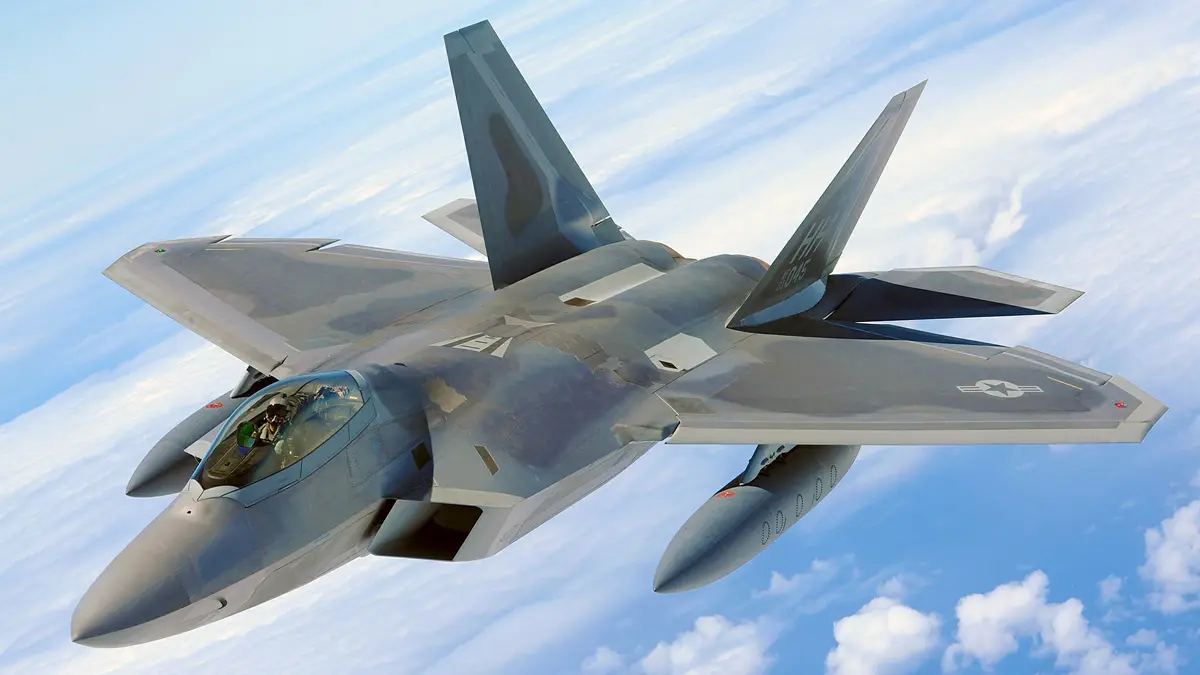
Over 10,000 new defense aircraft will be delivered globally through 2029 as the nations of the world modernize and expand their air defense capabilities; 20.2 percent of those deliveries are in competition. In addition to aircraft, new technologies, including airborne cyber-warfare capabilities and hypersonic missiles, will provide additional protection to warfighters and civilian populations alike.

Technological advances will see increased spending on military technology. The US is upgrading and modernizing its nuclear arsenal along with the lower tier air and missile defense sensors (LTAMDS), the next-gen radar for the Patriot missile defense system. Also, the US Air Force is moving to develop future jet fighters in five-year cycles using the best technology available today, versus the multi-decade design cycles of the past.

With the growth in connected computing on the battlefield, these next-generation air defense systems will rely on networking and sensing technology that will keep drones and piloted aircraft aware of changing conditions in real-time.

A Space Economy Emerges

From the growth of commercial space flight to the announcement of the new US Space Force, expect the next decade to bring revolutionary developments in both human and unmanned space flight.

Commercial space travel is moving toward viability, with planned suborbital tourist flights and trips to low Earth orbit. Meanwhile, NASA is preparing for the launch of the James Webb Space Telescope, the successor to the Hubble Space Telescope, and plans to return humans to the moon by 2024 in preparation for an eventual manned mission to Mars.

In fact, NASA itself predicts that the next economic revolution will happen outside Earth’s atmosphere – a future that holds “a space economy built on mining, tourism, and scientific research that will power and empower future generations,” according to a statement on NASA.gov.

Mining asteroids for precious metals, or for resources needed to enhance life on Earth, may seem like the realm of science fiction; however, this decade will likely see technologies put into place that make those fantasies come to life.

Ready for Takeoff?

The technological groundwork that will be laid this decade will drive significant, rapid and almost unlimited advances in air, defense and space. The biggest of these daydreams – electric aircraft, urban air mobility, colonizing and working in space – have yet to arrive, but we can see glimpses of them on the horizon.

Electronics will be among the biggest drivers of our ability to achieve these advances; not only the components available today, but those in development and the new technologies engineers are just beginning to imagine. The technological breakthroughs of the 2020s will lead us to safer and cleaner air travel, sustainable space flight and more.


Related

Source: Electronics Sourcing, TTI

Recent Posts

Square-Wave Harmonics and RMS Currents in Power Converters

14.7.2026
36

LeanBOM: Practical Cross‑Technology Capacitor Search by Real Working Conditions

14.7.2026
49

In the Age of AI, Every Watt Counts: Implications for Components

13.7.2026
59

RF Filters and Passive Components Enabling the 7 Missile RF Subsystems

9.7.2026
54

Vishay Unveils Multi-Turn Position Sensor for Harsh Industrial Environments

7.7.2026
35

ECIA Industry Pulse June 2026 Reaches Five‑Year High

1.7.2026
104

YAGEO Announces July 2026 Capacitor Price Increase

1.7.2026
866

MLCCs in the Age of AI: Q2 2026 Market Tightness

30.6.2026
525

AI Hardware Demand for Passive Components Dossier

30.6.2026
168

Upcoming Events

Jul 21
16:00 - 17:00 CEST

Safety by design: X and Y Interference suppression capacitors for power line filters

Jul 28
8:00 - 11:00 CEST

Post Procurement Testing of EEE Components for LEO Space Applications

Jul 29
17:30 - 18:30 CEST

To Ferrite or to Nanocrystalline in Transformer Design

View Calendar

Popular Posts

  • Boost Converter Design and Calculation

    0 shares
    Share 0 Tweet 0
  • Buck Converter Design and Calculation

    0 shares
    Share 0 Tweet 0
  • YAGEO Announces July 2026 Capacitor Price Increase

    0 shares
    Share 0 Tweet 0
  • Flyback Converter Design and Calculation

    0 shares
    Share 0 Tweet 0
  • LLC Resonant Converter Design and Calculation

    0 shares
    Share 0 Tweet 0
  • MLCC and Ceramic Capacitors

    0 shares
    Share 0 Tweet 0
  • Earthing Systems and IEC Classification Explained

    0 shares
    Share 0 Tweet 0
  • MLCCs in the Age of AI: Q2 2026 Market Tightness

    0 shares
    Share 0 Tweet 0
  • Nvidia Vera Rubin: Why One AI Rack Needs So Many More MLCC Capacitors

    0 shares
    Share 0 Tweet 0
  • Dual Active Bridge (DAB) Topology

    0 shares
    Share 0 Tweet 0

Newsletter Subscription


Passive Components Blog

© EPCI - Leading Passive Components Educational and Information Site

  • Home
  • Privacy Policy
  • EPCI Membership & Advertisement
  • About

No Result
View All Result
  • Home
  • Knowledge Blog
  • Dossiers
  • PCNS

© EPCI - Leading Passive Components Educational and Information Site

This website uses cookies. By continuing to use this website you are giving consent to cookies being used. Visit our Privacy and Cookie Policy.
Go to mobile version