




Passive Components Blog
No Result
View All Result
  • Home
  • NewsFilter
    • All
    • Aerospace & Defence
    • Antenna
    • Applications
    • Automotive
    • Capacitors
    • Circuit Protection Devices
    • electro-mechanical news
    • Filters
    • Fuses
    • Inductors
    • Industrial
    • Integrated Passives
    • inter-connect news
    • Market & Supply Chain
    • Market Insights
    • Medical
    • Modelling and Simulation
    • New Materials & Supply
    • New Technologies
    • Non-linear Passives
    • Oscillators
    • Passive Sensors News
    • Resistors
    • RF & Microwave
    • Telecommunication
    • Weekly Digest

    YAGEO Presents Single-Phase Common Mode Chokes for Industrial EMI Suppression

    Enabling the 800 V AI Server Era: How C0G High-Voltage MLCC Supports Next-Generation Power Architectures

    binder Prints Electronics on 3D Components Connector Surface

    Vishay Introduces SMD Polymer PTC Thermistors for Fast Resettable Overcurrent Protection

    MLCCs in the Age of AI: Q2 2026 Market Tightness

    AI Hardware Demand for Passive Components Dossier

    June 2026 Interconnect, Passives and Electromechanical Components Market Insights

    KYOCERA AVX Presents Antenna Integrator Studio Tutorial for Antenna Placement and RF Design

    Power Design Simulation Tools for Faster Inductor Selection and Loss Optimization

    Trending Tags

    • Ripple Current
    • RF
    • Leakage Current
    • Tantalum vs Ceramic
    • Snubber
    • Low ESR
    • Feedthrough
    • Derating
    • Dielectric Constant
    • New Products
    • Market Reports
  • VideoFilter
    • All
    • Antenna videos
    • Capacitor videos
    • Circuit Protection Video
    • Filter videos
    • Fuse videos
    • Inductor videos
    • Inter-Connect Video
    • Non-linear passives videos
    • Oscillator videos
    • Passive sensors videos
    • Resistor videos

    KYOCERA AVX Presents Antenna Integrator Studio Tutorial for Antenna Placement and RF Design

    Power Design Simulation Tools for Faster Inductor Selection and Loss Optimization

    EMC‑Compliant PCB and Connector Design Guidelines

    Why Isolated DC/DC Power Supplies Fail Late, Würth Elektronik Podcast

    Designing 800 V DC EMC Filters: Calculation, Simulation and Measurement

    Current Sense Transformer Datasheet and Design‑in Guide

    Designing a USB Type‑C Flyback Planar Transformer with Frenetic’s Planar Tool

    Magnetics Design in High‑Frequency GaN Converters

    Qi2 Wireless Charging: Inductors, Capacitors and EMC Filters

    Trending Tags

    • Capacitors explained
    • Inductors explained
    • Resistors explained
    • Filters explained
    • Application Video Guidelines
    • EMC
    • New Products
    • Ripple Current
    • Simulation
    • Tantalum vs Ceramic
  • Knowledge Blog
  • DossiersNew
  • Suppliers
    • Who is Who
  • PCNS
    • PCNS 2025
    • PCNS 2023
    • PCNS 2021
    • PCNS 2019
    • PCNS 2017
  • Events
  • Home
  • NewsFilter
    • All
    • Aerospace & Defence
    • Antenna
    • Applications
    • Automotive
    • Capacitors
    • Circuit Protection Devices
    • electro-mechanical news
    • Filters
    • Fuses
    • Inductors
    • Industrial
    • Integrated Passives
    • inter-connect news
    • Market & Supply Chain
    • Market Insights
    • Medical
    • Modelling and Simulation
    • New Materials & Supply
    • New Technologies
    • Non-linear Passives
    • Oscillators
    • Passive Sensors News
    • Resistors
    • RF & Microwave
    • Telecommunication
    • Weekly Digest

    YAGEO Presents Single-Phase Common Mode Chokes for Industrial EMI Suppression

    Enabling the 800 V AI Server Era: How C0G High-Voltage MLCC Supports Next-Generation Power Architectures

    binder Prints Electronics on 3D Components Connector Surface

    Vishay Introduces SMD Polymer PTC Thermistors for Fast Resettable Overcurrent Protection

    MLCCs in the Age of AI: Q2 2026 Market Tightness

    AI Hardware Demand for Passive Components Dossier

    June 2026 Interconnect, Passives and Electromechanical Components Market Insights

    KYOCERA AVX Presents Antenna Integrator Studio Tutorial for Antenna Placement and RF Design

    Power Design Simulation Tools for Faster Inductor Selection and Loss Optimization

    Trending Tags

    • Ripple Current
    • RF
    • Leakage Current
    • Tantalum vs Ceramic
    • Snubber
    • Low ESR
    • Feedthrough
    • Derating
    • Dielectric Constant
    • New Products
    • Market Reports
  • VideoFilter
    • All
    • Antenna videos
    • Capacitor videos
    • Circuit Protection Video
    • Filter videos
    • Fuse videos
    • Inductor videos
    • Inter-Connect Video
    • Non-linear passives videos
    • Oscillator videos
    • Passive sensors videos
    • Resistor videos

    KYOCERA AVX Presents Antenna Integrator Studio Tutorial for Antenna Placement and RF Design

    Power Design Simulation Tools for Faster Inductor Selection and Loss Optimization

    EMC‑Compliant PCB and Connector Design Guidelines

    Why Isolated DC/DC Power Supplies Fail Late, Würth Elektronik Podcast

    Designing 800 V DC EMC Filters: Calculation, Simulation and Measurement

    Current Sense Transformer Datasheet and Design‑in Guide

    Designing a USB Type‑C Flyback Planar Transformer with Frenetic’s Planar Tool

    Magnetics Design in High‑Frequency GaN Converters

    Qi2 Wireless Charging: Inductors, Capacitors and EMC Filters

    Trending Tags

    • Capacitors explained
    • Inductors explained
    • Resistors explained
    • Filters explained
    • Application Video Guidelines
    • EMC
    • New Products
    • Ripple Current
    • Simulation
    • Tantalum vs Ceramic
  • Knowledge Blog
  • DossiersNew
  • Suppliers
    • Who is Who
  • PCNS
    • PCNS 2025
    • PCNS 2023
    • PCNS 2021
    • PCNS 2019
    • PCNS 2017
  • Events
No Result
View All Result
Passive Components Blog
No Result
View All Result

Scientists Develop All-Solid-State Flexible Planar Lithium Ion Micro-Capacitors

3.7.2018
Reading Time: 2 mins read
A A

Source: DICP news

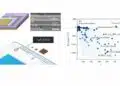
A research team led by WU Zhongshuai and BAO Xinhe et al. from Dalian Institute of Chemical Physics of the Chinese Academy of Sciences, collaborated with HE Yanbing from Graduate School at Shenzhen of Tsinghua University, reported a new-type all-solid-state planar lithium ion micro-capacitors (LIMCs) with landmark volumetric energy density, superior thermal stability and safety at high temperature, outstanding mechanical flexibility, and exceptional integration of bipolar cells.

RelatedPosts

YAGEO Presents Single-Phase Common Mode Chokes for Industrial EMI Suppression

Enabling the 800 V AI Server Era: How C0G High-Voltage MLCC Supports Next-Generation Power Architectures

binder Prints Electronics on 3D Components Connector Surface

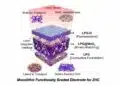
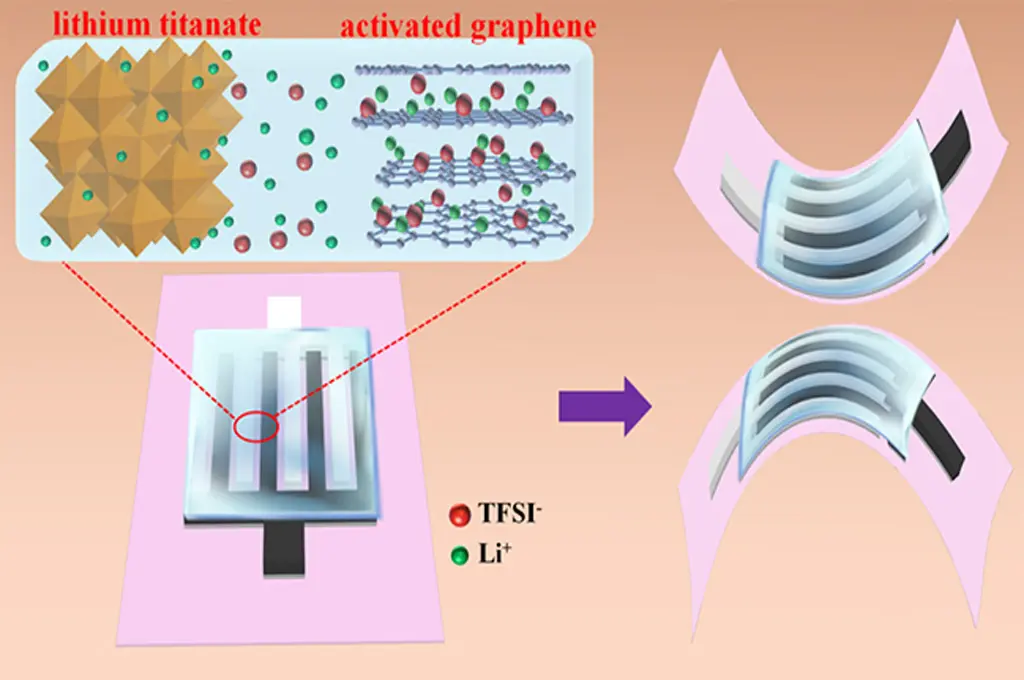
This LIMCs were based on interdigital patterned films of carbon-coated lithium titanate (LTO) nanospheres as anode, and activated graphene (AG) as cathode, using high-voltage ionogel as electrolyte. Their findings were published online in Energy & Environmental Science.

Portable and wearable electronics and micro-electro-mechanical systems, e.g., micro-robots and micro-sensors, are currently moving toward the integrated multi-functionality of on-chip, thin, lightweight and flexible features. This intensively stimulates the rapid development of the microscale electrochemical energy storage devices.

The emerging planar micro-supercapacitors (MSCs) constructed on single substrate possess the intriguing merits of high power density, free separator, and ultralong life span. Those advantages enable MSCs to become one highly-competitive miniaturized energy source. However, most reported MSCs still suffer from low volumetric energy density that can’t compete with lithium thin-film batteries. Also, MSCs are limited by poor high-temperature stability resulting from volatile electrolytes, unsatisfying flexibility and limited integration.

Lithium ion capacitors (LICs) represent a promising class of next-generation competitive power sources because they can simultaneously achieve high energy density and high power density to effectively bridge the gap between lithium ion batteries and supercapacitors. However, all the LICs reported have been constructed in a nonplanar device geometry, by sandwiching a polymer separator or solid-state electrolyte between two electrode-based substrates.

To solve the above problems, the scientists developed the interdigital LIMCs, which were fabricated via layer-by-layer mask-assisted deposition of graphene (EG) and electrode materials, without metal current collector, additive and polymer binder. The resulting patterns of sandwich-like electrode structures showed outstanding uniformity, mechanical flexibility, high electrical conductivity.

These electrode films with strong adhesion to the substrate are free of metal current collectors, conventional separator and polymer binder. Notably, all-solid-state LTO//AG-LIMCs delivered ultrahigh volumetric energy density of 53.5 mWh/cm3, which is threefold higher than those of AG//AG-MSCs (18.1 mWh/cm3) and lithium thin-film batteries, and superior to the reported MSCs so far.

Furthermore, LTO//AG-LIMCs exhibited superior cycling stability with 98.9% of capacitance retention after 6000 cycles, high-temperature electrochemical stability at 80 °C. Moreover, LTO//AG-LIMCs showed outstanding mechanical flexibility without performance degradation under various bending and twisting.

In addition, this finding is highly scalable for mass production of multiple flexible LTO//AG-LIMCs to modulate the output voltage and capacitance for integrated circuits. Therefore, they hold great potential for future flexible and wearable electronics.

The above work was supported by National Natural Science Foundation of China, National Key R&D Program of China, Natural Science Foundation of Liaoning

featured image: all-solid-state flexible planar Lithium Ion Micro-Capacitors; image credit: ZHENG Shuanghao


Related

Recent Posts

Enabling the 800 V AI Server Era: How C0G High-Voltage MLCC Supports Next-Generation Power Architectures

1.7.2026
18

MLCCs in the Age of AI: Q2 2026 Market Tightness

30.6.2026
91

AI Hardware Demand for Passive Components Dossier

30.6.2026
50

Skeleton Supercapacitor Achieves UL‑certified 3,500 A Peak Current for AI Data Centers

26.6.2026
55

100 V Hybrid Polymer Capacitor from VINA Enesol Targets 48–72 V Power Platforms

26.6.2026
113

Using a Virtual Anode Thermal Model to Evaluate Miniaturization Risk in Tantalum Capacitors

24.6.2026
43

High‑Speed Supercapacitor Balancing for AI Data Center Power Systems

23.6.2026
96

Practical Value of Structural Diagnostics for Tantalum Capacitor Anodes

22.6.2026
39

Knowles Expands High‑Q Ceramic Core Inductors for RF designs

19.6.2026
34

Upcoming Events

Jul 2
17:30 - 18:30 CEST

Can Claude design a production-ready Custom Magnetic Component?

Jul 14
16:00 - 17:00 CEST

EMC Design Essentials: Mastering Varistors and Common Mode Chokes

Jul 21
16:00 - 17:00 CEST

Safety by design: X and Y Interference suppression capacitors for power line filters

View Calendar

Popular Posts

  • Boost Converter Design and Calculation

    0 shares
    Share 0 Tweet 0
  • Buck Converter Design and Calculation

    0 shares
    Share 0 Tweet 0
  • LLC Resonant Converter Design and Calculation

    0 shares
    Share 0 Tweet 0
  • Flyback Converter Design and Calculation

    0 shares
    Share 0 Tweet 0
  • MLCC and Ceramic Capacitors

    0 shares
    Share 0 Tweet 0
  • Nvidia Vera Rubin: Why One AI Rack Needs So Many More MLCC Capacitors

    0 shares
    Share 0 Tweet 0
  • Earthing Systems and IEC Classification Explained

    0 shares
    Share 0 Tweet 0
  • Dual Active Bridge (DAB) Topology

    0 shares
    Share 0 Tweet 0
  • MLCC Case Sizes Standards Explained

    0 shares
    Share 0 Tweet 0
  • SEPIC Converter Design and Calculation

    0 shares
    Share 0 Tweet 0

Newsletter Subscription


Passive Components Blog

© EPCI - Leading Passive Components Educational and Information Site

  • Home
  • Privacy Policy
  • EPCI Membership & Advertisement
  • About

No Result
View All Result
  • Home
  • Knowledge Blog
  • Dossiers
  • PCNS

© EPCI - Leading Passive Components Educational and Information Site

This website uses cookies. By continuing to use this website you are giving consent to cookies being used. Visit our Privacy and Cookie Policy.
Go to mobile version