




Passive Components Blog
No Result
View All Result
  • Home
  • NewsFilter
    • All
    • Aerospace & Defence
    • Antenna
    • Applications
    • Automotive
    • Capacitors
    • Circuit Protection Devices
    • electro-mechanical news
    • Filters
    • Fuses
    • Inductors
    • Industrial
    • Integrated Passives
    • inter-connect news
    • Market & Supply Chain
    • Market Insights
    • Medical
    • Modelling and Simulation
    • New Materials & Supply
    • New Technologies
    • Non-linear Passives
    • Oscillators
    • Passive Sensors News
    • Resistors
    • RF & Microwave
    • Telecommunication
    • Weekly Digest

    Capacitances of Nonlinear MLCCs: What Datasheets Don’t Tell You

    Stackpole Releases Automotive Wide‑Termination Resistors

    How a Digital Structural Twin Can Predict Tantalum Capacitor Reliability

    SCHURTER Buys Biaodi to Boost High-Voltage Protection Portfolio

    Binder Hybrid Connector Simplifies One Cable Automation

    Tapped Inductor Buck Converter Fundamentals

    TAIYO YUDEN Releases Mini Metal Power Inductors

    Molecular Memristor Shows Record 145 kH Emergent Inductance

    Planar vs Conventional Transformer: When it Make Sense

    Trending Tags

    • Ripple Current
    • RF
    • Leakage Current
    • Tantalum vs Ceramic
    • Snubber
    • Low ESR
    • Feedthrough
    • Derating
    • Dielectric Constant
    • New Products
    • Market Reports
  • VideoFilter
    • All
    • Antenna videos
    • Capacitor videos
    • Circuit Protection Video
    • Filter videos
    • Fuse videos
    • Inductor videos
    • Inter-Connect Video
    • Non-linear passives videos
    • Oscillator videos
    • Passive sensors videos
    • Resistor videos

    Capacitances of Nonlinear MLCCs: What Datasheets Don’t Tell You

    Tapped Inductor Buck Converter Fundamentals

    Planar vs Conventional Transformer: When it Make Sense

    Modeling Fringing Field Losses in Inductors & Transformers

    Why Power Inductors Use a Ferrite Core With an Air Gap

    Transformer-Based Power-Line Harvester Magnetic Design

    Thermal Modeling of Magnetics

    Standard vs Planar LLC transformers Comparison for Battery Chargers

    How Modern Tools Model Magnetic Components for Power Electronics

    Trending Tags

    • Capacitors explained
    • Inductors explained
    • Resistors explained
    • Filters explained
    • Application Video Guidelines
    • EMC
    • New Products
    • Ripple Current
    • Simulation
    • Tantalum vs Ceramic
  • Knowledge Blog
  • DossiersNew
  • Suppliers
    • Who is Who
  • PCNS
    • PCNS 2025
    • PCNS 2023
    • PCNS 2021
    • PCNS 2019
    • PCNS 2017
  • Events
  • Home
  • NewsFilter
    • All
    • Aerospace & Defence
    • Antenna
    • Applications
    • Automotive
    • Capacitors
    • Circuit Protection Devices
    • electro-mechanical news
    • Filters
    • Fuses
    • Inductors
    • Industrial
    • Integrated Passives
    • inter-connect news
    • Market & Supply Chain
    • Market Insights
    • Medical
    • Modelling and Simulation
    • New Materials & Supply
    • New Technologies
    • Non-linear Passives
    • Oscillators
    • Passive Sensors News
    • Resistors
    • RF & Microwave
    • Telecommunication
    • Weekly Digest

    Capacitances of Nonlinear MLCCs: What Datasheets Don’t Tell You

    Stackpole Releases Automotive Wide‑Termination Resistors

    How a Digital Structural Twin Can Predict Tantalum Capacitor Reliability

    SCHURTER Buys Biaodi to Boost High-Voltage Protection Portfolio

    Binder Hybrid Connector Simplifies One Cable Automation

    Tapped Inductor Buck Converter Fundamentals

    TAIYO YUDEN Releases Mini Metal Power Inductors

    Molecular Memristor Shows Record 145 kH Emergent Inductance

    Planar vs Conventional Transformer: When it Make Sense

    Trending Tags

    • Ripple Current
    • RF
    • Leakage Current
    • Tantalum vs Ceramic
    • Snubber
    • Low ESR
    • Feedthrough
    • Derating
    • Dielectric Constant
    • New Products
    • Market Reports
  • VideoFilter
    • All
    • Antenna videos
    • Capacitor videos
    • Circuit Protection Video
    • Filter videos
    • Fuse videos
    • Inductor videos
    • Inter-Connect Video
    • Non-linear passives videos
    • Oscillator videos
    • Passive sensors videos
    • Resistor videos

    Capacitances of Nonlinear MLCCs: What Datasheets Don’t Tell You

    Tapped Inductor Buck Converter Fundamentals

    Planar vs Conventional Transformer: When it Make Sense

    Modeling Fringing Field Losses in Inductors & Transformers

    Why Power Inductors Use a Ferrite Core With an Air Gap

    Transformer-Based Power-Line Harvester Magnetic Design

    Thermal Modeling of Magnetics

    Standard vs Planar LLC transformers Comparison for Battery Chargers

    How Modern Tools Model Magnetic Components for Power Electronics

    Trending Tags

    • Capacitors explained
    • Inductors explained
    • Resistors explained
    • Filters explained
    • Application Video Guidelines
    • EMC
    • New Products
    • Ripple Current
    • Simulation
    • Tantalum vs Ceramic
  • Knowledge Blog
  • DossiersNew
  • Suppliers
    • Who is Who
  • PCNS
    • PCNS 2025
    • PCNS 2023
    • PCNS 2021
    • PCNS 2019
    • PCNS 2017
  • Events
No Result
View All Result
Passive Components Blog
No Result
View All Result

CeramTec Expands its Piezoceramic “Centre of Excellence”

19.11.2020
Reading Time: 3 mins read
A A

CeramTec, a world leader in the design and manufacture of complex electronic ceramic components, is expanding its existing production capabilities to meet the rising demand for high-quality piezoelectric elements and materials.

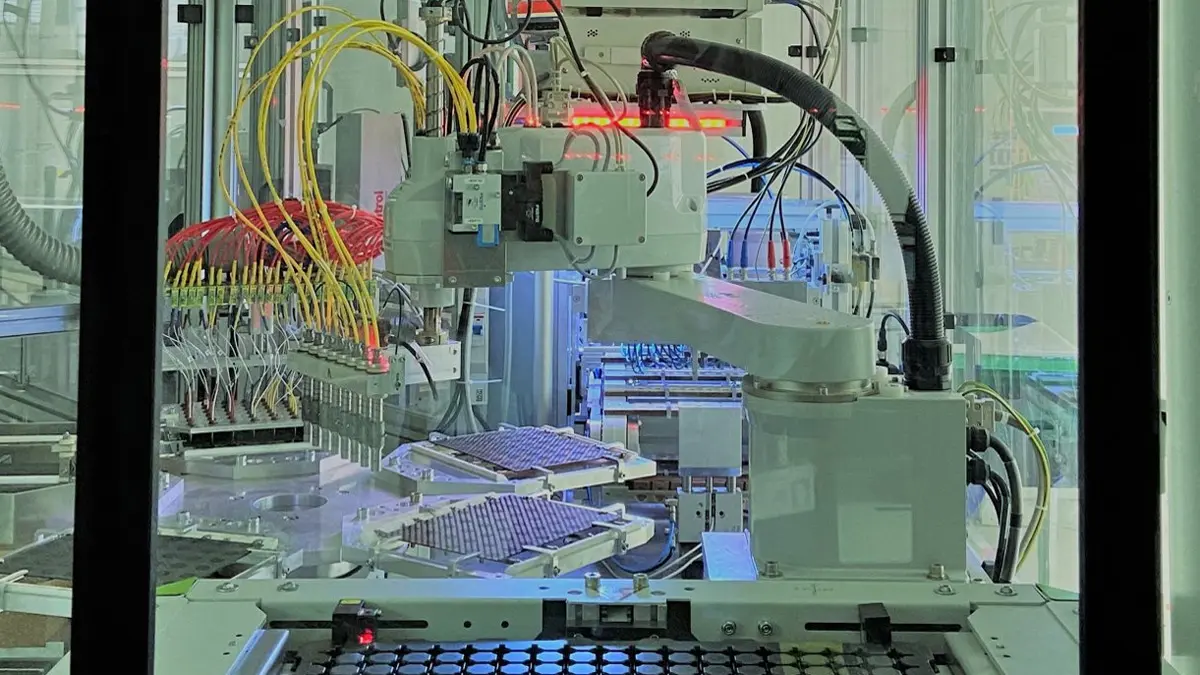
The internationally operating company with sites in Europe, the UK, USA and Asia has invested in two additional machinery units at its piezoceramic centre of excellence in Lauf, Germany, which further multiply existing high-volume manufacturing capabilities for piezoceramic components, such as discs, rings and tubes, as well as increase automation.

RelatedPosts

Capacitances of Nonlinear MLCCs: What Datasheets Don’t Tell You

Stackpole Releases Automotive Wide‑Termination Resistors

How a Digital Structural Twin Can Predict Tantalum Capacitor Reliability

Increasing demand for high-volume manufacturing

CeramTec is expanding its existing piezoceramic centre of excellence at the company’s Lauf site in Germany with two additional machinery units to meet the rising demand for high-quality piezoelectric elements and materials.

“We see growing client demand for high accuracy level sensing components, particularly for smart metering applications for water and gas as well as for ultrasonic flow metering, and are therefore continually working on further extending our existing capability at our Lauf site where, together with our facility in Wales, we specialise in high-volume piezoceramic manufacturing,” explains Melanie Bloss, Account Manager Measurement & Sensors at CeramTec. In a first step, a new unit for metallising and poling the piezoceramic components was installed last year.

Apart from handling the small piezoceramic components used in metering applications, this equipment will also be used for medical device applications to meet growing demand: Piezoceramic components are a key component in various atomisation systems which are increasingly deployed to deliver liquid medications in smaller droplets, enabling more precise and intensive dosage.

Centre of excellence with integrated production & modern technology

“This unit is an important step for us to not only establish our Lauf site as a centre of excellence for piezoceramics but also bolster our overall capabilities in this field for customers across Europe.” Melanie Bloss, Account Manager Measurement & Sensors at CeramTec

A second metallisation unit for wrap-around electrodes, which was installed in Lauf this year and went into operation in Q4, enables CeramTec to further integrate the production process and cover the entire supply chain in-house: “This unit is an important step for us to not only establish our Lauf site as a centre of excellence for piezoceramics but also bolster our overall capabilities in this field for customers across Europe,” says Melanie Bloss. The machine applies so-called wrap-around electrodes on the surface of piezoceramic components. This electrode pattern allows customers to easily establish electrical contacting at a favourable position within the mechanical assembly. Particularly customers with high automation levels in their production considerably benefit from wrap-around electrodes as they enable more efficient and easier handling of the connection process, reducing complexity and effort.

CeramTec’s integrated approach also includes working with an in- house engineering unit. As piezoceramic requires highly specialised production processes, including niche techniques, these on-site machinery experts were also key in building and installing the new equipment at the company’s Lauf site to ensure high-quality delivery of the mostly customised solutions CeramTec provides to its clients.
Related

Source: CeramTec

Recent Posts

High-Crystallinity Nanocrystalline Composites for MHz Chip Inductors

7.5.2026
65

Kyocera Developed Multilayer Ceramic Core Substrate for AI Packages

30.4.2026
53

Peak Nano to Develop Fusion Grade High Energy Film Capacitors

11.3.2026
56

Paumanok Unveils Aluminum Capacitor Foils World Markets Study 2025-2030

6.11.2025
47

Murata and QuantumScape Joint Development for Solid Batteries Ceramic Separators

14.10.2025
57

Researchers Demonstrated High Energy Ceramic Capacitors Stable in Wide Temperature Range

2.10.2025
45

Improving SMPS Performance with Thermal Interface Material

30.9.2025
47

Flaked Tantalum Powders: High Capacitance Powders for High Reliable Tantalum Capacitors

29.9.2025
75

Life Cycle Assessment of a Graphene-Based Supercapacitor

26.9.2025
144

Upcoming Events

May 19
16:00 - 17:00 CEST

Designing Qi2 Wireless Power Systems: Practical Development and EMC Optimization

Jun 2
16:00 - 17:00 CEST

Calculation, Simulation and Measurement of 800V EMC Filters

Jun 16
16:00 - 17:00 CEST

EMC with EMC – EMC‑compliant design with electromechanical connectors

View Calendar

Popular Posts

  • Buck Converter Design and Calculation

    0 shares
    Share 0 Tweet 0
  • Boost Converter Design and Calculation

    0 shares
    Share 0 Tweet 0
  • Flyback Converter Design and Calculation

    0 shares
    Share 0 Tweet 0
  • LLC Resonant Converter Design and Calculation

    0 shares
    Share 0 Tweet 0
  • MLCC and Ceramic Capacitors

    0 shares
    Share 0 Tweet 0
  • Dual Active Bridge (DAB) Topology

    0 shares
    Share 0 Tweet 0
  • What Electronics Engineer Needs to Know About Passive Low Pass Filters

    0 shares
    Share 0 Tweet 0
  • Capacitor Charging and Discharging

    0 shares
    Share 0 Tweet 0
  • Ripple Current and its Effects on the Performance of Capacitors

    3 shares
    Share 3 Tweet 0
  • MLCC Case Sizes Standards Explained

    0 shares
    Share 0 Tweet 0

Newsletter Subscription


Passive Components Blog

© EPCI - Leading Passive Components Educational and Information Site

  • Home
  • Privacy Policy
  • EPCI Membership & Advertisement
  • About

No Result
View All Result
  • Home
  • Knowledge Blog
  • PCNS

© EPCI - Leading Passive Components Educational and Information Site

This website uses cookies. By continuing to use this website you are giving consent to cookies being used. Visit our Privacy and Cookie Policy.
Go to mobile version