







Passive Components Blog
No Result
View All Result
  • Home
  • NewsFilter
    • All
    • Aerospace & Defence
    • Antenna
    • Applications
    • Automotive
    • Capacitors
    • Circuit Protection Devices
    • electro-mechanical news
    • Filters
    • Fuses
    • Inductors
    • Industrial
    • Integrated Passives
    • inter-connect news
    • Market & Supply Chain
    • Market Insights
    • Medical
    • Modelling and Simulation
    • New Materials & Supply
    • New Technologies
    • Non-linear Passives
    • Oscillators
    • Passive Sensors News
    • Resistors
    • RF & Microwave
    • Telecommunication
    • Weekly Digest

    Power Converter Dossier: Passive Components Design and Selection Guide 2026

    Evans Group Unifies Four High-Rel Capacitor Leaders

    Skeleton Releases Graphene‑Based UPS for AI Data Centers

    Designing 800 V DC EMC Filters: Calculation, Simulation and Measurement

    TDK Releases DC-link Film Capacitors with Ultra-low Inductance for SiC Power Converters

    Murata Introduces World First 2.2uF 100V Soft‑Term MLCC in 0805 Size for Automotive

    Murata and Xona Partner on LEO Satellite Navigation for Industrial Applications

    Bourns Offers Custom Magnetics for 3‑Phase Flying Capacitor Inverters

    YAGEO Releases Cost Efficient Pt‑RTD Sensors with Ni wires

    Trending Tags

    • Ripple Current
    • RF
    • Leakage Current
    • Tantalum vs Ceramic
    • Snubber
    • Low ESR
    • Feedthrough
    • Derating
    • Dielectric Constant
    • New Products
    • Market Reports
  • VideoFilter
    • All
    • Antenna videos
    • Capacitor videos
    • Circuit Protection Video
    • Filter videos
    • Fuse videos
    • Inductor videos
    • Inter-Connect Video
    • Non-linear passives videos
    • Oscillator videos
    • Passive sensors videos
    • Resistor videos

    Designing 800 V DC EMC Filters: Calculation, Simulation and Measurement

    Current Sense Transformer Datasheet and Design‑in Guide

    Designing a USB Type‑C Flyback Planar Transformer with Frenetic’s Planar Tool

    Magnetics Design in High‑Frequency GaN Converters

    Qi2 Wireless Charging: Inductors, Capacitors and EMC Filters

    Two‑capacitor paradox explained for engineers

    Capacitances of Nonlinear MLCCs: What Datasheets Don’t Tell You

    Tapped Inductor Buck Converter Fundamentals

    Planar vs Conventional Transformer: When it Make Sense

    Trending Tags

    • Capacitors explained
    • Inductors explained
    • Resistors explained
    • Filters explained
    • Application Video Guidelines
    • EMC
    • New Products
    • Ripple Current
    • Simulation
    • Tantalum vs Ceramic
  • Knowledge Blog
  • DossiersNew
  • Suppliers
    • Who is Who
  • PCNS
    • PCNS 2025
    • PCNS 2023
    • PCNS 2021
    • PCNS 2019
    • PCNS 2017
  • Events
  • Home
  • NewsFilter
    • All
    • Aerospace & Defence
    • Antenna
    • Applications
    • Automotive
    • Capacitors
    • Circuit Protection Devices
    • electro-mechanical news
    • Filters
    • Fuses
    • Inductors
    • Industrial
    • Integrated Passives
    • inter-connect news
    • Market & Supply Chain
    • Market Insights
    • Medical
    • Modelling and Simulation
    • New Materials & Supply
    • New Technologies
    • Non-linear Passives
    • Oscillators
    • Passive Sensors News
    • Resistors
    • RF & Microwave
    • Telecommunication
    • Weekly Digest

    Power Converter Dossier: Passive Components Design and Selection Guide 2026

    Evans Group Unifies Four High-Rel Capacitor Leaders

    Skeleton Releases Graphene‑Based UPS for AI Data Centers

    Designing 800 V DC EMC Filters: Calculation, Simulation and Measurement

    TDK Releases DC-link Film Capacitors with Ultra-low Inductance for SiC Power Converters

    Murata Introduces World First 2.2uF 100V Soft‑Term MLCC in 0805 Size for Automotive

    Murata and Xona Partner on LEO Satellite Navigation for Industrial Applications

    Bourns Offers Custom Magnetics for 3‑Phase Flying Capacitor Inverters

    YAGEO Releases Cost Efficient Pt‑RTD Sensors with Ni wires

    Trending Tags

    • Ripple Current
    • RF
    • Leakage Current
    • Tantalum vs Ceramic
    • Snubber
    • Low ESR
    • Feedthrough
    • Derating
    • Dielectric Constant
    • New Products
    • Market Reports
  • VideoFilter
    • All
    • Antenna videos
    • Capacitor videos
    • Circuit Protection Video
    • Filter videos
    • Fuse videos
    • Inductor videos
    • Inter-Connect Video
    • Non-linear passives videos
    • Oscillator videos
    • Passive sensors videos
    • Resistor videos

    Designing 800 V DC EMC Filters: Calculation, Simulation and Measurement

    Current Sense Transformer Datasheet and Design‑in Guide

    Designing a USB Type‑C Flyback Planar Transformer with Frenetic’s Planar Tool

    Magnetics Design in High‑Frequency GaN Converters

    Qi2 Wireless Charging: Inductors, Capacitors and EMC Filters

    Two‑capacitor paradox explained for engineers

    Capacitances of Nonlinear MLCCs: What Datasheets Don’t Tell You

    Tapped Inductor Buck Converter Fundamentals

    Planar vs Conventional Transformer: When it Make Sense

    Trending Tags

    • Capacitors explained
    • Inductors explained
    • Resistors explained
    • Filters explained
    • Application Video Guidelines
    • EMC
    • New Products
    • Ripple Current
    • Simulation
    • Tantalum vs Ceramic
  • Knowledge Blog
  • DossiersNew
  • Suppliers
    • Who is Who
  • PCNS
    • PCNS 2025
    • PCNS 2023
    • PCNS 2021
    • PCNS 2019
    • PCNS 2017
  • Events
No Result
View All Result
Passive Components Blog
No Result
View All Result

Electroninks Enhanced Ultra-Fine Silver Ink Ready for Aerosol Jet Printing

4.5.2022
Reading Time: 3 mins read
A A

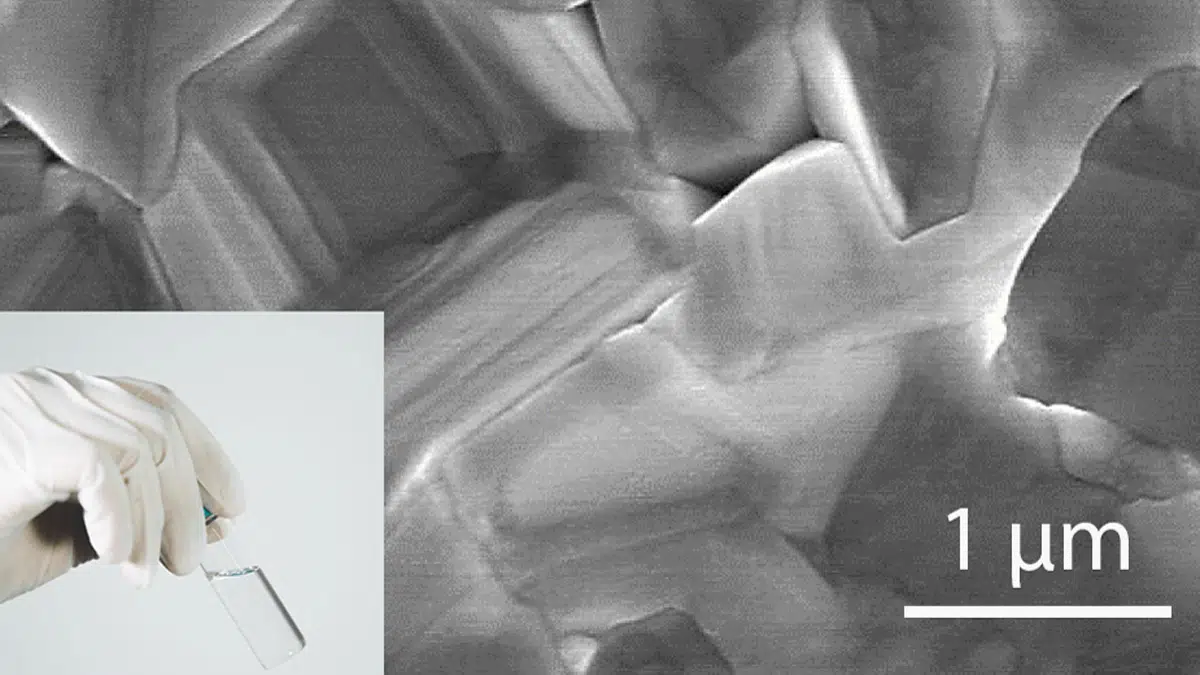
Electroninks, the leader in particle-free metal inks and advanced conductive materials, announced the confirmation of an enhanced particle-free silver ink product with aerosol jet printing compatibility for ultra-fine line printing requirements.

As a recognized industry leader of metal complex particle-free conductive inks, Electroninks developed an enhanced particle-free silver ink designed for fine-line, low temperature curing with aerosol jet printing that delivers a best-in-class combination of print resolution, electrical performance, and process temperature.

RelatedPosts

Researches Developed Fast and Low Cost Prototyping Technique to Make Wearable Stretchable Sensors and Supercapacitors

High Energy Flexible Supercapacitors for IoT Applications

Integrated Flexible Solar and Supercapacitors Maximize IoT Device Performance & Operating Life

The new ink product has broad impacts as aerosolized printing heads are compact, can be easily integrated into production lines, or placed on robotic arms for multi-axis additive manufacturing of conductive interconnects and circuits. This manufacturing technique is ideal for highly precise semiconductor packaging, aerospace, display, and biomedical applications. The use of the particle-free ink with aerosol jet printing makes it possible for manufacturers to reduce the size, power and weight of devices, making it ideal for interconnects and metallization in mobile and wearable products, foldable displays, biomedical devices and sensors, and conformal 3D parts.

“At Electroninks, we are committed to providing our customers with the highest performing products and solutions to meet the demands of their emerging manufacturing technologies and products,” said Electroninks co-founder and President, Melbs LeMieux. “Our new enhanced particle-free silver ink product is compatible with aerosol jet printing technology and allows our partners and commercial customers to meet difficult specifications.”

Aerosol jet printing is an additive manufacturing process that prints commercially available conductive, dielectric, semiconductor, and biologic inks onto a variety of 2D or 3D plastic, ceramic, and metallic substrates. Electroninks particle-free inks provide versatile, low-cost, domestically produced, all-in-one additive manufacturing solutions.

Electroninks’ novel particle-free ink formulation and capabilities interested In-Q-Tel, Inc., the strategic investor to the U.S. intelligence community, which joined with Electroninks as an additional strategic partner and investor. The partnership with In-Q-Tel will allow Electroninks to deliver its products at scale to its government partners in national security as well as for broader commercial usage.

“In-Q-Tel understands the value that Electroninks’ technology and team know-how can provide to the manufacturing of interconnects,” said Victoria Chernow, Ph.D., Technology Architect, In-Q-Tel. “We believe our strategic investment in Electroninks will contribute to our partners’ mission needs.”
Electroninks is delivering a more cost-effective and efficient use of many noble metals through its particle-free ink formulations, including gold, platinum, nickel, and copper. Its particle-free silver ink delivers higher conductivity, flexibility and cost-effectiveness making them ideal for today’s smaller, lighter, more highly functional electronic products.

The aerosol jet printing compatible particle-free silver ink is capable of being printed at <15um resolution, with up to 10um height, up to 3x bulk conductivity of silver, while being cured at no higher than 120C, while maintaining certain manufacturing and throughput specifications.

Development Team Quotes:
“The newly developed silver ink combines best-in-class electrical performance with fine feature printing,” said Garret McKerricher, Senior Scientist, Electroninks. “The ink is capable of ultrasonic aerosol jet printing and demonstrates fine feature printing at less than 20um resolution with high aspect ratios.”

“The new silver ink provides good resistivity at a low curing temperature, and has high volume output, ” said Yuan Gu, Senior Scientist, Electroninks. “Combined with room temperature printability, the ink is ideal for 3D surfaces printing on wrap-around and other flexible surfaces.”


Related

Source: Electroninks

Recent Posts

YAGEO Releases Cost Efficient Pt‑RTD Sensors with Ni wires

3.6.2026
13

High-Crystallinity Nanocrystalline Composites for MHz Chip Inductors

7.5.2026
101

Kyocera Developed Multilayer Ceramic Core Substrate for AI Packages

30.4.2026
113

Vishay Releases Compact High‑Accuracy Hall Effect Linear Position Sensor

26.3.2026
37

Würth Elektronik Presents Differential Pressure Sensor for HVAC and Medical

17.3.2026
34

Peak Nano to Develop Fusion Grade High Energy Film Capacitors

11.3.2026
60

Murata New Vibration Sensor Targets High‑Frequency Predictive Maintenance

10.3.2026
83

Bourns SSD‑1000A AEC‑Q Digital Current Sensors

8.1.2026
85

Littelfuse Introduces Automotive Current Sensors for EV Battery, Motor, and Safety Systems

18.12.2025
62

Upcoming Events

Jun 16
16:00 - 17:00 CEST

EMC with EMC – EMC‑compliant design with electromechanical connectors

View Calendar

Popular Posts

  • Buck Converter Design and Calculation

    0 shares
    Share 0 Tweet 0
  • Boost Converter Design and Calculation

    0 shares
    Share 0 Tweet 0
  • MLCC and Ceramic Capacitors

    0 shares
    Share 0 Tweet 0
  • Flyback Converter Design and Calculation

    0 shares
    Share 0 Tweet 0
  • LLC Resonant Converter Design and Calculation

    0 shares
    Share 0 Tweet 0
  • Dual Active Bridge (DAB) Topology

    0 shares
    Share 0 Tweet 0
  • What Electronics Engineer Needs to Know About Passive Low Pass Filters

    0 shares
    Share 0 Tweet 0
  • Capacitor Charging and Discharging

    0 shares
    Share 0 Tweet 0
  • SEPIC Converter Design and Calculation

    0 shares
    Share 0 Tweet 0
  • Earthing Systems and IEC Classification Explained

    0 shares
    Share 0 Tweet 0

Newsletter Subscription


Passive Components Blog

© EPCI - Leading Passive Components Educational and Information Site

  • Home
  • Privacy Policy
  • EPCI Membership & Advertisement
  • About

No Result
View All Result
  • Home
  • Knowledge Blog
  • Dossiers
  • PCNS

© EPCI - Leading Passive Components Educational and Information Site

This website uses cookies. By continuing to use this website you are giving consent to cookies being used. Visit our Privacy and Cookie Policy.
Go to mobile version