



Passive Components Blog
No Result
View All Result
  • Home
  • NewsFilter
    • All
    • Aerospace & Defence
    • Antenna
    • Applications
    • Automotive
    • Capacitors
    • Circuit Protection Devices
    • electro-mechanical news
    • Filters
    • Fuses
    • Inductors
    • Industrial
    • Integrated Passives
    • inter-connect news
    • Market & Supply Chain
    • Market Insights
    • Medical
    • Modelling and Simulation
    • New Materials & Supply
    • New Technologies
    • Non-linear Passives
    • Oscillators
    • Passive Sensors News
    • Resistors
    • RF & Microwave
    • Telecommunication
    • Weekly Digest

    Samsung Introduced Low ESL 3-Terminal Reverse-Geometry MLCCs for High-Performance ADAS

    Würth Elektronik Presents New Bidirectional Digital Isolators

    Using Stress–Strain Curves to Diagnose Tantalum Powders for Capacitors

    Coilcraft Introduces SMT Current Sense Transformers for High‑Performance Power Electronics

    Samsung Launches Ultra-Compact 008004 High Q MLCC for Next-Generation RF Applications

    Nichicon Extends Rechargeable Batteries Temperature to Rival Supercapacitors

    Two‑capacitor paradox explained for engineers

    YAGEO Releases Compact RJ45 Connector for Multi‑Gigabit Ethernet

    Circuit Protection Technology Annual Dossier

    Trending Tags

    • Ripple Current
    • RF
    • Leakage Current
    • Tantalum vs Ceramic
    • Snubber
    • Low ESR
    • Feedthrough
    • Derating
    • Dielectric Constant
    • New Products
    • Market Reports
  • VideoFilter
    • All
    • Antenna videos
    • Capacitor videos
    • Circuit Protection Video
    • Filter videos
    • Fuse videos
    • Inductor videos
    • Inter-Connect Video
    • Non-linear passives videos
    • Oscillator videos
    • Passive sensors videos
    • Resistor videos

    Two‑capacitor paradox explained for engineers

    Capacitances of Nonlinear MLCCs: What Datasheets Don’t Tell You

    Tapped Inductor Buck Converter Fundamentals

    Planar vs Conventional Transformer: When it Make Sense

    Modeling Fringing Field Losses in Inductors & Transformers

    Why Power Inductors Use a Ferrite Core With an Air Gap

    Transformer-Based Power-Line Harvester Magnetic Design

    Thermal Modeling of Magnetics

    Standard vs Planar LLC transformers Comparison for Battery Chargers

    Trending Tags

    • Capacitors explained
    • Inductors explained
    • Resistors explained
    • Filters explained
    • Application Video Guidelines
    • EMC
    • New Products
    • Ripple Current
    • Simulation
    • Tantalum vs Ceramic
  • Knowledge Blog
  • DossiersNew
  • Suppliers
    • Who is Who
  • PCNS
    • PCNS 2025
    • PCNS 2023
    • PCNS 2021
    • PCNS 2019
    • PCNS 2017
  • Events
  • Home
  • NewsFilter
    • All
    • Aerospace & Defence
    • Antenna
    • Applications
    • Automotive
    • Capacitors
    • Circuit Protection Devices
    • electro-mechanical news
    • Filters
    • Fuses
    • Inductors
    • Industrial
    • Integrated Passives
    • inter-connect news
    • Market & Supply Chain
    • Market Insights
    • Medical
    • Modelling and Simulation
    • New Materials & Supply
    • New Technologies
    • Non-linear Passives
    • Oscillators
    • Passive Sensors News
    • Resistors
    • RF & Microwave
    • Telecommunication
    • Weekly Digest

    Samsung Introduced Low ESL 3-Terminal Reverse-Geometry MLCCs for High-Performance ADAS

    Würth Elektronik Presents New Bidirectional Digital Isolators

    Using Stress–Strain Curves to Diagnose Tantalum Powders for Capacitors

    Coilcraft Introduces SMT Current Sense Transformers for High‑Performance Power Electronics

    Samsung Launches Ultra-Compact 008004 High Q MLCC for Next-Generation RF Applications

    Nichicon Extends Rechargeable Batteries Temperature to Rival Supercapacitors

    Two‑capacitor paradox explained for engineers

    YAGEO Releases Compact RJ45 Connector for Multi‑Gigabit Ethernet

    Circuit Protection Technology Annual Dossier

    Trending Tags

    • Ripple Current
    • RF
    • Leakage Current
    • Tantalum vs Ceramic
    • Snubber
    • Low ESR
    • Feedthrough
    • Derating
    • Dielectric Constant
    • New Products
    • Market Reports
  • VideoFilter
    • All
    • Antenna videos
    • Capacitor videos
    • Circuit Protection Video
    • Filter videos
    • Fuse videos
    • Inductor videos
    • Inter-Connect Video
    • Non-linear passives videos
    • Oscillator videos
    • Passive sensors videos
    • Resistor videos

    Two‑capacitor paradox explained for engineers

    Capacitances of Nonlinear MLCCs: What Datasheets Don’t Tell You

    Tapped Inductor Buck Converter Fundamentals

    Planar vs Conventional Transformer: When it Make Sense

    Modeling Fringing Field Losses in Inductors & Transformers

    Why Power Inductors Use a Ferrite Core With an Air Gap

    Transformer-Based Power-Line Harvester Magnetic Design

    Thermal Modeling of Magnetics

    Standard vs Planar LLC transformers Comparison for Battery Chargers

    Trending Tags

    • Capacitors explained
    • Inductors explained
    • Resistors explained
    • Filters explained
    • Application Video Guidelines
    • EMC
    • New Products
    • Ripple Current
    • Simulation
    • Tantalum vs Ceramic
  • Knowledge Blog
  • DossiersNew
  • Suppliers
    • Who is Who
  • PCNS
    • PCNS 2025
    • PCNS 2023
    • PCNS 2021
    • PCNS 2019
    • PCNS 2017
  • Events
No Result
View All Result
Passive Components Blog
No Result
View All Result

KYOCERA AVX Introduces New Range of Load Dump Automotive Varistors

5.3.2024
Reading Time: 2 mins read
A A

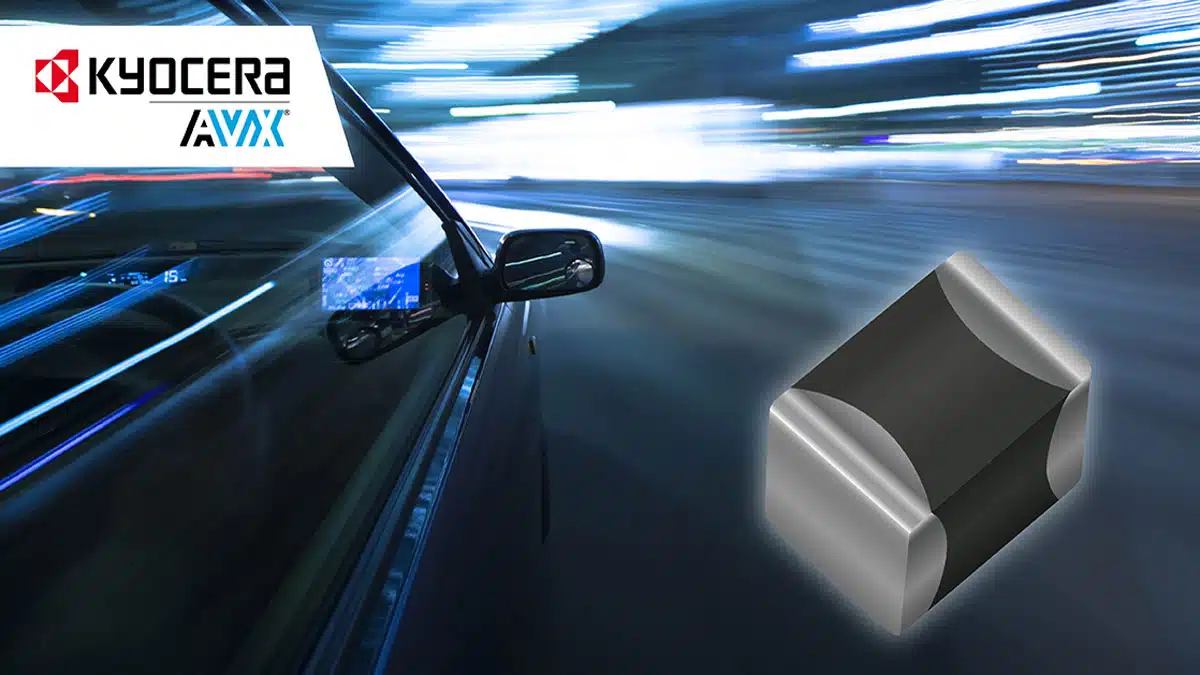
KYOCERA AVX, a leading global manufacturer of advanced electronic components engineered to accelerate technological innovation and build a better future, released the new range of load dump varistors as an extension of its trusted TransGuard Automotive Series.

KYOCERA AVX TransGuard Automotive Series varistors are innovative, zinc-oxide-based ceramic semiconductor devices that provide bidirectional overvoltage protection and EMI/RFI attenuation in a single, space-saving SMT package qualified to AEC-Q200 and backed by more than 20 years of proven performance in an array of automotive electronics.

RelatedPosts

KYOCERA 10 µF 0201 MLCC Brings High‑Capacitance into Mobile Designs

KYOCERA AVX Extends MLV Varistors for 48V Automotive Protection

Kyocera Developed Multilayer Ceramic Core Substrate for AI Packages

Key features include a unique monolithic multilayer construction, nonlinear, bidirectional voltage-current characteristics, high-current and -energy-handling capabilities, multi-strike capabilities, and extremely fast, sub-nanosecond response times.

They are also available with glass encapsulation for enhanced resistance against harsh environment hazards including acids, salts, and chlorite flux. Combined, these features enable TransGuard Automotive Series varistors to provide reliable, state-of-the-art circuit protection from voltage transients caused by ESD, induction motor loads, module load dump, and other disruptions, which is increasingly vital as the number of electronic systems deployed in automotive applications continues to grow.

The new TransGuard Automotive Series load dump varistors are characterized by higher peak current ratings than the rest of the series (2,000A), which make them even more effective at providing reliable protection against high-energy automotive load dump transients. Load dump pulses simulate a sudden battery disconnection from the alternator and cause the alternator to generate an overvoltage impulse that can damage sensitive ICs, which are also increasingly common in today’s automotive designs.

TransGuard Automotive Series varistors, including the new load dump varistors, are ideal for use in internal combustion engine, hybrid electric, and plug-in hybrid electric vehicles, including commercial vehicles, and are especially well suited for use in CAN, LIN, and FLEXRAY modules, sensors, and induction motors. They are compact and lightweight, rated for operating temperatures extending from -55°C to +125°C with no derating, and compliant with JASO D001 1994 and ISO 7637-2-2004 standards for protection against transient surges in the automotive industry. They are also RoHS compliant, lead-free compatible, and free of any other substances of very high concern (SVHCs).

“When compared to similar competing parts, the new TransGuard Automotive Series load dump varistors outperform in energy handling while utilizing a smaller footprint and maintaining all necessary parameters,” said Tyler Lagnese, Product Marketing Manager, KYOCERA AVX. “This allows design engineers to achieve significant performance improvements with the added benefit of space and weight savings, which is especially valuable considering the growing number of electronic systems deployed in automotive applications.”

The initial release of the new TransGuard Automotive Series load dump varistors consists of three standard part numbers (VCAS222016W400, VCAS222016Y390, and VCAS222016Z400) and their glass encapsulated counterparts (VGAS222016W400, VGAS222016Y390, and VGAS222016Z400), but additional codes are currently in development.
Related

Source: KYOCERA AVX

Recent Posts

Samsung Introduced Low ESL 3-Terminal Reverse-Geometry MLCCs for High-Performance ADAS

20.5.2026
16

Würth Elektronik Presents New Bidirectional Digital Isolators

20.5.2026
11

Circuit Protection Technology Annual Dossier

15.5.2026
36

Stackpole Releases Automotive Wide‑Termination Resistors

14.5.2026
28

SCHURTER Buys Biaodi to Boost High-Voltage Protection Portfolio

14.5.2026
53

Nichicon ADN Automotive Hybrid Aluminum Capacitors Now Available in EMEA

11.5.2026
46

Würth Elektronik Introduces Compact Flat-wire SMT Power Inductors for Automotive

5.5.2026
71

KYOCERA AVX Extends MLV Varistors for 48V Automotive Protection

5.5.2026
42

YAGEO Introduces C0G Flexible Termination Automotive MLCCs

30.4.2026
50

Upcoming Events

Jun 2
16:00 - 17:00 CEST

Calculation, Simulation and Measurement of 800V EMC Filters

Jun 16
16:00 - 17:00 CEST

EMC with EMC – EMC‑compliant design with electromechanical connectors

View Calendar

Popular Posts

  • Buck Converter Design and Calculation

    0 shares
    Share 0 Tweet 0
  • Boost Converter Design and Calculation

    0 shares
    Share 0 Tweet 0
  • Flyback Converter Design and Calculation

    0 shares
    Share 0 Tweet 0
  • LLC Resonant Converter Design and Calculation

    0 shares
    Share 0 Tweet 0
  • MLCC and Ceramic Capacitors

    0 shares
    Share 0 Tweet 0
  • Capacitor Charging and Discharging

    0 shares
    Share 0 Tweet 0
  • What Electronics Engineer Needs to Know About Passive Low Pass Filters

    0 shares
    Share 0 Tweet 0
  • Dual Active Bridge (DAB) Topology

    0 shares
    Share 0 Tweet 0
  • Ripple Current and its Effects on the Performance of Capacitors

    3 shares
    Share 3 Tweet 0
  • Samsung Electro-Mechanics Releases High-Capacitance MLCCs for AI Server Applications

    0 shares
    Share 0 Tweet 0

Newsletter Subscription


Passive Components Blog

© EPCI - Leading Passive Components Educational and Information Site

  • Home
  • Privacy Policy
  • EPCI Membership & Advertisement
  • About

No Result
View All Result
  • Home
  • Knowledge Blog
  • PCNS

© EPCI - Leading Passive Components Educational and Information Site

This website uses cookies. By continuing to use this website you are giving consent to cookies being used. Visit our Privacy and Cookie Policy.
Go to mobile version