




Passive Components Blog
No Result
View All Result
  • Home
  • NewsFilter
    • All
    • Aerospace & Defence
    • Antenna
    • Applications
    • Automotive
    • Capacitors
    • Circuit Protection Devices
    • electro-mechanical news
    • Filters
    • Fuses
    • Inductors
    • Industrial
    • Integrated Passives
    • inter-connect news
    • Market & Supply Chain
    • Market Insights
    • Medical
    • Modelling and Simulation
    • New Materials & Supply
    • New Technologies
    • Non-linear Passives
    • Oscillators
    • Passive Sensors News
    • Resistors
    • RF & Microwave
    • Telecommunication
    • Weekly Digest

    YAGEO Introduces C0G Flexible Termination Automotive MLCCs

    SCHURTER Releases SMT Micro Switch for Compact HMIs

    binder Releases Tool‑Tightenable M12 Connectors for Improved Reliability

    Vishay Introduced Thin Film Submount Platform for Optical and RF Modules

    Murata Introduces Crystal and NTC Set for Automotive UWB Timing

    Kyocera Developed Multilayer Ceramic Core Substrate for AI Packages

    Modeling Fringing Field Losses in Inductors & Transformers

    YMIN Introduces Polymer Tantalum Capacitors for AI Server SSDs

    Littelfuse Expands High-Voltage TVS Diodes

    Trending Tags

    • Ripple Current
    • RF
    • Leakage Current
    • Tantalum vs Ceramic
    • Snubber
    • Low ESR
    • Feedthrough
    • Derating
    • Dielectric Constant
    • New Products
    • Market Reports
  • VideoFilter
    • All
    • Antenna videos
    • Capacitor videos
    • Circuit Protection Video
    • Filter videos
    • Fuse videos
    • Inductor videos
    • Inter-Connect Video
    • Non-linear passives videos
    • Oscillator videos
    • Passive sensors videos
    • Resistor videos

    Modeling Fringing Field Losses in Inductors & Transformers

    Why Power Inductors Use a Ferrite Core With an Air Gap

    Transformer-Based Power-Line Harvester Magnetic Design

    Thermal Modeling of Magnetics

    Standard vs Planar LLC transformers Comparison for Battery Chargers

    How Modern Tools Model Magnetic Components for Power Electronics

    Advanced Loss Modeling for Planar Magnetics in the Frenetic Planar Tool

    2026 Power Magnetics Design Trends: Flyback, DAB and Planar

    Enabling Software‑Defined Vehicle Architectures: Automotive Ethernet and Zonal Smart Power

    Trending Tags

    • Capacitors explained
    • Inductors explained
    • Resistors explained
    • Filters explained
    • Application Video Guidelines
    • EMC
    • New Products
    • Ripple Current
    • Simulation
    • Tantalum vs Ceramic
  • Knowledge Blog
  • DossiersNew
  • Suppliers
    • Who is Who
  • PCNS
    • PCNS 2025
    • PCNS 2023
    • PCNS 2021
    • PCNS 2019
    • PCNS 2017
  • Events
  • Home
  • NewsFilter
    • All
    • Aerospace & Defence
    • Antenna
    • Applications
    • Automotive
    • Capacitors
    • Circuit Protection Devices
    • electro-mechanical news
    • Filters
    • Fuses
    • Inductors
    • Industrial
    • Integrated Passives
    • inter-connect news
    • Market & Supply Chain
    • Market Insights
    • Medical
    • Modelling and Simulation
    • New Materials & Supply
    • New Technologies
    • Non-linear Passives
    • Oscillators
    • Passive Sensors News
    • Resistors
    • RF & Microwave
    • Telecommunication
    • Weekly Digest

    YAGEO Introduces C0G Flexible Termination Automotive MLCCs

    SCHURTER Releases SMT Micro Switch for Compact HMIs

    binder Releases Tool‑Tightenable M12 Connectors for Improved Reliability

    Vishay Introduced Thin Film Submount Platform for Optical and RF Modules

    Murata Introduces Crystal and NTC Set for Automotive UWB Timing

    Kyocera Developed Multilayer Ceramic Core Substrate for AI Packages

    Modeling Fringing Field Losses in Inductors & Transformers

    YMIN Introduces Polymer Tantalum Capacitors for AI Server SSDs

    Littelfuse Expands High-Voltage TVS Diodes

    Trending Tags

    • Ripple Current
    • RF
    • Leakage Current
    • Tantalum vs Ceramic
    • Snubber
    • Low ESR
    • Feedthrough
    • Derating
    • Dielectric Constant
    • New Products
    • Market Reports
  • VideoFilter
    • All
    • Antenna videos
    • Capacitor videos
    • Circuit Protection Video
    • Filter videos
    • Fuse videos
    • Inductor videos
    • Inter-Connect Video
    • Non-linear passives videos
    • Oscillator videos
    • Passive sensors videos
    • Resistor videos

    Modeling Fringing Field Losses in Inductors & Transformers

    Why Power Inductors Use a Ferrite Core With an Air Gap

    Transformer-Based Power-Line Harvester Magnetic Design

    Thermal Modeling of Magnetics

    Standard vs Planar LLC transformers Comparison for Battery Chargers

    How Modern Tools Model Magnetic Components for Power Electronics

    Advanced Loss Modeling for Planar Magnetics in the Frenetic Planar Tool

    2026 Power Magnetics Design Trends: Flyback, DAB and Planar

    Enabling Software‑Defined Vehicle Architectures: Automotive Ethernet and Zonal Smart Power

    Trending Tags

    • Capacitors explained
    • Inductors explained
    • Resistors explained
    • Filters explained
    • Application Video Guidelines
    • EMC
    • New Products
    • Ripple Current
    • Simulation
    • Tantalum vs Ceramic
  • Knowledge Blog
  • DossiersNew
  • Suppliers
    • Who is Who
  • PCNS
    • PCNS 2025
    • PCNS 2023
    • PCNS 2021
    • PCNS 2019
    • PCNS 2017
  • Events
No Result
View All Result
Passive Components Blog
No Result
View All Result

Root Causes and Effects of DC Bias and AC in Ceramic Capacitors

6.8.2025
Reading Time: 3 mins read
A A

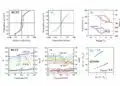
prof. Sam Ben-Yaakov in this video explains ceramic capacitors‘ behavior with DC Bias and AC voltage and how to model it in LTSpice.

  • Reference to the paper mentioned in the presentation: “DC and AC Bias Dependence of Capacitors Including Temperature Dependence”, Istvan Novak, Kendrick Barry Williams, Jason R. Miller, Gustavo Blando, Nathaniel Shannon. DesignCon East 2011 http://electrical-integrity.com/Paper…
  • Please note: The Q(V) plots shown in slides 12-14 include an offset in Q due to an arbitrary initial point of integration. The correct value of Q at V=0 is, of course, Q=0.

This presentation delves into the root causes and effects of DC bias and AC bias in ceramic capacitors, particularly focusing on Class II ferroelectric capacitors such as X7R. It aims to elucidate the behavior of capacitors under different biasing conditions, modeling approaches, and their implications on electronic circuit designs, especially in power electronics.

RelatedPosts

Why Power Inductors Use a Ferrite Core With an Air Gap

Transformer-Based Power-Line Harvester Magnetic Design

Calculating Resistance Value of a Flyback RC Snubber 

Introduction

ClassII ceramic capacitors demonstrate varying capacitance behaviors under DC and AC bias conditions. This document explores critical data interpretations from capacitor datasheets, identifies measurement methodologies, and offers precise nomenclature to distinguish between small-signal and large-signal capacitance.

Capacitance Measurement and Classification

  • DC Bias Dependence: Capacitors exhibit a decrease in capacitance with increasing DC bias, particularly noted in Class II capacitors.
  • AC Bias Characteristics: Changes in capacitance are observed under AC excitation, necessitating distinct measurement approaches for small-signal (derivative capacitance) and large-signal capacitance.

Modeling Nonlinear Capacitors

  • Charge-Voltage Relationship: The capacitance is defined by the derivative of charge (Q) concerning voltage (V). Linear capacitors maintain a constant relationship, whereas nonlinear capacitors demonstrate variable capacitance.
  • Simulation Techniques: Models can employ total capacitance or derivative capacitance approaches. LTspice and similar simulators are effective for simulating nonlinear behavior using behavioral voltage sources and integrals to measure charge.

Simulation Insights

  • Small vs. Large Signal Excitation: Simulations reveal that small AC signals result in minor distortions, while large AC excitations significantly distort current waveforms due to nonlinear effects.
  • Realistic Power Electronics Scenarios: Unlike standard tests imposing voltage on capacitors, power electronic circuits inject current. Simulations with resonant circuits demonstrate how nonlinearity affects both current and voltage, dependent on resonance proximity.

Implications for Electronic Design

  • PWM Converters: In applications with small voltage ripples, the primary concern is the capacitance variance with DC bias.
  • Resonant Converters: Nonlinear capacitors under large current amplitudes experience both capacitance change and waveform distortion, making them less suitable for resonant converters like LLC circuits.

Conclusion

Understanding the nonlinear behavior of ceramic capacitors under different bias conditions is critical for accurate electronic design. Designers should consider these characteristics in simulation models to predict and mitigate performance issues in real-world applications.

Further read reference:


High CV MLCC DC BIAS and AGEING Capacitance Loss Explained

Related

Source: Sam Ben-Yaakov

Recent Posts

YAGEO Introduces C0G Flexible Termination Automotive MLCCs

30.4.2026
7

Modeling Fringing Field Losses in Inductors & Transformers

30.4.2026
13

YMIN Introduces Polymer Tantalum Capacitors for AI Server SSDs

29.4.2026
37

Miniaturization of Tantalum Capacitors: Structural Limit Under Constant Rating

27.4.2026
32

Heatsink Design and Thermal Interface Materials for Reliable Electronics

27.4.2026
12

Murata New MLCC Bulk Case Packaging Cuts Packaging Material by 99%

27.4.2026
48

Exxelia Introduces SMD High‑Voltage Mica Capacitors

28.4.2026
23

Modelithics Releases COMPLETE v26.1 for Keysight ADS

23.4.2026
13

April 2026 Interconnect, Passives and Electromechanical Components Market Insights

22.4.2026
81

Upcoming Events

May 5
16:00 - 17:00 CEST

Understanding and Selecting Capacitors – Fundamentals, Technologies and Latest Trends

May 7
17:00 - 18:00 CEST

From Grid to Motion: How Industrial Electrification is Redefining Power System Design

May 12
8:00 - 15:00 CEST

ESCC Space Splice connectors

View Calendar

Popular Posts

  • Buck Converter Design and Calculation

    0 shares
    Share 0 Tweet 0
  • Boost Converter Design and Calculation

    0 shares
    Share 0 Tweet 0
  • Flyback Converter Design and Calculation

    0 shares
    Share 0 Tweet 0
  • LLC Resonant Converter Design and Calculation

    0 shares
    Share 0 Tweet 0
  • MLCC and Ceramic Capacitors

    0 shares
    Share 0 Tweet 0
  • Dual Active Bridge (DAB) Topology

    0 shares
    Share 0 Tweet 0
  • Capacitor Charging and Discharging

    0 shares
    Share 0 Tweet 0
  • What Electronics Engineer Needs to Know About Passive Low Pass Filters

    0 shares
    Share 0 Tweet 0
  • Ripple Current and its Effects on the Performance of Capacitors

    3 shares
    Share 3 Tweet 0
  • MLCC Case Sizes Standards Explained

    0 shares
    Share 0 Tweet 0

Newsletter Subscription


Passive Components Blog

© EPCI - Leading Passive Components Educational and Information Site

  • Home
  • Privacy Policy
  • EPCI Membership & Advertisement
  • About

No Result
View All Result
  • Home
  • Knowledge Blog
  • PCNS

© EPCI - Leading Passive Components Educational and Information Site

This website uses cookies. By continuing to use this website you are giving consent to cookies being used. Visit our Privacy and Cookie Policy.
Go to mobile version