






Passive Components Blog
No Result
View All Result
  • Home
  • NewsFilter
    • All
    • Aerospace & Defence
    • Antenna
    • Applications
    • Automotive
    • Capacitors
    • Circuit Protection Devices
    • electro-mechanical news
    • Filters
    • Fuses
    • Inductors
    • Industrial
    • Integrated Passives
    • inter-connect news
    • Market & Supply Chain
    • Market Insights
    • Medical
    • Modelling and Simulation
    • New Materials & Supply
    • New Technologies
    • Non-linear Passives
    • Oscillators
    • Passive Sensors News
    • Resistors
    • RF & Microwave
    • Telecommunication
    • Weekly Digest

    Bourns Releases Compact High Current Shielded Power Inductors

    March 2026 Interconnect, Passives and Electromechanical Components Market Insights

    Molex Completes Acquisition of Smiths Interconnect, Expanding Portfolio of High-Reliability Connectivity Solutions

    APEC 2026 Power Electronics Trends and Implications for Passive Components

    Hydra Enhances Film Capacitor Robustness by Novel Gel Filler

    Würth Elektronik Releases Heat Sinks for TO and IC packages

    Würth Elektronik ICS to Acquire MRS Electronic and Expand Vehicle Electronics Portfolio

    Indias ECMS Wave Brings New Capacity For Passive Components Manufacturing in India

    Binder Introduces Triangular Moulding for M16 and M12 Cable Connectors

    Trending Tags

    • Ripple Current
    • RF
    • Leakage Current
    • Tantalum vs Ceramic
    • Snubber
    • Low ESR
    • Feedthrough
    • Derating
    • Dielectric Constant
    • New Products
    • Market Reports
  • VideoFilter
    • All
    • Antenna videos
    • Capacitor videos
    • Circuit Protection Video
    • Filter videos
    • Fuse videos
    • Inductor videos
    • Inter-Connect Video
    • Non-linear passives videos
    • Oscillator videos
    • Passive sensors videos
    • Resistor videos

    Transformer-Based Power-Line Harvester Magnetic Design

    Thermal Modeling of Magnetics

    Standard vs Planar LLC transformers Comparison for Battery Chargers

    How Modern Tools Model Magnetic Components for Power Electronics

    Advanced Loss Modeling for Planar Magnetics in the Frenetic Planar Tool

    2026 Power Magnetics Design Trends: Flyback, DAB and Planar

    Enabling Software‑Defined Vehicle Architectures: Automotive Ethernet and Zonal Smart Power

    Calculating Resistance Value of a Flyback RC Snubber 

    One‑Pulse Characterization of Nonlinear Power Inductors

    Trending Tags

    • Capacitors explained
    • Inductors explained
    • Resistors explained
    • Filters explained
    • Application Video Guidelines
    • EMC
    • New Products
    • Ripple Current
    • Simulation
    • Tantalum vs Ceramic
  • Knowledge Blog
  • DossiersNew
  • Suppliers
    • Who is Who
  • PCNS
    • PCNS 2025
    • PCNS 2023
    • PCNS 2021
    • PCNS 2019
    • PCNS 2017
  • Events
  • Home
  • NewsFilter
    • All
    • Aerospace & Defence
    • Antenna
    • Applications
    • Automotive
    • Capacitors
    • Circuit Protection Devices
    • electro-mechanical news
    • Filters
    • Fuses
    • Inductors
    • Industrial
    • Integrated Passives
    • inter-connect news
    • Market & Supply Chain
    • Market Insights
    • Medical
    • Modelling and Simulation
    • New Materials & Supply
    • New Technologies
    • Non-linear Passives
    • Oscillators
    • Passive Sensors News
    • Resistors
    • RF & Microwave
    • Telecommunication
    • Weekly Digest

    Bourns Releases Compact High Current Shielded Power Inductors

    March 2026 Interconnect, Passives and Electromechanical Components Market Insights

    Molex Completes Acquisition of Smiths Interconnect, Expanding Portfolio of High-Reliability Connectivity Solutions

    APEC 2026 Power Electronics Trends and Implications for Passive Components

    Hydra Enhances Film Capacitor Robustness by Novel Gel Filler

    Würth Elektronik Releases Heat Sinks for TO and IC packages

    Würth Elektronik ICS to Acquire MRS Electronic and Expand Vehicle Electronics Portfolio

    Indias ECMS Wave Brings New Capacity For Passive Components Manufacturing in India

    Binder Introduces Triangular Moulding for M16 and M12 Cable Connectors

    Trending Tags

    • Ripple Current
    • RF
    • Leakage Current
    • Tantalum vs Ceramic
    • Snubber
    • Low ESR
    • Feedthrough
    • Derating
    • Dielectric Constant
    • New Products
    • Market Reports
  • VideoFilter
    • All
    • Antenna videos
    • Capacitor videos
    • Circuit Protection Video
    • Filter videos
    • Fuse videos
    • Inductor videos
    • Inter-Connect Video
    • Non-linear passives videos
    • Oscillator videos
    • Passive sensors videos
    • Resistor videos

    Transformer-Based Power-Line Harvester Magnetic Design

    Thermal Modeling of Magnetics

    Standard vs Planar LLC transformers Comparison for Battery Chargers

    How Modern Tools Model Magnetic Components for Power Electronics

    Advanced Loss Modeling for Planar Magnetics in the Frenetic Planar Tool

    2026 Power Magnetics Design Trends: Flyback, DAB and Planar

    Enabling Software‑Defined Vehicle Architectures: Automotive Ethernet and Zonal Smart Power

    Calculating Resistance Value of a Flyback RC Snubber 

    One‑Pulse Characterization of Nonlinear Power Inductors

    Trending Tags

    • Capacitors explained
    • Inductors explained
    • Resistors explained
    • Filters explained
    • Application Video Guidelines
    • EMC
    • New Products
    • Ripple Current
    • Simulation
    • Tantalum vs Ceramic
  • Knowledge Blog
  • DossiersNew
  • Suppliers
    • Who is Who
  • PCNS
    • PCNS 2025
    • PCNS 2023
    • PCNS 2021
    • PCNS 2019
    • PCNS 2017
  • Events
No Result
View All Result
Passive Components Blog
No Result
View All Result

Samsung Electro-Mechanics Develops World’s Smallest Power Inductor

14.9.2020
Reading Time: 3 mins read
A A

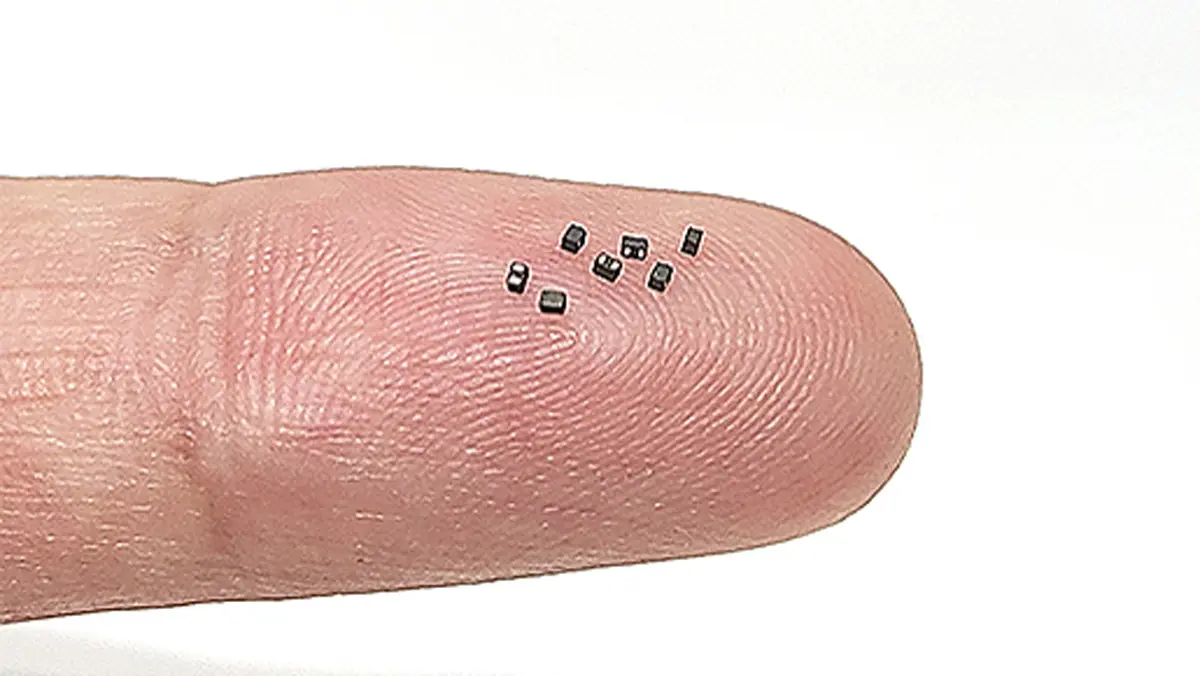
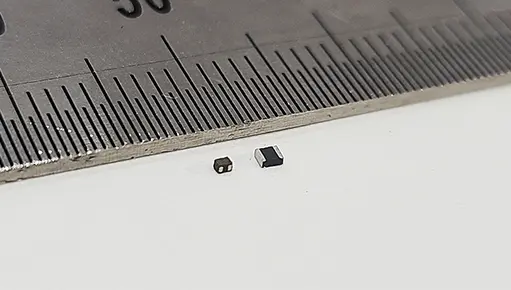
Samsung Electro-Mechanics revealed that it had developed the world’s smallest 0804 size power inductor.

The power inductor that was developed is of 0804 size (width 0.8mm, length 0.4mm), which is a significant decrease in area compared to the previously most smallest product of size 1210 (width 1.2mm, length 1.0mm), with a thickness of only 0.65mm. Samsung Electro-Mechanics is planning to supply this product global mobile companies.
 
The power inductor is a core component necessary to supply stable electricity (power) coming from the battery to the semiconductor, and it is a necessity used in smart phones, wearable devices, and electric vehicles. Recently, with the gradual trend towards light weight and size reduction of IT devices and increase in the number of multifunctional and high-performance components installed in 5G telecommunications and multi-cameras, the internal storage space for components has decreased, requiring miniature products. Moreover, with an improvement in component specs, power usage has increased, resulting in the need for power inductors that can withstand high currents.
 
The performance of the power inductor is generally determined based on the magnetic substance material (an object with magnetic characteristics) and the number of coils (copper wires) that can be internally winded. That is, in order to improve the performance of the power inductor, it is necessary to improve the magnetic substance characteristics and wrap more coils within a limited space.
 
Based on its material technology and semiconductor substrate manufacturing method accumulated through MLCC< Samsung Electro-Mechanics was able to reduce the size by approx. 50% and improve electricity loss. Moreover, rather than generally processing the power inductor in individual units, Samsung Electro-Mechanics manufactured them in substrate units to improve productivity and develop a thin product.
RelatedPosts

NIC Components Extends SMD High Voltage MLCC Offering

Stackpole Offers RoHS Compliant Lead-Free Thick Film Chip Resistors

Smiths Interconnect’s SMD Power Resistors with Heat Sink Qualified to Space Flights

Samsung Electro-Mechanics developed materials that applied nano-grade, ultra-microscopic powder in-house and succeeded in realizing finely spaced coils by applying the dimming technology (manufacturing method using light to mark circuits) applied in semiconductor manufacturing.
 
Kang Heon Hur, Vice President and Head of the Central Research Institute at Samsung Electro-Mechanics, revealed, “As the performance for electronic products increase and functionalities diversify, the size of the internal components must decrease along with an improvement in performance and volume. To do this, differentiating technology is necessary. Samsung Electro-Mechanics has been enhancing its product competitiveness through conversion and integration of technologies as the only company that possesses both material technology and micro engineering technology.”   
 
Since 1996, Samsung Electro-Mechanics has been developing and manufacturing inductors, and it has been recognized for its industry-leading technology in miniaturization. Samsung Electro-Mechanics plans to expand its product line-up and market share through material development and super-differential technology, such as ultrafine engineering method.
 
With the high-performance and multifunctionality of electronic devices, activation of 5G telecommunications, and growth of the wearable device market, the demand for super-small power inductors is expected to grow at a rapid pace, and its installment within electronic devices is forecasted to grow by at least 20% per year.
 
※ Reference
Both the MLCC and power inductors are passive components that control voltage/current to allow for smooth operation of electronic devices. Because each component has its own characteristics, they must both be installed in the electronic device. Generally, the capacitator serves a role in supplying voltage and the inductor serves a role in supplying stable energy to the semiconductor by preventing sudden changes in the current. 

Related

Source: Samsung Electro-Mechanics

Recent Posts

Bourns Releases Compact High Current Shielded Power Inductors

2.4.2026
8

March 2026 Interconnect, Passives and Electromechanical Components Market Insights

2.4.2026
27

APEC 2026 Power Electronics Trends and Implications for Passive Components

1.4.2026
44

Indias ECMS Wave Brings New Capacity For Passive Components Manufacturing in India

31.3.2026
34

New J‑STD‑075B Standard Elevates Process Sensitivity Classification for Passive and Solid-State Components

27.3.2026
44

Modelithics Expands COMPLETE+3D Library for Ansys HFSS

27.3.2026
8

Nanocrystalline Cores for Low‑Loss MHz Chip Inductors

25.3.2026
42

Exxelia Miniaturized 400 MHz Inverted‑F Antenna

24.3.2026
15

Würth Elektronik Unveils High-Current Automotive Power Inductor

24.3.2026
33

Upcoming Events

Apr 8
17:00 - 18:00 CEST

Trade Secrets of the Flyback Converter

Apr 21
16:00 - 17:00 CEST

Heatsink Solutions: Thermal Management in electronic devices

May 5
16:00 - 17:00 CEST

Understanding and Selecting Capacitors – Fundamentals, Technologies and Latest Trends

View Calendar

Popular Posts

  • Buck Converter Design and Calculation

    0 shares
    Share 0 Tweet 0
  • Boost Converter Design and Calculation

    0 shares
    Share 0 Tweet 0
  • Flyback Converter Design and Calculation

    0 shares
    Share 0 Tweet 0
  • LLC Resonant Converter Design and Calculation

    0 shares
    Share 0 Tweet 0
  • Dual Active Bridge (DAB) Topology

    0 shares
    Share 0 Tweet 0
  • MLCC and Ceramic Capacitors

    0 shares
    Share 0 Tweet 0
  • Ripple Current and its Effects on the Performance of Capacitors

    3 shares
    Share 3 Tweet 0
  • Capacitor Charging and Discharging

    0 shares
    Share 0 Tweet 0
  • Plastic Materials Dielectric Constant and DF

    4 shares
    Share 4 Tweet 0
  • MLCC Case Sizes Standards Explained

    0 shares
    Share 0 Tweet 0

Newsletter Subscription


Passive Components Blog

© EPCI - Leading Passive Components Educational and Information Site

  • Home
  • Privacy Policy
  • EPCI Membership & Advertisement
  • About

No Result
View All Result
  • Home
  • Knowledge Blog
  • PCNS

© EPCI - Leading Passive Components Educational and Information Site

This website uses cookies. By continuing to use this website you are giving consent to cookies being used. Visit our Privacy and Cookie Policy.
Go to mobile version