












Passive Components Blog
No Result
View All Result
  • Home
  • NewsFilter
    • All
    • Aerospace & Defence
    • Antenna
    • Applications
    • Automotive
    • Capacitors
    • Circuit Protection Devices
    • electro-mechanical news
    • Filters
    • Fuses
    • Inductors
    • Industrial
    • Integrated Passives
    • inter-connect news
    • Market & Supply Chain
    • Market Insights
    • Medical
    • Modelling and Simulation
    • New Materials & Supply
    • New Technologies
    • Non-linear Passives
    • Oscillators
    • Passive Sensors News
    • Resistors
    • RF & Microwave
    • Telecommunication
    • Weekly Digest

    Thermal Modeling of Magnetics

    ESA SPCD 26 Call for Papers Extended to 30th March

    Wk 11 Electronics Supply Chain Digest

    Binder Extends NCC Circular Connectors for Harsh Environments

    Standard vs Planar LLC transformers Comparison for Battery Chargers

    Würth Elektronik and Grinn Launch Edge AI Cooperation

    Bourns Expanded Semi-Shielded Low Profile Automotive Power Inductor

    Peak Nano to Develop Fusion Grade High Energy Film Capacitors

    Murata New Vibration Sensor Targets High‑Frequency Predictive Maintenance

    Trending Tags

    • Ripple Current
    • RF
    • Leakage Current
    • Tantalum vs Ceramic
    • Snubber
    • Low ESR
    • Feedthrough
    • Derating
    • Dielectric Constant
    • New Products
    • Market Reports
  • VideoFilter
    • All
    • Antenna videos
    • Capacitor videos
    • Circuit Protection Video
    • Filter videos
    • Fuse videos
    • Inductor videos
    • Inter-Connect Video
    • Non-linear passives videos
    • Oscillator videos
    • Passive sensors videos
    • Resistor videos

    Thermal Modeling of Magnetics

    Standard vs Planar LLC transformers Comparison for Battery Chargers

    How Modern Tools Model Magnetic Components for Power Electronics

    Advanced Loss Modeling for Planar Magnetics in the Frenetic Planar Tool

    2026 Power Magnetics Design Trends: Flyback, DAB and Planar

    Enabling Software‑Defined Vehicle Architectures: Automotive Ethernet and Zonal Smart Power

    Calculating Resistance Value of a Flyback RC Snubber 

    One‑Pulse Characterization of Nonlinear Power Inductors

    Thermistor Linearization Challenges

    Trending Tags

    • Capacitors explained
    • Inductors explained
    • Resistors explained
    • Filters explained
    • Application Video Guidelines
    • EMC
    • New Products
    • Ripple Current
    • Simulation
    • Tantalum vs Ceramic
  • Knowledge Blog
  • DossiersNew
  • Suppliers
    • Who is Who
  • PCNS
    • PCNS 2025
    • PCNS 2023
    • PCNS 2021
    • PCNS 2019
    • PCNS 2017
  • Events
  • Home
  • NewsFilter
    • All
    • Aerospace & Defence
    • Antenna
    • Applications
    • Automotive
    • Capacitors
    • Circuit Protection Devices
    • electro-mechanical news
    • Filters
    • Fuses
    • Inductors
    • Industrial
    • Integrated Passives
    • inter-connect news
    • Market & Supply Chain
    • Market Insights
    • Medical
    • Modelling and Simulation
    • New Materials & Supply
    • New Technologies
    • Non-linear Passives
    • Oscillators
    • Passive Sensors News
    • Resistors
    • RF & Microwave
    • Telecommunication
    • Weekly Digest

    Thermal Modeling of Magnetics

    ESA SPCD 26 Call for Papers Extended to 30th March

    Wk 11 Electronics Supply Chain Digest

    Binder Extends NCC Circular Connectors for Harsh Environments

    Standard vs Planar LLC transformers Comparison for Battery Chargers

    Würth Elektronik and Grinn Launch Edge AI Cooperation

    Bourns Expanded Semi-Shielded Low Profile Automotive Power Inductor

    Peak Nano to Develop Fusion Grade High Energy Film Capacitors

    Murata New Vibration Sensor Targets High‑Frequency Predictive Maintenance

    Trending Tags

    • Ripple Current
    • RF
    • Leakage Current
    • Tantalum vs Ceramic
    • Snubber
    • Low ESR
    • Feedthrough
    • Derating
    • Dielectric Constant
    • New Products
    • Market Reports
  • VideoFilter
    • All
    • Antenna videos
    • Capacitor videos
    • Circuit Protection Video
    • Filter videos
    • Fuse videos
    • Inductor videos
    • Inter-Connect Video
    • Non-linear passives videos
    • Oscillator videos
    • Passive sensors videos
    • Resistor videos

    Thermal Modeling of Magnetics

    Standard vs Planar LLC transformers Comparison for Battery Chargers

    How Modern Tools Model Magnetic Components for Power Electronics

    Advanced Loss Modeling for Planar Magnetics in the Frenetic Planar Tool

    2026 Power Magnetics Design Trends: Flyback, DAB and Planar

    Enabling Software‑Defined Vehicle Architectures: Automotive Ethernet and Zonal Smart Power

    Calculating Resistance Value of a Flyback RC Snubber 

    One‑Pulse Characterization of Nonlinear Power Inductors

    Thermistor Linearization Challenges

    Trending Tags

    • Capacitors explained
    • Inductors explained
    • Resistors explained
    • Filters explained
    • Application Video Guidelines
    • EMC
    • New Products
    • Ripple Current
    • Simulation
    • Tantalum vs Ceramic
  • Knowledge Blog
  • DossiersNew
  • Suppliers
    • Who is Who
  • PCNS
    • PCNS 2025
    • PCNS 2023
    • PCNS 2021
    • PCNS 2019
    • PCNS 2017
  • Events
No Result
View All Result
Passive Components Blog
No Result
View All Result

Bourns Releases High Clearance Transformer for Isolated DC/DC Supplies

24.2.2026
Reading Time: 6 mins read
A A

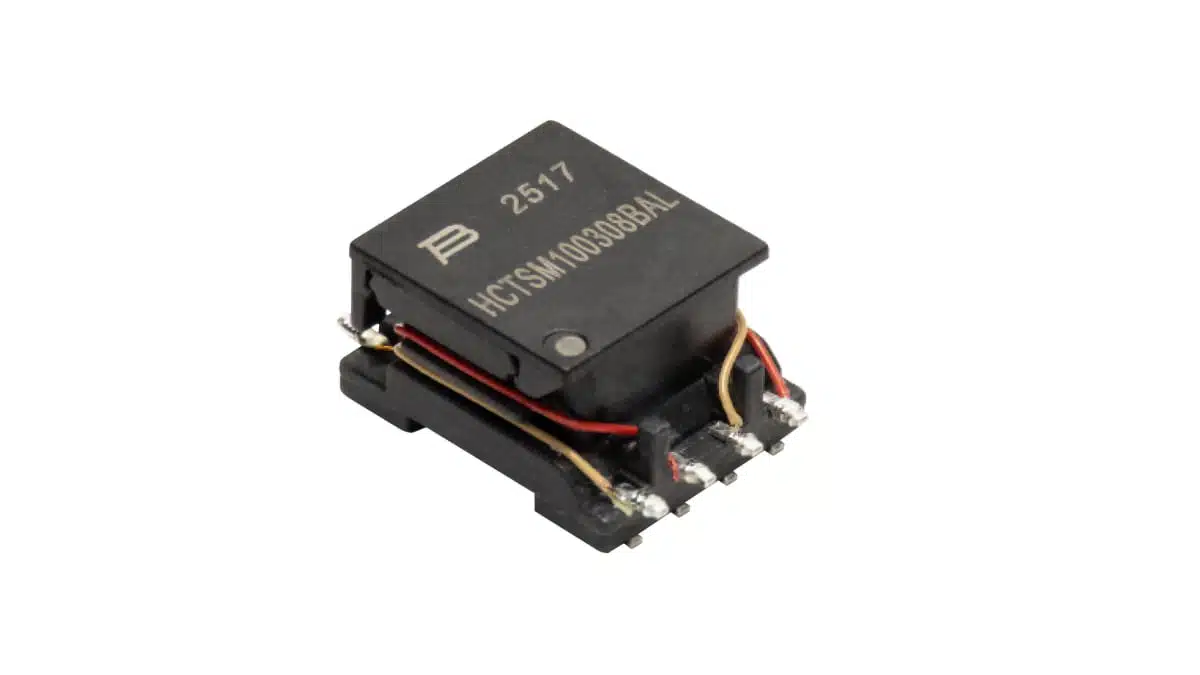
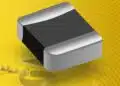
Bourns has introduced the HCTSM100308BAL, a high clearance and creepage distance transformer optimized for compact, isolated push‑pull and similar DC/DC converter topologies.

Positioned within the HCTSM8 family, the device targets designs that must meet reinforced insulation requirements and maintain isolation in small SMD footprints under demanding thermal and electrical conditions.

RelatedPosts

Bourns Expanded Semi-Shielded Low Profile Automotive Power Inductor

Bourns Extends PPTC Resettable High‑Power, High‑Voltage Protection Fuses

Bourns Releases Compact Automotive Isolation Power Transformer

Key features and benefits

The HCTSM100308BAL transformer is part of the Bourns HCTSM8 high clearance and creepage distance transformer series designed for isolated low‑power supplies in industrial, communication and related systems. It is intended to work with popular isolated driver ICs and controller devices in applications where reinforced insulation and reliable separation between primary and secondary circuits are mandatory.

Key characteristics include:

  • High clearance and creepage distance between primary and secondary to support reinforced insulation.
  • Working voltage capability defined in the manufacturer datasheet for the HCTSM8 series, enabling use in systems requiring robust isolation.
  • Hi‑pot isolation specified in the kilovolt range (primary to secondary) according to the family datasheet, suitable for safety‑critical isolation barriers.
  • Surface‑mount package optimized for automated assembly, with low profile and compact footprint.
  • Ferrite core construction with insulated copper windings to support insulation requirements and minimize leakage.
  • Suitability for push‑pull type isolated converters using appropriate driver ICs from major semiconductor vendors, enabling efficient energy transfer for compact gate‑drive or bias supplies.

In practice, the increased clearance and creepage distance help designers address insulation coordination aspects of IEC 62368‑1 and similar safety standards without resorting to bulky through‑hole magnetics. Using a surface‑mount transformer with reinforced insulation can simplify PCB layout, reduce board space, and support higher system reliability under long‑term thermal and electrical stress.

Typical applications

The HCTSM8 series is commonly used in small isolated power stages that provide a few watts to drive control electronics or interfaces rather than bulk power conversion. The HCTSM100308BAL variant targets similar use cases where small size and high isolation are required at the same time.

Typical applications include:

  • Isolated bias supplies for gate drivers, for example IGBT or MOSFET drivers in industrial inverters and motor drives.
  • Isolated auxiliary DC/DC converters from low‑voltage rails to support measurement, communication or control circuitry.
  • Isolated power for communication interfaces or sensors in industrial control and automation.
  • Circuits requiring reinforced isolation and compliance with insulation coordination rules, such as parts of medical, industrial or instrumentation systems, within the ratings specified in the datasheet.

In these use cases, the transformer helps break ground loops, improves EMC behavior for sensitive electronics, and offers a compact way to implement safety‑compliant isolation between primary and secondary circuits.

Technical highlights

The HCTSM100308BAL follows the general electrical and mechanical framework of the HCTSM8 series while using a compact SMD footprint. Exact primary inductance, turns ratio, current ratings and detailed safety classifications should always be taken directly from the manufacturer datasheet for the HCTSM100308BAL ordering code.

Key technical characteristics at HCTSM8 family level, indicative for this model, include:

  • Input voltage range for typical designs around low‑voltage rails such as 3.3 V to 5 V DC.
  • Output voltage range on the order of a few volts up to about 15 V DC, depending on turns ratio and converter design.
  • Peak output current capability in the few hundred milliampere range, suitable for bias and auxiliary rails rather than high‑power conversion.
  • Operating frequency range in the typical few‑hundred‑kilohertz band, matching common push‑pull driver ICs.
  • Operating temperature rating up to 125 °C including temperature rise, supporting use in thermally demanding environments.
  • Clearance and creepage distance between primary and secondary on the order of several millimeters, sufficient for reinforced insulation when applied according to the datasheet.

Mechanically, HCTSM8 devices are specified around a compact rectangular SMD package; the series includes a reduced‑length variant such as HCTSM80308BAL, and the exact mechanical outline of HCTSM100308BAL should be confirmed in the official drawing. The SMD package is supplied on tape‑and‑reel to support high‑volume automated pick‑and‑place assembly, and the recommended reflow profile is aligned with standard lead‑free soldering processes.

For practical design work, parameters such as primary inductance, leakage inductance, ET constant and DC resistance allow engineers to model core and copper losses and to estimate efficiency over the intended load current and operating frequency. Efficiency and thermal behavior should be validated at system level, but the family’s datasheet curves provide a useful starting point when sizing the transformer and checking margin.

Design‑in notes for engineers

When designing in the HCTSM100308BAL, a good starting point is the reference push‑pull or similar isolated converter topology recommended by Bourns and by the chosen driver IC manufacturer. The transformer’s turns ratio, inductance and current rating must be matched to the input voltage, target output voltage, switching frequency and expected load profile.

Key design‑in considerations include:

  • Use the HCTSM100308BAL‑specific inductance, leakage inductance and DC resistance values from the datasheet as the basis for SPICE models and loss calculations.
  • Check the rated ET constant and ensure that the applied volt‑microsecond product of the waveform remains within limit at the chosen switching frequency and duty cycle.
  • Respect the specified Hi‑pot and reinforced insulation ratings by following the recommended land pattern so that creepage and clearance distances on the PCB are not reduced.
  • Pay attention to any suggested slots, keep‑out areas or solder mask openings that help maintain isolation distance and reduce surface contamination effects.
  • Follow the recommended soldering profile and avoid exceeding maximum temperature limits during reflow, to protect the magnetic core and insulation system.

From an EMC and signal integrity perspective, the HCTSM8 construction is intended to support low leakage and good coupling, which helps reduce stray fields and supports compliance with conducted and radiated emission limits. Even so, designers should validate emissions, conducted noise and transient behavior in the final assembly, because board layout, grounding strategy and neighboring circuits strongly influence overall EMC performance.

For long‑term reliability, pay close attention to ambient temperature, self‑heating due to copper and core losses, and the maximum operating temperature rating up to 125 °C stated for the series. In higher ambient conditions it can be beneficial to derate output power or adjust frequency and duty cycle so that the transformer operates with sufficient thermal margin and insulation life over the required service period.

Source

The information in this article is based on the Bourns featured product bulletin for the HCTSM100308BAL and on the HCTSM8 series datasheet and related magnetics application material provided by the manufacturer.
References

  1. Bourns Featured Product Bulletin – Model HCTSM100308BAL (PDF)
  2. Bourns HCTSM8 Series High Clearance and Creepage Distance Transformers Datasheet (PDF)
  3. Bourns HCTSM8 High Clearance and Creepage Transformers – Product Page
  4. Bourns Magnetics Solutions for Power and Signal Lines – Application Note

Related

Recent Posts

Thermal Modeling of Magnetics

16.3.2026
1

ESA SPCD 26 Call for Papers Extended to 30th March

16.3.2026
73

Binder Extends NCC Circular Connectors for Harsh Environments

13.3.2026
2

Standard vs Planar LLC transformers Comparison for Battery Chargers

13.3.2026
15

Bourns Expanded Semi-Shielded Low Profile Automotive Power Inductor

12.3.2026
14

Peak Nano to Develop Fusion Grade High Energy Film Capacitors

11.3.2026
29

Murata New Vibration Sensor Targets High‑Frequency Predictive Maintenance

10.3.2026
24

Panasonic Expands Automotive PP Film Capacitors Voltage Range

9.3.2026
23

Panasonic Extends Automotive Power Inductor Line

9.3.2026
30

Upcoming Events

Mar 19
13:00 - 14:00 CDT

Smart Consideration of Inductor Thermal Performance

Mar 21
All day

PSMA Capacitor Workshop 2026

Apr 21
16:00 - 17:00 CEST

Heatsink Solutions: Thermal Management in electronic devices

View Calendar

Popular Posts

  • Buck Converter Design and Calculation

    0 shares
    Share 0 Tweet 0
  • Boost Converter Design and Calculation

    0 shares
    Share 0 Tweet 0
  • Flyback Converter Design and Calculation

    0 shares
    Share 0 Tweet 0
  • LLC Resonant Converter Design and Calculation

    0 shares
    Share 0 Tweet 0
  • MLCC Manufacturers Consider Price Increase as AI Demand Outpaces Supply

    0 shares
    Share 0 Tweet 0
  • Dual Active Bridge (DAB) Topology

    0 shares
    Share 0 Tweet 0
  • Ripple Current and its Effects on the Performance of Capacitors

    3 shares
    Share 3 Tweet 0
  • MLCC and Ceramic Capacitors

    0 shares
    Share 0 Tweet 0
  • MLCC Case Sizes Standards Explained

    0 shares
    Share 0 Tweet 0
  • 3-Phase EMI Filter Design, Simulation, Calculation and Test

    0 shares
    Share 0 Tweet 0

Newsletter Subscription


Passive Components Blog

© EPCI - Leading Passive Components Educational and Information Site

  • Home
  • Privacy Policy
  • EPCI Membership & Advertisement
  • About

No Result
View All Result
  • Home
  • Knowledge Blog
  • PCNS

© EPCI - Leading Passive Components Educational and Information Site

This website uses cookies. By continuing to use this website you are giving consent to cookies being used. Visit our Privacy and Cookie Policy.
Go to mobile version