




Passive Components Blog
No Result
View All Result
  • Home
  • NewsFilter
    • All
    • Aerospace & Defence
    • Antenna
    • Applications
    • Automotive
    • Capacitors
    • Circuit Protection Devices
    • electro-mechanical news
    • Filters
    • Fuses
    • Inductors
    • Industrial
    • Integrated Passives
    • inter-connect news
    • Market & Supply Chain
    • Market Insights
    • Medical
    • Modelling and Simulation
    • New Materials & Supply
    • New Technologies
    • Non-linear Passives
    • Oscillators
    • Passive Sensors News
    • Resistors
    • RF & Microwave
    • Telecommunication
    • Weekly Digest

    EMC‑Compliant PCB and Connector Design Guidelines

    Practical Value of Structural Diagnostics for Tantalum Capacitor Anodes

    Hall-Effect Sensing for Harsh Environments: TT Electronics Selected in NASA’s Dragonfly Fan

    Bourns Releases Automotive Gate Driver Transformer for Isolated Power

    Stackpole Releases High-Frequency Thin Film Chip Resistors for RF up to 50 GHz

    Knowles Expands High‑Q Ceramic Core Inductors for RF designs

    Vishay Unveils 1.5 kV IHDV High Voltage Power Inductors for EV and Industrial Converters

    SCHURTER Introduces PPTC Resettable Overcurrent Protection for Compact Electronics

    TrendForce: CSP in‑house AI ASIC Boom Reshapes Capacitor Demand

    Trending Tags

    • Ripple Current
    • RF
    • Leakage Current
    • Tantalum vs Ceramic
    • Snubber
    • Low ESR
    • Feedthrough
    • Derating
    • Dielectric Constant
    • New Products
    • Market Reports
  • VideoFilter
    • All
    • Antenna videos
    • Capacitor videos
    • Circuit Protection Video
    • Filter videos
    • Fuse videos
    • Inductor videos
    • Inter-Connect Video
    • Non-linear passives videos
    • Oscillator videos
    • Passive sensors videos
    • Resistor videos

    EMC‑Compliant PCB and Connector Design Guidelines

    Why Isolated DC/DC Power Supplies Fail Late, Würth Elektronik Podcast

    Designing 800 V DC EMC Filters: Calculation, Simulation and Measurement

    Current Sense Transformer Datasheet and Design‑in Guide

    Designing a USB Type‑C Flyback Planar Transformer with Frenetic’s Planar Tool

    Magnetics Design in High‑Frequency GaN Converters

    Qi2 Wireless Charging: Inductors, Capacitors and EMC Filters

    Two‑capacitor paradox explained for engineers

    Capacitances of Nonlinear MLCCs: What Datasheets Don’t Tell You

    Trending Tags

    • Capacitors explained
    • Inductors explained
    • Resistors explained
    • Filters explained
    • Application Video Guidelines
    • EMC
    • New Products
    • Ripple Current
    • Simulation
    • Tantalum vs Ceramic
  • Knowledge Blog
  • DossiersNew
  • Suppliers
    • Who is Who
  • PCNS
    • PCNS 2025
    • PCNS 2023
    • PCNS 2021
    • PCNS 2019
    • PCNS 2017
  • Events
  • Home
  • NewsFilter
    • All
    • Aerospace & Defence
    • Antenna
    • Applications
    • Automotive
    • Capacitors
    • Circuit Protection Devices
    • electro-mechanical news
    • Filters
    • Fuses
    • Inductors
    • Industrial
    • Integrated Passives
    • inter-connect news
    • Market & Supply Chain
    • Market Insights
    • Medical
    • Modelling and Simulation
    • New Materials & Supply
    • New Technologies
    • Non-linear Passives
    • Oscillators
    • Passive Sensors News
    • Resistors
    • RF & Microwave
    • Telecommunication
    • Weekly Digest

    EMC‑Compliant PCB and Connector Design Guidelines

    Practical Value of Structural Diagnostics for Tantalum Capacitor Anodes

    Hall-Effect Sensing for Harsh Environments: TT Electronics Selected in NASA’s Dragonfly Fan

    Bourns Releases Automotive Gate Driver Transformer for Isolated Power

    Stackpole Releases High-Frequency Thin Film Chip Resistors for RF up to 50 GHz

    Knowles Expands High‑Q Ceramic Core Inductors for RF designs

    Vishay Unveils 1.5 kV IHDV High Voltage Power Inductors for EV and Industrial Converters

    SCHURTER Introduces PPTC Resettable Overcurrent Protection for Compact Electronics

    TrendForce: CSP in‑house AI ASIC Boom Reshapes Capacitor Demand

    Trending Tags

    • Ripple Current
    • RF
    • Leakage Current
    • Tantalum vs Ceramic
    • Snubber
    • Low ESR
    • Feedthrough
    • Derating
    • Dielectric Constant
    • New Products
    • Market Reports
  • VideoFilter
    • All
    • Antenna videos
    • Capacitor videos
    • Circuit Protection Video
    • Filter videos
    • Fuse videos
    • Inductor videos
    • Inter-Connect Video
    • Non-linear passives videos
    • Oscillator videos
    • Passive sensors videos
    • Resistor videos

    EMC‑Compliant PCB and Connector Design Guidelines

    Why Isolated DC/DC Power Supplies Fail Late, Würth Elektronik Podcast

    Designing 800 V DC EMC Filters: Calculation, Simulation and Measurement

    Current Sense Transformer Datasheet and Design‑in Guide

    Designing a USB Type‑C Flyback Planar Transformer with Frenetic’s Planar Tool

    Magnetics Design in High‑Frequency GaN Converters

    Qi2 Wireless Charging: Inductors, Capacitors and EMC Filters

    Two‑capacitor paradox explained for engineers

    Capacitances of Nonlinear MLCCs: What Datasheets Don’t Tell You

    Trending Tags

    • Capacitors explained
    • Inductors explained
    • Resistors explained
    • Filters explained
    • Application Video Guidelines
    • EMC
    • New Products
    • Ripple Current
    • Simulation
    • Tantalum vs Ceramic
  • Knowledge Blog
  • DossiersNew
  • Suppliers
    • Who is Who
  • PCNS
    • PCNS 2025
    • PCNS 2023
    • PCNS 2021
    • PCNS 2019
    • PCNS 2017
  • Events
No Result
View All Result
Passive Components Blog
No Result
View All Result

Bourns Releases Compact High Current Shielded Power Inductors

2.4.2026
Reading Time: 7 mins read
A A

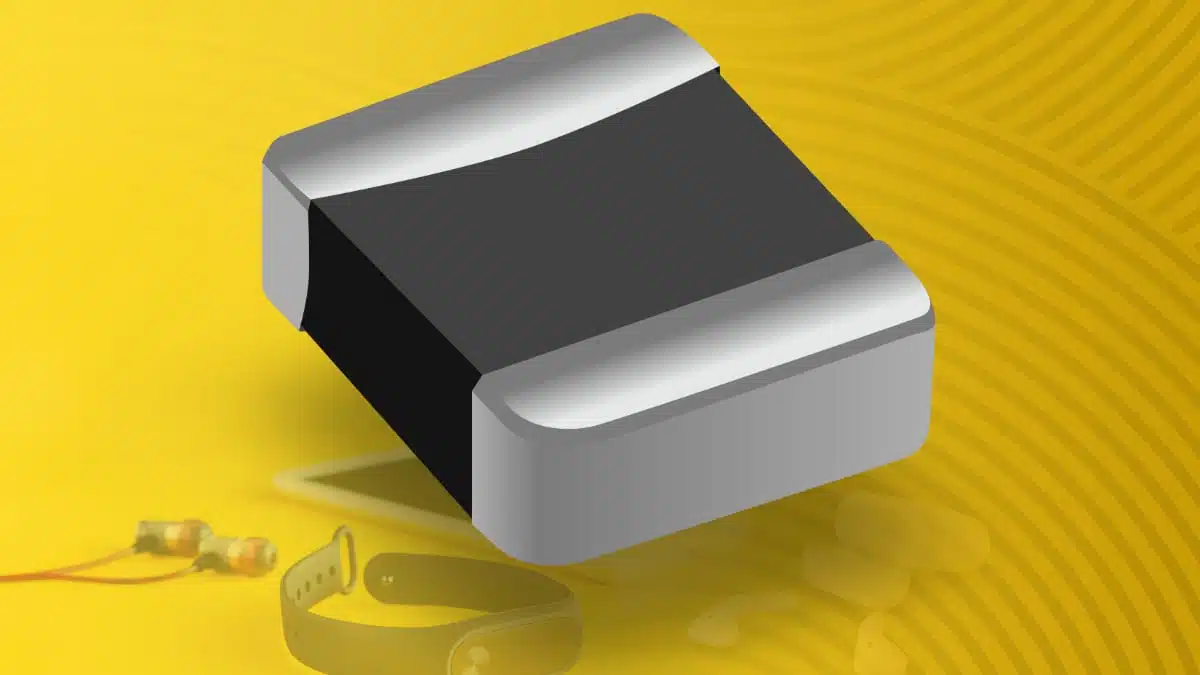
Bourns has introduced the SRP2008DP Series, a family of low‑profile, high current shielded power inductors in a 2.0 × 1.6 × 0.8 mm package for space‑constrained power stages in portable, IoT and compact industrial designs.

The SMD chip inductor series targets design engineers who need to increase power density and manage EMI on crowded PCBs without sacrificing saturation performance.

RelatedPosts

Bourns Releases Automotive Gate Driver Transformer for Isolated Power

Bourns Completes Rakon Acquisition, Enters Timing Market

Bourns Offers Custom Magnetics for 3‑Phase Flying Capacitor Inverters

Key features and benefits

The SRP2008DP power inductor series is built on a metal‑alloy powder core with fully shielded construction. This combination is aimed at high‑frequency DC‑DC converters where low profile, high current capability and controlled magnetic fields are all critical.

Key characteristics include:

  • Shielded construction to contain magnetic flux, reducing radiated emissions and helping with board‑level EMC compliance when components are packed closely together.
  • Metal‑alloy powder core with high resistivity to suppress eddy currents and reduce core losses at the switching frequencies typical of modern converters.
  • High saturation current ratings (Isat up to 5.50 A, depending on value) so inductance is maintained under load and the core is less likely to collapse during transient or peak current events.
  • Heating current (Irms up to 3.50 A) specified so designers can estimate temperature rise and steady‑state current limits more accurately in small enclosures.
  • Very low profile 0.8 mm package height for designs where z‑axis clearance is constrained, such as wearables, compact modules and stacked boards.
  • Wide operating temperature range from −40 °C to +125 °C, supporting typical consumer and many industrial environments.
  • RoHS compliant and halogen‑free construction for designs that must meet current environmental requirements.

For engineers, the key benefit is the ability to use a shielded, high‑current inductor even in layouts that previously would have forced a compromise toward smaller, unshielded components or larger footprints.

Typical applications

Bourns positions the SRP2008DP Series primarily for compact power conversion in modern, miniaturized electronics. The inductor size and current ratings fit a wide range of low‑ to mid‑power DC‑DC converter topologies.

Typical application areas include:

  • DC‑DC converters in portable and handheld devices, such as smartphones, cameras, handheld terminals and medical wearables where every square millimeter of PCB matters.
  • Miniature consumer electronics and wearables that integrate radios, sensors and processing in a single compact PCB and need shielded magnetics to control interference.
  • IoT modules and compact industrial power circuits that require stable power rails in small form‑factor boards, often in harsh or thermally challenging environments.
  • Height‑constrained PCB‑based designs in general, for example stacked boards, low‑profile modules or thin enclosures where component height can be a limiting factor.

In these use cases, the shielded construction helps reduce magnetic coupling into adjacent RF sections, precision analog front‑ends or high‑speed digital traces located near the power stage.

Technical highlights

From a specification perspective, the SRP2008DP Series occupies the low‑μH range suitable for switching converter energy storage while maintaining a very small footprint.

Package and mechanical data

  • Footprint: 2.0 × 1.6 mm outline for minimal board area usage.
  • Height: 0.8 mm maximum profile to match ultra‑slim designs.
  • Package style: SMD, shielded construction based on a metal‑alloy powder core.

The small size simplifies placement near the switching device, which helps minimize loop area and radiated noise while simplifying routing in multi‑rail or multi‑layer designs.

Electrical range (series overview)

According to the manufacturer’s published series data, the SRP2008DP family covers:

  • Inductance values: 0.24 μH to 4.70 μH (nominal range).
  • Heating current Irms: 1.10 A to 3.50 A across the value range.
  • Saturation current Isat: 1.60 A to 5.50 A depending on inductance.

In practice, lower inductance values typically support higher saturation currents, which is suitable for low‑voltage, high‑current converter stages, while higher inductance values serve lower current or higher duty‑cycle applications. Exact ratings, DCR values and tolerance classes should be taken from the current Bourns datasheet for the specific part number selected.

Thermal and environmental characteristics

  • Operating temperature range: −40 °C to +125 °C.
  • RoHS compliant and halogen‑free construction.

A −40 °C to +125 °C rating covers most commercial and many industrial applications, including equipment exposed to moderate ambient temperature rise and self‑heating. Designers should still validate actual component temperature on the target PCB under worst‑case load and airflow conditions.

Design‑in notes for engineers

When selecting a member of the SRP2008DP Series for a specific DC‑DC converter or power rail, a few practical points can improve design robustness.

Inductor selection considerations

  • Check inductance versus operating point: choose an inductance that meets converter ripple and transient response targets at the planned switching frequency, then verify the inductance drop at the expected peak current from the manufacturer’s curves.
  • Use Isat with margin: select a part where the saturation current rating comfortably exceeds the maximum peak current, including startup and fault conditions, not just nominal load.
  • Observe Irms and temperature rise: ensure the heating current rating supports continuous load current with acceptable temperature rise on your specific PCB stackup and enclosure.
  • Review DCR and efficiency: lower DCR improves efficiency and reduces heating, but may trade off against inductance or other parameters; refer to the datasheet tables rather than extrapolating.

Because the SRP2008DP devices are optimized for dense layouts, designers should also consider via placement and copper area beneath and around the component to help spread heat, especially in always‑on rails in thermally constrained housings.

EMI and layout guidance

The shielded construction is designed to reduce stray flux, but layout discipline remains important for low‑noise performance.

  • Keep the loop formed by the switch, diode or synchronous FET, inductor and input capacitor as compact as possible to limit radiated noise.
  • Avoid routing sensitive analog, RF or high‑speed digital lines directly under or adjacent to the inductor; even shielded parts can couple some residual fields at high current.
  • If multiple power rails are implemented with several SRP2008DP inductors in proximity, consider orientation and spacing to further reduce mutual coupling.
  • Use solid ground planes and carefully placed return paths to help control common‑mode emissions in conjunction with the shielded inductor.

For designs that must meet formal EMC standards, pre‑compliance testing with the intended inductor value and layout is recommended before finalizing the PCB.

Source

This article is based on information provided in the official Bourns press release and associated SRP2008DP Series product documentation, with additional independent commentary and design‑in guidance for power electronics engineers.
References

  1. Bourns press release – SRP2008DP Series high current shielded power inductors
  2. Bourns SRP2008DP Series datasheet
  3. Bourns SRP2008DP Series product page

Related

Recent Posts

Bourns Releases Automotive Gate Driver Transformer for Isolated Power

22.6.2026
7

Knowles Expands High‑Q Ceramic Core Inductors for RF designs

19.6.2026
18

Vishay Unveils 1.5 kV IHDV High Voltage Power Inductors for EV and Industrial Converters

19.6.2026
25

SCHURTER Introduces PPTC Resettable Overcurrent Protection for Compact Electronics

18.6.2026
27

Samsung Presents Ultra‑Thin Silicon Capacitors for AI and Server PDN

17.6.2026
54

YAGEO Introduces 310VAC SMD Y2 Safety MP Capacitors for Compact EMI Filtering

16.6.2026
32

DMASS: European Components Distribution Returns To Growth In Q1 2026

16.6.2026
51

German Component Distribution Market Rebounds in Q1 2026 According to FBDi

16.6.2026
35

Nippon Chemi-Con Announces New Capacitor series for AI, Automotive and Immersion Cooling

16.6.2026
61

Upcoming Events

Jun 30
17:00 - 18:00 CEST

PSMA Capacitor Committee Webinar: High Voltage Pulse Capacitors

Jul 14
16:00 - 17:00 CEST

EMC Design Essentials: Mastering Varistors and Common Mode Chokes

Jul 21
16:00 - 17:00 CEST

Safety by design: X and Y Interference suppression capacitors for power line filters

View Calendar

Popular Posts

  • Boost Converter Design and Calculation

    0 shares
    Share 0 Tweet 0
  • Buck Converter Design and Calculation

    0 shares
    Share 0 Tweet 0
  • Flyback Converter Design and Calculation

    0 shares
    Share 0 Tweet 0
  • LLC Resonant Converter Design and Calculation

    0 shares
    Share 0 Tweet 0
  • MLCC and Ceramic Capacitors

    0 shares
    Share 0 Tweet 0
  • Earthing Systems and IEC Classification Explained

    0 shares
    Share 0 Tweet 0
  • Dual Active Bridge (DAB) Topology

    0 shares
    Share 0 Tweet 0
  • SEPIC Converter Design and Calculation

    0 shares
    Share 0 Tweet 0
  • Nvidia Vera Rubin: Why One AI Rack Needs So Many More MLCC Capacitors

    0 shares
    Share 0 Tweet 0
  • MLCC Case Sizes Standards Explained

    0 shares
    Share 0 Tweet 0

Newsletter Subscription


Passive Components Blog

© EPCI - Leading Passive Components Educational and Information Site

  • Home
  • Privacy Policy
  • EPCI Membership & Advertisement
  • About

No Result
View All Result
  • Home
  • Knowledge Blog
  • Dossiers
  • PCNS

© EPCI - Leading Passive Components Educational and Information Site

This website uses cookies. By continuing to use this website you are giving consent to cookies being used. Visit our Privacy and Cookie Policy.
Go to mobile version