







Passive Components Blog
No Result
View All Result
  • Home
  • NewsFilter
    • All
    • Aerospace & Defence
    • Antenna
    • Applications
    • Automotive
    • Capacitors
    • Circuit Protection Devices
    • electro-mechanical news
    • Filters
    • Fuses
    • Inductors
    • Industrial
    • Integrated Passives
    • inter-connect news
    • Market & Supply Chain
    • Market Insights
    • Medical
    • Modelling and Simulation
    • New Materials & Supply
    • New Technologies
    • Non-linear Passives
    • Oscillators
    • Passive Sensors News
    • Resistors
    • RF & Microwave
    • Telecommunication
    • Weekly Digest

    KYOCERA AVX Introduces Traction‑Grade DC Link Film Capacitors

    When More Capacitance Hurts Reliability: The Role of the Metallic Skeleton in Tantalum Anodes

    Why Power Inductors Use a Ferrite Core With an Air Gap

    Wk 16 Electronics Supply Chain Digest

    YAGEO Introduces High‑Current Y2/X1 Film Capacitors for Wide-bandgap Power Systems

    Amphenol Explanded Liquid Cooling Connectors for AI, ESS and EV Systems

    Hirose Introduced BGA connector for PCIe Gen6 for AI and Edge Computing

    YAGEO Introduces High Rel MLCCs Beyond MIL-Spec Limits

    Würth Elektronik Expanded Capacity for Validation and Services in Asia

    Trending Tags

    • Ripple Current
    • RF
    • Leakage Current
    • Tantalum vs Ceramic
    • Snubber
    • Low ESR
    • Feedthrough
    • Derating
    • Dielectric Constant
    • New Products
    • Market Reports
  • VideoFilter
    • All
    • Antenna videos
    • Capacitor videos
    • Circuit Protection Video
    • Filter videos
    • Fuse videos
    • Inductor videos
    • Inter-Connect Video
    • Non-linear passives videos
    • Oscillator videos
    • Passive sensors videos
    • Resistor videos

    Why Power Inductors Use a Ferrite Core With an Air Gap

    Transformer-Based Power-Line Harvester Magnetic Design

    Thermal Modeling of Magnetics

    Standard vs Planar LLC transformers Comparison for Battery Chargers

    How Modern Tools Model Magnetic Components for Power Electronics

    Advanced Loss Modeling for Planar Magnetics in the Frenetic Planar Tool

    2026 Power Magnetics Design Trends: Flyback, DAB and Planar

    Enabling Software‑Defined Vehicle Architectures: Automotive Ethernet and Zonal Smart Power

    Calculating Resistance Value of a Flyback RC Snubber 

    Trending Tags

    • Capacitors explained
    • Inductors explained
    • Resistors explained
    • Filters explained
    • Application Video Guidelines
    • EMC
    • New Products
    • Ripple Current
    • Simulation
    • Tantalum vs Ceramic
  • Knowledge Blog
  • DossiersNew
  • Suppliers
    • Who is Who
  • PCNS
    • PCNS 2025
    • PCNS 2023
    • PCNS 2021
    • PCNS 2019
    • PCNS 2017
  • Events
  • Home
  • NewsFilter
    • All
    • Aerospace & Defence
    • Antenna
    • Applications
    • Automotive
    • Capacitors
    • Circuit Protection Devices
    • electro-mechanical news
    • Filters
    • Fuses
    • Inductors
    • Industrial
    • Integrated Passives
    • inter-connect news
    • Market & Supply Chain
    • Market Insights
    • Medical
    • Modelling and Simulation
    • New Materials & Supply
    • New Technologies
    • Non-linear Passives
    • Oscillators
    • Passive Sensors News
    • Resistors
    • RF & Microwave
    • Telecommunication
    • Weekly Digest

    KYOCERA AVX Introduces Traction‑Grade DC Link Film Capacitors

    When More Capacitance Hurts Reliability: The Role of the Metallic Skeleton in Tantalum Anodes

    Why Power Inductors Use a Ferrite Core With an Air Gap

    Wk 16 Electronics Supply Chain Digest

    YAGEO Introduces High‑Current Y2/X1 Film Capacitors for Wide-bandgap Power Systems

    Amphenol Explanded Liquid Cooling Connectors for AI, ESS and EV Systems

    Hirose Introduced BGA connector for PCIe Gen6 for AI and Edge Computing

    YAGEO Introduces High Rel MLCCs Beyond MIL-Spec Limits

    Würth Elektronik Expanded Capacity for Validation and Services in Asia

    Trending Tags

    • Ripple Current
    • RF
    • Leakage Current
    • Tantalum vs Ceramic
    • Snubber
    • Low ESR
    • Feedthrough
    • Derating
    • Dielectric Constant
    • New Products
    • Market Reports
  • VideoFilter
    • All
    • Antenna videos
    • Capacitor videos
    • Circuit Protection Video
    • Filter videos
    • Fuse videos
    • Inductor videos
    • Inter-Connect Video
    • Non-linear passives videos
    • Oscillator videos
    • Passive sensors videos
    • Resistor videos

    Why Power Inductors Use a Ferrite Core With an Air Gap

    Transformer-Based Power-Line Harvester Magnetic Design

    Thermal Modeling of Magnetics

    Standard vs Planar LLC transformers Comparison for Battery Chargers

    How Modern Tools Model Magnetic Components for Power Electronics

    Advanced Loss Modeling for Planar Magnetics in the Frenetic Planar Tool

    2026 Power Magnetics Design Trends: Flyback, DAB and Planar

    Enabling Software‑Defined Vehicle Architectures: Automotive Ethernet and Zonal Smart Power

    Calculating Resistance Value of a Flyback RC Snubber 

    Trending Tags

    • Capacitors explained
    • Inductors explained
    • Resistors explained
    • Filters explained
    • Application Video Guidelines
    • EMC
    • New Products
    • Ripple Current
    • Simulation
    • Tantalum vs Ceramic
  • Knowledge Blog
  • DossiersNew
  • Suppliers
    • Who is Who
  • PCNS
    • PCNS 2025
    • PCNS 2023
    • PCNS 2021
    • PCNS 2019
    • PCNS 2017
  • Events
No Result
View All Result
Passive Components Blog
No Result
View All Result

Bourns Expanded Semi-Shielded Low Profile Automotive Power Inductor

12.3.2026
Reading Time: 5 mins read
A A

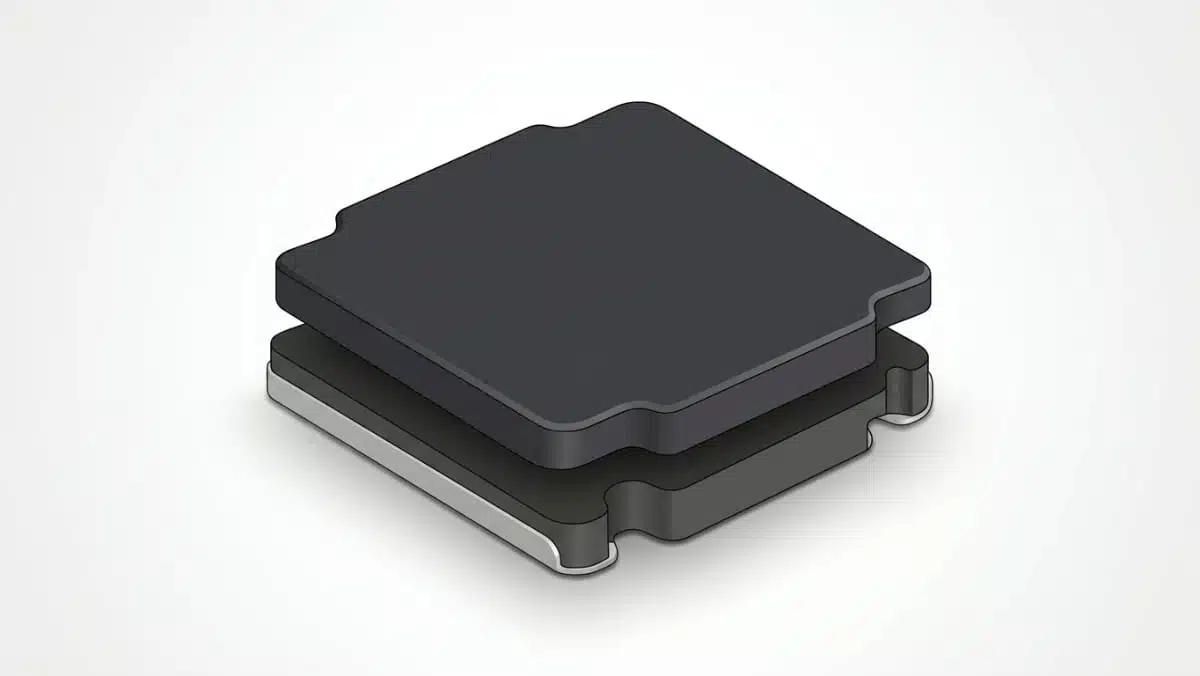
Bourns has expanded its SRN3010BTA series of semi‑shielded power inductors with a new 33 µH variant aimed at compact automotive and industrial power designs.

The new power inductor combines AEC‑Q200 qualification, a 1 mm maximum height and soldered lead‑wire construction to support higher reliability where board space and long‑term robustness are critical.

RelatedPosts

Bourns Releases Compact High Current Shielded Power Inductors

Bourns Expands its Modular Contacts for Power-Dense Systems

Bourns Extends PPTC Resettable High‑Power, High‑Voltage Protection Fuses

Key features and benefits

The SRN3010BTA series targets compact DC‑DC converter and power supply stages where a low‑profile, semi‑shielded inductor is required rather than a full molded or open construction. The newly added model is SRN3010BTA‑330M with the following headline parameters according to the manufacturer datasheet:

  • Inductance: 33 µH nominal
  • Package size: 3 mm × 3 mm footprint, 0.9 mm max height (1 mm max profile specified for the series)
  • Semi‑shielded construction
  • Heating current Irms=0.60 AI_{\text{rms}} = 0.60 \,\text{A} (temperature rise defined per datasheet)
  • Saturation current Isat=0.45 AI_{\text{sat}} = 0.45 \,\text{A}
  • Operating temperature range: −55 °C to +125 °C
  • AEC‑Q200 compliant automotive grade
  • RoHS compliant and halogen free as defined by the manufacturer

Semi‑shielded inductors typically use a composite magnetic material around the winding, which reduces radiated EMI compared with open inductors while still offering cost and height advantages versus fully molded shielded types. In this case, the 1 mm profile is especially attractive for slim automotive ECUs, infotainment modules and low‑profile consumer/industrial boards where z‑height is a primary constraint.

The series also utilizes soldered lead‑wire construction for the internal connection between the coil and terminations, which helps improve mechanical robustness and long‑term reliability under automotive vibration and thermal cycling. For engineers designing for elevated temperature and long operating life, this construction detail can be an important differentiator versus low‑cost alternatives.

Typical applications

Bourns positions the SRN3010BTA series for a range of automotive and general‑purpose low‑power DC‑DC conversion tasks. The 33 µH value in particular is suitable where relatively higher inductance is required at modest currents, for example in pre‑regulation or noise‑sensitive stages.

Typical use cases include:

  • Automotive systems and ECUs in body electronics and infotainment
  • Advanced driver assist system boards where board area and height are limited
  • Automotive lighting modules, including LED drivers with compact step‑down converters
  • Low‑power DC‑DC converters in consumer devices that must meet automotive‑grade reliability in harsh environments
  • Point‑of‑load regulators and auxiliary rails in industrial and telecom equipment with tight z‑height limits
  • Noise‑sensitive rails where semi‑shielding helps reduce coupling into adjacent traces or RF sections

In many of these applications, the 33 µH inductance can be used in conjunction with relatively low switching frequencies to reduce ripple current, at the expense of lower saturation current compared with lower‑value inductors. This makes the SRN3010BTA‑330M a candidate for control rails, bias supplies and other non‑primary, low‑power rails in automotive electronics.

Design‑in notes for engineers

When designing in the SRN3010BTA‑330M, several practical points should be checked at the schematic and layout stages:

  • Verify that the peak inductor current in your converter topology stays below the 0.45 A saturation current with adequate margin, considering worst‑case input voltage, load and switching frequency.
  • Confirm that the RMS inductor current remains within the 0.60 A heating current rating for your chosen ripple current and operating temperature rise.
  • Ensure that the −55 °C to +125 °C operating range aligns with the target ambient and hot‑spot temperature in the end application, including self‑heating.
  • Pay attention to PCB copper area around the inductor pads to aid heat dissipation and help keep the component within its thermal budget.
  • In layouts sensitive to EMI, place the semi‑shielded inductor so that its remaining stray field does not interfere with nearby high‑impedance or RF nodes; semi‑shielding reduces but does not eliminate coupling.
  • Where mechanical shock and vibration are concerns (automotive ECUs, under‑hood modules), follow the manufacturer’s recommended land pattern and consider additional board‑level reinforcement strategies as needed.

For power stage optimization, designers can use the series’ available inductance options to trade off ripple current versus transient response and dynamic performance of the DC‑DC converter. The 33 µH value is typically more suited for lower current rails or higher input‑to‑output voltage ratios where a higher inductance helps keep ripple within specification.

Source

This article is based on the official Bourns product extension release for the SRN3010BTA semi‑shielded power inductor series, specifically the announcement of the SRN3010BTA‑330M 33 µH model, complemented by general design considerations for automotive‑grade power inductors according to the manufacturer’s documentation.

References

  1. Bourns IC26024 – SRN3010BTA Series Semi‑shielded Power Inductors Product Extension Release
  2. Bourns official website – Magnetic products overview
  3. Bourns product selector – Inductors

Related

Recent Posts

KYOCERA AVX Introduces Traction‑Grade DC Link Film Capacitors

21.4.2026
4

Why Power Inductors Use a Ferrite Core With an Air Gap

20.4.2026
9

YAGEO Introduces High‑Current Y2/X1 Film Capacitors for Wide-bandgap Power Systems

17.4.2026
15

Amphenol Explanded Liquid Cooling Connectors for AI, ESS and EV Systems

17.4.2026
6

Hirose Introduced BGA connector for PCIe Gen6 for AI and Edge Computing

17.4.2026
5

Samsung Introduces Ultra-High-Voltage 1500 V MLCCs for xEV Powertrains

16.4.2026
22

TDK Introduces High‑Voltage Common‑Mode Chokes for Compact 1250 V DC Converters

16.4.2026
23

Vishay Extends Power Inductors for DC/DC with 1212 Compact Case

16.4.2026
16

Modeling Planar Magnetics Temperature: Practical Guidelines for Power Electronics Engineers

15.4.2026
20

Upcoming Events

Apr 22
17:00 - 17:30 CEST

Magnetics in a high frequency GaN era

Apr 22
17:00 - 18:00 CEST

Derating Tantalum, Film, and Ceramic Capacitors

Apr 29
10:00 - 11:00 CDT

SEPIC Design Done Right

View Calendar

Popular Posts

  • Buck Converter Design and Calculation

    0 shares
    Share 0 Tweet 0
  • Boost Converter Design and Calculation

    0 shares
    Share 0 Tweet 0
  • Flyback Converter Design and Calculation

    0 shares
    Share 0 Tweet 0
  • LLC Resonant Converter Design and Calculation

    0 shares
    Share 0 Tweet 0
  • Dual Active Bridge (DAB) Topology

    0 shares
    Share 0 Tweet 0
  • MLCC and Ceramic Capacitors

    0 shares
    Share 0 Tweet 0
  • Capacitor Charging and Discharging

    0 shares
    Share 0 Tweet 0
  • Ripple Current and its Effects on the Performance of Capacitors

    3 shares
    Share 3 Tweet 0
  • MLCC Case Sizes Standards Explained

    0 shares
    Share 0 Tweet 0
  • Plastic Materials Dielectric Constant and DF

    4 shares
    Share 4 Tweet 0

Newsletter Subscription


Passive Components Blog

© EPCI - Leading Passive Components Educational and Information Site

  • Home
  • Privacy Policy
  • EPCI Membership & Advertisement
  • About

No Result
View All Result
  • Home
  • Knowledge Blog
  • PCNS

© EPCI - Leading Passive Components Educational and Information Site

This website uses cookies. By continuing to use this website you are giving consent to cookies being used. Visit our Privacy and Cookie Policy.
Go to mobile version