







Passive Components Blog
No Result
View All Result
  • Home
  • NewsFilter
    • All
    • Aerospace & Defence
    • Antenna
    • Applications
    • Automotive
    • Capacitors
    • Circuit Protection Devices
    • electro-mechanical news
    • Filters
    • Fuses
    • Inductors
    • Industrial
    • Integrated Passives
    • inter-connect news
    • Market & Supply Chain
    • Market Insights
    • Medical
    • Modelling and Simulation
    • New Materials & Supply
    • New Technologies
    • Non-linear Passives
    • Oscillators
    • Passive Sensors News
    • Resistors
    • RF & Microwave
    • Telecommunication
    • Weekly Digest

    SPICE Simulation of Non-Linear Resistors: Vishay’s Thermistor and PPTC Modelling Ecosystem

    KYOCERA AVX Introduces Traction‑Grade DC Link Film Capacitors

    When More Capacitance Hurts Reliability: The Role of the Metallic Skeleton in Tantalum Anodes

    Why Power Inductors Use a Ferrite Core With an Air Gap

    Wk 16 Electronics Supply Chain Digest

    YAGEO Introduces High‑Current Y2/X1 Film Capacitors for Wide-bandgap Power Systems

    Amphenol Explanded Liquid Cooling Connectors for AI, ESS and EV Systems

    Hirose Introduced BGA connector for PCIe Gen6 for AI and Edge Computing

    YAGEO Introduces High Rel MLCCs Beyond MIL-Spec Limits

    Trending Tags

    • Ripple Current
    • RF
    • Leakage Current
    • Tantalum vs Ceramic
    • Snubber
    • Low ESR
    • Feedthrough
    • Derating
    • Dielectric Constant
    • New Products
    • Market Reports
  • VideoFilter
    • All
    • Antenna videos
    • Capacitor videos
    • Circuit Protection Video
    • Filter videos
    • Fuse videos
    • Inductor videos
    • Inter-Connect Video
    • Non-linear passives videos
    • Oscillator videos
    • Passive sensors videos
    • Resistor videos

    Why Power Inductors Use a Ferrite Core With an Air Gap

    Transformer-Based Power-Line Harvester Magnetic Design

    Thermal Modeling of Magnetics

    Standard vs Planar LLC transformers Comparison for Battery Chargers

    How Modern Tools Model Magnetic Components for Power Electronics

    Advanced Loss Modeling for Planar Magnetics in the Frenetic Planar Tool

    2026 Power Magnetics Design Trends: Flyback, DAB and Planar

    Enabling Software‑Defined Vehicle Architectures: Automotive Ethernet and Zonal Smart Power

    Calculating Resistance Value of a Flyback RC Snubber 

    Trending Tags

    • Capacitors explained
    • Inductors explained
    • Resistors explained
    • Filters explained
    • Application Video Guidelines
    • EMC
    • New Products
    • Ripple Current
    • Simulation
    • Tantalum vs Ceramic
  • Knowledge Blog
  • DossiersNew
  • Suppliers
    • Who is Who
  • PCNS
    • PCNS 2025
    • PCNS 2023
    • PCNS 2021
    • PCNS 2019
    • PCNS 2017
  • Events
  • Home
  • NewsFilter
    • All
    • Aerospace & Defence
    • Antenna
    • Applications
    • Automotive
    • Capacitors
    • Circuit Protection Devices
    • electro-mechanical news
    • Filters
    • Fuses
    • Inductors
    • Industrial
    • Integrated Passives
    • inter-connect news
    • Market & Supply Chain
    • Market Insights
    • Medical
    • Modelling and Simulation
    • New Materials & Supply
    • New Technologies
    • Non-linear Passives
    • Oscillators
    • Passive Sensors News
    • Resistors
    • RF & Microwave
    • Telecommunication
    • Weekly Digest

    SPICE Simulation of Non-Linear Resistors: Vishay’s Thermistor and PPTC Modelling Ecosystem

    KYOCERA AVX Introduces Traction‑Grade DC Link Film Capacitors

    When More Capacitance Hurts Reliability: The Role of the Metallic Skeleton in Tantalum Anodes

    Why Power Inductors Use a Ferrite Core With an Air Gap

    Wk 16 Electronics Supply Chain Digest

    YAGEO Introduces High‑Current Y2/X1 Film Capacitors for Wide-bandgap Power Systems

    Amphenol Explanded Liquid Cooling Connectors for AI, ESS and EV Systems

    Hirose Introduced BGA connector for PCIe Gen6 for AI and Edge Computing

    YAGEO Introduces High Rel MLCCs Beyond MIL-Spec Limits

    Trending Tags

    • Ripple Current
    • RF
    • Leakage Current
    • Tantalum vs Ceramic
    • Snubber
    • Low ESR
    • Feedthrough
    • Derating
    • Dielectric Constant
    • New Products
    • Market Reports
  • VideoFilter
    • All
    • Antenna videos
    • Capacitor videos
    • Circuit Protection Video
    • Filter videos
    • Fuse videos
    • Inductor videos
    • Inter-Connect Video
    • Non-linear passives videos
    • Oscillator videos
    • Passive sensors videos
    • Resistor videos

    Why Power Inductors Use a Ferrite Core With an Air Gap

    Transformer-Based Power-Line Harvester Magnetic Design

    Thermal Modeling of Magnetics

    Standard vs Planar LLC transformers Comparison for Battery Chargers

    How Modern Tools Model Magnetic Components for Power Electronics

    Advanced Loss Modeling for Planar Magnetics in the Frenetic Planar Tool

    2026 Power Magnetics Design Trends: Flyback, DAB and Planar

    Enabling Software‑Defined Vehicle Architectures: Automotive Ethernet and Zonal Smart Power

    Calculating Resistance Value of a Flyback RC Snubber 

    Trending Tags

    • Capacitors explained
    • Inductors explained
    • Resistors explained
    • Filters explained
    • Application Video Guidelines
    • EMC
    • New Products
    • Ripple Current
    • Simulation
    • Tantalum vs Ceramic
  • Knowledge Blog
  • DossiersNew
  • Suppliers
    • Who is Who
  • PCNS
    • PCNS 2025
    • PCNS 2023
    • PCNS 2021
    • PCNS 2019
    • PCNS 2017
  • Events
No Result
View All Result
Passive Components Blog
No Result
View All Result

MLCC Structural Supply Shortage To Intensify

16.4.2018
Reading Time: 4 mins read
A A

Source: Seeking alpha article

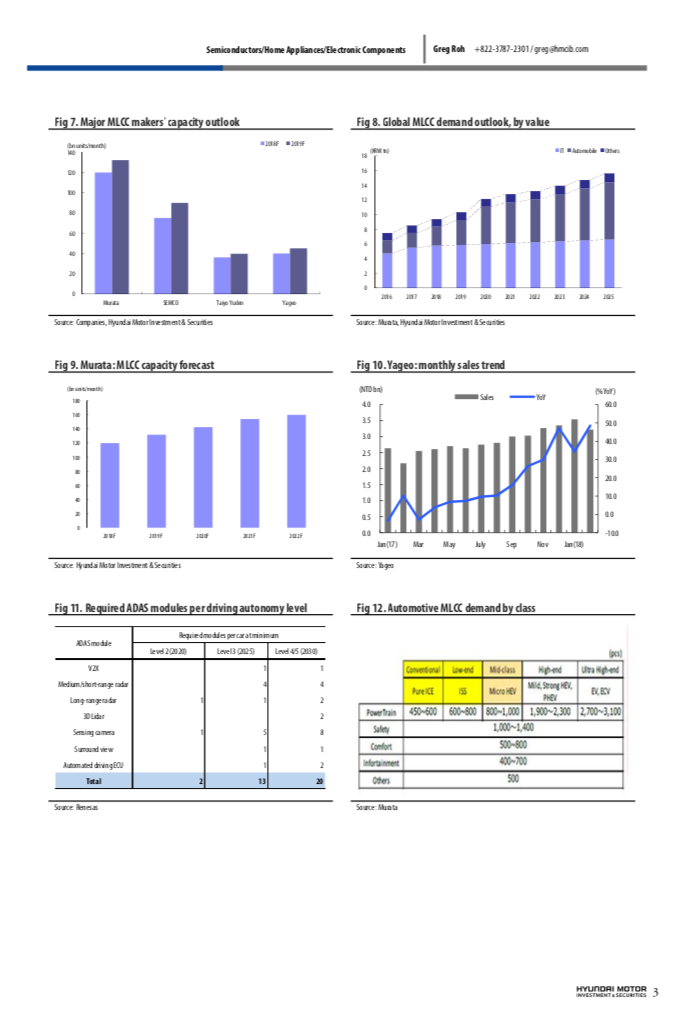
MLCC prices up over 20% in 2017; MLCC price strength to continue into 2019. With automotive MCU’s migration into the 28nm process, demand for high-capacitance, ultra-small MLCCs to pick up in earnest. Even with the increased capacity, supply to remain tight because of soaring demand from automotive electronics, smartphones, industrials, and cryptocurrency mining.

RelatedPosts

SPICE Simulation of Non-Linear Resistors: Vishay’s Thermistor and PPTC Modelling Ecosystem

KYOCERA AVX Introduces Traction‑Grade DC Link Film Capacitors

When More Capacitance Hurts Reliability: The Role of the Metallic Skeleton in Tantalum Anodes


Major issues and conclusions

Top four MLCC makers’ MLCC capacity to grow 13.1% YoY to 306.6bn units/month and 3.7tn units/year in 2018.

Industry and stock outlook
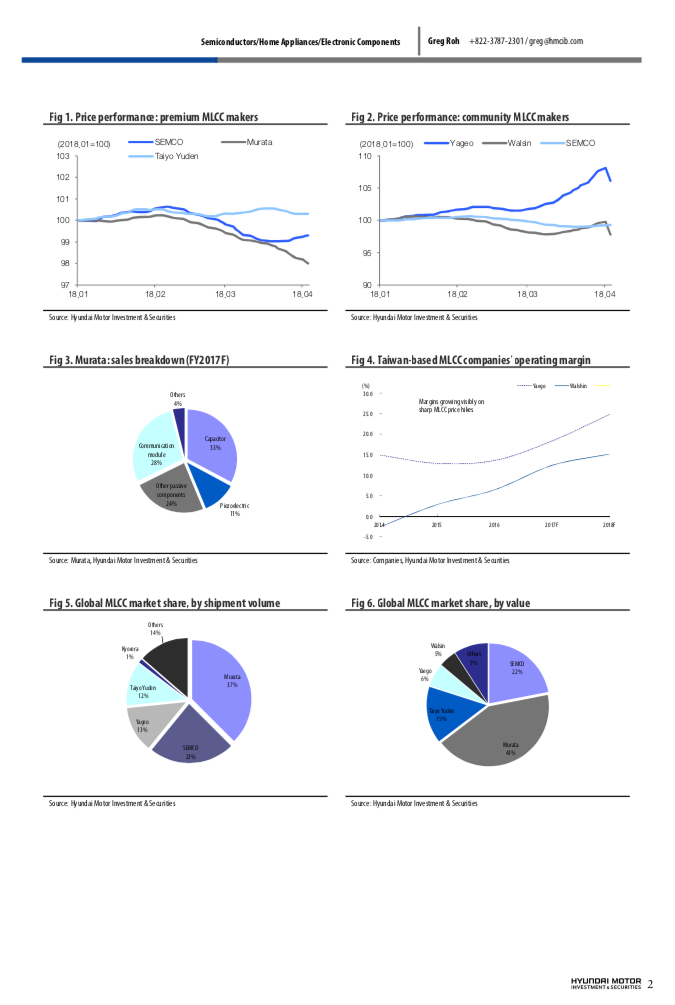
Murata’s (OTCPK:MRAAY) sluggish stock performance has to do with a communication module margin squeeze; Top pick is Samsung Electro Mechanic (SEMCO) (OTC:SMSGF).
Auto MLCCs becoming smaller as MCU is pushed to 28nm process; top four’s capacity to grow 13.1% YoY

As Japanese MLCC makers including Murata have begun to convert their capacity for general-type MLCCs to automotive MLCCs since 2017, the MLCC shortage (especially general-type MLCCs) is intensifying and the price is spiking as a result. Although PC and TV demand is sluggish, demand for game consoles and gaming PCs is intact and there is soaring demand for cryptocurrency miners too, all of which contribute to a surge of general purpose MLCC prices.

The price of MLCC used in niche products such as ESS has grown over six-fold especially, which signals the deepening of the structural supply shortage. Additionally, as the Apple (NASDAQ:AAPL) iPhone X with its biometric, dual camera uses 0603-mm 3μF/3.7μF and 1005-mm 17μF/20μF MLCCs, the value of MLCCs in premium smartphones is sharply rising.

In the case of automotive MLCCs, EV powertrains’ ECU consumes the most MLCCs currently but going forward, we expect ADAS to be the major driver of automotive MLCC demand as ADAS makes further advancement for connected cars. For automotive MLCCs, the focus was mainly on high-capacitance and reliability but now there is growing demand for high-capacitance, high-reliability, and ultra-small MLCCs as well. As the number of MCUs per car increases, Renesas (OTCPK:RNECF)(OTCPK:RNECY), the world’s largest maker of automotive micro control units (MCUs), is collaborating with TSMC (NYSE:TSM) to push embedded MCU flash to the 28nm process in 2018 from 2012’s 40nm process. Smaller MCU chips means smaller electronic control units (ECUs), and this necessitates the use of ultra-small MLCCs. We believe a large number of ultra-small, high-capacitance MLCCs in automobiles will again shore up MLCC prices further. Murata’s automotive MLCCs are manufactured in the Izumo plant in Shimane, which is currently expanding capacity on a massive scale. As of 2017, automotive MLCCs represented 25% of total MLCC sales at Murata and we forecast the percentage to rise to 30% this year. For SEMCO, automotive MLCCs’ share of sales is expected to reach 7% in 2018 from 5% in 2017. The top four MLCC players’ total annual capacity is estimated to grow 13.1% YoY to 3.7tn units.

Murata shares’ rebound to trigger sentiment improvement over related sectors; our top pick is SEMCO

Taiwanese companies specializing in general-type MLCCs enjoyed a sharp rise in operating profit in 2017 along with their share prices. In contrast, shares of the biggest MLCC player Murata have stayed bearish despite the bullishness of the MLCC market because of the margin squeeze in smartphone communication modules. However, we now believe Murata shares will stage a rebound as its MLCC margin has reached 40% on the back of MLCC price strength, which will likely help buoy sentiment over related sectors. As for SEMCO, the stock has underperformed its Taiwanese peers due to lower-than-expected results from other divisions. However, given the favorable MLCC market fundamentals, we expect the stock to become more attractive going forward, and against this backdrop, we present SEMCO as our top pick in the passive components sector.
Disclosure:

I/we have no positions in any stocks mentioned, and no plans to initiate any positions within the next 72 hours.

I wrote this article myself, and it expresses my own opinions. I am not receiving compensation for it. I have no business relationship with any company whose stock is mentioned in this article.

Editor’s Note: This article discusses one or more securities that do not trade on a major U.S. exchange. Please be aware of the risks associated with these stocks.


Related

Recent Posts

KYOCERA AVX Introduces Traction‑Grade DC Link Film Capacitors

21.4.2026
11

When More Capacitance Hurts Reliability: The Role of the Metallic Skeleton in Tantalum Anodes

20.4.2026
22

YAGEO Introduces High‑Current Y2/X1 Film Capacitors for Wide-bandgap Power Systems

17.4.2026
19

Amphenol Explanded Liquid Cooling Connectors for AI, ESS and EV Systems

17.4.2026
9

Hirose Introduced BGA connector for PCIe Gen6 for AI and Edge Computing

17.4.2026
6

YAGEO Introduces High Rel MLCCs Beyond MIL-Spec Limits

16.4.2026
46

Würth Elektronik Expanded Capacity for Validation and Services in Asia

16.4.2026
13

Samsung Introduces Ultra-High-Voltage 1500 V MLCCs for xEV Powertrains

16.4.2026
26

YAGEO Q1 2026 Results: AI Servers and Pricing Power Behind a Moderate Q2 Outlook

16.4.2026
66

Upcoming Events

Apr 22
17:00 - 17:30 CEST

Magnetics in a high frequency GaN era

Apr 22
17:00 - 18:00 CEST

Derating Tantalum, Film, and Ceramic Capacitors

Apr 29
10:00 - 11:00 CDT

SEPIC Design Done Right

View Calendar

Popular Posts

  • Buck Converter Design and Calculation

    0 shares
    Share 0 Tweet 0
  • Boost Converter Design and Calculation

    0 shares
    Share 0 Tweet 0
  • Flyback Converter Design and Calculation

    0 shares
    Share 0 Tweet 0
  • LLC Resonant Converter Design and Calculation

    0 shares
    Share 0 Tweet 0
  • MLCC and Ceramic Capacitors

    0 shares
    Share 0 Tweet 0
  • Dual Active Bridge (DAB) Topology

    0 shares
    Share 0 Tweet 0
  • Capacitor Charging and Discharging

    0 shares
    Share 0 Tweet 0
  • Ripple Current and its Effects on the Performance of Capacitors

    3 shares
    Share 3 Tweet 0
  • What Electronics Engineer Needs to Know About Passive Low Pass Filters

    0 shares
    Share 0 Tweet 0
  • MLCC Case Sizes Standards Explained

    0 shares
    Share 0 Tweet 0

Newsletter Subscription


Passive Components Blog

© EPCI - Leading Passive Components Educational and Information Site

  • Home
  • Privacy Policy
  • EPCI Membership & Advertisement
  • About

No Result
View All Result
  • Home
  • Knowledge Blog
  • PCNS

© EPCI - Leading Passive Components Educational and Information Site

This website uses cookies. By continuing to use this website you are giving consent to cookies being used. Visit our Privacy and Cookie Policy.
Go to mobile version