






Passive Components Blog
No Result
View All Result
  • Home
  • NewsFilter
    • All
    • Aerospace & Defence
    • Antenna
    • Applications
    • Automotive
    • Capacitors
    • Circuit Protection Devices
    • electro-mechanical news
    • Filters
    • Fuses
    • Inductors
    • Industrial
    • Integrated Passives
    • inter-connect news
    • Market & Supply Chain
    • Market Insights
    • Medical
    • Modelling and Simulation
    • New Materials & Supply
    • New Technologies
    • Non-linear Passives
    • Oscillators
    • Passive Sensors News
    • Resistors
    • RF & Microwave
    • Telecommunication
    • Weekly Digest

    Bourns Releases Compact High Current Shielded Power Inductors

    March 2026 Interconnect, Passives and Electromechanical Components Market Insights

    Molex Completes Acquisition of Smiths Interconnect, Expanding Portfolio of High-Reliability Connectivity Solutions

    APEC 2026 Power Electronics Trends and Implications for Passive Components

    Hydra Enhances Film Capacitor Robustness by Novel Gel Filler

    Würth Elektronik Releases Heat Sinks for TO and IC packages

    Würth Elektronik ICS to Acquire MRS Electronic and Expand Vehicle Electronics Portfolio

    Indias ECMS Wave Brings New Capacity For Passive Components Manufacturing in India

    Binder Introduces Triangular Moulding for M16 and M12 Cable Connectors

    Trending Tags

    • Ripple Current
    • RF
    • Leakage Current
    • Tantalum vs Ceramic
    • Snubber
    • Low ESR
    • Feedthrough
    • Derating
    • Dielectric Constant
    • New Products
    • Market Reports
  • VideoFilter
    • All
    • Antenna videos
    • Capacitor videos
    • Circuit Protection Video
    • Filter videos
    • Fuse videos
    • Inductor videos
    • Inter-Connect Video
    • Non-linear passives videos
    • Oscillator videos
    • Passive sensors videos
    • Resistor videos

    Transformer-Based Power-Line Harvester Magnetic Design

    Thermal Modeling of Magnetics

    Standard vs Planar LLC transformers Comparison for Battery Chargers

    How Modern Tools Model Magnetic Components for Power Electronics

    Advanced Loss Modeling for Planar Magnetics in the Frenetic Planar Tool

    2026 Power Magnetics Design Trends: Flyback, DAB and Planar

    Enabling Software‑Defined Vehicle Architectures: Automotive Ethernet and Zonal Smart Power

    Calculating Resistance Value of a Flyback RC Snubber 

    One‑Pulse Characterization of Nonlinear Power Inductors

    Trending Tags

    • Capacitors explained
    • Inductors explained
    • Resistors explained
    • Filters explained
    • Application Video Guidelines
    • EMC
    • New Products
    • Ripple Current
    • Simulation
    • Tantalum vs Ceramic
  • Knowledge Blog
  • DossiersNew
  • Suppliers
    • Who is Who
  • PCNS
    • PCNS 2025
    • PCNS 2023
    • PCNS 2021
    • PCNS 2019
    • PCNS 2017
  • Events
  • Home
  • NewsFilter
    • All
    • Aerospace & Defence
    • Antenna
    • Applications
    • Automotive
    • Capacitors
    • Circuit Protection Devices
    • electro-mechanical news
    • Filters
    • Fuses
    • Inductors
    • Industrial
    • Integrated Passives
    • inter-connect news
    • Market & Supply Chain
    • Market Insights
    • Medical
    • Modelling and Simulation
    • New Materials & Supply
    • New Technologies
    • Non-linear Passives
    • Oscillators
    • Passive Sensors News
    • Resistors
    • RF & Microwave
    • Telecommunication
    • Weekly Digest

    Bourns Releases Compact High Current Shielded Power Inductors

    March 2026 Interconnect, Passives and Electromechanical Components Market Insights

    Molex Completes Acquisition of Smiths Interconnect, Expanding Portfolio of High-Reliability Connectivity Solutions

    APEC 2026 Power Electronics Trends and Implications for Passive Components

    Hydra Enhances Film Capacitor Robustness by Novel Gel Filler

    Würth Elektronik Releases Heat Sinks for TO and IC packages

    Würth Elektronik ICS to Acquire MRS Electronic and Expand Vehicle Electronics Portfolio

    Indias ECMS Wave Brings New Capacity For Passive Components Manufacturing in India

    Binder Introduces Triangular Moulding for M16 and M12 Cable Connectors

    Trending Tags

    • Ripple Current
    • RF
    • Leakage Current
    • Tantalum vs Ceramic
    • Snubber
    • Low ESR
    • Feedthrough
    • Derating
    • Dielectric Constant
    • New Products
    • Market Reports
  • VideoFilter
    • All
    • Antenna videos
    • Capacitor videos
    • Circuit Protection Video
    • Filter videos
    • Fuse videos
    • Inductor videos
    • Inter-Connect Video
    • Non-linear passives videos
    • Oscillator videos
    • Passive sensors videos
    • Resistor videos

    Transformer-Based Power-Line Harvester Magnetic Design

    Thermal Modeling of Magnetics

    Standard vs Planar LLC transformers Comparison for Battery Chargers

    How Modern Tools Model Magnetic Components for Power Electronics

    Advanced Loss Modeling for Planar Magnetics in the Frenetic Planar Tool

    2026 Power Magnetics Design Trends: Flyback, DAB and Planar

    Enabling Software‑Defined Vehicle Architectures: Automotive Ethernet and Zonal Smart Power

    Calculating Resistance Value of a Flyback RC Snubber 

    One‑Pulse Characterization of Nonlinear Power Inductors

    Trending Tags

    • Capacitors explained
    • Inductors explained
    • Resistors explained
    • Filters explained
    • Application Video Guidelines
    • EMC
    • New Products
    • Ripple Current
    • Simulation
    • Tantalum vs Ceramic
  • Knowledge Blog
  • DossiersNew
  • Suppliers
    • Who is Who
  • PCNS
    • PCNS 2025
    • PCNS 2023
    • PCNS 2021
    • PCNS 2019
    • PCNS 2017
  • Events
No Result
View All Result
Passive Components Blog
No Result
View All Result

Tantalum Supply Chain is Stronger Than Ever

1.6.2021
Reading Time: 4 mins read
A A

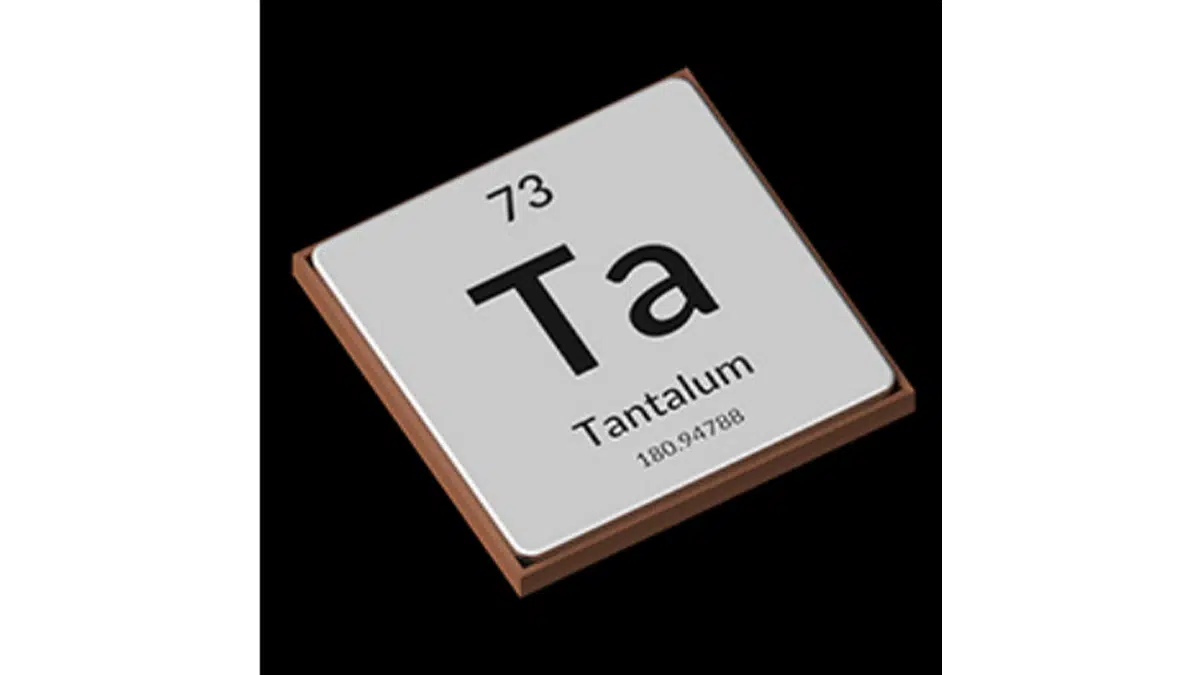
Despite the current market situation and high demand for electronic components, tantalum supply chain is getting stronger according to industry sources.

Tantalum for a lifetime

RelatedPosts

Flaked Tantalum Powders: High Capacitance Powders for High Reliable Tantalum Capacitors

Lithium Mines Impact to Tantalum Supply

Tantalum for Next-Generation Electronics

Current shortages and concerns over stable supply of critical commodities such as rare earths, cobalt, and nickel are weighing heavily on the downstream electronics, aerospace, automotive and appliance industries. Tantalum ore supply on the other hand is stronger than ever and ready to support increasing demand1 from tantalum capacitor makers, semiconductor manufacturers and other industries.

This is primarily due to: 

  • Co-product mining: as demand for lithium continues to rise driven by electric vehicle demand, so too does the volume of tantalum extracted as a co-product of this lithium production. Lithium and tantalum frequently co-exist in hard rock mines in Western Australia, South America, Africa and elsewhere. This tantalum co-product is extracted with relatively minimal incremental environmental impact2, predictable economics, and rising volumes.
  • Traceable “conflict-free” artisanal mining: Trade in elements such as tantalum, tin, tungsten and gold from Central African countries is complicated by fear that such trade could fund and perpetuate conflict in that region. For over a decade, robust traceability programs, from mine source through to OEM product delivery have been implemented. These programs are mature, transparent3, are fully understood throughout the tantalum supply chain, and have opened up market for legitimate trade in minerals, including tantalum, from this region.
  • Regional supply balance: historically, tantalum ore supply has been skewed towards one region or another. Until the mid-2010s, Western Australia was the largest source: a stable industrial scale source that became relatively expensive. This was entirely replaced by supply from Central Africa: an artisanal scale source that is more economical but supply is less stable. Tantalum as a co-product of lithium mining re-introduces industrial scale stability, does so economically, and should result in a balanced global supply without over-reliance on any one region. There is an increasingly healthy balance of tantalum supply from Australia, South America, Central Africa (also other African nations such as Mozambique), China, and emerging supply sources elsewhere. Disruption in any one location should, therefore, not have an oversized impact on global supply of tantalum.
  • Established recycling: each year approximately 30% of all tantalum sold to end users comes from high purity recycled tantalum material. Tantalum recycling is long-established and the material is actively traded and much sought after by processors.
  • Demand stability/supply confidence: fluctuating demand disrupts the upstream supply chain, which in turn creates further demand instability. The supply chain “Bullwhip Effect”4 can be exaggerated when downstream players fear upstream supply shortages. Double ordering or, worse, “design out” occurs. ABT5 has been a refrain in the tantalum industry in the past as a result of this type of instability. In recent years however, end user confidence has been restored. Tantalum demand has stabilized, tantalum is being “designed in” and no one end-use segment dominates. Stable demand begets stable supply which further encourages demand growth.

Quoting Roskill Information Services, a metal market and analyst company, “In the long-term, we expect the (tantalum) industry to see limited deficits and surpluses that will not amount to more than a few weeks of demand in any given year and that will be smoothed out by inventory in most cases.”

Tantalum has indispensable properties when used in electronic components, aircraft engines, medical implants and countless other applications.  Historically, the industry’s Achilles’ heel6 has been intermittent (real or perceived) supply chain disruptions. Existing and emerging stable tantalum sources should alleviate supply concerns.

1 Consumption is currently at approx. 2200 tonnes per year and predicted to grow 3-4% per year through 2029.

2 The tantalum is contained in the same ore body as lithium. To meet the ever increasing demand for electric vehicles, lithium will be mined whether the tantalum is extracted as a co-product or not. So no initial extra mining activity is required to extract the tantalum ore from the mine pit.

3 For example, tantalum and other mineral smelters (a.k.a. processors) are audited annually by the Responsible Minerals Initiative. There are currently approx. 37 tantalum suppliers conformant to this audit protocol. Conformant Tantalum Smelters (responsiblemineralsinitiative.org).

4 The term “Bullwhip Effect” was coined by Stanford University Professor Hau Lee. The Bullwhip Effect in Supply Chains (mit.edu)

5 Anything But Tantalum!6  Achilles’ mom held his heel and dipped him in the River Styx , the river’s water making him invulnerable. She forgot to dip one part of the poor kid – his heel!


Related

Source: GAM Global Advanced Metals

Recent Posts

March 2026 Interconnect, Passives and Electromechanical Components Market Insights

2.4.2026
26

Molex Completes Acquisition of Smiths Interconnect, Expanding Portfolio of High-Reliability Connectivity Solutions

1.4.2026
5

APEC 2026 Power Electronics Trends and Implications for Passive Components

1.4.2026
42

Hydra Enhances Film Capacitor Robustness by Novel Gel Filler

1.4.2026
19

Würth Elektronik ICS to Acquire MRS Electronic and Expand Vehicle Electronics Portfolio

31.3.2026
22

Indias ECMS Wave Brings New Capacity For Passive Components Manufacturing in India

31.3.2026
34

Samsung Introduces 35V MLCCs Flying Capacitors for USB PD Fast Charging

27.3.2026
31

New J‑STD‑075B Standard Elevates Process Sensitivity Classification for Passive and Solid-State Components

27.3.2026
44

Modelithics Expands COMPLETE+3D Library for Ansys HFSS

27.3.2026
8

Upcoming Events

Apr 8
17:00 - 18:00 CEST

Trade Secrets of the Flyback Converter

Apr 21
16:00 - 17:00 CEST

Heatsink Solutions: Thermal Management in electronic devices

May 5
16:00 - 17:00 CEST

Understanding and Selecting Capacitors – Fundamentals, Technologies and Latest Trends

View Calendar

Popular Posts

  • Buck Converter Design and Calculation

    0 shares
    Share 0 Tweet 0
  • Boost Converter Design and Calculation

    0 shares
    Share 0 Tweet 0
  • Flyback Converter Design and Calculation

    0 shares
    Share 0 Tweet 0
  • LLC Resonant Converter Design and Calculation

    0 shares
    Share 0 Tweet 0
  • Dual Active Bridge (DAB) Topology

    0 shares
    Share 0 Tweet 0
  • MLCC and Ceramic Capacitors

    0 shares
    Share 0 Tweet 0
  • Ripple Current and its Effects on the Performance of Capacitors

    3 shares
    Share 3 Tweet 0
  • Plastic Materials Dielectric Constant and DF

    4 shares
    Share 4 Tweet 0
  • MLCC Case Sizes Standards Explained

    0 shares
    Share 0 Tweet 0
  • Capacitor Charging and Discharging

    0 shares
    Share 0 Tweet 0

Newsletter Subscription


Passive Components Blog

© EPCI - Leading Passive Components Educational and Information Site

  • Home
  • Privacy Policy
  • EPCI Membership & Advertisement
  • About

No Result
View All Result
  • Home
  • Knowledge Blog
  • PCNS

© EPCI - Leading Passive Components Educational and Information Site

This website uses cookies. By continuing to use this website you are giving consent to cookies being used. Visit our Privacy and Cookie Policy.
Go to mobile version