




Passive Components Blog
No Result
View All Result
  • Home
  • NewsFilter
    • All
    • Aerospace & Defence
    • Antenna
    • Applications
    • Automotive
    • Capacitors
    • Circuit Protection Devices
    • electro-mechanical news
    • Filters
    • Fuses
    • Inductors
    • Industrial
    • Integrated Passives
    • inter-connect news
    • Market & Supply Chain
    • Market Insights
    • Medical
    • Modelling and Simulation
    • New Materials & Supply
    • New Technologies
    • Non-linear Passives
    • Oscillators
    • Passive Sensors News
    • Resistors
    • RF & Microwave
    • Telecommunication
    • Weekly Digest

    Mechanical SSC Testing as a Structural Diagnostic Tool for Tantalum Capacitor Anodes

    Stackpole Introduces High‑Voltage Low VCR Chip Resistors

    GDT Gas Discharge Tubes: Surge Protection Fundamentals, Selection, and Design‑in Tips

    YMIN Introduces Vibration Resistant Compact Low ESR Aluminum Capacitors for Home Appliances

    Designing a Custom Core Transformer for 10 kW LLC Data Center Power Stages

    Magnetics Design in High‑Frequency GaN Converters

    ECIA Industry Pulse April 2026: Sentiment Cools but Stays Strong

    Industrial Passive Components Markets and Technologies 2026

    Automotive Passive Components Technology Dossier

    Trending Tags

    • Ripple Current
    • RF
    • Leakage Current
    • Tantalum vs Ceramic
    • Snubber
    • Low ESR
    • Feedthrough
    • Derating
    • Dielectric Constant
    • New Products
    • Market Reports
  • VideoFilter
    • All
    • Antenna videos
    • Capacitor videos
    • Circuit Protection Video
    • Filter videos
    • Fuse videos
    • Inductor videos
    • Inter-Connect Video
    • Non-linear passives videos
    • Oscillator videos
    • Passive sensors videos
    • Resistor videos

    Magnetics Design in High‑Frequency GaN Converters

    Qi2 Wireless Charging: Inductors, Capacitors and EMC Filters

    Two‑capacitor paradox explained for engineers

    Capacitances of Nonlinear MLCCs: What Datasheets Don’t Tell You

    Tapped Inductor Buck Converter Fundamentals

    Planar vs Conventional Transformer: When it Make Sense

    Modeling Fringing Field Losses in Inductors & Transformers

    Why Power Inductors Use a Ferrite Core With an Air Gap

    Transformer-Based Power-Line Harvester Magnetic Design

    Trending Tags

    • Capacitors explained
    • Inductors explained
    • Resistors explained
    • Filters explained
    • Application Video Guidelines
    • EMC
    • New Products
    • Ripple Current
    • Simulation
    • Tantalum vs Ceramic
  • Knowledge Blog
  • DossiersNew
  • Suppliers
    • Who is Who
  • PCNS
    • PCNS 2025
    • PCNS 2023
    • PCNS 2021
    • PCNS 2019
    • PCNS 2017
  • Events
  • Home
  • NewsFilter
    • All
    • Aerospace & Defence
    • Antenna
    • Applications
    • Automotive
    • Capacitors
    • Circuit Protection Devices
    • electro-mechanical news
    • Filters
    • Fuses
    • Inductors
    • Industrial
    • Integrated Passives
    • inter-connect news
    • Market & Supply Chain
    • Market Insights
    • Medical
    • Modelling and Simulation
    • New Materials & Supply
    • New Technologies
    • Non-linear Passives
    • Oscillators
    • Passive Sensors News
    • Resistors
    • RF & Microwave
    • Telecommunication
    • Weekly Digest

    Mechanical SSC Testing as a Structural Diagnostic Tool for Tantalum Capacitor Anodes

    Stackpole Introduces High‑Voltage Low VCR Chip Resistors

    GDT Gas Discharge Tubes: Surge Protection Fundamentals, Selection, and Design‑in Tips

    YMIN Introduces Vibration Resistant Compact Low ESR Aluminum Capacitors for Home Appliances

    Designing a Custom Core Transformer for 10 kW LLC Data Center Power Stages

    Magnetics Design in High‑Frequency GaN Converters

    ECIA Industry Pulse April 2026: Sentiment Cools but Stays Strong

    Industrial Passive Components Markets and Technologies 2026

    Automotive Passive Components Technology Dossier

    Trending Tags

    • Ripple Current
    • RF
    • Leakage Current
    • Tantalum vs Ceramic
    • Snubber
    • Low ESR
    • Feedthrough
    • Derating
    • Dielectric Constant
    • New Products
    • Market Reports
  • VideoFilter
    • All
    • Antenna videos
    • Capacitor videos
    • Circuit Protection Video
    • Filter videos
    • Fuse videos
    • Inductor videos
    • Inter-Connect Video
    • Non-linear passives videos
    • Oscillator videos
    • Passive sensors videos
    • Resistor videos

    Magnetics Design in High‑Frequency GaN Converters

    Qi2 Wireless Charging: Inductors, Capacitors and EMC Filters

    Two‑capacitor paradox explained for engineers

    Capacitances of Nonlinear MLCCs: What Datasheets Don’t Tell You

    Tapped Inductor Buck Converter Fundamentals

    Planar vs Conventional Transformer: When it Make Sense

    Modeling Fringing Field Losses in Inductors & Transformers

    Why Power Inductors Use a Ferrite Core With an Air Gap

    Transformer-Based Power-Line Harvester Magnetic Design

    Trending Tags

    • Capacitors explained
    • Inductors explained
    • Resistors explained
    • Filters explained
    • Application Video Guidelines
    • EMC
    • New Products
    • Ripple Current
    • Simulation
    • Tantalum vs Ceramic
  • Knowledge Blog
  • DossiersNew
  • Suppliers
    • Who is Who
  • PCNS
    • PCNS 2025
    • PCNS 2023
    • PCNS 2021
    • PCNS 2019
    • PCNS 2017
  • Events
No Result
View All Result
Passive Components Blog
No Result
View All Result

Viiyong Ready to Expand High CV and Automotive MLCC Production

19.8.2022
Reading Time: 2 mins read
A A

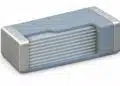
Viiyong, Guangdong, China whose shareholders include Chinese smartphone brands Xiaomi and Oppo, completed round B financing of 2 billion RMB to expand production for high capacitance MLCC and automotive MLCC.

GUANGDONG VIIYONG ELECTRONIC TECHNOLOGY CO., LTD. located in Guangdong province of China, Viiyong is a manufacturing enterprise of multi-layer ceramic chip capacitor (MLCC). Viiyong went smoothly to become China’s largest MLCC maker as quickly recognized by a series of tier 1 electronics companies.

RelatedPosts

Mechanical SSC Testing as a Structural Diagnostic Tool for Tantalum Capacitor Anodes

Stackpole Introduces High‑Voltage Low VCR Chip Resistors

GDT Gas Discharge Tubes: Surge Protection Fundamentals, Selection, and Design‑in Tips

Recently, Weirong Technology successfully completed the B round and B+ round of financing of nearly 2 billion RMB. The main purpose of its funds is to invest in the newly expanded high-end MLCC factory and equipment, which will greatly increase the production capacity of high-end MLCCs such as high-capacity and vehicle specifications and enhance continuous research and development ability.

Micro Rong Technology has been established for several years and has experienced rapid development. Since 2020, it has become the largest MLCC manufacturer in domestic production and sales, and has become one of the main companies in the high-end series. In terms of products, at present, micro-capacity high-capacity MLCCs have been serialized and mass-produced to 100μF; automotive-grade MLCCs have also achieved product development and production of 0201-1210 full-size series; plus 008004, which has previously formed a good advantage in the market , 01005, 0201 ultra-miniature series and RF series, Microcapac continues to strive to become one of the best suppliers in the industry.

Microcapac’s R&D investment in high-end MLCC has accounted for more than 12% of sales for many years, and has obtained a number of MLCC core invention patents. Among the top 100 electronic components companies in 2021 announced by China Electronic Components Association, Microcap Technology’s R&D strength is in 200 Ranked fifth among many companies.

The completion of this B round of financing will ensure the full production of the two MLCC plants in the first phase of Micro Rong Technology, and help the company’s MLCC annual output reach 600 billion pieces. Since then, the company will continue to carry out the second and third phase expansion projects, with an additional investment of 12 billion yuan, to achieve the overall goal of MLCC annual production capacity of 1.5 trillion pieces around 2028, ranking among the top three in the global MLCC industry.

Sincerely thank the shareholders of various industries for their strong support to Micro-Rong Technology. In the future, the company will continue to maintain the style of hard work, and continue to break through the high-end MLCC with the spirit and concept of ingenuity and ingenuity, and become a leader in all aspects of technology, quality, price and service. A first-class supplier in the industry, continuously creating value for shareholders and related parties.

Related

Source: Viiyong

Recent Posts

Mechanical SSC Testing as a Structural Diagnostic Tool for Tantalum Capacitor Anodes

25.5.2026
8

YMIN Introduces Vibration Resistant Compact Low ESR Aluminum Capacitors for Home Appliances

25.5.2026
12

ECIA Industry Pulse April 2026: Sentiment Cools but Stays Strong

21.5.2026
45

Industrial Passive Components Markets and Technologies 2026

21.5.2026
87

Automotive Passive Components Technology Dossier

21.5.2026
59

Samsung Electro-Mechanics Signs 1.5T KRW Silicon Capacitor AI Contract

21.5.2026
71

Murata Expands Thermistor Production Capacity at Yokaichi Plant

21.5.2026
24

Qi2 Wireless Charging: Inductors, Capacitors and EMC Filters

21.5.2026
26

Samsung Introduced Low ESL 3-Terminal Reverse-Geometry MLCCs for High-Performance ADAS

20.5.2026
54

Upcoming Events

May 27
17:00 - 17:30 CEST

When requirements change: Live Planar redesign under time pressure

Jun 2
16:00 - 17:00 CEST

Calculation, Simulation and Measurement of 800V EMC Filters

Jun 16
16:00 - 17:00 CEST

EMC with EMC – EMC‑compliant design with electromechanical connectors

View Calendar

Popular Posts

  • Buck Converter Design and Calculation

    0 shares
    Share 0 Tweet 0
  • Boost Converter Design and Calculation

    0 shares
    Share 0 Tweet 0
  • Flyback Converter Design and Calculation

    0 shares
    Share 0 Tweet 0
  • LLC Resonant Converter Design and Calculation

    0 shares
    Share 0 Tweet 0
  • MLCC and Ceramic Capacitors

    0 shares
    Share 0 Tweet 0
  • Capacitor Charging and Discharging

    0 shares
    Share 0 Tweet 0
  • What Electronics Engineer Needs to Know About Passive Low Pass Filters

    0 shares
    Share 0 Tweet 0
  • Dual Active Bridge (DAB) Topology

    0 shares
    Share 0 Tweet 0
  • Ripple Current and its Effects on the Performance of Capacitors

    3 shares
    Share 3 Tweet 0
  • Samsung Electro-Mechanics Releases High-Capacitance MLCCs for AI Server Applications

    0 shares
    Share 0 Tweet 0

Newsletter Subscription


Passive Components Blog

© EPCI - Leading Passive Components Educational and Information Site

  • Home
  • Privacy Policy
  • EPCI Membership & Advertisement
  • About

No Result
View All Result
  • Home
  • Knowledge Blog
  • Dossiers
  • PCNS

© EPCI - Leading Passive Components Educational and Information Site

This website uses cookies. By continuing to use this website you are giving consent to cookies being used. Visit our Privacy and Cookie Policy.
Go to mobile version