










Passive Components Blog
No Result
View All Result
  • Home
  • NewsFilter
    • All
    • Aerospace & Defence
    • Antenna
    • Applications
    • Automotive
    • Capacitors
    • Circuit Protection Devices
    • electro-mechanical news
    • Filters
    • Fuses
    • Inductors
    • Industrial
    • Integrated Passives
    • inter-connect news
    • Market & Supply Chain
    • Market Insights
    • Medical
    • Modelling and Simulation
    • New Materials & Supply
    • New Technologies
    • Non-linear Passives
    • Oscillators
    • Passive Sensors News
    • Resistors
    • RF & Microwave
    • Telecommunication
    • Weekly Digest
    Researchers developed a polymer capacitor by combining two cheap, commercially available plastics. The new polymer capacitor makes use of the transparent material — pictured here, with vintage Penn State athletic marks visible through it — to store four times the energy and withstand significantly more heat.  Credit: Penn State

    Penn State Demonstrated Polymer Alloy Capacitor Film with 4× Energy Density up to 250C

    ECIA January 2026 Reports Strong Sales Confidence

    Vishay Unveils Ultra-Compact 0201 Thick Film Chip Resistors

    Würth Elektronik Component Data Live in Accuris

    Coilcraft Releases Automotive Common Mode Chokes

    MLCC Manufacturers Consider Price Increase as AI Demand Outpaces Supply

    YAGEO Extends Antenna Portfolio with Wi‑Fi 6E/7 and Tri‑band GNSS Solutions

    SCHURTER Introduces 2410 SMD Fuse for Robust AC/DC Protection

    TDK Releases High Temp 175C Automotive NTC thermistors

    Trending Tags

    • Ripple Current
    • RF
    • Leakage Current
    • Tantalum vs Ceramic
    • Snubber
    • Low ESR
    • Feedthrough
    • Derating
    • Dielectric Constant
    • New Products
    • Market Reports
  • VideoFilter
    • All
    • Antenna videos
    • Capacitor videos
    • Circuit Protection Video
    • Filter videos
    • Fuse videos
    • Inductor videos
    • Inter-Connect Video
    • Non-linear passives videos
    • Oscillator videos
    • Passive sensors videos
    • Resistor videos

    2026 Power Magnetics Design Trends: Flyback, DAB and Planar

    Enabling Software‑Defined Vehicle Architectures: Automotive Ethernet and Zonal Smart Power

    Calculating Resistance Value of a Flyback RC Snubber 

    One‑Pulse Characterization of Nonlinear Power Inductors

    Thermistor Linearization Challenges

    Coaxial Connectors and How to Connect with PCB

    PCB Manufacturing, Test Methods, Quality and Reliability

    Transformer Behavior – Current Transfer and Hidden Feedback

    Choosing the Right Capacitor: The Importance of Accurate Measurements

    Trending Tags

    • Capacitors explained
    • Inductors explained
    • Resistors explained
    • Filters explained
    • Application Video Guidelines
    • EMC
    • New Products
    • Ripple Current
    • Simulation
    • Tantalum vs Ceramic
  • Knowledge Blog
  • DossiersNew
  • Suppliers
    • Who is Who
  • PCNS
    • PCNS 2025
    • PCNS 2023
    • PCNS 2021
    • PCNS 2019
    • PCNS 2017
  • Events
  • Home
  • NewsFilter
    • All
    • Aerospace & Defence
    • Antenna
    • Applications
    • Automotive
    • Capacitors
    • Circuit Protection Devices
    • electro-mechanical news
    • Filters
    • Fuses
    • Inductors
    • Industrial
    • Integrated Passives
    • inter-connect news
    • Market & Supply Chain
    • Market Insights
    • Medical
    • Modelling and Simulation
    • New Materials & Supply
    • New Technologies
    • Non-linear Passives
    • Oscillators
    • Passive Sensors News
    • Resistors
    • RF & Microwave
    • Telecommunication
    • Weekly Digest
    Researchers developed a polymer capacitor by combining two cheap, commercially available plastics. The new polymer capacitor makes use of the transparent material — pictured here, with vintage Penn State athletic marks visible through it — to store four times the energy and withstand significantly more heat.  Credit: Penn State

    Penn State Demonstrated Polymer Alloy Capacitor Film with 4× Energy Density up to 250C

    ECIA January 2026 Reports Strong Sales Confidence

    Vishay Unveils Ultra-Compact 0201 Thick Film Chip Resistors

    Würth Elektronik Component Data Live in Accuris

    Coilcraft Releases Automotive Common Mode Chokes

    MLCC Manufacturers Consider Price Increase as AI Demand Outpaces Supply

    YAGEO Extends Antenna Portfolio with Wi‑Fi 6E/7 and Tri‑band GNSS Solutions

    SCHURTER Introduces 2410 SMD Fuse for Robust AC/DC Protection

    TDK Releases High Temp 175C Automotive NTC thermistors

    Trending Tags

    • Ripple Current
    • RF
    • Leakage Current
    • Tantalum vs Ceramic
    • Snubber
    • Low ESR
    • Feedthrough
    • Derating
    • Dielectric Constant
    • New Products
    • Market Reports
  • VideoFilter
    • All
    • Antenna videos
    • Capacitor videos
    • Circuit Protection Video
    • Filter videos
    • Fuse videos
    • Inductor videos
    • Inter-Connect Video
    • Non-linear passives videos
    • Oscillator videos
    • Passive sensors videos
    • Resistor videos

    2026 Power Magnetics Design Trends: Flyback, DAB and Planar

    Enabling Software‑Defined Vehicle Architectures: Automotive Ethernet and Zonal Smart Power

    Calculating Resistance Value of a Flyback RC Snubber 

    One‑Pulse Characterization of Nonlinear Power Inductors

    Thermistor Linearization Challenges

    Coaxial Connectors and How to Connect with PCB

    PCB Manufacturing, Test Methods, Quality and Reliability

    Transformer Behavior – Current Transfer and Hidden Feedback

    Choosing the Right Capacitor: The Importance of Accurate Measurements

    Trending Tags

    • Capacitors explained
    • Inductors explained
    • Resistors explained
    • Filters explained
    • Application Video Guidelines
    • EMC
    • New Products
    • Ripple Current
    • Simulation
    • Tantalum vs Ceramic
  • Knowledge Blog
  • DossiersNew
  • Suppliers
    • Who is Who
  • PCNS
    • PCNS 2025
    • PCNS 2023
    • PCNS 2021
    • PCNS 2019
    • PCNS 2017
  • Events
No Result
View All Result
Passive Components Blog
No Result
View All Result

Advanced Conversion Announces Mass Production of 200C Film Capacitors

18.6.2025
Reading Time: 4 mins read
A A

Advanced Conversion and WL Gore jointly announce the start of volume production of 200C high temp film capacitors.

Advanced Conversion, a leading manufacturer of high-temperature film, is thrilled to announce the successful launch of its newly established High Temperature Film production line. This line features GORE® High Temperature Film, renowned for its exceptional performance in applications up to 200°C.

RelatedPosts

Penn State Demonstrated Polymer Alloy Capacitor Film with 4× Energy Density up to 250C

ECIA January 2026 Reports Strong Sales Confidence

Vishay Unveils Ultra-Compact 0201 Thick Film Chip Resistors

This significant milestone marks the culmination of a strategic partnership agreement signed between Advanced Conversion and W. L. Gore & Associates in June 2024. Since then, the two companies have collaborated closely to transfer specialized production expertise, replicate critical processes, and ensure the quality of capacitors produced on the new line. They have also provided seamless support to key customers throughout the transition.

The High Temperature Film capacitors are now in active production, with capacity steadily increasing.

To facilitate a smooth transition, Gore has published a comprehensive quality readiness document. This document meticulously outlines the rigorous testing conducted on capacitors manufactured by Advanced Conversion, confirming their complete compliance with the qualification standards of previously built Gore products. The document is available at Proven Reliability Backed By Rigorous Testing.

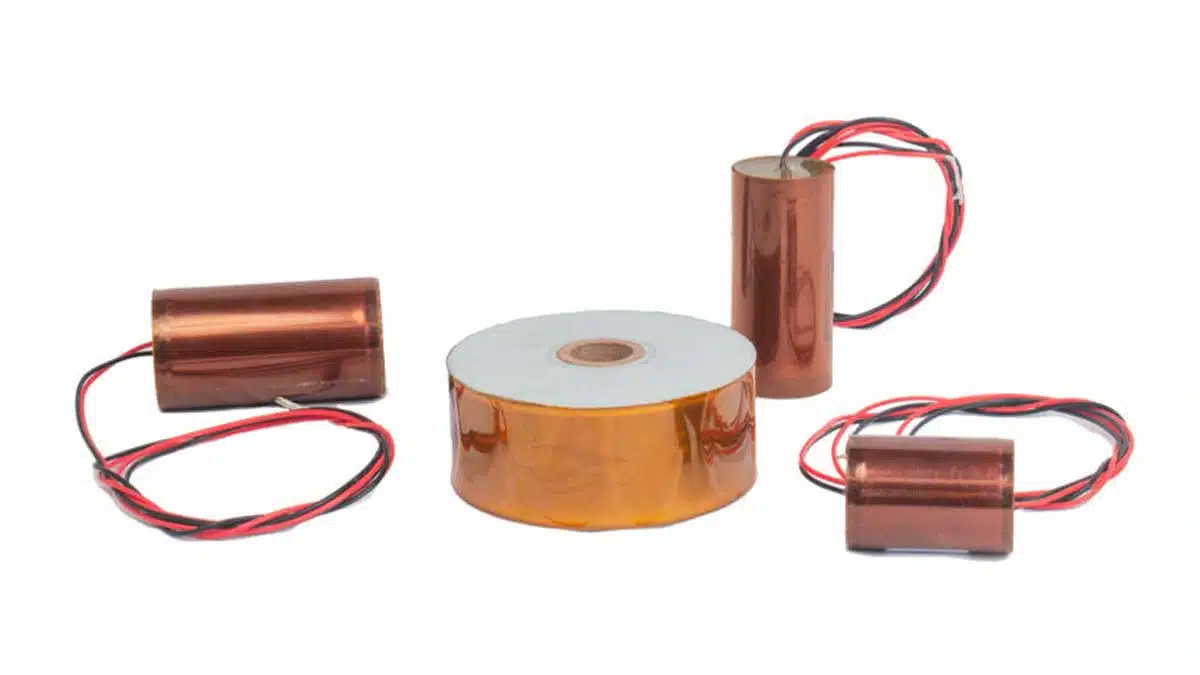
In addition to supplying standard wire-lead capacitors to oil and gas and geothermal markets, Advanced Conversion is also expanding its product offerings. They are now offering their industry-leading Power Rings, a unique type of capacitor shaped like a ring. These Power Rings are now engineered with GORE® High Temperature Film, enhancing their performance in high-temperature applications.

“We are delighted with the completed line, which is already producing high-quality products,” said Ed Sawyer, General Manager of Advanced Conversion. “We are eager to embrace the new technology and capabilities, not only in traditional markets but also in Aerospace and Defense, where 200°C requirements are paramount.”

Connor Carr, Product Specialist at Gore, added, “The establishment of the new production line at Advanced Conversion is a significant milestone for the industry. GORE® High Temperature Film can now be seamlessly integrated into new form factors, ensuring exceptional quality and performance. This unlocks the potential of high-temperature capabilities for demanding applications.”

High-Temperature DC-Link – Overview

Advanced Conversion offers a specialized portfolio of film capacitor solutions that cater to operating temperatures spanning from -40°C to 200°C. The Advanced Conversion Power Ring Film Capacitor stands out with its unique aspect ratio, featuring a short height and a large diameter. This combination ensures the lowest possible ESR and thermal resistance, resulting in the highest Ampere per Farad rating. This is crucial for enhancing power density. These optimal windings can be utilized as discrete components or seamlessly integrated into bus structures when a low inductance configuration is desired. By minimizing the capacitor hotspot temperature rise due to internal heating, Advanced Conversion enables higher operating temperatures.

Advanced Conversion has pioneered the development of metallized polypropylene capacitor solutions with minimal temperature rise, enabling operation at up to 105°C coolant. While polypropylene is a well-proven and cost-effective solution, certain applications require higher operating temperatures beyond 105°C, where cooling becomes impractical. In such cases, system-level costing often favors higher-cost, higher-temperature capacitor films that eliminate the need for cooling or extend service life. Our technology is readily adaptable to higher temperature applications, and we now offer film capacitor solutions up to 200°C.

We provide KaladexTM PEN HV film from Mylar Specialty Films, which enables operation into the 150°C hotspot range with excellent self-healing and reliability. Notably, these capacitors offer up to thousands of micro-Farads in a single winding element. Recently, Advanced Conversion announced a partnership with W. L. Gore & Associates, granting us semi-exclusive access to GORE® High Temperature Film for specific markets. This partnership has finally bridged the gap to 200°C operation with demonstrated self-healing capabilities. As we transition this product line to Advanced Conversion, we are providing simple capacitor elements from 10 to 100uF while supporting existing Gore customers. This industry-leading film solution will eventually become part of Advanced Conversion’s high-performance DC Link portfolio.

It’s crucial to recognize that the added expense of high-temperature film is most effectively realized when the increased temperature limit is not consumed by internal capacitor heating (ESR). Advanced Conversion’s form factor offers the lowest possible temperature rise for any film, enabling the optimal exploitation of higher operating temperatures with reduced cooling, ultimately resulting in the highest economic value for the customer application.

Related

Source: Advanced Conversion

Recent Posts

Researchers developed a polymer capacitor by combining two cheap, commercially available plastics. The new polymer capacitor makes use of the transparent material — pictured here, with vintage Penn State athletic marks visible through it — to store four times the energy and withstand significantly more heat.  Credit: Penn State

Penn State Demonstrated Polymer Alloy Capacitor Film with 4× Energy Density up to 250C

19.2.2026
7

Vishay Unveils Ultra-Compact 0201 Thick Film Chip Resistors

19.2.2026
4

Würth Elektronik Component Data Live in Accuris

19.2.2026
5

Coilcraft Releases Automotive Common Mode Chokes

19.2.2026
5

MLCC Manufacturers Consider Price Increase as AI Demand Outpaces Supply

18.2.2026
51

YAGEO Extends Antenna Portfolio with Wi‑Fi 6E/7 and Tri‑band GNSS Solutions

17.2.2026
7

SCHURTER Introduces 2410 SMD Fuse for Robust AC/DC Protection

17.2.2026
6

TDK Releases High Temp 175C Automotive NTC thermistors

17.2.2026
4

TU Wien Sets New Benchmark in Superconducting Vacuum Gap nanoCapacitors

16.2.2026
10

Upcoming Events

Feb 24
16:00 - 17:00 CET

Mastering Galvanic Isolation: Ensuring Safety in Power Electronics

Mar 3
16:00 - 17:00 CET

Cybersecurity at the Eleventh Hour – from RED to CRA – Information and Discussion

Mar 21
All day

PSMA Capacitor Workshop 2026

View Calendar

Popular Posts

  • Buck Converter Design and Calculation

    0 shares
    Share 0 Tweet 0
  • Boost Converter Design and Calculation

    0 shares
    Share 0 Tweet 0
  • LLC Resonant Converter Design and Calculation

    0 shares
    Share 0 Tweet 0
  • Flyback Converter Design and Calculation

    0 shares
    Share 0 Tweet 0
  • Ripple Current and its Effects on the Performance of Capacitors

    3 shares
    Share 3 Tweet 0
  • Dual Active Bridge (DAB) Topology

    0 shares
    Share 0 Tweet 0
  • What is a Dielectric Constant and DF of Plastic Materials?

    4 shares
    Share 4 Tweet 0
  • MLCC and Ceramic Capacitors

    0 shares
    Share 0 Tweet 0
  • 3-Phase EMI Filter Design, Simulation, Calculation and Test

    0 shares
    Share 0 Tweet 0
  • MLCC Case Sizes Standards Explained

    0 shares
    Share 0 Tweet 0

Newsletter Subscription


Passive Components Blog

© EPCI - Leading Passive Components Educational and Information Site

  • Home
  • Privacy Policy
  • EPCI Membership & Advertisement
  • About

No Result
View All Result
  • Home
  • Knowledge Blog
  • PCNS

© EPCI - Leading Passive Components Educational and Information Site

This website uses cookies. By continuing to use this website you are giving consent to cookies being used. Visit our Privacy and Cookie Policy.
Go to mobile version