












Passive Components Blog
No Result
View All Result
  • Home
  • NewsFilter
    • All
    • Aerospace & Defence
    • Antenna
    • Applications
    • Automotive
    • Capacitors
    • Circuit Protection Devices
    • electro-mechanical news
    • Filters
    • Fuses
    • Inductors
    • Industrial
    • Integrated Passives
    • inter-connect news
    • Market & Supply Chain
    • Market Insights
    • Medical
    • Modelling and Simulation
    • New Materials & Supply
    • New Technologies
    • Non-linear Passives
    • Oscillators
    • Passive Sensors News
    • Resistors
    • RF & Microwave
    • Telecommunication
    • Weekly Digest

    Würth Elektronik Unveils High-Current Automotive Power Inductor

    Transformer-Based Power-Line Harvester Magnetic Design

    Tantalum Capacitor Anode Manufacturing Quality Management

    Middle East Conflict: The Potential Impact to Passive Components

    Wk 12 Electronics Supply Chain Digest

    Designing a 2 kW LLC Transformer with Integrated Resonant Inductor

    Inductor Technology Dossier

    Coilcraft Releases TLVR Inductors for High Density VRMs and PoL Converters

    Rutheniums Critical Role in Passive Component Supply Chains

    Trending Tags

    • Ripple Current
    • RF
    • Leakage Current
    • Tantalum vs Ceramic
    • Snubber
    • Low ESR
    • Feedthrough
    • Derating
    • Dielectric Constant
    • New Products
    • Market Reports
  • VideoFilter
    • All
    • Antenna videos
    • Capacitor videos
    • Circuit Protection Video
    • Filter videos
    • Fuse videos
    • Inductor videos
    • Inter-Connect Video
    • Non-linear passives videos
    • Oscillator videos
    • Passive sensors videos
    • Resistor videos

    Transformer-Based Power-Line Harvester Magnetic Design

    Thermal Modeling of Magnetics

    Standard vs Planar LLC transformers Comparison for Battery Chargers

    How Modern Tools Model Magnetic Components for Power Electronics

    Advanced Loss Modeling for Planar Magnetics in the Frenetic Planar Tool

    2026 Power Magnetics Design Trends: Flyback, DAB and Planar

    Enabling Software‑Defined Vehicle Architectures: Automotive Ethernet and Zonal Smart Power

    Calculating Resistance Value of a Flyback RC Snubber 

    One‑Pulse Characterization of Nonlinear Power Inductors

    Trending Tags

    • Capacitors explained
    • Inductors explained
    • Resistors explained
    • Filters explained
    • Application Video Guidelines
    • EMC
    • New Products
    • Ripple Current
    • Simulation
    • Tantalum vs Ceramic
  • Knowledge Blog
  • DossiersNew
  • Suppliers
    • Who is Who
  • PCNS
    • PCNS 2025
    • PCNS 2023
    • PCNS 2021
    • PCNS 2019
    • PCNS 2017
  • Events
  • Home
  • NewsFilter
    • All
    • Aerospace & Defence
    • Antenna
    • Applications
    • Automotive
    • Capacitors
    • Circuit Protection Devices
    • electro-mechanical news
    • Filters
    • Fuses
    • Inductors
    • Industrial
    • Integrated Passives
    • inter-connect news
    • Market & Supply Chain
    • Market Insights
    • Medical
    • Modelling and Simulation
    • New Materials & Supply
    • New Technologies
    • Non-linear Passives
    • Oscillators
    • Passive Sensors News
    • Resistors
    • RF & Microwave
    • Telecommunication
    • Weekly Digest

    Würth Elektronik Unveils High-Current Automotive Power Inductor

    Transformer-Based Power-Line Harvester Magnetic Design

    Tantalum Capacitor Anode Manufacturing Quality Management

    Middle East Conflict: The Potential Impact to Passive Components

    Wk 12 Electronics Supply Chain Digest

    Designing a 2 kW LLC Transformer with Integrated Resonant Inductor

    Inductor Technology Dossier

    Coilcraft Releases TLVR Inductors for High Density VRMs and PoL Converters

    Rutheniums Critical Role in Passive Component Supply Chains

    Trending Tags

    • Ripple Current
    • RF
    • Leakage Current
    • Tantalum vs Ceramic
    • Snubber
    • Low ESR
    • Feedthrough
    • Derating
    • Dielectric Constant
    • New Products
    • Market Reports
  • VideoFilter
    • All
    • Antenna videos
    • Capacitor videos
    • Circuit Protection Video
    • Filter videos
    • Fuse videos
    • Inductor videos
    • Inter-Connect Video
    • Non-linear passives videos
    • Oscillator videos
    • Passive sensors videos
    • Resistor videos

    Transformer-Based Power-Line Harvester Magnetic Design

    Thermal Modeling of Magnetics

    Standard vs Planar LLC transformers Comparison for Battery Chargers

    How Modern Tools Model Magnetic Components for Power Electronics

    Advanced Loss Modeling for Planar Magnetics in the Frenetic Planar Tool

    2026 Power Magnetics Design Trends: Flyback, DAB and Planar

    Enabling Software‑Defined Vehicle Architectures: Automotive Ethernet and Zonal Smart Power

    Calculating Resistance Value of a Flyback RC Snubber 

    One‑Pulse Characterization of Nonlinear Power Inductors

    Trending Tags

    • Capacitors explained
    • Inductors explained
    • Resistors explained
    • Filters explained
    • Application Video Guidelines
    • EMC
    • New Products
    • Ripple Current
    • Simulation
    • Tantalum vs Ceramic
  • Knowledge Blog
  • DossiersNew
  • Suppliers
    • Who is Who
  • PCNS
    • PCNS 2025
    • PCNS 2023
    • PCNS 2021
    • PCNS 2019
    • PCNS 2017
  • Events
No Result
View All Result
Passive Components Blog
No Result
View All Result

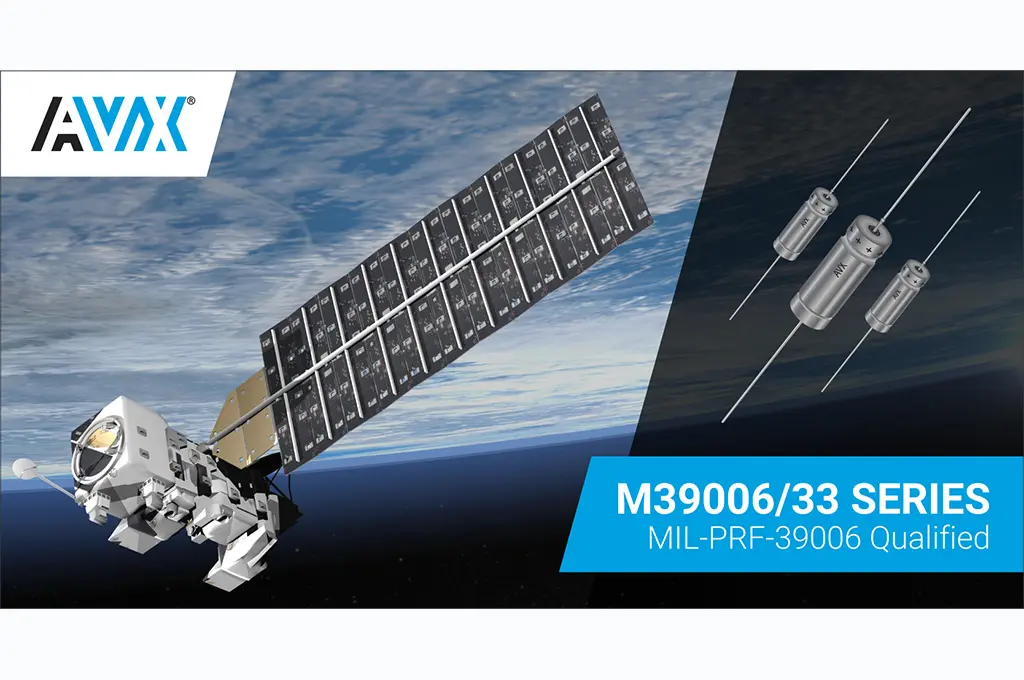
AVX axial-leaded, hermetically sealed wet electrolytic tantalum capacitors are now qualified to MIL-PRF-39006/33A.

27.2.2019
Reading Time: 2 mins read
A A

Source: AVX news

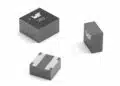
TWA M39006 Series axial-leaded, hermetically sealed wet tantalum capacitors deliver high-reliability, high-CV performance in harsh-environment military, defense, avionics, & industrial applications.
FOUNTAIN INN, S.C. (February 26, 2019) – AVX Corporation, a leading manufacturer and supplier of advanced electronic components and interconnect, sensor, control, and antenna solutions, announced that several of its TWA Series axial-leaded, hermetically sealed wet electrolytic tantalum capacitors are now qualified to MIL-PRF-39006/33A.

RelatedPosts

Würth Elektronik Unveils High-Current Automotive Power Inductor

Transformer-Based Power-Line Harvester Magnetic Design

Tantalum Capacitor Anode Manufacturing Quality Management

Designed to deliver high-reliability, high-CV performance in harsh-environment military, defense, avionics, and industrial applications, including satellites, DC/DC power supplies, power converters, bulk energy storage, and pule power circuits, the new TWA M39006 Series capacitors have a cylindrical, axial-leaded case with a hermetically sealed welded tantalum can and header assembly that ruggedly withstands environmental hazards including shock, vibration, and temperatures extending from -55°C to +125°C, and a unique cathode system that provides impressively high CV/cc and stable electrical parameters.

TWA Series capacitors currently on the MIL-PRF-39006 qualified parts list (QPL) are manufactured at the AVX facility in Lanškroun, Czech Republic, and include T3 and T4 case sizes with M-level reliability (i.e., failure rates of 1% per 1,000 hours), capacitance values spanning 470–1800µF, and voltage ratings ranging from 25–75V. The TWA M39006 Series capacitors also exhibit low DC leakage (5–12µA at +25°C and 20–50µA at +85°C and +125°C) and low ESR (0.5–0.9Ω max. at 120Hz).

“In addition to delivering stable, high-reliability, high-CV performance, TWA M39006 Series wet tantalum capacitors also have long lifetimes, which contribute to reduced maintenance requirements and lower total systems costs,” said Mitch Weaver, member of the technical staff, AVX.

Parts with P-level reliability (i.e., failure rates of 0.1% per 1,000 hours) are currently in the midst of the qualification process, and additional capacitance values, voltage ratings, and case sizes will follow. Lead-time for the series is currently 10–14 weeks.

Related

Recent Posts

Würth Elektronik Unveils High-Current Automotive Power Inductor

24.3.2026
3

Tantalum Capacitor Anode Manufacturing Quality Management

23.3.2026
12

Middle East Conflict: The Potential Impact to Passive Components

23.3.2026
64

Inductor Technology Dossier

19.3.2026
44

Coilcraft Releases TLVR Inductors for High Density VRMs and PoL Converters

19.3.2026
36

Bourns Expands its Modular Contacts for Power-Dense Systems

19.3.2026
7

Murata to Decouple China Rare Earth Supply in 3 Years

19.3.2026
149

Samtec AcceleRate Slim ARC6 Cable Assemblies with New Signaling Options

19.3.2026
8
Schematic illustration of the electric double layer of porous carbon electrodes at elevated potentials in a a conventional electrolyte and b a weakly solvating electrolyte; source: authors

Researchers Presented Lignin-based Electrolyte for 4V Supercapacitors with Low Self‑Discharge

19.3.2026
24

Upcoming Events

Apr 21
16:00 - 17:00 CEST

Heatsink Solutions: Thermal Management in electronic devices

May 5
16:00 - 17:00 CEST

Understanding and Selecting Capacitors – Fundamentals, Technologies and Latest Trends

May 19
16:00 - 17:00 CEST

Designing Qi2 Wireless Power Systems: Practical Development and EMC Optimization

View Calendar

Popular Posts

  • Buck Converter Design and Calculation

    0 shares
    Share 0 Tweet 0
  • Boost Converter Design and Calculation

    0 shares
    Share 0 Tweet 0
  • Flyback Converter Design and Calculation

    0 shares
    Share 0 Tweet 0
  • LLC Resonant Converter Design and Calculation

    0 shares
    Share 0 Tweet 0
  • MLCC Manufacturers Consider Price Increase as AI Demand Outpaces Supply

    0 shares
    Share 0 Tweet 0
  • Dual Active Bridge (DAB) Topology

    0 shares
    Share 0 Tweet 0
  • MLCC and Ceramic Capacitors

    0 shares
    Share 0 Tweet 0
  • Ripple Current and its Effects on the Performance of Capacitors

    3 shares
    Share 3 Tweet 0
  • MLCC Case Sizes Standards Explained

    0 shares
    Share 0 Tweet 0
  • What is a Dielectric Constant and DF of Plastic Materials?

    4 shares
    Share 4 Tweet 0

Newsletter Subscription


Passive Components Blog

© EPCI - Leading Passive Components Educational and Information Site

  • Home
  • Privacy Policy
  • EPCI Membership & Advertisement
  • About

No Result
View All Result
  • Home
  • Knowledge Blog
  • PCNS

© EPCI - Leading Passive Components Educational and Information Site

This website uses cookies. By continuing to use this website you are giving consent to cookies being used. Visit our Privacy and Cookie Policy.
Go to mobile version