













Passive Components Blog
No Result
View All Result
  • Home
  • NewsFilter
    • All
    • Aerospace & Defence
    • Antenna
    • Applications
    • Automotive
    • Capacitors
    • Circuit Protection Devices
    • electro-mechanical news
    • Filters
    • Fuses
    • Inductors
    • Industrial
    • Integrated Passives
    • inter-connect news
    • Market & Supply Chain
    • Market Insights
    • Medical
    • Modelling and Simulation
    • New Materials & Supply
    • New Technologies
    • Non-linear Passives
    • Oscillators
    • Passive Sensors News
    • Resistors
    • RF & Microwave
    • Telecommunication
    • Weekly Digest

    YAGEO Presents 3.6 kW LLC Transformer Platform

    Empower Extends Embedded Silicon Capacitors for AI

    ECIA February 2026 Industry Pulse Signals Strong Component Growth

    How Modern Tools Model Magnetic Components for Power Electronics

    Inductors and Ferrite Beads Price Hikes 

    TDK Extends Compact ThermoFuse Varistors up to 50 kA

    Samtec ANSI/VITA 90 Connectors: Rugged Small Form Factor Standard

    Resistor Technology Dossier

    Würth Elektronik IQD Awarded by EcoVadis Gold Sustainability Medal

    Trending Tags

    • Ripple Current
    • RF
    • Leakage Current
    • Tantalum vs Ceramic
    • Snubber
    • Low ESR
    • Feedthrough
    • Derating
    • Dielectric Constant
    • New Products
    • Market Reports
  • VideoFilter
    • All
    • Antenna videos
    • Capacitor videos
    • Circuit Protection Video
    • Filter videos
    • Fuse videos
    • Inductor videos
    • Inter-Connect Video
    • Non-linear passives videos
    • Oscillator videos
    • Passive sensors videos
    • Resistor videos

    How Modern Tools Model Magnetic Components for Power Electronics

    Advanced Loss Modeling for Planar Magnetics in the Frenetic Planar Tool

    2026 Power Magnetics Design Trends: Flyback, DAB and Planar

    Enabling Software‑Defined Vehicle Architectures: Automotive Ethernet and Zonal Smart Power

    Calculating Resistance Value of a Flyback RC Snubber 

    One‑Pulse Characterization of Nonlinear Power Inductors

    Thermistor Linearization Challenges

    Coaxial Connectors and How to Connect with PCB

    PCB Manufacturing, Test Methods, Quality and Reliability

    Trending Tags

    • Capacitors explained
    • Inductors explained
    • Resistors explained
    • Filters explained
    • Application Video Guidelines
    • EMC
    • New Products
    • Ripple Current
    • Simulation
    • Tantalum vs Ceramic
  • Knowledge Blog
  • DossiersNew
  • Suppliers
    • Who is Who
  • PCNS
    • PCNS 2025
    • PCNS 2023
    • PCNS 2021
    • PCNS 2019
    • PCNS 2017
  • Events
  • Home
  • NewsFilter
    • All
    • Aerospace & Defence
    • Antenna
    • Applications
    • Automotive
    • Capacitors
    • Circuit Protection Devices
    • electro-mechanical news
    • Filters
    • Fuses
    • Inductors
    • Industrial
    • Integrated Passives
    • inter-connect news
    • Market & Supply Chain
    • Market Insights
    • Medical
    • Modelling and Simulation
    • New Materials & Supply
    • New Technologies
    • Non-linear Passives
    • Oscillators
    • Passive Sensors News
    • Resistors
    • RF & Microwave
    • Telecommunication
    • Weekly Digest

    YAGEO Presents 3.6 kW LLC Transformer Platform

    Empower Extends Embedded Silicon Capacitors for AI

    ECIA February 2026 Industry Pulse Signals Strong Component Growth

    How Modern Tools Model Magnetic Components for Power Electronics

    Inductors and Ferrite Beads Price Hikes 

    TDK Extends Compact ThermoFuse Varistors up to 50 kA

    Samtec ANSI/VITA 90 Connectors: Rugged Small Form Factor Standard

    Resistor Technology Dossier

    Würth Elektronik IQD Awarded by EcoVadis Gold Sustainability Medal

    Trending Tags

    • Ripple Current
    • RF
    • Leakage Current
    • Tantalum vs Ceramic
    • Snubber
    • Low ESR
    • Feedthrough
    • Derating
    • Dielectric Constant
    • New Products
    • Market Reports
  • VideoFilter
    • All
    • Antenna videos
    • Capacitor videos
    • Circuit Protection Video
    • Filter videos
    • Fuse videos
    • Inductor videos
    • Inter-Connect Video
    • Non-linear passives videos
    • Oscillator videos
    • Passive sensors videos
    • Resistor videos

    How Modern Tools Model Magnetic Components for Power Electronics

    Advanced Loss Modeling for Planar Magnetics in the Frenetic Planar Tool

    2026 Power Magnetics Design Trends: Flyback, DAB and Planar

    Enabling Software‑Defined Vehicle Architectures: Automotive Ethernet and Zonal Smart Power

    Calculating Resistance Value of a Flyback RC Snubber 

    One‑Pulse Characterization of Nonlinear Power Inductors

    Thermistor Linearization Challenges

    Coaxial Connectors and How to Connect with PCB

    PCB Manufacturing, Test Methods, Quality and Reliability

    Trending Tags

    • Capacitors explained
    • Inductors explained
    • Resistors explained
    • Filters explained
    • Application Video Guidelines
    • EMC
    • New Products
    • Ripple Current
    • Simulation
    • Tantalum vs Ceramic
  • Knowledge Blog
  • DossiersNew
  • Suppliers
    • Who is Who
  • PCNS
    • PCNS 2025
    • PCNS 2023
    • PCNS 2021
    • PCNS 2019
    • PCNS 2017
  • Events
No Result
View All Result
Passive Components Blog
No Result
View All Result

Did Tesla Buy Maxwell for Its Ultracapacitors or Higher-Density Batteries?

20.2.2019
Reading Time: 4 mins read
A A

Source: ExtremeTech news

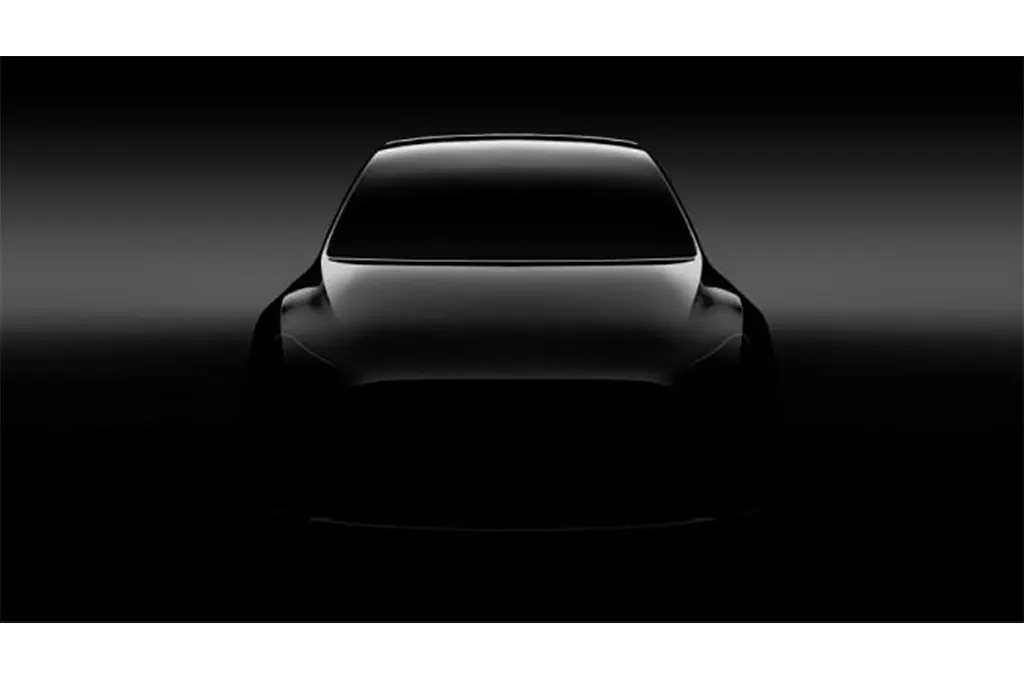
By Bill Howard, Tesla made headlines this month — actually, when doesn’t Tesla make headlines? — when the company bought battery-maker Maxwell for its ultracapacitor technology and its work on battery density. Analysts agreed Tesla was smart to pay in shares of Tesla stock, not cash, because Tesla has lots of stock on hand. Analysts are also divided on the prospects of ultracapacitors in the near term and Maxwell as an acquisition. But Maxwell is also a developer of other battery technology. It’s just that ultra-caps generate the most intense interest.

RelatedPosts

YAGEO Presents 3.6 kW LLC Transformer Platform

Empower Extends Embedded Silicon Capacitors for AI

ECIA February 2026 Industry Pulse Signals Strong Component Growth

Ultracapacitors quickly capture and release large amounts of energy stored between two charged plates. A small capacitor could retain the settings on our DVD player when it’s unplugged. Ultracapacitors could store almost all the energy of braking to a stop, then feed it back to the electric motors to accelerate back to speed. The challenge is reducing the cost, ensuring safety, and developing capacitor banks that might be in the tens of kilowatt-hours if they’re to be a significant part of Tesla’s 100-kWh over-the-road energy storage.

While ultracapacitors are attractive, Maxwell’s dry battery electrode technology for batteries, not ultracapacitors, also has a lot of promise. And that’s important because Tesla has promised to dramatically improve battery density. Having done the talk-the-talk part, Maxwell could help Tesla walk the walk as well.

Here are some numbers. (Take all numbers with a grain of salt.) A Tesla Model 3 battery pack has an energy density of 272 watt-hours per liter; the cells produce 207 watt-hours per kilogram. The dry battery technology ramp is said to be to 300 Wh/kilogram (+45 percent) “demonstrated,” Maxwell says, and then with a “path to 500 wH/Kg identified” (+142 percent or 2.4x the initial rating.)

Maxwell laid out its near term plans in a presentation and paper at the recent Power Sources conference. Maxwell says it anticipates large-scale production by 2023. Tesla says it might get to market sooner, 2020-2021.

Batteries are chemical reactions designed to throw off electrons and light up a flashlight or move an EV along the roadway. Maxwell’s special sauce involves how it mixes the chemicals in what becomes the battery electrodes with a solvent, forming a slurry. (Don’t try this at home unless you’ve got the kitchen exhaust fan running, the same rule as for making as crystal meth. Or so we hear.)

The slurry is coated on a conductor metal (aluminum or copper), then baked in long ovens. The solvent evaporates, and at the other end of the oven, you’ve got a dry electrode ready to be packaged into a battery. The technology Tesla acquires from Maxwell calls for a binding agent and a conductive agent to take the place of the solvent. And it’s this process that promises to get batteries to 300-watt-hours-per-kilogram of density. The same thousand-pound battery unit that delivers, say, 250 miles of driving pleasure could now go 375 miles, or you could stick with 250 miles and the battery weight could be reduced to around 600 pounds.

Does the deal make sense? Yes, says Cowen analyst Jeffrey Osborne:

We see the deal offering three layers of synergies for Tesla relative to other would be-acquirers. Namely, applications in automotive, grid applications combining lithium ion batteries and ultracapacitors for grid stabilization and ancillary services, and opportunities for Tesla to improve energy density, and thus range, with Maxwell’s dry electrode capability and graphite expertise.
Ravi Manghani, director of energy storage at Wood Mackenzie, told Quartz.com that it’s the dry electrode battery technology that Tesla wants, “the early results of which look promising.”

Tesla told Barron’s, “We are always looking for potential acquisitions that make sense for the business and support Tesla’s mission to accelerate the world’s transition to sustainable energy.” This would be Tesla’s fifth acquisition. The last was Perbix, which does manufacturing automation, in 2017.

The deal had little effect on Tesla’s stock price, while Maxwell’s zoomed 50 percent the morning of the announcement from just over $3 a share to $4.58 a share. It now stands at $4.74. The purchase offer was for $4.75. Maxwell’s price hit $40 a share in the 1990s.

Maxwell Technologies, not to be confused with Japanese recording media and battery maker Maxell (as in MAXimum capacity dry cELL), is a San Diego company that dates to 1965 and focuses on developing and manufacturing energy storage and power delivery solution-related products for automotive, heavy transportation, renewable energy, backup power, wireless communications, and industrial and consumer electronics applications, according to the company website.

Tesla and battery-maker Panasonic have had a long relationship, but monogamy gets boring after a while. Quartz says Tesla wants to be less dependent on Panasonic. In January, Tesla said it’s open to using battery cells from Chinese companies in Tesla’s China Gigafactory (now under construction), in part because Chinese subsidies for EVs sold in China are limited to cars using China-sourced batteries. But in the past, Tesla has said, or suggested, that there’s something special about the batteries coming out of the Tesla-Panasonic battery factories.

Meanwhile, Panasonic and Toyota set up a partnership to develop next-generation batteries. So the Maxwell deal may well be Tesla’s way of stepping up the power-density of Tesla-made batteries. Tesla could also develop ultra-capacitor packs as solid-state turbochargers (so to speak) to boost acceleration for coming up to speed quickly on highway on-ramps, or turning a 50-70 mph two-lane passing maneuver into a 50-90 run, then dump the excess energy when you brake hard (oncoming traffic) back into the capacitors.

Related

Recent Posts

YAGEO Presents 3.6 kW LLC Transformer Platform

6.3.2026
10

Empower Extends Embedded Silicon Capacitors for AI

6.3.2026
10

ECIA February 2026 Industry Pulse Signals Strong Component Growth

6.3.2026
7

Inductors and Ferrite Beads Price Hikes 

5.3.2026
45

Resistor Technology Dossier

4.3.2026
29

AI Servers Demand is Driving Tantalum Capacitor Price Hikes

5.3.2026
77

DMASS Reports Europe Components Up 9.8% in Q4 2025

3.3.2026
21

Mastering Galvanic Isolation in Power Electronics: Methods, Standards, and Implementation

2.3.2026
36

Bourns Releases Compact Automotive Isolation Power Transformer

2.3.2026
11

Upcoming Events

Mar 19
13:00 - 14:00 CDT

Smart Consideration of Inductor Thermal Performance

Mar 21
All day

PSMA Capacitor Workshop 2026

Apr 21
16:00 - 17:00 CEST

Heatsink Solutions: Thermal Management in electronic devices

View Calendar

Popular Posts

  • Buck Converter Design and Calculation

    0 shares
    Share 0 Tweet 0
  • Boost Converter Design and Calculation

    0 shares
    Share 0 Tweet 0
  • Flyback Converter Design and Calculation

    0 shares
    Share 0 Tweet 0
  • LLC Resonant Converter Design and Calculation

    0 shares
    Share 0 Tweet 0
  • MLCC Manufacturers Consider Price Increase as AI Demand Outpaces Supply

    0 shares
    Share 0 Tweet 0
  • Dual Active Bridge (DAB) Topology

    0 shares
    Share 0 Tweet 0
  • Ripple Current and its Effects on the Performance of Capacitors

    3 shares
    Share 3 Tweet 0
  • MLCC and Ceramic Capacitors

    0 shares
    Share 0 Tweet 0
  • What is a Dielectric Constant and DF of Plastic Materials?

    4 shares
    Share 4 Tweet 0
  • MLCC Case Sizes Standards Explained

    0 shares
    Share 0 Tweet 0

Newsletter Subscription


Passive Components Blog

© EPCI - Leading Passive Components Educational and Information Site

  • Home
  • Privacy Policy
  • EPCI Membership & Advertisement
  • About

No Result
View All Result
  • Home
  • Knowledge Blog
  • PCNS

© EPCI - Leading Passive Components Educational and Information Site

This website uses cookies. By continuing to use this website you are giving consent to cookies being used. Visit our Privacy and Cookie Policy.
Go to mobile version