




Passive Components Blog
No Result
View All Result
  • Home
  • NewsFilter
    • All
    • Aerospace & Defence
    • Antenna
    • Applications
    • Automotive
    • Capacitors
    • Circuit Protection Devices
    • electro-mechanical news
    • Filters
    • Fuses
    • Inductors
    • Industrial
    • Integrated Passives
    • inter-connect news
    • Market & Supply Chain
    • Market Insights
    • Medical
    • Modelling and Simulation
    • New Materials & Supply
    • New Technologies
    • Non-linear Passives
    • Oscillators
    • Passive Sensors News
    • Resistors
    • RF & Microwave
    • Telecommunication
    • Weekly Digest

    YAGEO Introduces High Rel MLCCs Beyond MIL-Spec Limits

    Würth Elektronik Expanded Capacity for Validation and Services in Asia

    Samsung Introduces Ultra-High-Voltage 1500 V MLCCs for xEV Powertrains

    YAGEO Q1 2026 Results: AI Servers and Pricing Power Behind a Moderate Q2 Outlook

    TDK Introduces High‑Voltage Common‑Mode Chokes for Compact 1250 V DC Converters

    Vishay Extends Power Inductors for DC/DC with 1212 Compact Case

    Modeling Planar Magnetics Temperature: Practical Guidelines for Power Electronics Engineers

    YAGEO Releases Ferrite Shielded Power Inductors for High‑Density Designs

    Samsung Presents MLCC Selection Guide for Humanoids and Robotic Applications

    Trending Tags

    • Ripple Current
    • RF
    • Leakage Current
    • Tantalum vs Ceramic
    • Snubber
    • Low ESR
    • Feedthrough
    • Derating
    • Dielectric Constant
    • New Products
    • Market Reports
  • VideoFilter
    • All
    • Antenna videos
    • Capacitor videos
    • Circuit Protection Video
    • Filter videos
    • Fuse videos
    • Inductor videos
    • Inter-Connect Video
    • Non-linear passives videos
    • Oscillator videos
    • Passive sensors videos
    • Resistor videos

    Transformer-Based Power-Line Harvester Magnetic Design

    Thermal Modeling of Magnetics

    Standard vs Planar LLC transformers Comparison for Battery Chargers

    How Modern Tools Model Magnetic Components for Power Electronics

    Advanced Loss Modeling for Planar Magnetics in the Frenetic Planar Tool

    2026 Power Magnetics Design Trends: Flyback, DAB and Planar

    Enabling Software‑Defined Vehicle Architectures: Automotive Ethernet and Zonal Smart Power

    Calculating Resistance Value of a Flyback RC Snubber 

    One‑Pulse Characterization of Nonlinear Power Inductors

    Trending Tags

    • Capacitors explained
    • Inductors explained
    • Resistors explained
    • Filters explained
    • Application Video Guidelines
    • EMC
    • New Products
    • Ripple Current
    • Simulation
    • Tantalum vs Ceramic
  • Knowledge Blog
  • DossiersNew
  • Suppliers
    • Who is Who
  • PCNS
    • PCNS 2025
    • PCNS 2023
    • PCNS 2021
    • PCNS 2019
    • PCNS 2017
  • Events
  • Home
  • NewsFilter
    • All
    • Aerospace & Defence
    • Antenna
    • Applications
    • Automotive
    • Capacitors
    • Circuit Protection Devices
    • electro-mechanical news
    • Filters
    • Fuses
    • Inductors
    • Industrial
    • Integrated Passives
    • inter-connect news
    • Market & Supply Chain
    • Market Insights
    • Medical
    • Modelling and Simulation
    • New Materials & Supply
    • New Technologies
    • Non-linear Passives
    • Oscillators
    • Passive Sensors News
    • Resistors
    • RF & Microwave
    • Telecommunication
    • Weekly Digest

    YAGEO Introduces High Rel MLCCs Beyond MIL-Spec Limits

    Würth Elektronik Expanded Capacity for Validation and Services in Asia

    Samsung Introduces Ultra-High-Voltage 1500 V MLCCs for xEV Powertrains

    YAGEO Q1 2026 Results: AI Servers and Pricing Power Behind a Moderate Q2 Outlook

    TDK Introduces High‑Voltage Common‑Mode Chokes for Compact 1250 V DC Converters

    Vishay Extends Power Inductors for DC/DC with 1212 Compact Case

    Modeling Planar Magnetics Temperature: Practical Guidelines for Power Electronics Engineers

    YAGEO Releases Ferrite Shielded Power Inductors for High‑Density Designs

    Samsung Presents MLCC Selection Guide for Humanoids and Robotic Applications

    Trending Tags

    • Ripple Current
    • RF
    • Leakage Current
    • Tantalum vs Ceramic
    • Snubber
    • Low ESR
    • Feedthrough
    • Derating
    • Dielectric Constant
    • New Products
    • Market Reports
  • VideoFilter
    • All
    • Antenna videos
    • Capacitor videos
    • Circuit Protection Video
    • Filter videos
    • Fuse videos
    • Inductor videos
    • Inter-Connect Video
    • Non-linear passives videos
    • Oscillator videos
    • Passive sensors videos
    • Resistor videos

    Transformer-Based Power-Line Harvester Magnetic Design

    Thermal Modeling of Magnetics

    Standard vs Planar LLC transformers Comparison for Battery Chargers

    How Modern Tools Model Magnetic Components for Power Electronics

    Advanced Loss Modeling for Planar Magnetics in the Frenetic Planar Tool

    2026 Power Magnetics Design Trends: Flyback, DAB and Planar

    Enabling Software‑Defined Vehicle Architectures: Automotive Ethernet and Zonal Smart Power

    Calculating Resistance Value of a Flyback RC Snubber 

    One‑Pulse Characterization of Nonlinear Power Inductors

    Trending Tags

    • Capacitors explained
    • Inductors explained
    • Resistors explained
    • Filters explained
    • Application Video Guidelines
    • EMC
    • New Products
    • Ripple Current
    • Simulation
    • Tantalum vs Ceramic
  • Knowledge Blog
  • DossiersNew
  • Suppliers
    • Who is Who
  • PCNS
    • PCNS 2025
    • PCNS 2023
    • PCNS 2021
    • PCNS 2019
    • PCNS 2017
  • Events
No Result
View All Result
Passive Components Blog
No Result
View All Result

YAGEO Introduces High Rel MLCCs Beyond MIL-Spec Limits

16.4.2026
Reading Time: 8 mins read
A A

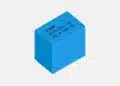
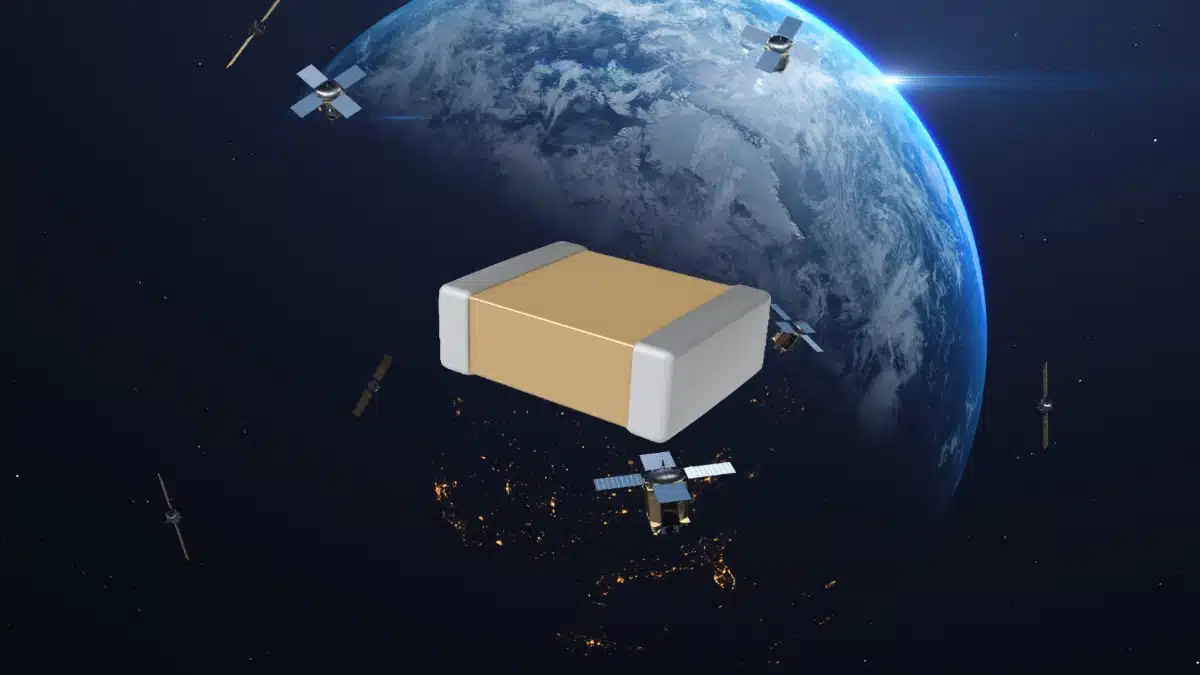
The YAGEO KEMET HRA Z‑Level series extends high‑reliability multilayer ceramic capacitors (MLCCs) beyond traditional MIL‑SPEC capacitance limits, while aligning its screening and process controls with MIL‑PRF‑32535 T‑Level expectations.

These YAGEO KEMET high‑reliability MLCC capacitors target demanding defense, aerospace, and space electronics where higher capacitance density, controlled reliability, and full lot traceability are required in compact SMD formats.

RelatedPosts

YAGEO Q1 2026 Results: AI Servers and Pricing Power Behind a Moderate Q2 Outlook

YAGEO Releases Ferrite Shielded Power Inductors for High‑Density Designs

YAGEO Introduces EMI Suppression High‑Current 3‑phase Common Mode Chokes

Building on the previously introduced HRA X‑Level platform, the new Z‑Level variant offers enhanced in‑process inspection and testing, leveraging base metal electrode (BME) technology to achieve significantly higher capacitance in standard EIA 0402–2220 case sizes. This makes the HRA series a practical bridge between commercial/automotive MLCCs and fully qualified MIL parts for designers who need more capacitance without losing reliability controls.

Key features and benefits

  • High‑capacitance MLCC platform for mission‑critical electronics
    • Capacitance range from 39 pF to 22 µF in standard SMD case sizes.
    • Up to 5× the capacitance of comparable MIL‑PRF‑32535‑qualified devices, enabling downsizing and fewer components on the PCB.
  • Extended high‑reliability screening levels
    • HRA X‑Level: aligned with MIL‑PRF‑32535 M‑Level in‑process inspection and testing for limited mission applications.
    • HRA Z‑Level: expanded screening and process controls more closely aligned with MIL‑PRF‑32535 T‑Level expectations, addressing longer or more critical missions.
  • Robust construction versus automotive/COTS MLCCs
    • Designs and process controls aimed at higher reliability than standard automotive or COTS parts.
    • Defined screening and acceptance criteria including voltage conditioning and post‑electrical testing.
  • Wide operating and voltage range
    • Operating temperature: −55 °C to +125 °C, suitable for many defense, avionic, and space subsystems.
    • DC voltage ratings: 6.3 V to 100 V, covering low‑voltage logic rails through typical 28 V and 48 V class systems.
  • Flexible termination options for mechanical robustness
    • Standard and flexible termination constructions available.
    • Flexible termination uses a conductive silver epoxy layer to absorb board flex and mitigate MLCC flex cracking, especially important on large case sizes and stiff boards.
  • Plating options for diverse assembly flows
    • Termination finishes: 100% Sn, SnPb, and Au to support different soldering profiles and high‑reliability assembly requirements.
  • Quality and traceability controls
    • 100% electrical testing and full lot traceability.
    • Optional Single Lot Date Code (SLDC) for programs that require tight configuration and batch control.
    • Lot release testing and voltage conditioning per MIL‑PRF‑32535 (including 5% PDA) to screen early failures.

Typical applications

The HRA Z‑Level series targets systems where capacitance density, predictable reliability, and documentation/traceability are critical, but full MIL qualification may be either unnecessary or too restrictive in terms of available CV values.

Typical use cases include:

  • Defense and aerospace electronics
    • Avionics control units and flight computers.
    • Mission computers and data‑processing modules.
    • Guidance, navigation, and control electronics.
  • Space and high‑altitude platforms
    • Satellite subsystems where higher capacitance is required beyond many traditional MIL‑spec MLCC offerings.
    • Payload electronics and communication modules that demand defined screening but also compact, high‑CV solutions.
  • High‑reliability power management
    • Decoupling of FPGAs, DSPs, and microprocessors in critical systems.
    • Bypass capacitors on regulated power rails.
    • Filtering elements in EMI/EMC networks.
    • Transient voltage suppression support, where MLCC banks are used to absorb fast surges and edges alongside TVS or other protection devices.
  • Long‑life industrial and specialty applications
    • High‑end industrial control, measurement, or radar/lidar systems that adopt aerospace‑style qualification flows.
    • Any design where enhanced screening, controllable process quality, and documentation are needed but classical MIL parts do not offer sufficient capacitance in the available footprints.

Technical highlights

The table below summarizes the key technical parameters of the HRA Z‑Level series according to the manufacturer information and product brief.

ParameterHRA Series (X & Z Levels) – overview*
Capacitance range39 pF to 22 µF (application‑specific)
Case sizesEIA 0402 to 2220
DC voltage range6.3 V to 100 V
Operating temperature range−55 °C to +125 °C
Construction optionsStandard and flexible termination
Electrode systemPatented Base Metal Electrode (BME)
Screening levelsX‑Level (M‑Level aligned), Z‑Level (T‑Level aligned)
Termination plating100% Sn, SnPb, Au
Screening stepsVoltage conditioning and post‑electrical testing per MIL‑PRF‑32535

*Exact value combinations by case size, voltage and dielectric should be confirmed in the manufacturer datasheet and product tables.

Base Metal Electrode (BME) technology

The HRA series uses patented BME technology to achieve higher capacitance per volume than many noble‑metal electrode solutions in similar case sizes. For designers, this means:

  • The possibility to replace banks of smaller MLCCs with fewer high‑CV parts, simplifying layouts and inventory.
  • Potential board area reduction or margin in routing in dense boards such as RF front‑ends, payload electronics, or advanced power modules.
  • A path to higher CV values while still maintaining screening practices aligned to MIL‑PRF‑32535 expectations for high‑reliability programs.

Screening and reliability controls

The X‑Level and Z‑Level definitions provide a structured way to select screening intensity:

  • X‑Level (M‑Level aligned)
    Suitable for limited mission or medium‑criticality applications where enhanced screening above standard COTS/automotive is required, but mission duration or risk profile is relatively constrained.
  • Z‑Level (T‑Level aligned)
    Aimed at applications more closely aligned with T‑Level expectations of MIL‑PRF‑32535, with extended in‑process inspection and testing. This is relevant for longer missions, more critical functions, or where program requirements drive higher assurance.

Both levels include voltage conditioning and post‑electrical testing with defined percent defective allowed (PDA) criteria, which help to remove early‑life failures before parts reach assembly. For designers, this reduces the risk of infant mortality and strengthens confidence during qualification and early field deployment.

Flexible termination for mechanical robustness

Flexible termination variants integrate a conductive silver epoxy layer between the ceramic body and outer plating. In practice this:

  • Helps absorb PCB flexing and thermal cycling stresses, which are common causes of MLCC cracking.
  • Is especially useful in larger case sizes (e.g., 1210 and above) or stiff boards like thick backplanes or modules with heavy components.
  • Supports improved board‑level reliability in environments with vibration, shock, or repeated thermal excursions such as airborne or space platforms.

Source

This article is based on the official YAGEO Group / KEMET information about the HRA Series Z‑Level high‑reliability MLCC portfolio, including the published HRA Series product brief and related online resources, adapted and commented from the perspective of an independent technical editor.


References

  1. YAGEO Group – HRA Z‑Level Series overview
  2. YAGEO Group – HRA Series Product Brief (PDF)
  3. YAGEO Group – Multilayer Ceramic Capacitors (MLCC) selection
  4. YAGEO Group – Sales offices and contacts

Related

Recent Posts

Samsung Introduces Ultra-High-Voltage 1500 V MLCCs for xEV Powertrains

16.4.2026
3

YAGEO Q1 2026 Results: AI Servers and Pricing Power Behind a Moderate Q2 Outlook

16.4.2026
5

Samsung Presents MLCC Selection Guide for Humanoids and Robotic Applications

15.4.2026
11

AI-Assisted Structural Diagnostics and Physics-Based Reliability Interpretation of Tantalum Capacitor Anodes

14.4.2026
14

KYOCERA AVX MIL-PRF-32535 BME NP0 MLCCs Approved to the DLA QPD

16.4.2026
19

ECIA March 2026 Industry Pulse Points to Best Sales Climate in Five Years

13.4.2026
27

Exxelia Releases Updated Microwave Materials and Frequency Tuning Catalogues

8.4.2026
18

Murata Automotive MLCCs Push Capacitance Limits for ADAS and Power Lines

16.4.2026
40

TDK and Nippon Chemical Launch Joint Venture for MLCC Materials

7.4.2026
43

Upcoming Events

Apr 21
16:00 - 17:00 CEST

Heatsink Solutions: Thermal Management in electronic devices

Apr 22
17:00 - 17:30 CEST

Magnetics in a high frequency GaN era

Apr 22
17:00 - 18:00 CEST

Derating Tantalum, Film, and Ceramic Capacitors

View Calendar

Popular Posts

  • Buck Converter Design and Calculation

    0 shares
    Share 0 Tweet 0
  • Boost Converter Design and Calculation

    0 shares
    Share 0 Tweet 0
  • Flyback Converter Design and Calculation

    0 shares
    Share 0 Tweet 0
  • LLC Resonant Converter Design and Calculation

    0 shares
    Share 0 Tweet 0
  • MLCC and Ceramic Capacitors

    0 shares
    Share 0 Tweet 0
  • Dual Active Bridge (DAB) Topology

    0 shares
    Share 0 Tweet 0
  • Capacitor Charging and Discharging

    0 shares
    Share 0 Tweet 0
  • Plastic Materials Dielectric Constant and DF

    4 shares
    Share 4 Tweet 0
  • MLCC Case Sizes Standards Explained

    0 shares
    Share 0 Tweet 0
  • Ripple Current and its Effects on the Performance of Capacitors

    3 shares
    Share 3 Tweet 0

Newsletter Subscription


Passive Components Blog

© EPCI - Leading Passive Components Educational and Information Site

  • Home
  • Privacy Policy
  • EPCI Membership & Advertisement
  • About

No Result
View All Result
  • Home
  • Knowledge Blog
  • PCNS

© EPCI - Leading Passive Components Educational and Information Site

This website uses cookies. By continuing to use this website you are giving consent to cookies being used. Visit our Privacy and Cookie Policy.
Go to mobile version