


Passive Components Blog
No Result
View All Result
  • Home
  • NewsFilter
    • All
    • Aerospace & Defence
    • Antenna
    • Applications
    • Automotive
    • Capacitors
    • Circuit Protection Devices
    • electro-mechanical news
    • Filters
    • Fuses
    • Inductors
    • Industrial
    • Integrated Passives
    • inter-connect news
    • Market & Supply Chain
    • Market Insights
    • Medical
    • Modelling and Simulation
    • New Materials & Supply
    • New Technologies
    • Non-linear Passives
    • Oscillators
    • Passive Sensors News
    • Resistors
    • RF & Microwave
    • Telecommunication
    • Weekly Digest

    DigiKey Releases Season Two of Sustainable Futures Series

    Using a Virtual Anode Thermal Model to Evaluate Miniaturization Risk in Tantalum Capacitors

    Bourns Introduced High-Current Coupled Inductor for 48 V Hybrid and IBC Converters

    Würth Elektronik Expands Nanocrystalline Cable Cores for Broadband EMI Suppression

    High‑Speed Supercapacitor Balancing for AI Data Center Power Systems

    Bourns Introduced Automotive TVS Diodes for Compact ESD Protection

    EMC‑Compliant PCB and Connector Design Guidelines

    Practical Value of Structural Diagnostics for Tantalum Capacitor Anodes

    Hall-Effect Sensing for Harsh Environments: TT Electronics Selected in NASA’s Dragonfly Fan

    Trending Tags

    • Ripple Current
    • RF
    • Leakage Current
    • Tantalum vs Ceramic
    • Snubber
    • Low ESR
    • Feedthrough
    • Derating
    • Dielectric Constant
    • New Products
    • Market Reports
  • VideoFilter
    • All
    • Antenna videos
    • Capacitor videos
    • Circuit Protection Video
    • Filter videos
    • Fuse videos
    • Inductor videos
    • Inter-Connect Video
    • Non-linear passives videos
    • Oscillator videos
    • Passive sensors videos
    • Resistor videos

    EMC‑Compliant PCB and Connector Design Guidelines

    Why Isolated DC/DC Power Supplies Fail Late, Würth Elektronik Podcast

    Designing 800 V DC EMC Filters: Calculation, Simulation and Measurement

    Current Sense Transformer Datasheet and Design‑in Guide

    Designing a USB Type‑C Flyback Planar Transformer with Frenetic’s Planar Tool

    Magnetics Design in High‑Frequency GaN Converters

    Qi2 Wireless Charging: Inductors, Capacitors and EMC Filters

    Two‑capacitor paradox explained for engineers

    Capacitances of Nonlinear MLCCs: What Datasheets Don’t Tell You

    Trending Tags

    • Capacitors explained
    • Inductors explained
    • Resistors explained
    • Filters explained
    • Application Video Guidelines
    • EMC
    • New Products
    • Ripple Current
    • Simulation
    • Tantalum vs Ceramic
  • Knowledge Blog
  • DossiersNew
  • Suppliers
    • Who is Who
  • PCNS
    • PCNS 2025
    • PCNS 2023
    • PCNS 2021
    • PCNS 2019
    • PCNS 2017
  • Events
  • Home
  • NewsFilter
    • All
    • Aerospace & Defence
    • Antenna
    • Applications
    • Automotive
    • Capacitors
    • Circuit Protection Devices
    • electro-mechanical news
    • Filters
    • Fuses
    • Inductors
    • Industrial
    • Integrated Passives
    • inter-connect news
    • Market & Supply Chain
    • Market Insights
    • Medical
    • Modelling and Simulation
    • New Materials & Supply
    • New Technologies
    • Non-linear Passives
    • Oscillators
    • Passive Sensors News
    • Resistors
    • RF & Microwave
    • Telecommunication
    • Weekly Digest

    DigiKey Releases Season Two of Sustainable Futures Series

    Using a Virtual Anode Thermal Model to Evaluate Miniaturization Risk in Tantalum Capacitors

    Bourns Introduced High-Current Coupled Inductor for 48 V Hybrid and IBC Converters

    Würth Elektronik Expands Nanocrystalline Cable Cores for Broadband EMI Suppression

    High‑Speed Supercapacitor Balancing for AI Data Center Power Systems

    Bourns Introduced Automotive TVS Diodes for Compact ESD Protection

    EMC‑Compliant PCB and Connector Design Guidelines

    Practical Value of Structural Diagnostics for Tantalum Capacitor Anodes

    Hall-Effect Sensing for Harsh Environments: TT Electronics Selected in NASA’s Dragonfly Fan

    Trending Tags

    • Ripple Current
    • RF
    • Leakage Current
    • Tantalum vs Ceramic
    • Snubber
    • Low ESR
    • Feedthrough
    • Derating
    • Dielectric Constant
    • New Products
    • Market Reports
  • VideoFilter
    • All
    • Antenna videos
    • Capacitor videos
    • Circuit Protection Video
    • Filter videos
    • Fuse videos
    • Inductor videos
    • Inter-Connect Video
    • Non-linear passives videos
    • Oscillator videos
    • Passive sensors videos
    • Resistor videos

    EMC‑Compliant PCB and Connector Design Guidelines

    Why Isolated DC/DC Power Supplies Fail Late, Würth Elektronik Podcast

    Designing 800 V DC EMC Filters: Calculation, Simulation and Measurement

    Current Sense Transformer Datasheet and Design‑in Guide

    Designing a USB Type‑C Flyback Planar Transformer with Frenetic’s Planar Tool

    Magnetics Design in High‑Frequency GaN Converters

    Qi2 Wireless Charging: Inductors, Capacitors and EMC Filters

    Two‑capacitor paradox explained for engineers

    Capacitances of Nonlinear MLCCs: What Datasheets Don’t Tell You

    Trending Tags

    • Capacitors explained
    • Inductors explained
    • Resistors explained
    • Filters explained
    • Application Video Guidelines
    • EMC
    • New Products
    • Ripple Current
    • Simulation
    • Tantalum vs Ceramic
  • Knowledge Blog
  • DossiersNew
  • Suppliers
    • Who is Who
  • PCNS
    • PCNS 2025
    • PCNS 2023
    • PCNS 2021
    • PCNS 2019
    • PCNS 2017
  • Events
No Result
View All Result
Passive Components Blog
No Result
View All Result

Lelon’s efforts in high-end markets are expected to generate significant results in the second half the year

1.8.2017
Reading Time: 4 mins read
A A

source: Digitimes news

According to the Transparency Market Research, the global connected car market is expected to reach US$131.9 billion by 2019 continuing to maintain its steady growth. Businesses are scrambling for a share of the automotive electronics market in recent years. Lelon Electronics, Taiwan’s No. 1 manufacturer of aluminum electrolytic capacitors, entered the market at an opportune time and have secured their place in the OEM supply chain of American and European automakers. As the automotive electronics market continues to grow, Lelon is confident in sustaining its business model and market share in the second half of the year.

RelatedPosts

DigiKey Releases Season Two of Sustainable Futures Series

Using a Virtual Anode Thermal Model to Evaluate Miniaturization Risk in Tantalum Capacitors

Bourns Introduced High-Current Coupled Inductor for 48 V Hybrid and IBC Converters

Jimmy Wu, General Manager of Lelon Electronics, noted that automotive LCD panels used to be installed only in luxury cars. However, due to increased importance being placed on vehicle safety, even entry-level cars are now coming equipped with a variety of sensors to collect information, then processed and displayed on LCD monitors. Lelon is one of the select few non-Japanese manufacturers of aluminum electrolytic capacitors that are capable of being used in automotive applications. Their products now recognized by leading international automotive electronics companies. The automotive electronics market accounted for 9% of Lelon’s 2016 revenue and is expected to increase to 10% in 2017. Lelon plans to introduce aluminum electrolytic capacitors for automobile transmission systems in the future to expand Lelon’s automotive applications product line.

Focusing on the development of high-end capacitors to build up the company’s position

Founded in 1976, Lelon has engaged in the R&D, manufacturing and sales of aluminum electrolytic capacitors for over four decades. In order to provide comprehensive services for their customers, Lelon expanded into upstream material production of formed aluminum foil and automated production equipment. Through vertical integration of upstream and downstream manufacturing, Lelon is strengthening its competitive edge in technology, quality, cost, and service. Lelon now has complete offerings of aluminum electrolytic capacitors, including aluminum electrolytic capacitors (radial, SMD, snap-in, and screw terminal), organic conductive polymer capacitors, and conductive polymer hybrid aluminum electrolytic capacitors, which are widely used in automotive electronics, telecommunication equipment, cloud computing, and power electronics. Its quality products and services are highly regarded by their customers.

Last year, Lelon’s major revenue generators included power electronics, telecommunication equipment, automotive electronics, and consumer electronics. With the company transitioning from mid-range to high-end markets, it plans to reduce its share of products used in consumer electronics due to the fiercely competitive pricing environment. Instead focusing its efforts on aluminum electrolytic capacitors for high-end electronics, which are used in automobiles, telecommunication, healthcare, green energy, smart grid, and cloud computing.

Wu further commented that the rising demand for consumer electronics, especially flat-panel TVs, smartphones, and tablets, drew a large number of companies to expand into the production of aluminum electrolytic capacitors. However, as prices of consumer electronics continue to fall, passive component markets have become “red oceans” where many vendors have resorted to price-cutting and have sacrificed quality for cost. If Lelon were to use its resources on low-end products with little margin, it would eventually impact its overall profitability and competitiveness. Lelon has always insisted on delivering premium quality products since its establishment.

Actively engaging in new technology development and vertical integration

Lelon has been able to come out ahead in the competitive market of aluminum electrolytic capacitors due to their long-term devotion to the R&D of advanced technologies. In addition to their own professional R&D team, they have also hired technical consultants from Japan to help refine their technology and quality systems. Furthermore, Lelon has been collaborating with Industrial Technology Research Institute to jointly research critical technologies and participate in the research of material suppliers and customers in order to develop products that cater to market needs.

Lelon has generated impressive results in terms of its patents. It has obtained multiple patents in Taiwan, China and Japan, including ones for a V-chip vibration-proof back plate, a vibration-proof capacitor, a capacitor electrolytic solution with heat resistance and high spark voltage, electrolytic capacitors with optimum cooling, and horizontal capacitors. With growing public awareness of the need to protect the environment and an increasingly strict enforcement of environmental protection laws, the supply of aluminum foil for aluminum electrolytic capacitors has become rather limited. Wu pointed out that in an attempt to minimize the impact of market instability and maintain a steady supply for its customers, Lelon had already begun to search for new material suppliers prior to the Japan 3/11 earthquake and conducted testing on a variety of materials in order to understand the characteristics of the materials and the type of capacitors they were suitable for.

Demand for polymer capacitors is rising with exciting developments in quick charging

A growing number of mobile devices such as smartphones and tablets now feature quick charging, which requires the use of matching quick chargers. Quick chargers must meet more stringent requirements than conventional chargers and need polymer capacitors to match product design specifications. Polymer capacitors are also used in cloud computing equipment, telecommunication equipment, and power supplies. Lelon has accumulated years of experience in manufacturing polymer capacitors and will be able to produce close to 100 million polymer capacitors per month. This number includes the monthly capacity of 60 million polymer capacitors produced on the equipment acquired from Matsuki Polymer last year, and Lelon’s original monthly capacity of 35 million polymer capacitors. After the completion of this expansion, which is expected to happen this year, Lelon will become a leading manufacturer of SMD polymer capacitors made outside of Japan. Benefiting from an increasing market demand, polymer capacitors will become a major revenue growth driver for Lelon this year.

Wu remarked that Lelon has adopted a flexible production approach. It is able to quickly adjust the production line according to order changes and thereby meet their customers’ delivery schedules. The purchase of Matsuki Polymer’s production equipment of polymer capacitors was completed efficiently and economically. This deal will assist in moving up the company’s original scheduled date to expand its production capacity and upgrade its production equipment. It will also further enhance the company’s competitiveness.

Lelon has made remarkable progress in the market of aluminum electrolytic capacitors and has become a chosen partner of multiple global companies by maintaining its goal of providing premium quality aluminum electrolytic capacitors. As it looks forward to a promising future, Lelon will devote additional resources to the development of high-end aluminum electrolytic capacitors, focusing its efforts on the high-end electronics markets.

Jimmy Wu, General Manager of Lelon Electronics

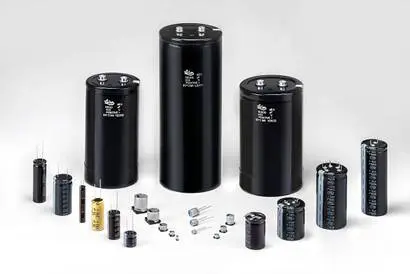
featured image: Lelon focuses on the development of high-end aluminum electrolytic capacitors, and on actively expanding its high-end electronics customer base.

Related

Recent Posts

DigiKey Releases Season Two of Sustainable Futures Series

24.6.2026
10

Using a Virtual Anode Thermal Model to Evaluate Miniaturization Risk in Tantalum Capacitors

24.6.2026
15

Bourns Introduced High-Current Coupled Inductor for 48 V Hybrid and IBC Converters

24.6.2026
11

Würth Elektronik Expands Nanocrystalline Cable Cores for Broadband EMI Suppression

23.6.2026
12

High‑Speed Supercapacitor Balancing for AI Data Center Power Systems

23.6.2026
47

Bourns Introduced Automotive TVS Diodes for Compact ESD Protection

23.6.2026
11

Practical Value of Structural Diagnostics for Tantalum Capacitor Anodes

22.6.2026
24

Bourns Releases Automotive Gate Driver Transformer for Isolated Power

22.6.2026
20

Knowles Expands High‑Q Ceramic Core Inductors for RF designs

19.6.2026
23

Upcoming Events

Jun 30
17:00 - 18:00 CEST

PSMA Capacitor Committee Webinar: High Voltage Pulse Capacitors

Jul 14
16:00 - 17:00 CEST

EMC Design Essentials: Mastering Varistors and Common Mode Chokes

Jul 21
16:00 - 17:00 CEST

Safety by design: X and Y Interference suppression capacitors for power line filters

View Calendar

Popular Posts

  • Boost Converter Design and Calculation

    0 shares
    Share 0 Tweet 0
  • Buck Converter Design and Calculation

    0 shares
    Share 0 Tweet 0
  • LLC Resonant Converter Design and Calculation

    0 shares
    Share 0 Tweet 0
  • Flyback Converter Design and Calculation

    0 shares
    Share 0 Tweet 0
  • MLCC and Ceramic Capacitors

    0 shares
    Share 0 Tweet 0
  • Earthing Systems and IEC Classification Explained

    0 shares
    Share 0 Tweet 0
  • Nvidia Vera Rubin: Why One AI Rack Needs So Many More MLCC Capacitors

    0 shares
    Share 0 Tweet 0
  • Dual Active Bridge (DAB) Topology

    0 shares
    Share 0 Tweet 0
  • SEPIC Converter Design and Calculation

    0 shares
    Share 0 Tweet 0
  • MLCC Case Sizes Standards Explained

    0 shares
    Share 0 Tweet 0

Newsletter Subscription


Passive Components Blog

© EPCI - Leading Passive Components Educational and Information Site

  • Home
  • Privacy Policy
  • EPCI Membership & Advertisement
  • About

No Result
View All Result
  • Home
  • Knowledge Blog
  • Dossiers
  • PCNS

© EPCI - Leading Passive Components Educational and Information Site

This website uses cookies. By continuing to use this website you are giving consent to cookies being used. Visit our Privacy and Cookie Policy.
Go to mobile version