




Passive Components Blog
No Result
View All Result
  • Home
  • NewsFilter
    • All
    • Aerospace & Defence
    • Antenna
    • Applications
    • Automotive
    • Capacitors
    • Circuit Protection Devices
    • electro-mechanical news
    • Filters
    • Fuses
    • Inductors
    • Industrial
    • Integrated Passives
    • inter-connect news
    • Market & Supply Chain
    • Market Insights
    • Medical
    • Modelling and Simulation
    • New Materials & Supply
    • New Technologies
    • Non-linear Passives
    • Oscillators
    • Passive Sensors News
    • Resistors
    • RF & Microwave
    • Telecommunication
    • Weekly Digest

    YAGEO Introduces High‑Current Y2/X1 Film Capacitors for Wide-bandgap Power Systems

    Amphenol Explanded Liquid Cooling Connectors for AI, ESS and EV Systems

    Hirose Introduced BGA connector for PCIe Gen6 for AI and Edge Computing

    YAGEO Introduces High Rel MLCCs Beyond MIL-Spec Limits

    Würth Elektronik Expanded Capacity for Validation and Services in Asia

    Samsung Introduces Ultra-High-Voltage 1500 V MLCCs for xEV Powertrains

    YAGEO Q1 2026 Results: AI Servers and Pricing Power Behind a Moderate Q2 Outlook

    TDK Introduces High‑Voltage Common‑Mode Chokes for Compact 1250 V DC Converters

    Vishay Extends Power Inductors for DC/DC with 1212 Compact Case

    Trending Tags

    • Ripple Current
    • RF
    • Leakage Current
    • Tantalum vs Ceramic
    • Snubber
    • Low ESR
    • Feedthrough
    • Derating
    • Dielectric Constant
    • New Products
    • Market Reports
  • VideoFilter
    • All
    • Antenna videos
    • Capacitor videos
    • Circuit Protection Video
    • Filter videos
    • Fuse videos
    • Inductor videos
    • Inter-Connect Video
    • Non-linear passives videos
    • Oscillator videos
    • Passive sensors videos
    • Resistor videos

    Transformer-Based Power-Line Harvester Magnetic Design

    Thermal Modeling of Magnetics

    Standard vs Planar LLC transformers Comparison for Battery Chargers

    How Modern Tools Model Magnetic Components for Power Electronics

    Advanced Loss Modeling for Planar Magnetics in the Frenetic Planar Tool

    2026 Power Magnetics Design Trends: Flyback, DAB and Planar

    Enabling Software‑Defined Vehicle Architectures: Automotive Ethernet and Zonal Smart Power

    Calculating Resistance Value of a Flyback RC Snubber 

    One‑Pulse Characterization of Nonlinear Power Inductors

    Trending Tags

    • Capacitors explained
    • Inductors explained
    • Resistors explained
    • Filters explained
    • Application Video Guidelines
    • EMC
    • New Products
    • Ripple Current
    • Simulation
    • Tantalum vs Ceramic
  • Knowledge Blog
  • DossiersNew
  • Suppliers
    • Who is Who
  • PCNS
    • PCNS 2025
    • PCNS 2023
    • PCNS 2021
    • PCNS 2019
    • PCNS 2017
  • Events
  • Home
  • NewsFilter
    • All
    • Aerospace & Defence
    • Antenna
    • Applications
    • Automotive
    • Capacitors
    • Circuit Protection Devices
    • electro-mechanical news
    • Filters
    • Fuses
    • Inductors
    • Industrial
    • Integrated Passives
    • inter-connect news
    • Market & Supply Chain
    • Market Insights
    • Medical
    • Modelling and Simulation
    • New Materials & Supply
    • New Technologies
    • Non-linear Passives
    • Oscillators
    • Passive Sensors News
    • Resistors
    • RF & Microwave
    • Telecommunication
    • Weekly Digest

    YAGEO Introduces High‑Current Y2/X1 Film Capacitors for Wide-bandgap Power Systems

    Amphenol Explanded Liquid Cooling Connectors for AI, ESS and EV Systems

    Hirose Introduced BGA connector for PCIe Gen6 for AI and Edge Computing

    YAGEO Introduces High Rel MLCCs Beyond MIL-Spec Limits

    Würth Elektronik Expanded Capacity for Validation and Services in Asia

    Samsung Introduces Ultra-High-Voltage 1500 V MLCCs for xEV Powertrains

    YAGEO Q1 2026 Results: AI Servers and Pricing Power Behind a Moderate Q2 Outlook

    TDK Introduces High‑Voltage Common‑Mode Chokes for Compact 1250 V DC Converters

    Vishay Extends Power Inductors for DC/DC with 1212 Compact Case

    Trending Tags

    • Ripple Current
    • RF
    • Leakage Current
    • Tantalum vs Ceramic
    • Snubber
    • Low ESR
    • Feedthrough
    • Derating
    • Dielectric Constant
    • New Products
    • Market Reports
  • VideoFilter
    • All
    • Antenna videos
    • Capacitor videos
    • Circuit Protection Video
    • Filter videos
    • Fuse videos
    • Inductor videos
    • Inter-Connect Video
    • Non-linear passives videos
    • Oscillator videos
    • Passive sensors videos
    • Resistor videos

    Transformer-Based Power-Line Harvester Magnetic Design

    Thermal Modeling of Magnetics

    Standard vs Planar LLC transformers Comparison for Battery Chargers

    How Modern Tools Model Magnetic Components for Power Electronics

    Advanced Loss Modeling for Planar Magnetics in the Frenetic Planar Tool

    2026 Power Magnetics Design Trends: Flyback, DAB and Planar

    Enabling Software‑Defined Vehicle Architectures: Automotive Ethernet and Zonal Smart Power

    Calculating Resistance Value of a Flyback RC Snubber 

    One‑Pulse Characterization of Nonlinear Power Inductors

    Trending Tags

    • Capacitors explained
    • Inductors explained
    • Resistors explained
    • Filters explained
    • Application Video Guidelines
    • EMC
    • New Products
    • Ripple Current
    • Simulation
    • Tantalum vs Ceramic
  • Knowledge Blog
  • DossiersNew
  • Suppliers
    • Who is Who
  • PCNS
    • PCNS 2025
    • PCNS 2023
    • PCNS 2021
    • PCNS 2019
    • PCNS 2017
  • Events
No Result
View All Result
Passive Components Blog
No Result
View All Result

Taiyo Yuden Releases 165C Automotive Multilayer Metal Power Inductor in 1608 Size

7.1.2026
Reading Time: 7 mins read
A A

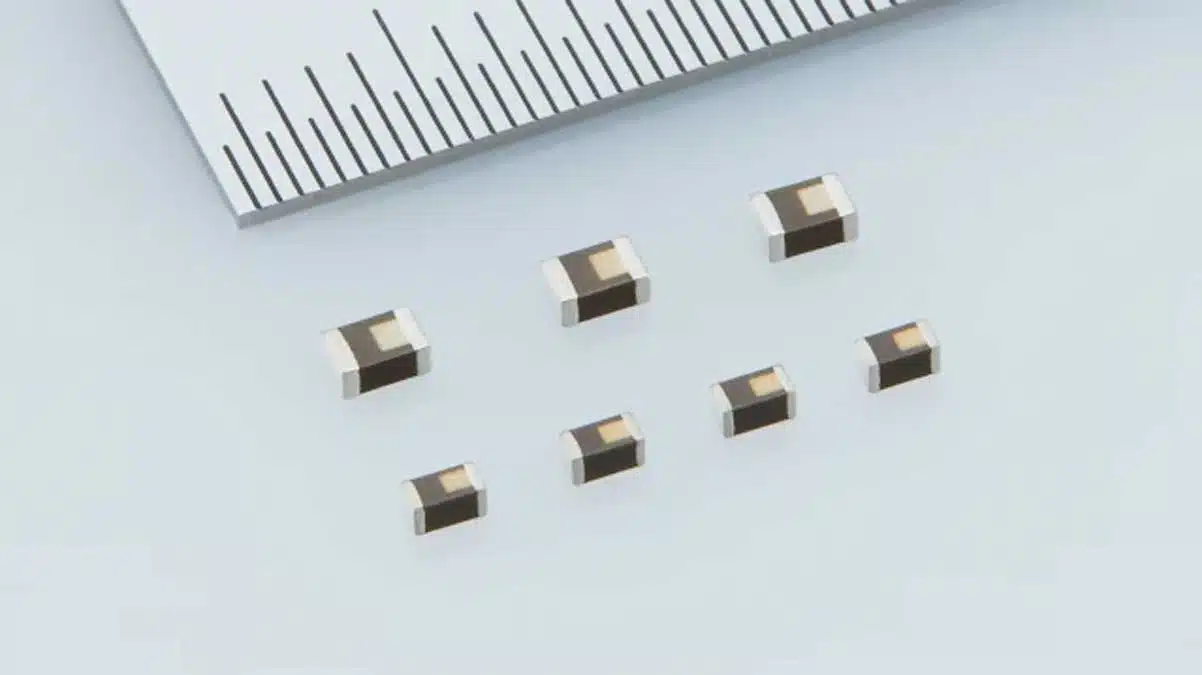
Taiyo Yuden has expanded its MCOIL multilayer metal power inductor portfolio with a new AEC‑Q200 qualified 1608 size device capable of operation up to 165 °C, aimed at demanding automotive power supply designs.

The new inductor targets choke coil roles in compact DC‑DC converters where shrinking PCB area, higher switching frequencies, and harsher thermal conditions are pushing conventional ferrite solutions to their limits.

RelatedPosts

Conductive Polymer Capacitor Market and Design‑In Guide to 2035

TAIYO YUDEN Extends Polymer Hybrid Aluminum Capacitors with Higher Ripple Current and Lower Profile

TAIYO YUDEN Releases 22uF MLCC in 0402 Size for AI Servers

Key features and benefits

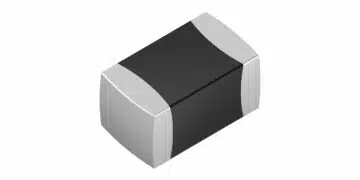
The new part is introduced as MCOIL LACNF1608KKT1R0MAB, a multilayer metal power inductor in 1608 size (1.6 mm × 0.8 mm footprint, 1.0 mm maximum height). The product is part of the LACN series and is qualified to the AEC‑Q200 reliability test standard for passive automotive components, making it suitable for use in ECUs and other mission‑critical modules where automotive qualification is mandatory.

Key characteristics and benefits include:

  • Compact 1608 case size (1.6 mm × 0.8 mm × 1.0 mm max height), helping designers increase power density and free up PCB area in crowded automotive control units.
  • Operating temperature range of −55 °C to +165 °C, enabling stable operation in engine bay and other hot‑zone installations where board temperatures can exceed the 125–150 °C range of many legacy parts.
  • Multilayer metal composite construction (MCOIL), using proprietary metal materials bonded with oxide films through heat treatment to ensure insulation, high heat resistance, and good thermal conductivity; this supports both high current handling and robust reliability under thermal cycling.
  • AEC‑Q200 qualification, simplifying approval workflows for automotive OEMs and Tier‑1 suppliers compared with non‑qualified commodity inductors.
  • Stable inductance characteristics and high reliability even under high‑temperature conditions, which helps maintain control loop stability and converter efficiency over the vehicle lifetime.

For engineers, the high upper temperature limit means less derating margin is consumed by worst‑case ambient and self‑heating, which can allow either a smaller inductor for the same current or higher allowable ripple current within the same footprint.

Typical applications

Taiyo Yuden positions the new 1608 LACNF device as a choke coil for DC‑DC converters in a broad range of automotive systems. These converters are increasingly used to generate multiple local rails for digital, sensor and actuator loads from a common 12 V or 48 V supply in modern vehicles.

Typical applications include:

  • Engine control systems: engine ECUs and related modules placed in hot environments close to the engine, where sustained high temperatures and vibration demand robust magnetics.
  • Safety systems: ABS and other safety‑related control units that require stable power conversion for microcontrollers, sensors, and actuators under extreme ambient conditions.
  • Body and ADAS systems: advanced driver assistance systems, camera and radar modules, and body control electronics that combine tighter packaging with higher processing power, driving up power density requirements.
  • Information and cluster systems: instrument clusters and infotainment units where multiple DC‑DC converters supply SoCs, displays and communication ICs, and where space savings and low profile components are critical.

The combination of compact footprint, 1.0 mm maximum height, and 165 °C rating makes this inductor particularly attractive in densely populated multilayer automotive PCBs with severe thermal constraints and limited vertical clearance.

Technical highlights

The press release introduces a lineup of 14 items in the MCOIL LACN series, with LACNF1608KKT1R0MAB highlighted as the 1608 size addition. The detailed electrical characteristics (inductance, DCR, current ratings) are provided in the manufacturer’s datasheet and online tools; designers should always refer to those documents for exact values rather than using generic assumptions.

Important technical aspects include:

  • Structure: multilayer metal power inductor using proprietary metal material layers bonded by oxide films. This structure allows efficient heat conduction through the body and robust insulation between layers, which in turn supports the high maximum operating temperature.
  • Current rating definition: Taiyo Yuden specifies saturation current (Idc1) as the DC current at which inductance drops by 30 % (at 20 °C), and temperature‑rise current (Idc2) as the DC current that causes a 40 °C temperature increase (at 20 °C). The rated current is the DC current that simultaneously satisfies both limits.
  • Product families: the newly added device is part of the LACN series for AEC‑Q200 applications; related LCCN series versions with IEC/JIS specification part numbers are also available for other segments, sharing similar construction but with different qualification focus.

In practice, understanding the distinct current ratings is essential: in high‑ripple DC‑DC stages, saturation current usually limits transient performance, while temperature‑rise current constrains continuous load and ambient temperature combinations. Designers should check both curves in the datasheet when selecting a part for borderline thermal environments.

Availability and part numbers

According to the press information, Taiyo Yuden has commercialized 14 LACN series items including the LACNF1608KKT1R0MAB 1608 inductor, with mass production already started at the company’s Wakayama Taiyo Yuden manufacturing site. Samples are quoted at 50 JPY per unit, giving purchasing teams a rough indication of relative price positioning compared with larger or lower‑temperature inductors in the same family.

Key commercial points:

  • Product series: MCOIL LACN series (AEC‑Q200 qualified multilayer metal power inductors).
  • Highlighted part number: LACNF1608KKT1R0MAB (1.6 mm × 0.8 mm × 1.0 mm max, automotive grade, −55 °C to +165 °C).
  • Production status: in mass production, with samples available to support evaluation and early design‑in.
  • Related series: LCCN series with IEC/JIS specification part numbers for applications that do not explicitly require AEC‑Q200.

For full ordering information, available inductance values, and packaging options, engineers and buyers should consult the online LACN series overview and the individual datasheets provided by Taiyo Yuden.

Design‑in notes for engineers

While the new 1608 MCOIL device is drop‑in from a footprint perspective, careful electrical and thermal design is still required to fully exploit its −55 °C to +165 °C rating in real automotive hardware.

Points to consider during design‑in:

  • Thermal environment and derating: even though the part is rated up to 165 °C, current derating versus ambient temperature still applies; engineers should apply the manufacturer’s derating curves and consider worst‑case board temperatures in engine bay or under‑hood locations.
  • DC‑DC converter topology: in typical step‑down converters for ECUs or ADAS modules, select the inductance value to meet ripple current targets and transient response needs, then confirm that peak and RMS currents remain below both saturation and temperature‑rise current limits across the operating range.
  • Layout and cooling: leverage the device’s good thermal conductivity by connecting pads to sufficiently large copper areas, possibly with thermal vias to inner planes, to reduce temperature rise at high current; this is especially important in high‑density modules with limited airflow.
  • EMC behavior: metal composite inductors typically exhibit lower acoustic noise and can improve EMI performance versus some wire‑wound alternatives; nonetheless, final EMC must be verified at system level, and snubbers or additional EMI filters may still be required.
  • Qualification and documentation: for automotive projects, retain the AEC‑Q200 qualification information and test reports from Taiyo Yuden as part of the PPAP or component approval package, and ensure that internal component libraries flag the part as automotive grade.

When migrating an existing design from a larger footprint or lower temperature‑rated inductor, the new LACNF1608KKT1R0MAB can support further miniaturization and higher local power density, provided the converter’s switching losses and board‑level thermal management are adequately handled.

Source

This article is based on information provided in the official Taiyo Yuden press release announcing the commercialization of the MCOIL LACN series multilayer metal power inductors including the new LACNF1608KKT1R0MAB 1608 size component, complemented by publicly available series overview information and general manufacturer documentation.

References

  1. Taiyo Yuden press release – Multilayer metal power inductor rated at 165 °C for automobiles, 1608 size added to the lineup
  2. Taiyo Yuden MCOIL LACN series overview and specifications

Related

Recent Posts

YAGEO Introduces High‑Current Y2/X1 Film Capacitors for Wide-bandgap Power Systems

17.4.2026
3

Samsung Introduces Ultra-High-Voltage 1500 V MLCCs for xEV Powertrains

16.4.2026
15

TDK Introduces High‑Voltage Common‑Mode Chokes for Compact 1250 V DC Converters

16.4.2026
16

Vishay Extends Power Inductors for DC/DC with 1212 Compact Case

16.4.2026
16

Modeling Planar Magnetics Temperature: Practical Guidelines for Power Electronics Engineers

15.4.2026
16

YAGEO Releases Ferrite Shielded Power Inductors for High‑Density Designs

15.4.2026
13

YAGEO Introduces EMI Suppression High‑Current 3‑phase Common Mode Chokes

14.4.2026
29

ECIA March 2026 Industry Pulse Points to Best Sales Climate in Five Years

13.4.2026
35

Coilcraft Unveils Molded Power Inductors for High‑Current VRMs

8.4.2026
39

Upcoming Events

Apr 21
16:00 - 17:00 CEST

Heatsink Solutions: Thermal Management in electronic devices

Apr 22
17:00 - 17:30 CEST

Magnetics in a high frequency GaN era

Apr 22
17:00 - 18:00 CEST

Derating Tantalum, Film, and Ceramic Capacitors

View Calendar

Popular Posts

  • Buck Converter Design and Calculation

    0 shares
    Share 0 Tweet 0
  • Boost Converter Design and Calculation

    0 shares
    Share 0 Tweet 0
  • Flyback Converter Design and Calculation

    0 shares
    Share 0 Tweet 0
  • LLC Resonant Converter Design and Calculation

    0 shares
    Share 0 Tweet 0
  • Dual Active Bridge (DAB) Topology

    0 shares
    Share 0 Tweet 0
  • MLCC and Ceramic Capacitors

    0 shares
    Share 0 Tweet 0
  • Capacitor Charging and Discharging

    0 shares
    Share 0 Tweet 0
  • Plastic Materials Dielectric Constant and DF

    4 shares
    Share 4 Tweet 0
  • MLCC Case Sizes Standards Explained

    0 shares
    Share 0 Tweet 0
  • Ripple Current and its Effects on the Performance of Capacitors

    3 shares
    Share 3 Tweet 0

Newsletter Subscription


Passive Components Blog

© EPCI - Leading Passive Components Educational and Information Site

  • Home
  • Privacy Policy
  • EPCI Membership & Advertisement
  • About

No Result
View All Result
  • Home
  • Knowledge Blog
  • PCNS

© EPCI - Leading Passive Components Educational and Information Site

This website uses cookies. By continuing to use this website you are giving consent to cookies being used. Visit our Privacy and Cookie Policy.
Go to mobile version