


Passive Components Blog
No Result
View All Result
  • Home
  • NewsFilter
    • All
    • Aerospace & Defence
    • Antenna
    • Applications
    • Automotive
    • Capacitors
    • Circuit Protection Devices
    • electro-mechanical news
    • Filters
    • Fuses
    • Inductors
    • Industrial
    • Integrated Passives
    • inter-connect news
    • Market & Supply Chain
    • Market Insights
    • Medical
    • Modelling and Simulation
    • New Materials & Supply
    • New Technologies
    • Non-linear Passives
    • Oscillators
    • Passive Sensors News
    • Resistors
    • RF & Microwave
    • Telecommunication
    • Weekly Digest

    Inductor Technology Dossier

    Coilcraft Releases TLVR Inductors for High Density VRMs and PoL Converters

    Rutheniums Critical Role in Passive Component Supply Chains

    Bourns Expands its Modular Contacts for Power-Dense Systems

    Murata to Decouple China Rare Earth Supply in 3 Years

    Samtec AcceleRate Slim ARC6 Cable Assemblies with New Signaling Options

    Hirose Electric to Establish Automotive Connector Plant in India

    Schematic illustration of the electric double layer of porous carbon electrodes at elevated potentials in a a conventional electrolyte and b a weakly solvating electrolyte; source: authors

    Researchers Presented Lignin-based Electrolyte for 4V Supercapacitors with Low Self‑Discharge

    Samsung Outlines Growth Roadmap at its 52nd General Shareholders Meeting

    Trending Tags

    • Ripple Current
    • RF
    • Leakage Current
    • Tantalum vs Ceramic
    • Snubber
    • Low ESR
    • Feedthrough
    • Derating
    • Dielectric Constant
    • New Products
    • Market Reports
  • VideoFilter
    • All
    • Antenna videos
    • Capacitor videos
    • Circuit Protection Video
    • Filter videos
    • Fuse videos
    • Inductor videos
    • Inter-Connect Video
    • Non-linear passives videos
    • Oscillator videos
    • Passive sensors videos
    • Resistor videos

    Thermal Modeling of Magnetics

    Standard vs Planar LLC transformers Comparison for Battery Chargers

    How Modern Tools Model Magnetic Components for Power Electronics

    Advanced Loss Modeling for Planar Magnetics in the Frenetic Planar Tool

    2026 Power Magnetics Design Trends: Flyback, DAB and Planar

    Enabling Software‑Defined Vehicle Architectures: Automotive Ethernet and Zonal Smart Power

    Calculating Resistance Value of a Flyback RC Snubber 

    One‑Pulse Characterization of Nonlinear Power Inductors

    Thermistor Linearization Challenges

    Trending Tags

    • Capacitors explained
    • Inductors explained
    • Resistors explained
    • Filters explained
    • Application Video Guidelines
    • EMC
    • New Products
    • Ripple Current
    • Simulation
    • Tantalum vs Ceramic
  • Knowledge Blog
  • DossiersNew
  • Suppliers
    • Who is Who
  • PCNS
    • PCNS 2025
    • PCNS 2023
    • PCNS 2021
    • PCNS 2019
    • PCNS 2017
  • Events
  • Home
  • NewsFilter
    • All
    • Aerospace & Defence
    • Antenna
    • Applications
    • Automotive
    • Capacitors
    • Circuit Protection Devices
    • electro-mechanical news
    • Filters
    • Fuses
    • Inductors
    • Industrial
    • Integrated Passives
    • inter-connect news
    • Market & Supply Chain
    • Market Insights
    • Medical
    • Modelling and Simulation
    • New Materials & Supply
    • New Technologies
    • Non-linear Passives
    • Oscillators
    • Passive Sensors News
    • Resistors
    • RF & Microwave
    • Telecommunication
    • Weekly Digest

    Inductor Technology Dossier

    Coilcraft Releases TLVR Inductors for High Density VRMs and PoL Converters

    Rutheniums Critical Role in Passive Component Supply Chains

    Bourns Expands its Modular Contacts for Power-Dense Systems

    Murata to Decouple China Rare Earth Supply in 3 Years

    Samtec AcceleRate Slim ARC6 Cable Assemblies with New Signaling Options

    Hirose Electric to Establish Automotive Connector Plant in India

    Schematic illustration of the electric double layer of porous carbon electrodes at elevated potentials in a a conventional electrolyte and b a weakly solvating electrolyte; source: authors

    Researchers Presented Lignin-based Electrolyte for 4V Supercapacitors with Low Self‑Discharge

    Samsung Outlines Growth Roadmap at its 52nd General Shareholders Meeting

    Trending Tags

    • Ripple Current
    • RF
    • Leakage Current
    • Tantalum vs Ceramic
    • Snubber
    • Low ESR
    • Feedthrough
    • Derating
    • Dielectric Constant
    • New Products
    • Market Reports
  • VideoFilter
    • All
    • Antenna videos
    • Capacitor videos
    • Circuit Protection Video
    • Filter videos
    • Fuse videos
    • Inductor videos
    • Inter-Connect Video
    • Non-linear passives videos
    • Oscillator videos
    • Passive sensors videos
    • Resistor videos

    Thermal Modeling of Magnetics

    Standard vs Planar LLC transformers Comparison for Battery Chargers

    How Modern Tools Model Magnetic Components for Power Electronics

    Advanced Loss Modeling for Planar Magnetics in the Frenetic Planar Tool

    2026 Power Magnetics Design Trends: Flyback, DAB and Planar

    Enabling Software‑Defined Vehicle Architectures: Automotive Ethernet and Zonal Smart Power

    Calculating Resistance Value of a Flyback RC Snubber 

    One‑Pulse Characterization of Nonlinear Power Inductors

    Thermistor Linearization Challenges

    Trending Tags

    • Capacitors explained
    • Inductors explained
    • Resistors explained
    • Filters explained
    • Application Video Guidelines
    • EMC
    • New Products
    • Ripple Current
    • Simulation
    • Tantalum vs Ceramic
  • Knowledge Blog
  • DossiersNew
  • Suppliers
    • Who is Who
  • PCNS
    • PCNS 2025
    • PCNS 2023
    • PCNS 2021
    • PCNS 2019
    • PCNS 2017
  • Events
No Result
View All Result
Passive Components Blog
No Result
View All Result

Races Won and Experience Gained in Formula E Würth Elektronik Technology Partnership with Audi Sport ABT Schaeffler

20.9.2023
Reading Time: 3 mins read
A A
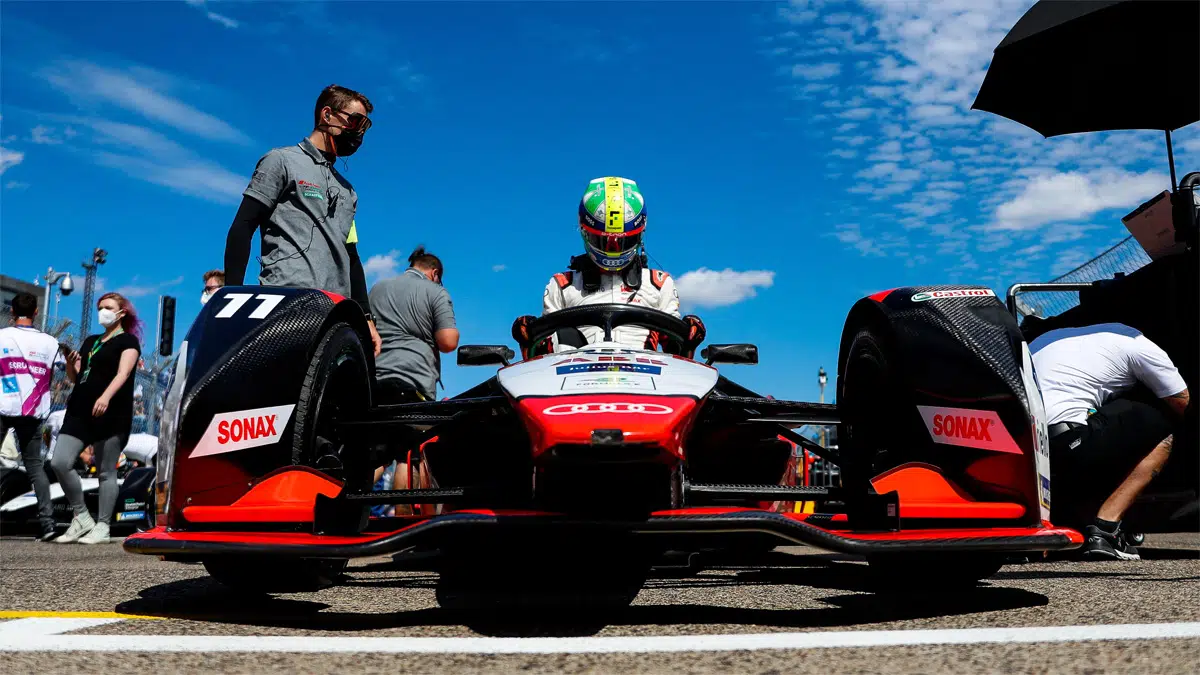
Racing driver Lucas di Grassi in the Audi e-tron F07. Image source: Audi Media Center

Racing driver Lucas di Grassi in the Audi e-tron F07. Image source: Audi Media Center

Würth Elektronik technology partnership with Audi Sport ABT Schaeffler comes to an end.

Würth Elektronik looks back on seven years of successful partnership with the Audi Sport ABT Schaeffler racing team. At the final race on August 14 and 15, 2021 in Berlin, Lucas di Grassi finished in 7th place and René Rast in 13th place. With a team score of 4th place, Team Audi Sport ABT Schaeffler bows out of Formula E. Würth Elektronik has been involved as a technology partner since the first season. For the manufacturer of electronic and electromechanical components, a period of successful commitment to the most dynamic form of e-mobility draws to a close.

RelatedPosts

Inductor Technology Dossier

Coilcraft Releases TLVR Inductors for High Density VRMs and PoL Converters

Rutheniums Critical Role in Passive Component Supply Chains

“Together with Audi Sport ABT Schaeffler, we have experienced many exciting races and emotional moments and take pleasure in the very successful partnership that has evolved over the years,” said Alexander Gerfer, CTO of the Würth Elektronik eisos Group. “With the developments in the field of e-mobility, we have provided impetus to accentuate the need for a change of mindset and to respond to climate change with new technologies. Our aspiration is to achieve the best results for our components and to discover where we can further improve their performance in order to bring our own expertise and innovations into series production. At the same time, the challenges of our partners and customers drive us forward, however. And that’s how it was in Formula E too.”

Electronics for ultra heavy-duty use

The more individual the racing cars were allowed to become over the course of the race series, the more intense the cooperation became. One last highlight of the 2019/20 season: With its WE-AGDT “Auxilliary Gate Drive Transformer” made of silicon carbide, Würth Elektronik provided a highly efficient, lightweight and space-saving component with a significantly higher switching frequency than comparable products. It is part of the innovative MGU05 powertrain from the Audi e-tron F07, which has now seen its last Formula E race. Besides joint developments and the use of components like the REDcube high-current contacts in vibration-resistant press-fit technology, Würth Elektronik also provided spontaneous assistance: It was only in the electronics manufacturer’s lab that the fault could be found, which had led to vehicle failures at the start of the fourth season. A spectacular catch-up chase then ensued, which ended with winning the Team Championship title.

“In 2014, as the only German team to compete in the newly founded FIA Formula E World Championship, Würth Elektronik was our partner back then and has remained so until today. The collaboration was excellent and together we advanced e-mobility as a racing sport. I say thank you,” says Hans-Jürgen Abt, Managing Director of ABT Sportsline GmbH.

“We look back with pleasure on seven years together full of goose bump moments, mutual trust, deep bonding and a shared passion for eMotorsport,” Harry Unflath, Head of Sports Marketing at ABT Sportsline GmbH adds.

Oliver Opitz, Vice President of Wireless Connectivity & Sensors and initiator of Würth Elektronik’s commitment with ABT Sportsline in Formula E, had the right connection to ABT: “From the very beginning, it was important for us to promote and help shape an innovative project for the future. We shared Hans-Jürgen Abt’s pioneering spirit, and we were immediately impressed by his willingness to take risks, his courage and curiosity to embark on something groundbreaking. That’s why ABT Sportsline became an important and valuable technology partner for us back in 2014, enabling us to accelerate technical developments and to grow with the FIA Formula E race series. Thank you very much for the strong partnership that has grown between us.”
Related

Source: Würth Elektronik

Recent Posts

Inductor Technology Dossier

19.3.2026
3

Coilcraft Releases TLVR Inductors for High Density VRMs and PoL Converters

19.3.2026
9

Vishay Introduced Space-Grade SMT Common Mode Choke

19.3.2026
6

Exxelia to Exhibit at APEC 2026 in San Antonio, Texas

17.3.2026
26

Würth Elektronik Presents Differential Pressure Sensor for HVAC and Medical

17.3.2026
8

Thermal Modeling of Magnetics

16.3.2026
12

ESA SPCD 26 Call for Papers Extended to 30th March

16.3.2026
80

Standard vs Planar LLC transformers Comparison for Battery Chargers

13.3.2026
27

Würth Elektronik and Grinn Launch Edge AI Cooperation

13.3.2026
15

Upcoming Events

Mar 21
All day

PSMA Capacitor Workshop 2026

Mar 24
9:00 - 10:00 CET

Power protection in the digital age – eFuse and hot-swap strategies for modern data center design

Apr 21
16:00 - 17:00 CEST

Heatsink Solutions: Thermal Management in electronic devices

View Calendar

Popular Posts

  • Buck Converter Design and Calculation

    0 shares
    Share 0 Tweet 0
  • Boost Converter Design and Calculation

    0 shares
    Share 0 Tweet 0
  • Flyback Converter Design and Calculation

    0 shares
    Share 0 Tweet 0
  • LLC Resonant Converter Design and Calculation

    0 shares
    Share 0 Tweet 0
  • MLCC Manufacturers Consider Price Increase as AI Demand Outpaces Supply

    0 shares
    Share 0 Tweet 0
  • MLCC and Ceramic Capacitors

    0 shares
    Share 0 Tweet 0
  • Dual Active Bridge (DAB) Topology

    0 shares
    Share 0 Tweet 0
  • Ripple Current and its Effects on the Performance of Capacitors

    3 shares
    Share 3 Tweet 0
  • MLCC Case Sizes Standards Explained

    0 shares
    Share 0 Tweet 0
  • What is a Dielectric Constant and DF of Plastic Materials?

    4 shares
    Share 4 Tweet 0

Newsletter Subscription


Passive Components Blog

© EPCI - Leading Passive Components Educational and Information Site

  • Home
  • Privacy Policy
  • EPCI Membership & Advertisement
  • About

No Result
View All Result
  • Home
  • Knowledge Blog
  • PCNS

© EPCI - Leading Passive Components Educational and Information Site

This website uses cookies. By continuing to use this website you are giving consent to cookies being used. Visit our Privacy and Cookie Policy.
Go to mobile version