







Passive Components Blog
No Result
View All Result
  • Home
  • NewsFilter
    • All
    • Aerospace & Defence
    • Antenna
    • Applications
    • Automotive
    • Capacitors
    • Circuit Protection Devices
    • electro-mechanical news
    • Filters
    • Fuses
    • Inductors
    • Industrial
    • Integrated Passives
    • inter-connect news
    • Market & Supply Chain
    • Market Insights
    • Medical
    • Modelling and Simulation
    • New Materials & Supply
    • New Technologies
    • Non-linear Passives
    • Oscillators
    • Passive Sensors News
    • Resistors
    • RF & Microwave
    • Telecommunication
    • Weekly Digest

    RF Inductors: Selection and Design Challenges for High-Frequency Circuits

    Wk 45 Electronics Supply Chain Digest

    Transformer Safety IEC 61558 Standard

    ESR of Capacitors, Measurements and Applications

    Murata Christophe Pottier Appointed President of EPCIA

    3-Phase EMI Filter Design, Simulation, Calculation and Test

    YAGEO Unveils Compact 2.4 GHz SMD Antenna

    KYOCERA AVX Releases Antenna for Iridium Satellite IoT Applications

    Molex Releases Industry-First Quad-Row Board-to-Board Connectors with EMI Shields

    Trending Tags

    • Ripple Current
    • RF
    • Leakage Current
    • Tantalum vs Ceramic
    • Snubber
    • Low ESR
    • Feedthrough
    • Derating
    • Dielectric Constant
    • New Products
    • Market Reports
  • VideoFilter
    • All
    • Antenna videos
    • Capacitor videos
    • Circuit Protection Video
    • Filter videos
    • Fuse videos
    • Inductor videos
    • Inter-Connect Video
    • Non-linear passives videos
    • Oscillator videos
    • Passive sensors videos
    • Resistor videos

    RF Inductors: Selection and Design Challenges for High-Frequency Circuits

    Transformer Safety IEC 61558 Standard

    3-Phase EMI Filter Design, Simulation, Calculation and Test

    Transformer Design Optimization for Power Electronics Applications

    Common Mode Chokes Selection for RF Circuits in Next-Generation Communication Systems

    Capacitor Self-balancing in a Flying-Capacitor Buck Converter

    How to Select Ferrite Bead for Filtering in Buck Boost Converter

    Power Inductors Future: Minimal Losses and Compact Designs

    Percolation Phenomenon: Degradation of Molded Power Inductors in DC/DC Converters

    Trending Tags

    • Capacitors explained
    • Inductors explained
    • Resistors explained
    • Filters explained
    • Application Video Guidelines
    • EMC
    • New Products
    • Ripple Current
    • Simulation
    • Tantalum vs Ceramic
  • Knowledge Blog
  • Suppliers
    • Who is Who
  • PCNS
    • PCNS 2025
    • PCNS 2023
    • PCNS 2021
    • PCNS 2019
    • PCNS 2017
  • Events
  • Home
  • NewsFilter
    • All
    • Aerospace & Defence
    • Antenna
    • Applications
    • Automotive
    • Capacitors
    • Circuit Protection Devices
    • electro-mechanical news
    • Filters
    • Fuses
    • Inductors
    • Industrial
    • Integrated Passives
    • inter-connect news
    • Market & Supply Chain
    • Market Insights
    • Medical
    • Modelling and Simulation
    • New Materials & Supply
    • New Technologies
    • Non-linear Passives
    • Oscillators
    • Passive Sensors News
    • Resistors
    • RF & Microwave
    • Telecommunication
    • Weekly Digest

    RF Inductors: Selection and Design Challenges for High-Frequency Circuits

    Wk 45 Electronics Supply Chain Digest

    Transformer Safety IEC 61558 Standard

    ESR of Capacitors, Measurements and Applications

    Murata Christophe Pottier Appointed President of EPCIA

    3-Phase EMI Filter Design, Simulation, Calculation and Test

    YAGEO Unveils Compact 2.4 GHz SMD Antenna

    KYOCERA AVX Releases Antenna for Iridium Satellite IoT Applications

    Molex Releases Industry-First Quad-Row Board-to-Board Connectors with EMI Shields

    Trending Tags

    • Ripple Current
    • RF
    • Leakage Current
    • Tantalum vs Ceramic
    • Snubber
    • Low ESR
    • Feedthrough
    • Derating
    • Dielectric Constant
    • New Products
    • Market Reports
  • VideoFilter
    • All
    • Antenna videos
    • Capacitor videos
    • Circuit Protection Video
    • Filter videos
    • Fuse videos
    • Inductor videos
    • Inter-Connect Video
    • Non-linear passives videos
    • Oscillator videos
    • Passive sensors videos
    • Resistor videos

    RF Inductors: Selection and Design Challenges for High-Frequency Circuits

    Transformer Safety IEC 61558 Standard

    3-Phase EMI Filter Design, Simulation, Calculation and Test

    Transformer Design Optimization for Power Electronics Applications

    Common Mode Chokes Selection for RF Circuits in Next-Generation Communication Systems

    Capacitor Self-balancing in a Flying-Capacitor Buck Converter

    How to Select Ferrite Bead for Filtering in Buck Boost Converter

    Power Inductors Future: Minimal Losses and Compact Designs

    Percolation Phenomenon: Degradation of Molded Power Inductors in DC/DC Converters

    Trending Tags

    • Capacitors explained
    • Inductors explained
    • Resistors explained
    • Filters explained
    • Application Video Guidelines
    • EMC
    • New Products
    • Ripple Current
    • Simulation
    • Tantalum vs Ceramic
  • Knowledge Blog
  • Suppliers
    • Who is Who
  • PCNS
    • PCNS 2025
    • PCNS 2023
    • PCNS 2021
    • PCNS 2019
    • PCNS 2017
  • Events
No Result
View All Result
Passive Components Blog
No Result
View All Result

Samsung Electro-Mechanics Introduces Industry’s First Thin-Film Coupled Power Inductor into Mass Production

14.9.2023
Reading Time: 3 mins read
A A

Samsung Electro-Mechanics announced on September 10 that it will mass-produce coupled power inductors, which feature two power inductors on a single chip, and will target the market by expanding its high-end product lineup.

Power inductors, referred to as the “second MLCC,” are core electronic components that are applied to power circuits to convert electricity (power) from batteries into power required by semiconductors and stably supply current.

RelatedPosts

RF Inductors: Selection and Design Challenges for High-Frequency Circuits

Wk 45 Electronics Supply Chain Digest

Transformer Safety IEC 61558 Standard

Samsung Electro-Mechanics has developed two types of coupled power inductors with low losses and DCR resistance value (a characteristic that hinders the flow of current): the 2016 size (2.0 mm wide and 1.6 mm long) and the 2218 size (2.2 mm wide and 1.8 mm long).

These products are mounted near the CPU (central processing unit), which serves as the brain of a PC, to provide stable current to the CPU. In particular, the higher the performance of the CPU, the more current it uses, so a power inductor with low power loss is required.

Power inductors consume power based on the resistance value of the coils wound inside. The greater the resistance, the greater the power consumed.

Previously, two power inductors were connected in parallel to reduce the resistance value, but this has the disadvantage of increasing the number of components and limiting the freedom of circuit design.

Samsung Electro-Mechanics has applied a coupled structure with two coils stacked on top of each other to realize a single chip. Coupled power inductors are one of the most difficult technologies to implement among power inductor products due to issues such as insulation between coils and magnetic field interference.

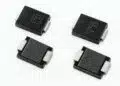
Samsung Electro-Mechanics’ coupled power inductor is a thin-film type product formed by electroplating thin coil shapes on a package substrate and is characterized by superior electrical properties such as insulation (less electromagnetic interference) and resistance value than competing products that are made by directly winding coils on magnetic materials (objects with magnetic properties).

Samsung Electro-Mechanics independently developed a magnetic material with excellent properties and low loss based on the material technology accumulated through MLCC and applied the photosensitization method (a manufacturing method that uses light to engrave circuits) used in semiconductor package substrate manufacturing to precisely create the spacing between the two coils to minimize changes in product properties due to the environment.

The power inductor market size is expected to reach approximately USD 3.65 billion (KRW 4.85 trillion) by 2028, at a CAGR of approximately 9%. The power inductor market is expected to grow steadily centered on high-performance products due to the increasing demand for high-performance and multifunctionalization of electronic devices and the expansion of the automotive industry such as autonomous driving and electric vehicles.

“Power inductors are becoming a key component in differentiating the performance of semiconductors as the demand for higher specifications and higher performance of semiconductors continues,” said Chang Duckhyun, CEO of Samsung Electro-Mechanics. “Samsung Electro-Mechanics will develop differentiated products based on the world’s best materials and process technologies to become a top-tier tech company leading the power inductor market.”

In December of last year, Samsung Electro-Mechanics implemented an organizational change that elevated the ‘Electronic Component Team’ in charge of power inductors, which is being developed as the second MLCC, to the ‘Electronic Component Business Team,’ and is embarking on a full-scale business expansion.

Related

Source: Samsung Electr-Mechanics

Recent Posts

RF Inductors: Selection and Design Challenges for High-Frequency Circuits

10.11.2025
23

Transformer Safety IEC 61558 Standard

7.11.2025
8

3-Phase EMI Filter Design, Simulation, Calculation and Test

6.11.2025
48

Molex Releases Industry-First Quad-Row Board-to-Board Connectors with EMI Shields

6.11.2025
9

Capacitor Lead Times: October 2025

6.11.2025
66

Coilcraft Introduces Ultra-Low Loss Shielded Power Inductors

6.11.2025
15

Würth Elektronik Expands its MagI³C-VDMM MicroModules

5.11.2025
13

Exxelia Presents Smart Integrated Magnetics Solution at Space Tech Expo 2025 

5.11.2025
16

Littelfuse Releases Load-Powered Compact Relay

5.11.2025
16

Upcoming Events

Nov 11
17:00 - 18:00 CET

Industrial Applications Demand More from Interconnects in Next-Gen Designs

Nov 12
11:00 - 12:00 CET

PCB Design: Impedance is for everyone!

Nov 12
November 12 @ 12:00 - November 13 @ 14:15 EST

Microelectronic Packaging Failure Modes and Analysis

View Calendar

Popular Posts

  • Buck Converter Design and Calculation

    0 shares
    Share 0 Tweet 0
  • Boost Converter Design and Calculation

    0 shares
    Share 0 Tweet 0
  • LLC Resonant Converter Design and Calculation

    0 shares
    Share 0 Tweet 0
  • Flyback Converter Design and Calculation

    0 shares
    Share 0 Tweet 0
  • Ripple Current and its Effects on the Performance of Capacitors

    3 shares
    Share 3 Tweet 0
  • MLCC and Ceramic Capacitors

    0 shares
    Share 0 Tweet 0
  • Dual Active Bridge (DAB) Topology

    0 shares
    Share 0 Tweet 0
  • What is a Dielectric Constant and DF of Plastic Materials?

    4 shares
    Share 4 Tweet 0
  • SEPIC Converter Design and Calculation

    0 shares
    Share 0 Tweet 0
  • Flying Capacitors

    0 shares
    Share 0 Tweet 0

Newsletter Subscription


Passive Components Blog

© EPCI - Leading Passive Components Educational and Information Site

  • Home
  • Privacy Policy
  • EPCI Membership & Advertisement
  • About

No Result
View All Result
  • Home
  • Knowledge Blog
  • PCNS

© EPCI - Leading Passive Components Educational and Information Site

This website uses cookies. By continuing to use this website you are giving consent to cookies being used. Visit our Privacy and Cookie Policy.
Go to mobile version