




Passive Components Blog
No Result
View All Result
  • Home
  • NewsFilter
    • All
    • Aerospace & Defence
    • Antenna
    • Applications
    • Automotive
    • Capacitors
    • Circuit Protection Devices
    • electro-mechanical news
    • Filters
    • Fuses
    • Inductors
    • Industrial
    • Integrated Passives
    • inter-connect news
    • Market & Supply Chain
    • Market Insights
    • Medical
    • Modelling and Simulation
    • New Materials & Supply
    • New Technologies
    • Non-linear Passives
    • Oscillators
    • Passive Sensors News
    • Resistors
    • RF & Microwave
    • Telecommunication
    • Weekly Digest

    Electrocaloric Multilayer Capacitors: Towards Quiet, Solid‑State Cooling Around Room Temperature

    High-Crystallinity Nanocrystalline Composites for MHz Chip Inductors

    European Components Distribution Shows Strong Q1 2026 Growth Amid Geopolitical Uncertainty

    Stackpole Expanded its AlN Thick Film Chip Resistors

    KYOCERA 10 µF 0201 MLCC Brings High‑Capacitance into Mobile Designs

    Würth Elektronik Introduces Compact Flat-wire SMT Power Inductors for Automotive

    KYOCERA AVX Extends MLV Varistors for 48V Automotive Protection

    Energy Localization in Tantalum Anode Formation: A Structural Perspective

    Wk 18 Electronics Supply Chain Digest

    Trending Tags

    • Ripple Current
    • RF
    • Leakage Current
    • Tantalum vs Ceramic
    • Snubber
    • Low ESR
    • Feedthrough
    • Derating
    • Dielectric Constant
    • New Products
    • Market Reports
  • VideoFilter
    • All
    • Antenna videos
    • Capacitor videos
    • Circuit Protection Video
    • Filter videos
    • Fuse videos
    • Inductor videos
    • Inter-Connect Video
    • Non-linear passives videos
    • Oscillator videos
    • Passive sensors videos
    • Resistor videos

    Modeling Fringing Field Losses in Inductors & Transformers

    Why Power Inductors Use a Ferrite Core With an Air Gap

    Transformer-Based Power-Line Harvester Magnetic Design

    Thermal Modeling of Magnetics

    Standard vs Planar LLC transformers Comparison for Battery Chargers

    How Modern Tools Model Magnetic Components for Power Electronics

    Advanced Loss Modeling for Planar Magnetics in the Frenetic Planar Tool

    2026 Power Magnetics Design Trends: Flyback, DAB and Planar

    Enabling Software‑Defined Vehicle Architectures: Automotive Ethernet and Zonal Smart Power

    Trending Tags

    • Capacitors explained
    • Inductors explained
    • Resistors explained
    • Filters explained
    • Application Video Guidelines
    • EMC
    • New Products
    • Ripple Current
    • Simulation
    • Tantalum vs Ceramic
  • Knowledge Blog
  • DossiersNew
  • Suppliers
    • Who is Who
  • PCNS
    • PCNS 2025
    • PCNS 2023
    • PCNS 2021
    • PCNS 2019
    • PCNS 2017
  • Events
  • Home
  • NewsFilter
    • All
    • Aerospace & Defence
    • Antenna
    • Applications
    • Automotive
    • Capacitors
    • Circuit Protection Devices
    • electro-mechanical news
    • Filters
    • Fuses
    • Inductors
    • Industrial
    • Integrated Passives
    • inter-connect news
    • Market & Supply Chain
    • Market Insights
    • Medical
    • Modelling and Simulation
    • New Materials & Supply
    • New Technologies
    • Non-linear Passives
    • Oscillators
    • Passive Sensors News
    • Resistors
    • RF & Microwave
    • Telecommunication
    • Weekly Digest

    Electrocaloric Multilayer Capacitors: Towards Quiet, Solid‑State Cooling Around Room Temperature

    High-Crystallinity Nanocrystalline Composites for MHz Chip Inductors

    European Components Distribution Shows Strong Q1 2026 Growth Amid Geopolitical Uncertainty

    Stackpole Expanded its AlN Thick Film Chip Resistors

    KYOCERA 10 µF 0201 MLCC Brings High‑Capacitance into Mobile Designs

    Würth Elektronik Introduces Compact Flat-wire SMT Power Inductors for Automotive

    KYOCERA AVX Extends MLV Varistors for 48V Automotive Protection

    Energy Localization in Tantalum Anode Formation: A Structural Perspective

    Wk 18 Electronics Supply Chain Digest

    Trending Tags

    • Ripple Current
    • RF
    • Leakage Current
    • Tantalum vs Ceramic
    • Snubber
    • Low ESR
    • Feedthrough
    • Derating
    • Dielectric Constant
    • New Products
    • Market Reports
  • VideoFilter
    • All
    • Antenna videos
    • Capacitor videos
    • Circuit Protection Video
    • Filter videos
    • Fuse videos
    • Inductor videos
    • Inter-Connect Video
    • Non-linear passives videos
    • Oscillator videos
    • Passive sensors videos
    • Resistor videos

    Modeling Fringing Field Losses in Inductors & Transformers

    Why Power Inductors Use a Ferrite Core With an Air Gap

    Transformer-Based Power-Line Harvester Magnetic Design

    Thermal Modeling of Magnetics

    Standard vs Planar LLC transformers Comparison for Battery Chargers

    How Modern Tools Model Magnetic Components for Power Electronics

    Advanced Loss Modeling for Planar Magnetics in the Frenetic Planar Tool

    2026 Power Magnetics Design Trends: Flyback, DAB and Planar

    Enabling Software‑Defined Vehicle Architectures: Automotive Ethernet and Zonal Smart Power

    Trending Tags

    • Capacitors explained
    • Inductors explained
    • Resistors explained
    • Filters explained
    • Application Video Guidelines
    • EMC
    • New Products
    • Ripple Current
    • Simulation
    • Tantalum vs Ceramic
  • Knowledge Blog
  • DossiersNew
  • Suppliers
    • Who is Who
  • PCNS
    • PCNS 2025
    • PCNS 2023
    • PCNS 2021
    • PCNS 2019
    • PCNS 2017
  • Events
No Result
View All Result
Passive Components Blog
No Result
View All Result

TDK Releases Automotive Grade High-Current Power Inductors

25.10.2022
Reading Time: 2 mins read
A A

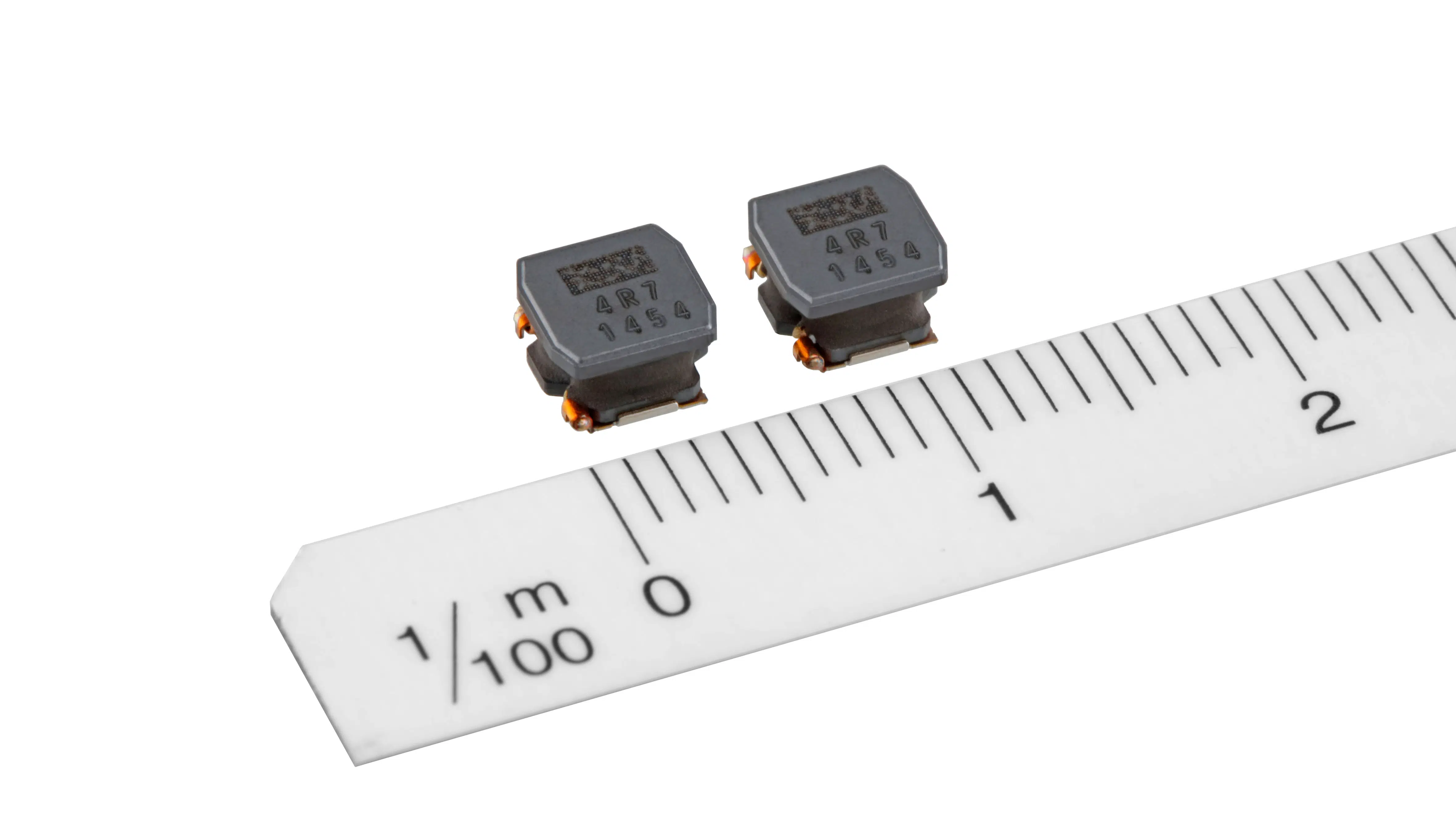
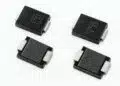
TDK Corporation has announced the introduction of its new VLS5030EX-D type power inductor (5.3 x 5.0 x 3.0mm (L x W x H)) as part of the VLS-EX-D Series of wound ferrite power inductors automotive power circuits.

These compact components provide excellent DC superposition characteristics with an assured performance at temperatures of up to 150℃. These inductors are suitable for headlights, airbags, electric power steering (EPS), advanced driver-assistance systems (ADAS), engine control units (ECUs), and various other power circuit applications.

RelatedPosts

TDK Introduces High‑Voltage Common‑Mode Chokes for Compact 1250 V DC Converters

TDK Releases Ultra‑small EMI Noise Suppression Filters

TDK and Nippon Chemical Launch Joint Venture for MLCC Materials

Mass production of these new inductors began in October 2022.

Recently, there has been a rise in the number of ECUs mounted under the hood for the electrification of various automotive control functions, as well as for infotainment, autonomous driving, and other applications.

The compact components support automotive power over-coax (PoC) implementations with an excellent DC superposition characteristic for transmitting data as well as supplying power, fulfilling the needs of, for example, advanced driver-assistance systems (ADAS) that employ low-voltage differential signaling (LVDS) transmission. In addition, as the IC’s processing capability increases, a higher current is required, and the VLS-EX-D series contributes to these specifications.

The new VLS-EX-D series of inductors achieves a higher-rated current compared to TDK’s standard VLS-EX-H series. These improvements are achieved by using TDK’s innovative metallic magnetic material for the magnetic shielding function. Specifically, for the VLS5030EX-D inductor, the rated Isat is 3.3 A at 4.7 μH, which is an increase of approximately 6 % from standard parts of the same size – 5.3 x 5.0 x 3.0 ㎜ (L x W x H). Moreover, thanks to the welding method used for connecting the wire winding to the external electrodes, high reliability is implemented for reflow and use in high-temperature environments.

TDK will continue expanding the VLS-EX-D series product portfolio to cater to needs for a wide range of automotive applications, centering on ADAS, and will meet the requirements of customers.

Features

  • Supporting temperatures of up to 150 ℃ for under-the-hood power circuit applications
  • Implementing a DC superposition characteristic with high-rated current by using TDK’s innovative metallic magnetic material for the magnetic shielding function
  • Achieving high reliability by employing the wire connection structure in which wires and terminals are welded
  • Compliant with AEC-Q200 Rev D for automotive applications

Applications

  • Automotive power supply circuits for ADAS, EPS, PoC, various types of ECU, etc.
Related

Source: TDK

Recent Posts

High-Crystallinity Nanocrystalline Composites for MHz Chip Inductors

7.5.2026
28

Würth Elektronik Introduces Compact Flat-wire SMT Power Inductors for Automotive

5.5.2026
43

KYOCERA AVX Extends MLV Varistors for 48V Automotive Protection

5.5.2026
17

YAGEO Introduces C0G Flexible Termination Automotive MLCCs

30.4.2026
28

Murata Introduces Crystal and NTC Set for Automotive UWB Timing

30.4.2026
24

Modeling Fringing Field Losses in Inductors & Transformers

30.4.2026
43

Modelithics Releases COMPLETE v26.1 for Keysight ADS

23.4.2026
20

April 2026 Interconnect, Passives and Electromechanical Components Market Insights

22.4.2026
125

KYOCERA AVX Introduces Traction‑Grade DC Link Film Capacitors

21.4.2026
59

Upcoming Events

May 12
8:00 - 15:00 CEST

ESCC Space Splice connectors

May 12
16:00 - 17:00 CEST

Accelerating Power Supply Design with Wurth Elektronik and STMicroelectronics

May 19
16:00 - 17:00 CEST

Designing Qi2 Wireless Power Systems: Practical Development and EMC Optimization

View Calendar

Popular Posts

  • Buck Converter Design and Calculation

    0 shares
    Share 0 Tweet 0
  • Boost Converter Design and Calculation

    0 shares
    Share 0 Tweet 0
  • Flyback Converter Design and Calculation

    0 shares
    Share 0 Tweet 0
  • LLC Resonant Converter Design and Calculation

    0 shares
    Share 0 Tweet 0
  • MLCC and Ceramic Capacitors

    0 shares
    Share 0 Tweet 0
  • Dual Active Bridge (DAB) Topology

    0 shares
    Share 0 Tweet 0
  • Capacitor Charging and Discharging

    0 shares
    Share 0 Tweet 0
  • What Electronics Engineer Needs to Know About Passive Low Pass Filters

    0 shares
    Share 0 Tweet 0
  • Ripple Current and its Effects on the Performance of Capacitors

    3 shares
    Share 3 Tweet 0
  • MLCC Case Sizes Standards Explained

    0 shares
    Share 0 Tweet 0

Newsletter Subscription


Passive Components Blog

© EPCI - Leading Passive Components Educational and Information Site

  • Home
  • Privacy Policy
  • EPCI Membership & Advertisement
  • About

No Result
View All Result
  • Home
  • Knowledge Blog
  • PCNS

© EPCI - Leading Passive Components Educational and Information Site

This website uses cookies. By continuing to use this website you are giving consent to cookies being used. Visit our Privacy and Cookie Policy.
Go to mobile version