


Passive Components Blog
No Result
View All Result
  • Home
  • NewsFilter
    • All
    • Aerospace & Defence
    • Antenna
    • Applications
    • Automotive
    • Capacitors
    • Circuit Protection Devices
    • electro-mechanical news
    • Filters
    • Fuses
    • Inductors
    • Industrial
    • Integrated Passives
    • inter-connect news
    • Market & Supply Chain
    • Market Insights
    • Medical
    • Modelling and Simulation
    • New Materials & Supply
    • New Technologies
    • Non-linear Passives
    • Oscillators
    • Passive Sensors News
    • Resistors
    • RF & Microwave
    • Telecommunication
    • Weekly Digest

    TDK Releases High Performance 105C DC Link Film Capacitors

    YAGEO Offers Automotive MOVs for EV and AI power

    YAGEO Acquires 100% of Shares of Shibaura Electronics

    Wk 3 Electronics Supply Chain Digest

    Vishay Extends Aluminum Capacitors Rating Up to 600 V for DC Links

    Würth Elektronik Introduces Product Navigator for Passive Components

    Panasonic Passive Components for Reliable Robotic Arms

    Littelfuse Unveils Ultra-Low-Power TMR Magnetic Switches

    DC/DC Push‑Pull Converter vs PSFB Design Guide

    Trending Tags

    • Ripple Current
    • RF
    • Leakage Current
    • Tantalum vs Ceramic
    • Snubber
    • Low ESR
    • Feedthrough
    • Derating
    • Dielectric Constant
    • New Products
    • Market Reports
  • VideoFilter
    • All
    • Antenna videos
    • Capacitor videos
    • Circuit Protection Video
    • Filter videos
    • Fuse videos
    • Inductor videos
    • Inter-Connect Video
    • Non-linear passives videos
    • Oscillator videos
    • Passive sensors videos
    • Resistor videos

    One‑Pulse Characterization of Nonlinear Power Inductors

    Thermistor Linearization Challenges

    Coaxial Connectors and How to Connect with PCB

    PCB Manufacturing, Test Methods, Quality and Reliability

    Transformer Behavior – Current Transfer and Hidden Feedback

    Choosing the Right Capacitor: The Importance of Accurate Measurements

    RF Inductors: Selection and Design Challenges for High-Frequency Circuits

    Transformer Safety IEC 61558 Standard

    3-Phase EMI Filter Design, Simulation, Calculation and Test

    Trending Tags

    • Capacitors explained
    • Inductors explained
    • Resistors explained
    • Filters explained
    • Application Video Guidelines
    • EMC
    • New Products
    • Ripple Current
    • Simulation
    • Tantalum vs Ceramic
  • Knowledge Blog
  • Suppliers
    • Who is Who
  • PCNS
    • PCNS 2025
    • PCNS 2023
    • PCNS 2021
    • PCNS 2019
    • PCNS 2017
  • Events
  • Home
  • NewsFilter
    • All
    • Aerospace & Defence
    • Antenna
    • Applications
    • Automotive
    • Capacitors
    • Circuit Protection Devices
    • electro-mechanical news
    • Filters
    • Fuses
    • Inductors
    • Industrial
    • Integrated Passives
    • inter-connect news
    • Market & Supply Chain
    • Market Insights
    • Medical
    • Modelling and Simulation
    • New Materials & Supply
    • New Technologies
    • Non-linear Passives
    • Oscillators
    • Passive Sensors News
    • Resistors
    • RF & Microwave
    • Telecommunication
    • Weekly Digest

    TDK Releases High Performance 105C DC Link Film Capacitors

    YAGEO Offers Automotive MOVs for EV and AI power

    YAGEO Acquires 100% of Shares of Shibaura Electronics

    Wk 3 Electronics Supply Chain Digest

    Vishay Extends Aluminum Capacitors Rating Up to 600 V for DC Links

    Würth Elektronik Introduces Product Navigator for Passive Components

    Panasonic Passive Components for Reliable Robotic Arms

    Littelfuse Unveils Ultra-Low-Power TMR Magnetic Switches

    DC/DC Push‑Pull Converter vs PSFB Design Guide

    Trending Tags

    • Ripple Current
    • RF
    • Leakage Current
    • Tantalum vs Ceramic
    • Snubber
    • Low ESR
    • Feedthrough
    • Derating
    • Dielectric Constant
    • New Products
    • Market Reports
  • VideoFilter
    • All
    • Antenna videos
    • Capacitor videos
    • Circuit Protection Video
    • Filter videos
    • Fuse videos
    • Inductor videos
    • Inter-Connect Video
    • Non-linear passives videos
    • Oscillator videos
    • Passive sensors videos
    • Resistor videos

    One‑Pulse Characterization of Nonlinear Power Inductors

    Thermistor Linearization Challenges

    Coaxial Connectors and How to Connect with PCB

    PCB Manufacturing, Test Methods, Quality and Reliability

    Transformer Behavior – Current Transfer and Hidden Feedback

    Choosing the Right Capacitor: The Importance of Accurate Measurements

    RF Inductors: Selection and Design Challenges for High-Frequency Circuits

    Transformer Safety IEC 61558 Standard

    3-Phase EMI Filter Design, Simulation, Calculation and Test

    Trending Tags

    • Capacitors explained
    • Inductors explained
    • Resistors explained
    • Filters explained
    • Application Video Guidelines
    • EMC
    • New Products
    • Ripple Current
    • Simulation
    • Tantalum vs Ceramic
  • Knowledge Blog
  • Suppliers
    • Who is Who
  • PCNS
    • PCNS 2025
    • PCNS 2023
    • PCNS 2021
    • PCNS 2019
    • PCNS 2017
  • Events
No Result
View All Result
Passive Components Blog
No Result
View All Result

TDK releases high-temperature and high-current power inductors for LED headlights

4.9.2019
Reading Time: 2 mins read
A A

Source: TDK news

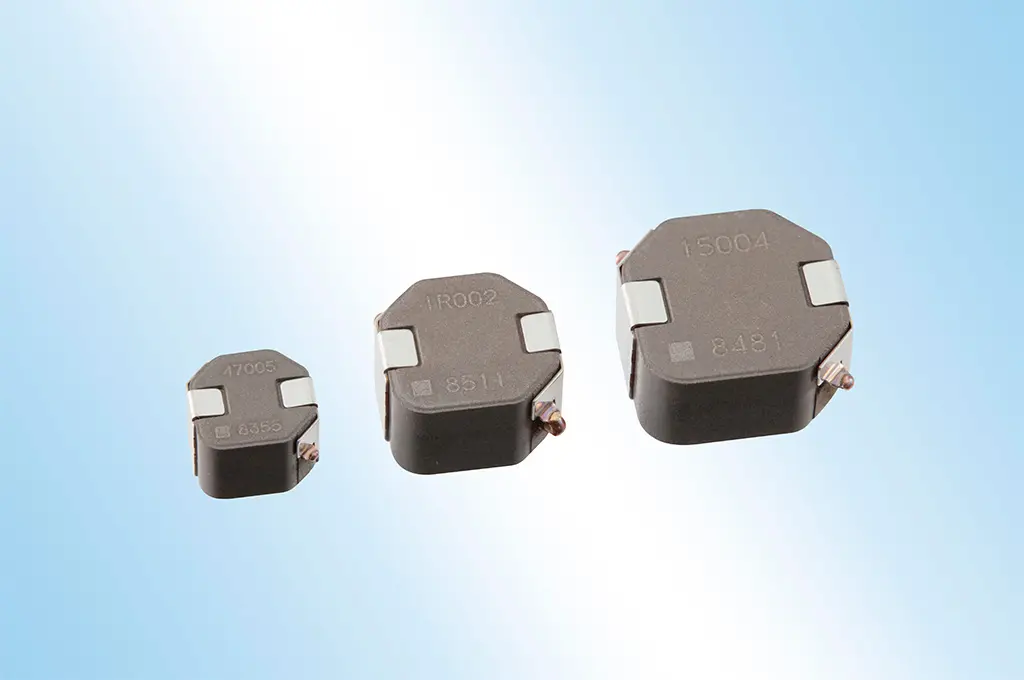
TDK Corporation has expanded its lineup of metal core power inductors with the new SPM-VT series that is designed especially for the high thermal and current demands of automotive LED headlights.

RelatedPosts

TDK Releases High Performance 105C DC Link Film Capacitors

YAGEO Offers Automotive MOVs for EV and AI power

YAGEO Acquires 100% of Shares of Shibaura Electronics

These wire-wound power inductors feature both a broad operating temperature range from -55 °C up to +155 °C and high rated currents from 4.7 A to 36.6 A (Isat), depending on type. The new components are qualified to AEC-Q200 and are initially available in three sizes: 7.5 x 7.0 x 5.4 mm, 10.5 x 10.0 x 6.5 mm and 13.0 x 12.5 x 6.5 mm. Their rated inductances range from 1 µH to 47 µH, depending on type. Mass production starts in September 2019.

The SPM-VT series is based on TDK’s innovative metallic magnetic material technology that enables a high magnetic saturation density and robust structural design. These metal core power inductors boast superior DC superposition characteristics in a compact size and feature a rated current that is approximately two to three times higher than that of comparable high-temperature products based on ferrite core materials.

Modern adaptive LED headlights typically use one and the same control circuit to drive all LED headlight functions such as low and high beams, daytime running lights and curve lighting. Thanks to their low power consumption and multifunctionality, LED headlights are now rapidly replacing conventional halogen and HID headlights. The DC-DC converters in the power circuits of LED headlights use power inductors, and as the functionality of the headlights increases, the number of inductors needed is also growing.

The new SPM-VT series meets the automotive industry’s demand for compact, high-performance power inductors that can support high currents and withstand high temperatures. TDK will continue to expand the SPM power inductor lineup to include more miniaturized inductors with dimensions of 7.0 x 6.5 x 4.5 mm and 5.3 x 5.1 x 3.0 mm, for example.

Main applications

  • Automotive LED headlights
  • Power circuits for various automotive ECUs

Main features and benefits

  • Broad operating temperature range from -55 up to +155 °C for high heat resistance in automotive LED headlight applications
  • Superior DC superposition characteristics based on metallic magnetic materials
  • Rated current approximately two to three times higher than comparable ferrite core power inductors
  • Qualified to AEC-Q200

Key data

Type Dimensions
[mm]
Inductance
[μH]
DC resistance
[mΩ] max.
Rated current [A]
Isat* Itemp**
SPM7054VT-470M-D 7.5 x 7.0 x 5.4 47±20% 162±10% 4.7 2.5
SPM10065VT-1R0M-D 10.5 x 10.0 x 6.5 1.0±20% 2.4±10% 36.6 22.9
SPM12565VT-150M-D 13.0 x 12.5 x 6.5 15±20% 20.9±10% 14.2 8.5

* Isat: Based on the inductance change rate (30% lower than the initial figures)

** Itemp: Based on a temperature increase of 40 K
Related

Recent Posts

TDK Releases High Performance 105C DC Link Film Capacitors

19.1.2026
5

YAGEO Offers Automotive MOVs for EV and AI power

19.1.2026
4

Vishay Extends Aluminum Capacitors Rating Up to 600 V for DC Links

15.1.2026
23

Würth Elektronik Introduces Product Navigator for Passive Components

14.1.2026
46

Panasonic Passive Components for Reliable Robotic Arms

14.1.2026
54

Littelfuse Unveils Ultra-Low-Power TMR Magnetic Switches

13.1.2026
27

DC/DC Push‑Pull Converter vs PSFB Design Guide

12.1.2026
69

Rubycon PMLCAP DC‑Link Film Capacitors in Mass Production

9.1.2026
69

Bourns SSD‑1000A AEC‑Q Digital Current Sensors

8.1.2026
47

Upcoming Events

Jan 21
18:00 - 18:45 CET

To Rogowski or not to Rogowski

Jan 27
16:00 - 17:00 CET

Simplifying Vehicle Development with Automotive Ethernet and Zonal Smart Switch Technologies

Feb 24
16:00 - 17:00 CET

Designing Qi2 Wireless Power Systems: Practical Development and EMC Optimization

View Calendar

Popular Posts

  • Buck Converter Design and Calculation

    0 shares
    Share 0 Tweet 0
  • Boost Converter Design and Calculation

    0 shares
    Share 0 Tweet 0
  • LLC Resonant Converter Design and Calculation

    0 shares
    Share 0 Tweet 0
  • Flyback Converter Design and Calculation

    0 shares
    Share 0 Tweet 0
  • Ripple Current and its Effects on the Performance of Capacitors

    3 shares
    Share 3 Tweet 0
  • MLCC and Ceramic Capacitors

    0 shares
    Share 0 Tweet 0
  • How Metal Prices Are Driving Passive Component Price Hikes

    0 shares
    Share 0 Tweet 0
  • Dual Active Bridge (DAB) Topology

    0 shares
    Share 0 Tweet 0
  • What is a Dielectric Constant and DF of Plastic Materials?

    4 shares
    Share 4 Tweet 0
  • Degradation of Capacitors and its Failure Mechanisms

    0 shares
    Share 0 Tweet 0

Newsletter Subscription


Passive Components Blog

© EPCI - Leading Passive Components Educational and Information Site

  • Home
  • Privacy Policy
  • EPCI Membership & Advertisement
  • About

No Result
View All Result
  • Home
  • Knowledge Blog
  • PCNS

© EPCI - Leading Passive Components Educational and Information Site

This website uses cookies. By continuing to use this website you are giving consent to cookies being used. Visit our Privacy and Cookie Policy.
Go to mobile version