














Passive Components Blog
No Result
View All Result
  • Home
  • NewsFilter
    • All
    • Aerospace & Defence
    • Antenna
    • Applications
    • Automotive
    • Capacitors
    • Circuit Protection Devices
    • electro-mechanical news
    • Filters
    • Fuses
    • Inductors
    • Industrial
    • Integrated Passives
    • inter-connect news
    • Market & Supply Chain
    • Market Insights
    • Medical
    • Modelling and Simulation
    • New Materials & Supply
    • New Technologies
    • Non-linear Passives
    • Oscillators
    • Passive Sensors News
    • Resistors
    • RF & Microwave
    • Telecommunication
    • Weekly Digest

    TDK Releases High Performance 105C DC Link Film Capacitors

    YAGEO Offers Automotive MOVs for EV and AI power

    YAGEO Acquires 100% of Shares of Shibaura Electronics

    Wk 3 Electronics Supply Chain Digest

    Vishay Extends Aluminum Capacitors Rating Up to 600 V for DC Links

    Würth Elektronik Introduces Product Navigator for Passive Components

    Panasonic Passive Components for Reliable Robotic Arms

    Littelfuse Unveils Ultra-Low-Power TMR Magnetic Switches

    DC/DC Push‑Pull Converter vs PSFB Design Guide

    Trending Tags

    • Ripple Current
    • RF
    • Leakage Current
    • Tantalum vs Ceramic
    • Snubber
    • Low ESR
    • Feedthrough
    • Derating
    • Dielectric Constant
    • New Products
    • Market Reports
  • VideoFilter
    • All
    • Antenna videos
    • Capacitor videos
    • Circuit Protection Video
    • Filter videos
    • Fuse videos
    • Inductor videos
    • Inter-Connect Video
    • Non-linear passives videos
    • Oscillator videos
    • Passive sensors videos
    • Resistor videos

    One‑Pulse Characterization of Nonlinear Power Inductors

    Thermistor Linearization Challenges

    Coaxial Connectors and How to Connect with PCB

    PCB Manufacturing, Test Methods, Quality and Reliability

    Transformer Behavior – Current Transfer and Hidden Feedback

    Choosing the Right Capacitor: The Importance of Accurate Measurements

    RF Inductors: Selection and Design Challenges for High-Frequency Circuits

    Transformer Safety IEC 61558 Standard

    3-Phase EMI Filter Design, Simulation, Calculation and Test

    Trending Tags

    • Capacitors explained
    • Inductors explained
    • Resistors explained
    • Filters explained
    • Application Video Guidelines
    • EMC
    • New Products
    • Ripple Current
    • Simulation
    • Tantalum vs Ceramic
  • Knowledge Blog
  • Suppliers
    • Who is Who
  • PCNS
    • PCNS 2025
    • PCNS 2023
    • PCNS 2021
    • PCNS 2019
    • PCNS 2017
  • Events
  • Home
  • NewsFilter
    • All
    • Aerospace & Defence
    • Antenna
    • Applications
    • Automotive
    • Capacitors
    • Circuit Protection Devices
    • electro-mechanical news
    • Filters
    • Fuses
    • Inductors
    • Industrial
    • Integrated Passives
    • inter-connect news
    • Market & Supply Chain
    • Market Insights
    • Medical
    • Modelling and Simulation
    • New Materials & Supply
    • New Technologies
    • Non-linear Passives
    • Oscillators
    • Passive Sensors News
    • Resistors
    • RF & Microwave
    • Telecommunication
    • Weekly Digest

    TDK Releases High Performance 105C DC Link Film Capacitors

    YAGEO Offers Automotive MOVs for EV and AI power

    YAGEO Acquires 100% of Shares of Shibaura Electronics

    Wk 3 Electronics Supply Chain Digest

    Vishay Extends Aluminum Capacitors Rating Up to 600 V for DC Links

    Würth Elektronik Introduces Product Navigator for Passive Components

    Panasonic Passive Components for Reliable Robotic Arms

    Littelfuse Unveils Ultra-Low-Power TMR Magnetic Switches

    DC/DC Push‑Pull Converter vs PSFB Design Guide

    Trending Tags

    • Ripple Current
    • RF
    • Leakage Current
    • Tantalum vs Ceramic
    • Snubber
    • Low ESR
    • Feedthrough
    • Derating
    • Dielectric Constant
    • New Products
    • Market Reports
  • VideoFilter
    • All
    • Antenna videos
    • Capacitor videos
    • Circuit Protection Video
    • Filter videos
    • Fuse videos
    • Inductor videos
    • Inter-Connect Video
    • Non-linear passives videos
    • Oscillator videos
    • Passive sensors videos
    • Resistor videos

    One‑Pulse Characterization of Nonlinear Power Inductors

    Thermistor Linearization Challenges

    Coaxial Connectors and How to Connect with PCB

    PCB Manufacturing, Test Methods, Quality and Reliability

    Transformer Behavior – Current Transfer and Hidden Feedback

    Choosing the Right Capacitor: The Importance of Accurate Measurements

    RF Inductors: Selection and Design Challenges for High-Frequency Circuits

    Transformer Safety IEC 61558 Standard

    3-Phase EMI Filter Design, Simulation, Calculation and Test

    Trending Tags

    • Capacitors explained
    • Inductors explained
    • Resistors explained
    • Filters explained
    • Application Video Guidelines
    • EMC
    • New Products
    • Ripple Current
    • Simulation
    • Tantalum vs Ceramic
  • Knowledge Blog
  • Suppliers
    • Who is Who
  • PCNS
    • PCNS 2025
    • PCNS 2023
    • PCNS 2021
    • PCNS 2019
    • PCNS 2017
  • Events
No Result
View All Result
Passive Components Blog
No Result
View All Result

Understanding Design Controls For Commercial And Medical Components

10.8.2018
Reading Time: 6 mins read
A A

Source: MDT mag article

08/06/2018 by Lizzie Geismar, Product Marketing Manager, Medical Division & High-Reliability Tantalum, AVX Corporation
When it comes to specifying passive components, there is no “one size fits all” solution. It is imperative that specifying engineers give special consideration to the extent of a component’s importance in a successful operation of an end device, and its potential to cause harm before making their selection.

RelatedPosts

TDK Releases High Performance 105C DC Link Film Capacitors

YAGEO Offers Automotive MOVs for EV and AI power

YAGEO Acquires 100% of Shares of Shibaura Electronics

More than 70 percent of all passive components on the market are commercial-grade, or designed for use in consumer or industrial applications, including cellphones, computers, appliances and the machinery required to manufacture such products. Another 25 percent, or so, are designed for use in automotive applications.  Less than 5 percent are specially designed for use in high-reliability medical, military and aerospace applications.

Because of their wide availability, designers may be tempted to utilize commercial-grade passive components for medical devices, especially those that are external/non-implantable and non-life-supporting; however, doing so can pose significant risks. Commercial components generally offer a wide range of performance characteristics, since this enables maximum compatibility with various manufacturing materials and processes. They also allow the same part number to be modified to satisfy specific circuit requirements for an extensive range of end products. While this parametric flexibility presents little risk for consumer products, but can pose significant risks in medical devices.

In addition to flexible performance specifications, commercial component manufacturers have the leeway to modify the design of their components over time through minor modifications, often without the need to publicize changes. One might assume that incrementally adjusted commercial components would essentially mirror the performance of the original design. While this is more or less true for consumer applications, they can create complications for more-critical medical applications. For example, the direct current leakage (DCL) specifications for commercial tantalum capacitors are quite high based on historical testing and performance data. So, even if changes to a tantalum capacitor’s internal construction, caused the DCL of these commercial parts to substantially increase, it could still be well within specification limits for commercial applications, like computers or gaming devices. However, if one of these same commercial tantalum capacitors were instead integrated into a medical device with the very same operating conditions, their inflated DCL could significantly reduce the product’s battery life, or even cause a catastrophic failure. This is a far more troubling possibility in a pacemaker than a PC.

Additionally, commercial components are not required to be manufactured in a single plant. So, as long as the form, fit or function rule is not broken, the same manufacturer can make the same commercial part number in several different plants with different designs, processes and materials (Figure 1). For commercial applications, such variances rarely affect a component’s overall performance and almost never adversely affect what the wide catalog parameters commercial components usually offer and the uncritical nature of the end products they are designed for., When integrated in medical devices with more stringent performance parameters, these variances can lead to performance irregularities that can reduce the end device reliability or even cause a catastrophic, potentially life-threatening failure.

Figure 1. Each of these tantalum capacitor anode designs (from left to right: fluted, multi, and single) would meet the same capacitance and voltage ratings.

For this reason, manufacturing medical devices is a tightly regulated industry subject with stringent regulations and strict design controls. These regulations are developed and implemented to prevent any potential risks to end users, including those that can be introduced during the design, production and testing of board-level components. The regulatory standards are drafted and enforced by vast international organizations and governments, such as the International Standards Organization (ISO) and the US Food and Drug Administration (FDA).

The FDA regulates medical devices according to the provisions of the Federal Food Drug and Cosmetic Act, which classifies several aspects of the design, manufacturing, packaging, labeling, clinical evaluation and post-market surveillance of these devices under the Title 21 Code of Federal Regulations (CFR). Last updated in April of 2015, Part 820: Quality System Regulation, Subpart C – Design Controls defined the various procedures that all Class II, Class III, and specific types of Class I medical component and device manufacturers must establish and rigorously maintain to control the design of each device and ensure that all specified design requirements are met. Adherence to these regulations prevents commercial components, which do not require design control or change control procedures, from being specified for use in medical devices that eliminate the risks associated with an undocumented process or material changes.

ISO 13485, a standalone regulatory document that was originally published in 1996, last updated in 2016, and is generally in line with ISO 9001, explains the requirements for establishing and maintaining a comprehensive quality management system for the design and manufacture of medical devices as dictated in the Title 21 CFR. This document states that the promotion and awareness of regulatory requirements is an internal management responsibility. Each medical component and device manufacturer is now required to establish and maintain procedures for regulating design and development planning, in addition to design input, output, review, verification, validation, transfer, changes and historic filing. Compliance is not nearly as challenging as it may sound, and is summarized below:

  • Design and Development Planning: Describe the component design and development process in step-by-step detail, clearly defining who is responsible for the implementation of each.
  • Design Input: Review the initial requirements for the medical component or device that you intend to produce to ensure that they are appropriate. Clearly explain the intended use of the component or device, spanning its role in the product’s circuitry to how it will ultimately affect the user and/or patient.
  • Design Output: Examine the final component or device specifications that resulted from your design and engineering efforts, and evaluate for conformance to design input requirements.
  • Design Review: Schedule and conduct formal documented reviews of the design results at each stage of development.
  • Design Verification: Compare the design outputs to the design input requirements, and confirm that the device was successfully designed and manufactured according to spec.
  • Design Validation: Test the component or device under actual or simulated use conditions, thoroughly documenting all testing procedures and results, and then evaluate these results to ensure the component or device adequately fulfills the intended use, spanning circuitry to user and patient which is described in the Design Input stage.
  • Design Transfer: Carefully translate the device design into production specifications.
  • Design Changes: Explain how to identify, document, validate, verify, review and approve design changes (i.e., any modification to any aspect of the design, composition, or manufacture of a part) before they can be implemented in the medical component or device at hand.
  • Design History: Maintain a design history file (DHF) that contains all of the aforementioned documentation in order to demonstrate that the design was developed in accordance with the approved design plan and all relevant regulatory requirements.

One way to keep track of whether a component design change requires customer notification and/or adherence with regulatory requirements is to develop and utilize design decision templates (Figure 2), that enable manufacturers to populate the propriety instructions that address each aspect of a component’s design, manufacturing and testing.These templates can be tailor-made to establish whether component changes do not require customer notification, only require customer notification, or require both customer notification and customer acceptance, either with or without additional reliability testing and FDA approval.


Figure 2. This sample design decision template illustrates the spaces in which manufacturers can write each of the actions that should be taken when and by whom to ensure compliance with ISO and FDA design control requirements.
With well over half of all passive components designed for commercial use, and roughly 5 percent designed for use in high-reliability medical, military and aerospace applications, medical electronic engineers must exercise extreme caution when selecting components for design-in. The medical device development process will always involve compliance with stringent regulatory measures, but quality manufacturers with rigorous design control, manufacturing and testing processes can help ease customers’ regulatory burdens. They can ensure compliance by providing easily digestible documentation of their design, manufacturing and testing processes.
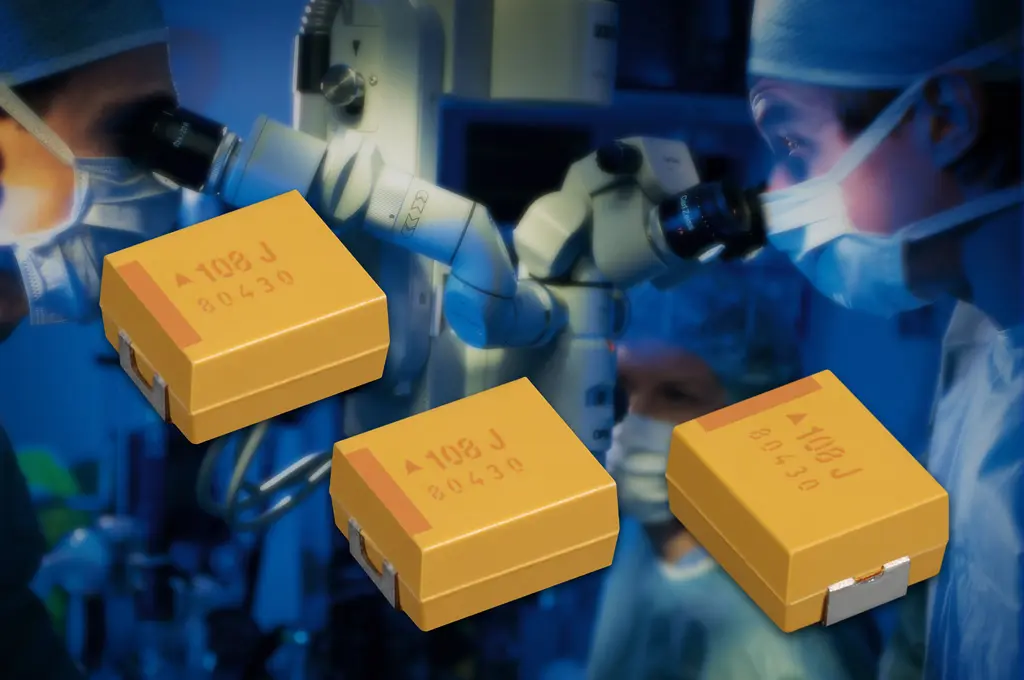
featured image credit: AVX

Related

Recent Posts

TDK Releases High Performance 105C DC Link Film Capacitors

19.1.2026
12

Vishay Extends Aluminum Capacitors Rating Up to 600 V for DC Links

15.1.2026
24

Würth Elektronik Introduces Product Navigator for Passive Components

14.1.2026
47

Panasonic Passive Components for Reliable Robotic Arms

14.1.2026
54

Littelfuse Unveils Ultra-Low-Power TMR Magnetic Switches

13.1.2026
27

Rubycon PMLCAP DC‑Link Film Capacitors in Mass Production

9.1.2026
71

YAGEO High‑Capacitance X7R Automotive MLCC Extensions

8.1.2026
63

How Metal Prices Are Driving Passive Component Price Hikes

8.1.2026
309

Modelithics COMPLETE Library v25.8 for Keysight ADS

7.1.2026
39

Upcoming Events

Jan 21
18:00 - 18:45 CET

To Rogowski or not to Rogowski

Jan 27
16:00 - 17:00 CET

Simplifying Vehicle Development with Automotive Ethernet and Zonal Smart Switch Technologies

Feb 24
16:00 - 17:00 CET

Designing Qi2 Wireless Power Systems: Practical Development and EMC Optimization

View Calendar

Popular Posts

  • Buck Converter Design and Calculation

    0 shares
    Share 0 Tweet 0
  • Boost Converter Design and Calculation

    0 shares
    Share 0 Tweet 0
  • LLC Resonant Converter Design and Calculation

    0 shares
    Share 0 Tweet 0
  • Flyback Converter Design and Calculation

    0 shares
    Share 0 Tweet 0
  • Ripple Current and its Effects on the Performance of Capacitors

    3 shares
    Share 3 Tweet 0
  • MLCC and Ceramic Capacitors

    0 shares
    Share 0 Tweet 0
  • How Metal Prices Are Driving Passive Component Price Hikes

    0 shares
    Share 0 Tweet 0
  • Dual Active Bridge (DAB) Topology

    0 shares
    Share 0 Tweet 0
  • What is a Dielectric Constant and DF of Plastic Materials?

    4 shares
    Share 4 Tweet 0
  • Degradation of Capacitors and its Failure Mechanisms

    0 shares
    Share 0 Tweet 0

Newsletter Subscription


Passive Components Blog

© EPCI - Leading Passive Components Educational and Information Site

  • Home
  • Privacy Policy
  • EPCI Membership & Advertisement
  • About

No Result
View All Result
  • Home
  • Knowledge Blog
  • PCNS

© EPCI - Leading Passive Components Educational and Information Site

This website uses cookies. By continuing to use this website you are giving consent to cookies being used. Visit our Privacy and Cookie Policy.
Go to mobile version