







Passive Components Blog
No Result
View All Result
  • Home
  • NewsFilter
    • All
    • Aerospace & Defence
    • Antenna
    • Applications
    • Automotive
    • Capacitors
    • Circuit Protection Devices
    • electro-mechanical news
    • Filters
    • Fuses
    • Inductors
    • Industrial
    • Integrated Passives
    • inter-connect news
    • Market & Supply Chain
    • Market Insights
    • Medical
    • Modelling and Simulation
    • New Materials & Supply
    • New Technologies
    • Non-linear Passives
    • Oscillators
    • Passive Sensors News
    • Resistors
    • RF & Microwave
    • Telecommunication
    • Weekly Digest

    YAGEO Presents 3.6 kW LLC Transformer Platform

    Empower Extends Embedded Silicon Capacitors for AI

    ECIA February 2026 Industry Pulse Signals Strong Component Growth

    How Modern Tools Model Magnetic Components for Power Electronics

    Inductors and Ferrite Beads Price Hikes 

    TDK Extends Compact ThermoFuse Varistors up to 50 kA

    Samtec ANSI/VITA 90 Connectors: Rugged Small Form Factor Standard

    Resistor Technology Dossier

    Würth Elektronik IQD Awarded by EcoVadis Gold Sustainability Medal

    Trending Tags

    • Ripple Current
    • RF
    • Leakage Current
    • Tantalum vs Ceramic
    • Snubber
    • Low ESR
    • Feedthrough
    • Derating
    • Dielectric Constant
    • New Products
    • Market Reports
  • VideoFilter
    • All
    • Antenna videos
    • Capacitor videos
    • Circuit Protection Video
    • Filter videos
    • Fuse videos
    • Inductor videos
    • Inter-Connect Video
    • Non-linear passives videos
    • Oscillator videos
    • Passive sensors videos
    • Resistor videos

    How Modern Tools Model Magnetic Components for Power Electronics

    Advanced Loss Modeling for Planar Magnetics in the Frenetic Planar Tool

    2026 Power Magnetics Design Trends: Flyback, DAB and Planar

    Enabling Software‑Defined Vehicle Architectures: Automotive Ethernet and Zonal Smart Power

    Calculating Resistance Value of a Flyback RC Snubber 

    One‑Pulse Characterization of Nonlinear Power Inductors

    Thermistor Linearization Challenges

    Coaxial Connectors and How to Connect with PCB

    PCB Manufacturing, Test Methods, Quality and Reliability

    Trending Tags

    • Capacitors explained
    • Inductors explained
    • Resistors explained
    • Filters explained
    • Application Video Guidelines
    • EMC
    • New Products
    • Ripple Current
    • Simulation
    • Tantalum vs Ceramic
  • Knowledge Blog
  • DossiersNew
  • Suppliers
    • Who is Who
  • PCNS
    • PCNS 2025
    • PCNS 2023
    • PCNS 2021
    • PCNS 2019
    • PCNS 2017
  • Events
  • Home
  • NewsFilter
    • All
    • Aerospace & Defence
    • Antenna
    • Applications
    • Automotive
    • Capacitors
    • Circuit Protection Devices
    • electro-mechanical news
    • Filters
    • Fuses
    • Inductors
    • Industrial
    • Integrated Passives
    • inter-connect news
    • Market & Supply Chain
    • Market Insights
    • Medical
    • Modelling and Simulation
    • New Materials & Supply
    • New Technologies
    • Non-linear Passives
    • Oscillators
    • Passive Sensors News
    • Resistors
    • RF & Microwave
    • Telecommunication
    • Weekly Digest

    YAGEO Presents 3.6 kW LLC Transformer Platform

    Empower Extends Embedded Silicon Capacitors for AI

    ECIA February 2026 Industry Pulse Signals Strong Component Growth

    How Modern Tools Model Magnetic Components for Power Electronics

    Inductors and Ferrite Beads Price Hikes 

    TDK Extends Compact ThermoFuse Varistors up to 50 kA

    Samtec ANSI/VITA 90 Connectors: Rugged Small Form Factor Standard

    Resistor Technology Dossier

    Würth Elektronik IQD Awarded by EcoVadis Gold Sustainability Medal

    Trending Tags

    • Ripple Current
    • RF
    • Leakage Current
    • Tantalum vs Ceramic
    • Snubber
    • Low ESR
    • Feedthrough
    • Derating
    • Dielectric Constant
    • New Products
    • Market Reports
  • VideoFilter
    • All
    • Antenna videos
    • Capacitor videos
    • Circuit Protection Video
    • Filter videos
    • Fuse videos
    • Inductor videos
    • Inter-Connect Video
    • Non-linear passives videos
    • Oscillator videos
    • Passive sensors videos
    • Resistor videos

    How Modern Tools Model Magnetic Components for Power Electronics

    Advanced Loss Modeling for Planar Magnetics in the Frenetic Planar Tool

    2026 Power Magnetics Design Trends: Flyback, DAB and Planar

    Enabling Software‑Defined Vehicle Architectures: Automotive Ethernet and Zonal Smart Power

    Calculating Resistance Value of a Flyback RC Snubber 

    One‑Pulse Characterization of Nonlinear Power Inductors

    Thermistor Linearization Challenges

    Coaxial Connectors and How to Connect with PCB

    PCB Manufacturing, Test Methods, Quality and Reliability

    Trending Tags

    • Capacitors explained
    • Inductors explained
    • Resistors explained
    • Filters explained
    • Application Video Guidelines
    • EMC
    • New Products
    • Ripple Current
    • Simulation
    • Tantalum vs Ceramic
  • Knowledge Blog
  • DossiersNew
  • Suppliers
    • Who is Who
  • PCNS
    • PCNS 2025
    • PCNS 2023
    • PCNS 2021
    • PCNS 2019
    • PCNS 2017
  • Events
No Result
View All Result
Passive Components Blog
No Result
View All Result

Littelfuse NANO2 415 SMD Fuse Wins 2025 Product of the Year

26.2.2026
Reading Time: 5 mins read
A A

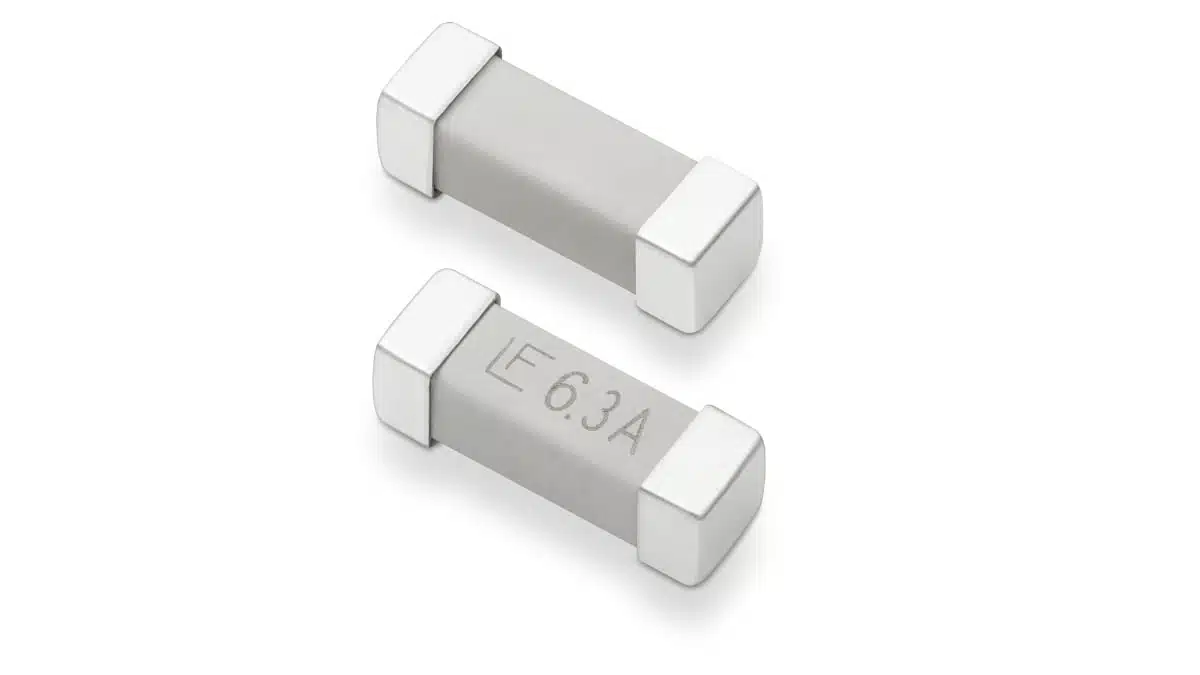
Littelfuse has announced that its NANO2 415 Series surface‑mount fuse has received a 2025 Product of the Year award, highlighting the continued importance of robust overcurrent protection in compact electronic designs.

The recognition underlines how this fuse series addresses space‑constrained, safety‑critical applications where reliable interruption of fault currents is essential.

RelatedPosts

Littelfuse Unveils Ultra-Low-Power TMR Magnetic Switches

Littelfuse Introduces Automotive Current Sensors for EV Battery, Motor, and Safety Systems

Littelfuse Completes Acquisition of Basler Electric

Key features and benefits

The Littelfuse NANO2 415 Series is a time‑delay, surface‑mount fuse family designed for modern high‑density boards where both footprint and height are tightly constrained. According to Littelfuse, the award recognizes its balance of compact size, fault‑clearing performance, and compliance with relevant safety standards.

Key characteristics include:

  • Surface‑mount NANO2 footprint, optimized for automated assembly and high‑volume production.
  • Time‑delay (slow‑blow) behavior, helping tolerate inrush and transient surge currents while still opening under sustained overloads.
  • Construction and ratings suitable for use in safety‑critical circuits, with parameters defined in the manufacturer datasheet.
  • Compatibility with standard reflow soldering processes common in SMT production lines.

From a design perspective, the combination of time‑delay behavior and small package makes the NANO2 415 Series attractive wherever inrush currents from capacitors, motors, or switching regulators would cause nuisance openings in fast‑acting fuses.

Typical applications

Littelfuse positions the NANO2 415 Series for a broad range of electronic equipment where printed circuit board space is at a premium and regulatory compliance is required. Typical application areas include:

  • Consumer electronics such as set‑top boxes, small appliances, and home networking equipment using compact multilayer PCBs.
  • Industrial control and building automation modules where DIN‑rail devices pack multiple channels into narrow enclosures.
  • ICT and telecom equipment, including line cards and embedded power stages with tight thermal and spatial constraints.
  • Embedded systems and IoT controllers where protection must coexist with dense mixed‑signal circuitry.

In these systems, the fuse typically sits in series with the incoming supply rail or sub‑rails, providing primary overcurrent protection and helping meet overall safety and reliability targets.

Technical highlights

While the detailed electrical ratings, breaking capacity, and derating curves are provided in the NANO2 415 Series manufacturer datasheet, several aspects are especially relevant for design engineers:

  • Time‑delay characteristic: The fuse sustains short‑duration peaks such as capacitor inrush or motor start‑up, which reduces nuisance trips in power supplies and actuator drivers.
  • Surface‑mount construction: The package is compatible with standard pick‑and‑place and reflow processes, improving manufacturability and reducing assembly cost versus through‑hole fuses.
  • Defined interrupting ratings: The series is designed to safely clear specified fault currents; exact values and required coordination should be confirmed against the datasheet and applicable safety standards.
  • Temperature and derating behavior: Operating temperature range and derating curves, as specified by Littelfuse, help engineers size the fuse for worst‑case ambient and self‑heating conditions.

For robust designs, it is important to treat the published current rating as valid under defined test conditions, then apply derating for ambient temperature, enclosure conditions, and expected overload profile.

Design‑in notes for engineers

When designing‑in the NANO2 415 Series, engineers should consider both electrical coordination and practical PCB implementation.

Key design‑in recommendations include:

  • Current rating selection: Choose the nominal current based on steady‑state load, expected inrush profile, and the time‑delay curve; avoid selecting a rating too close to the normal operating current to reduce nuisance openings.
  • Ambient and heating: Apply derating according to the Littelfuse curves, taking into account local PCB copper area, nearby hot components, and enclosure ventilation.
  • Fault scenarios: Evaluate worst‑case short‑circuit and overload conditions so that the fuse sees fault currents within its specified interrupting rating and characteristic curves.
  • PCB layout: Provide adequate pad size and copper area as specified in the recommended land pattern to ensure good solder joints and thermal performance.
  • Compliance considerations: For products targeting safety standards, coordinate fuse selection with insulation, creepage/clearance, and other protective components so the overall design meets the relevant requirements.

In many real‑world circuits, the NANO2 415 fuse will operate in combination with transient protection (such as MOVs or TVS diodes) and upstream breakers or fuses; the coordination between these elements should be validated during design and test.

Source

This article is based on information published by Littelfuse in an official press release announcing the NANO2 415 Series surface‑mount fuse as a 2025 Product of the Year, complemented by general best practices for fuse selection and design‑in.


References

  1. Littelfuse – NANO2 415 Series surface‑mount fuse wins 2025 Product of the Year award (press release)

Related

Recent Posts

YAGEO Presents 3.6 kW LLC Transformer Platform

6.3.2026
10

ECIA February 2026 Industry Pulse Signals Strong Component Growth

6.3.2026
8

Inductors and Ferrite Beads Price Hikes 

5.3.2026
45

TDK Extends Compact ThermoFuse Varistors up to 50 kA

5.3.2026
13

Samtec ANSI/VITA 90 Connectors: Rugged Small Form Factor Standard

5.3.2026
5

Resistor Technology Dossier

4.3.2026
29

Bourns Extends PPTC Resettable High‑Power, High‑Voltage Protection Fuses

2.3.2026
13

Mastering Galvanic Isolation in Power Electronics: Methods, Standards, and Implementation

2.3.2026
36

Bourns Releases Compact Automotive Isolation Power Transformer

2.3.2026
11

Upcoming Events

Mar 19
13:00 - 14:00 CDT

Smart Consideration of Inductor Thermal Performance

Mar 21
All day

PSMA Capacitor Workshop 2026

Apr 21
16:00 - 17:00 CEST

Heatsink Solutions: Thermal Management in electronic devices

View Calendar

Popular Posts

  • Buck Converter Design and Calculation

    0 shares
    Share 0 Tweet 0
  • Boost Converter Design and Calculation

    0 shares
    Share 0 Tweet 0
  • Flyback Converter Design and Calculation

    0 shares
    Share 0 Tweet 0
  • LLC Resonant Converter Design and Calculation

    0 shares
    Share 0 Tweet 0
  • MLCC Manufacturers Consider Price Increase as AI Demand Outpaces Supply

    0 shares
    Share 0 Tweet 0
  • Dual Active Bridge (DAB) Topology

    0 shares
    Share 0 Tweet 0
  • Ripple Current and its Effects on the Performance of Capacitors

    3 shares
    Share 3 Tweet 0
  • MLCC and Ceramic Capacitors

    0 shares
    Share 0 Tweet 0
  • What is a Dielectric Constant and DF of Plastic Materials?

    4 shares
    Share 4 Tweet 0
  • MLCC Case Sizes Standards Explained

    0 shares
    Share 0 Tweet 0

Newsletter Subscription


Passive Components Blog

© EPCI - Leading Passive Components Educational and Information Site

  • Home
  • Privacy Policy
  • EPCI Membership & Advertisement
  • About

No Result
View All Result
  • Home
  • Knowledge Blog
  • PCNS

© EPCI - Leading Passive Components Educational and Information Site

This website uses cookies. By continuing to use this website you are giving consent to cookies being used. Visit our Privacy and Cookie Policy.
Go to mobile version