





Passive Components Blog
No Result
View All Result
  • Home
  • NewsFilter
    • All
    • Aerospace & Defence
    • Antenna
    • Applications
    • Automotive
    • Capacitors
    • Circuit Protection Devices
    • electro-mechanical news
    • Filters
    • Fuses
    • Inductors
    • Industrial
    • Integrated Passives
    • inter-connect news
    • Market & Supply Chain
    • Market Insights
    • Medical
    • Modelling and Simulation
    • New Materials & Supply
    • New Technologies
    • Non-linear Passives
    • Oscillators
    • Passive Sensors News
    • Resistors
    • RF & Microwave
    • Telecommunication
    • Weekly Digest

    Designing a 2 kW LLC Transformer with Integrated Resonant Inductor

    Middle East Conflict: The Potential Impact to Passive Components

    Inductor Technology Dossier

    Coilcraft Releases TLVR Inductors for High Density VRMs and PoL Converters

    Rutheniums Critical Role in Passive Component Supply Chains

    Bourns Expands its Modular Contacts for Power-Dense Systems

    Murata to Decouple China Rare Earth Supply in 3 Years

    Samtec AcceleRate Slim ARC6 Cable Assemblies with New Signaling Options

    Hirose Electric to Establish Automotive Connector Plant in India

    Trending Tags

    • Ripple Current
    • RF
    • Leakage Current
    • Tantalum vs Ceramic
    • Snubber
    • Low ESR
    • Feedthrough
    • Derating
    • Dielectric Constant
    • New Products
    • Market Reports
  • VideoFilter
    • All
    • Antenna videos
    • Capacitor videos
    • Circuit Protection Video
    • Filter videos
    • Fuse videos
    • Inductor videos
    • Inter-Connect Video
    • Non-linear passives videos
    • Oscillator videos
    • Passive sensors videos
    • Resistor videos

    Thermal Modeling of Magnetics

    Standard vs Planar LLC transformers Comparison for Battery Chargers

    How Modern Tools Model Magnetic Components for Power Electronics

    Advanced Loss Modeling for Planar Magnetics in the Frenetic Planar Tool

    2026 Power Magnetics Design Trends: Flyback, DAB and Planar

    Enabling Software‑Defined Vehicle Architectures: Automotive Ethernet and Zonal Smart Power

    Calculating Resistance Value of a Flyback RC Snubber 

    One‑Pulse Characterization of Nonlinear Power Inductors

    Thermistor Linearization Challenges

    Trending Tags

    • Capacitors explained
    • Inductors explained
    • Resistors explained
    • Filters explained
    • Application Video Guidelines
    • EMC
    • New Products
    • Ripple Current
    • Simulation
    • Tantalum vs Ceramic
  • Knowledge Blog
  • DossiersNew
  • Suppliers
    • Who is Who
  • PCNS
    • PCNS 2025
    • PCNS 2023
    • PCNS 2021
    • PCNS 2019
    • PCNS 2017
  • Events
  • Home
  • NewsFilter
    • All
    • Aerospace & Defence
    • Antenna
    • Applications
    • Automotive
    • Capacitors
    • Circuit Protection Devices
    • electro-mechanical news
    • Filters
    • Fuses
    • Inductors
    • Industrial
    • Integrated Passives
    • inter-connect news
    • Market & Supply Chain
    • Market Insights
    • Medical
    • Modelling and Simulation
    • New Materials & Supply
    • New Technologies
    • Non-linear Passives
    • Oscillators
    • Passive Sensors News
    • Resistors
    • RF & Microwave
    • Telecommunication
    • Weekly Digest

    Designing a 2 kW LLC Transformer with Integrated Resonant Inductor

    Middle East Conflict: The Potential Impact to Passive Components

    Inductor Technology Dossier

    Coilcraft Releases TLVR Inductors for High Density VRMs and PoL Converters

    Rutheniums Critical Role in Passive Component Supply Chains

    Bourns Expands its Modular Contacts for Power-Dense Systems

    Murata to Decouple China Rare Earth Supply in 3 Years

    Samtec AcceleRate Slim ARC6 Cable Assemblies with New Signaling Options

    Hirose Electric to Establish Automotive Connector Plant in India

    Trending Tags

    • Ripple Current
    • RF
    • Leakage Current
    • Tantalum vs Ceramic
    • Snubber
    • Low ESR
    • Feedthrough
    • Derating
    • Dielectric Constant
    • New Products
    • Market Reports
  • VideoFilter
    • All
    • Antenna videos
    • Capacitor videos
    • Circuit Protection Video
    • Filter videos
    • Fuse videos
    • Inductor videos
    • Inter-Connect Video
    • Non-linear passives videos
    • Oscillator videos
    • Passive sensors videos
    • Resistor videos

    Thermal Modeling of Magnetics

    Standard vs Planar LLC transformers Comparison for Battery Chargers

    How Modern Tools Model Magnetic Components for Power Electronics

    Advanced Loss Modeling for Planar Magnetics in the Frenetic Planar Tool

    2026 Power Magnetics Design Trends: Flyback, DAB and Planar

    Enabling Software‑Defined Vehicle Architectures: Automotive Ethernet and Zonal Smart Power

    Calculating Resistance Value of a Flyback RC Snubber 

    One‑Pulse Characterization of Nonlinear Power Inductors

    Thermistor Linearization Challenges

    Trending Tags

    • Capacitors explained
    • Inductors explained
    • Resistors explained
    • Filters explained
    • Application Video Guidelines
    • EMC
    • New Products
    • Ripple Current
    • Simulation
    • Tantalum vs Ceramic
  • Knowledge Blog
  • DossiersNew
  • Suppliers
    • Who is Who
  • PCNS
    • PCNS 2025
    • PCNS 2023
    • PCNS 2021
    • PCNS 2019
    • PCNS 2017
  • Events
No Result
View All Result
Passive Components Blog
No Result
View All Result

Vacuum capacitors market and trends

22.5.2017
Reading Time: 3 mins read
A A

source: SB wire article

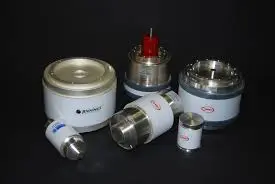
Vacuum Capacitor are devices that uses high vacuum instead of air or any other insulating material, as dielectric medium. They are mostly used in boradcasting applications, however some new applications are on rise.

RelatedPosts

Designing a 2 kW LLC Transformer with Integrated Resonant Inductor

Middle East Conflict: The Potential Impact to Passive Components

Inductor Technology Dossier

Vacuum capacitor is generally used in high voltage applications such as high powered broadcast transmitters, large antenna tuners and amateur radio RF amplifiers among others.

A Vacuum Capacitor is also used as the impedance variation part in an automatic matching network inflat panel displays and chip fabrication. Vacuum capacitor also finds application in automation industry and hazardous working environments.

Global Vacuum Capacitor market is segmented by type into Variable Vacuum Capacitor and Fixed Vacuum Capacitor. Variable Vacuum Capacitor allows variation in capacitance and used in several areas such as semiconductor manufacturing equipment and LCD panel manufacturing unit.

These are also used in industrial applications such as high frequency RF generators, industrial RF process applicators and antenna systems that operate at variable frequencies.In addition, by end user, the Vacuum Capacitor market is segmented into automotive industry, building automation industry, home appliances and medical industry,. Moreover, by application, the Vacuum Capacitor market is segmented into powertrain, exhaust, safety and control, telematics, anesthesia monitors, respirators and carbon oxideconcentrators.

Increased adoption coupled with awareness of smart televisions is one of the key factor driving the vacuum capacitor market globally. Rising need for cost-effective medical facilities in developing regions of Asia-Pacific coupled with technological advancements in medical industry are some of the important factor to drive the Vacuum Capacitor market.

Technology innovation along with enhanced manufacturing processes and embedded electronics is anticipated to drive the Vacuum Capacitor market. Rising consciousness of pollution free environment and safety requirements is driving the growth of Vacuum Capacitor market and is dominating the automotive industry. Vacuum capacitor acting as an effective substitute of costly and high range exhaust sensors such as Nitrogen Oxide (NOx) sensors is actually boosting the demand of Vacuum Capacitor market significantly.

Competitive advantage strategy such as product development, patent holdings and manufacturing process used by the key manufacturers are intensifying the competition among the existing players in the market. Key manufacturers are constantly investing in R&D to develop new products and identification of areas where vacuum capacitors can find its applications.

Increasing demand of Vacuum Capacitors for manufacturing various LCD displays and monitors are acting as a driving factor in the growth of Vacuum Capacitor market .Increasing concern for safe working environment by Occupational Safety and Health Administration (OSHA) has increased the demand of Vacuum Capacitor market.

Reduction of carbon emissions and use of alternatives such as shale gas used for power generation is estimated to restrict the Vacuum Capacitor market from reaching its full potential. In addition, Vacuum capacitors used in RF or high current applications overheats and explodes and generates soft X-rays even during normal operation.

This in turn is acting as a restraining factor in the growth of Vacuum Capacitor market. Alternate methods for Vacuum Capacitor such as electrochemical/galvanic, infrared, catalytic and ultrasonic are in tandem with Vacuum Capacitor. As a part of their competitive advantage strategy, Key Manufacturers are continuously focusing on developing various specialized sensors based on various functionalities such as emission sensor and gas sensor among others.

By geography, the Vacuum Capacitor market has been segmented into various regions namely Asia-Pacific (APAC), Europe, North America and Middle East and Africa and South America.Asia-Pacific (APAC) leads the Global Vacuum Capacitor market followed by Europe and North America.

France and Germany are the leading contributor for the growth of Vacuum Capacitors in the European region. China and India are estimated to be the largest growing market in terms of revenue shares in Asia-Pacific (APAC) region during the forecast period. France, UK and Germany are the leading contributor in European region.

Various key players of Vacuum Capacitor market include COMET, GLVAC, Meidensha, Richardson Electronics, Omnicor and Highhope among others.
Related

Recent Posts

Middle East Conflict: The Potential Impact to Passive Components

20.3.2026
11

Inductor Technology Dossier

19.3.2026
27

Coilcraft Releases TLVR Inductors for High Density VRMs and PoL Converters

19.3.2026
23

Rutheniums Critical Role in Passive Component Supply Chains

19.3.2026
17

Bourns Expands its Modular Contacts for Power-Dense Systems

19.3.2026
6

Murata to Decouple China Rare Earth Supply in 3 Years

19.3.2026
95

Samtec AcceleRate Slim ARC6 Cable Assemblies with New Signaling Options

19.3.2026
7

Hirose Electric to Establish Automotive Connector Plant in India

19.3.2026
8
Schematic illustration of the electric double layer of porous carbon electrodes at elevated potentials in a a conventional electrolyte and b a weakly solvating electrolyte; source: authors

Researchers Presented Lignin-based Electrolyte for 4V Supercapacitors with Low Self‑Discharge

19.3.2026
8

Upcoming Events

Mar 21
All day

PSMA Capacitor Workshop 2026

Mar 24
9:00 - 10:00 CET

Power protection in the digital age – eFuse and hot-swap strategies for modern data center design

Apr 21
16:00 - 17:00 CEST

Heatsink Solutions: Thermal Management in electronic devices

View Calendar

Popular Posts

  • Buck Converter Design and Calculation

    0 shares
    Share 0 Tweet 0
  • Boost Converter Design and Calculation

    0 shares
    Share 0 Tweet 0
  • Flyback Converter Design and Calculation

    0 shares
    Share 0 Tweet 0
  • LLC Resonant Converter Design and Calculation

    0 shares
    Share 0 Tweet 0
  • MLCC Manufacturers Consider Price Increase as AI Demand Outpaces Supply

    0 shares
    Share 0 Tweet 0
  • MLCC and Ceramic Capacitors

    0 shares
    Share 0 Tweet 0
  • Dual Active Bridge (DAB) Topology

    0 shares
    Share 0 Tweet 0
  • Ripple Current and its Effects on the Performance of Capacitors

    3 shares
    Share 3 Tweet 0
  • MLCC Case Sizes Standards Explained

    0 shares
    Share 0 Tweet 0
  • What is a Dielectric Constant and DF of Plastic Materials?

    4 shares
    Share 4 Tweet 0

Newsletter Subscription


Passive Components Blog

© EPCI - Leading Passive Components Educational and Information Site

  • Home
  • Privacy Policy
  • EPCI Membership & Advertisement
  • About

No Result
View All Result
  • Home
  • Knowledge Blog
  • PCNS

© EPCI - Leading Passive Components Educational and Information Site

This website uses cookies. By continuing to use this website you are giving consent to cookies being used. Visit our Privacy and Cookie Policy.
Go to mobile version