





Passive Components Blog
No Result
View All Result
  • Home
  • NewsFilter
    • All
    • Aerospace & Defence
    • Antenna
    • Applications
    • Automotive
    • Capacitors
    • Circuit Protection Devices
    • electro-mechanical news
    • Filters
    • Fuses
    • Inductors
    • Industrial
    • Integrated Passives
    • inter-connect news
    • Market & Supply Chain
    • Market Insights
    • Medical
    • Modelling and Simulation
    • New Materials & Supply
    • New Technologies
    • Non-linear Passives
    • Oscillators
    • Passive Sensors News
    • Resistors
    • RF & Microwave
    • Telecommunication
    • Weekly Digest

    Molecular Memristor Shows Record 145 kH Emergent Inductance

    Planar vs Conventional Transformer: When it Make Sense

    Researchers Propose Next‑Gen Compact Memory Using Ultra-thin Ferroelectric Capacitors

    Nichicon ADN Automotive Hybrid Aluminum Capacitors Now Available in EMEA

    Wk 19 Electronics Supply Chain Digest

    Electrocaloric Multilayer Capacitors: Towards Quiet, Solid‑State Cooling Around Room Temperature

    High-Crystallinity Nanocrystalline Composites for MHz Chip Inductors

    European Components Distribution Shows Strong Q1 2026 Growth Amid Geopolitical Uncertainty

    Stackpole Expanded its AlN Thick Film Chip Resistors

    Trending Tags

    • Ripple Current
    • RF
    • Leakage Current
    • Tantalum vs Ceramic
    • Snubber
    • Low ESR
    • Feedthrough
    • Derating
    • Dielectric Constant
    • New Products
    • Market Reports
  • VideoFilter
    • All
    • Antenna videos
    • Capacitor videos
    • Circuit Protection Video
    • Filter videos
    • Fuse videos
    • Inductor videos
    • Inter-Connect Video
    • Non-linear passives videos
    • Oscillator videos
    • Passive sensors videos
    • Resistor videos

    Planar vs Conventional Transformer: When it Make Sense

    Modeling Fringing Field Losses in Inductors & Transformers

    Why Power Inductors Use a Ferrite Core With an Air Gap

    Transformer-Based Power-Line Harvester Magnetic Design

    Thermal Modeling of Magnetics

    Standard vs Planar LLC transformers Comparison for Battery Chargers

    How Modern Tools Model Magnetic Components for Power Electronics

    Advanced Loss Modeling for Planar Magnetics in the Frenetic Planar Tool

    2026 Power Magnetics Design Trends: Flyback, DAB and Planar

    Trending Tags

    • Capacitors explained
    • Inductors explained
    • Resistors explained
    • Filters explained
    • Application Video Guidelines
    • EMC
    • New Products
    • Ripple Current
    • Simulation
    • Tantalum vs Ceramic
  • Knowledge Blog
  • DossiersNew
  • Suppliers
    • Who is Who
  • PCNS
    • PCNS 2025
    • PCNS 2023
    • PCNS 2021
    • PCNS 2019
    • PCNS 2017
  • Events
  • Home
  • NewsFilter
    • All
    • Aerospace & Defence
    • Antenna
    • Applications
    • Automotive
    • Capacitors
    • Circuit Protection Devices
    • electro-mechanical news
    • Filters
    • Fuses
    • Inductors
    • Industrial
    • Integrated Passives
    • inter-connect news
    • Market & Supply Chain
    • Market Insights
    • Medical
    • Modelling and Simulation
    • New Materials & Supply
    • New Technologies
    • Non-linear Passives
    • Oscillators
    • Passive Sensors News
    • Resistors
    • RF & Microwave
    • Telecommunication
    • Weekly Digest

    Molecular Memristor Shows Record 145 kH Emergent Inductance

    Planar vs Conventional Transformer: When it Make Sense

    Researchers Propose Next‑Gen Compact Memory Using Ultra-thin Ferroelectric Capacitors

    Nichicon ADN Automotive Hybrid Aluminum Capacitors Now Available in EMEA

    Wk 19 Electronics Supply Chain Digest

    Electrocaloric Multilayer Capacitors: Towards Quiet, Solid‑State Cooling Around Room Temperature

    High-Crystallinity Nanocrystalline Composites for MHz Chip Inductors

    European Components Distribution Shows Strong Q1 2026 Growth Amid Geopolitical Uncertainty

    Stackpole Expanded its AlN Thick Film Chip Resistors

    Trending Tags

    • Ripple Current
    • RF
    • Leakage Current
    • Tantalum vs Ceramic
    • Snubber
    • Low ESR
    • Feedthrough
    • Derating
    • Dielectric Constant
    • New Products
    • Market Reports
  • VideoFilter
    • All
    • Antenna videos
    • Capacitor videos
    • Circuit Protection Video
    • Filter videos
    • Fuse videos
    • Inductor videos
    • Inter-Connect Video
    • Non-linear passives videos
    • Oscillator videos
    • Passive sensors videos
    • Resistor videos

    Planar vs Conventional Transformer: When it Make Sense

    Modeling Fringing Field Losses in Inductors & Transformers

    Why Power Inductors Use a Ferrite Core With an Air Gap

    Transformer-Based Power-Line Harvester Magnetic Design

    Thermal Modeling of Magnetics

    Standard vs Planar LLC transformers Comparison for Battery Chargers

    How Modern Tools Model Magnetic Components for Power Electronics

    Advanced Loss Modeling for Planar Magnetics in the Frenetic Planar Tool

    2026 Power Magnetics Design Trends: Flyback, DAB and Planar

    Trending Tags

    • Capacitors explained
    • Inductors explained
    • Resistors explained
    • Filters explained
    • Application Video Guidelines
    • EMC
    • New Products
    • Ripple Current
    • Simulation
    • Tantalum vs Ceramic
  • Knowledge Blog
  • DossiersNew
  • Suppliers
    • Who is Who
  • PCNS
    • PCNS 2025
    • PCNS 2023
    • PCNS 2021
    • PCNS 2019
    • PCNS 2017
  • Events
No Result
View All Result
Passive Components Blog
No Result
View All Result

binder Presents Harsh Environment Connector for Outdoor Environments

26.11.2025
Reading Time: 3 mins read
A A

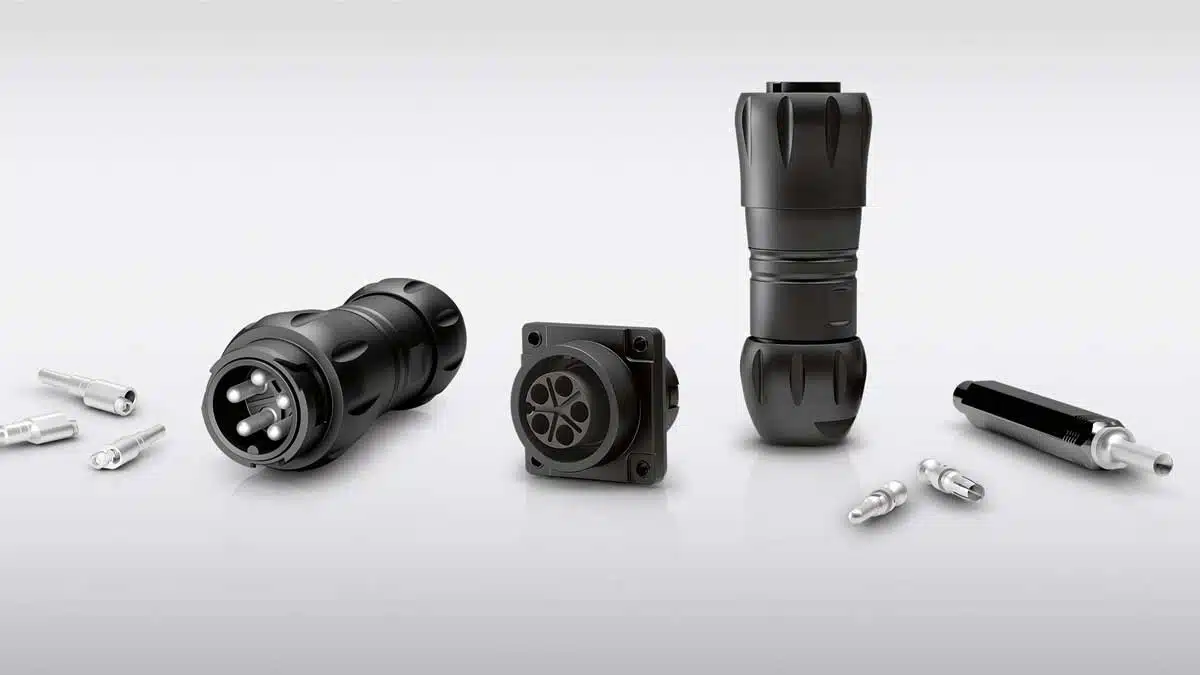
With the Harsh Environment Connector (HEC), binder presents a connector solution specifically designed for use in particularly demanding outdoor environments.

Thanks to its robust materials, high sealing performance, and durable design, the HEC ensures secure connections even under extreme conditions – for example in agriculture, mechanical engineering, or renewable energy systems.

RelatedPosts

binder Releases Tool‑Tightenable M12 Connectors for Improved Reliability

Binder Introduces Triangular Moulding for M16 and M12 Cable Connectors

Binder Extends NCC Circular Connectors for Harsh Environments

The HEC impresses with its high IP68/IP69K protection rating, providing reliable protection against dust, dirt, and high-pressure or steam cleaning. Its UV- and corrosion-resistant materials guarantee a long service life, even under intense sunlight or high humidity. This ensures stable signal and power transmission even in harsh weather conditions.

“With the HEC from the 696 series, we offer our customers a robust, durable, and easy-to-use connector solution developed specifically for harsh outdoor conditions,” explains Sebastian Ader, Product Manager at binder.

Quick, safe, and tool-free – easy handling in the field

The HEC is designed for maximum user convenience. The binder HEC product portfolio includes, among others, a 5-pole version with a screw clamp connection. This allows quick and easy assembly using standard tools, making it ideal for field applications. The bayonet quick-lock system, which can be opened and closed simply by pressing and turning, ensures simple and secure handling. This enables efficient and time-saving installation and maintenance.

In its hybrid version, the connector allows power and signal coupling in a single connection – providing particularly efficient operation.

Reliable in any environment – an all-rounder for demanding applications

With its rugged design and high vibration resistance, the Harsh Environment Connector is the ideal solution for a wide range of demanding applications. In agricultural and construction machinery, for example, it ensures reliable power and signal connections in tractors, harvesters, or pumping systems – even under heavy mechanical stress and changing weather conditions.
To withstand the typical mechanical, chemical, and climatic influences found in such environments, components of the 696 series – cable connectors and square flange parts – are also available with protective conduits. This ensures that the power interface meets protection classes IP68 and, when mated, IP69K. Thanks to integrated sealing, all cables and wires routed through the protective conduit are protected to IP67.

The HEC also demonstrates its resilience in outdoor lighting and tunnel applications, resisting moisture, oils, chemicals, vibrations, and temperature fluctuations while ensuring reliable electrical connections over time.

Power in harmony with nature – reliable in solar and wind applications

Renewable energy systems place particularly high demands on technology and materials. In solar and wind farms, components are exposed to extreme environmental conditions – from intense UV radiation and humidity to wide temperature variations. The HEC has been designed precisely for such challenges: its high sealing performance and resistance to UV radiation, corrosion, and vibration make it ideal for these applications.
Thanks to its versatile power range, the connector is suitable for both low- and high-voltage applications, providing maximum flexibility across different areas of use.

Connections that withstand the extremes

With the Harsh Environment Connector, binder offers a powerful solution for applications where conventional connectors reach their limits. The HEC combines robust materials, ease of use, and high reliability – making it the ideal choice for anyone seeking durable connection technology for demanding outdoor environments.

Features

  • Number of contacts: 5-, 8-, or 12-pole
  • Rated voltage: 150 V, 250 V, 1000 V, 6000 V, 4000 V
  • Rated current: 32 A (5-pole), 3 A signal / 25 A power (8-pole), 5 A (12-pole)
  • Protection class: IP68 / IP69K
  • Approvals: VDE and UL
  • Accessories: Protective caps, covers, suitable protective conduit

Related

Source: binder

Recent Posts

binder Releases Tool‑Tightenable M12 Connectors for Improved Reliability

30.4.2026
12

Kyocera Developed Multilayer Ceramic Core Substrate for AI Packages

30.4.2026
47

Heatsink Design and Thermal Interface Materials for Reliable Electronics

27.4.2026
34

Amphenol Explanded Liquid Cooling Connectors for AI, ESS and EV Systems

17.4.2026
32

Hirose Introduced BGA connector for PCIe Gen6 for AI and Edge Computing

17.4.2026
27

Molex Completes Acquisition of Smiths Interconnect, Expanding Portfolio of High-Reliability Connectivity Solutions

1.4.2026
18

Binder Introduces Triangular Moulding for M16 and M12 Cable Connectors

31.3.2026
14

Bourns Expands its Modular Contacts for Power-Dense Systems

19.3.2026
19

Samtec AcceleRate Slim ARC6 Cable Assemblies with New Signaling Options

19.3.2026
37

Upcoming Events

May 13
17:00 - 17:30 CEST

Winding Loss Modeling for Toroidal Magnetics – Including Gapped Cores

May 19
16:00 - 17:00 CEST

Designing Qi2 Wireless Power Systems: Practical Development and EMC Optimization

Jun 2
16:00 - 17:00 CEST

Calculation, Simulation and Measurement of 800V EMC Filters

View Calendar

Popular Posts

  • Buck Converter Design and Calculation

    0 shares
    Share 0 Tweet 0
  • Boost Converter Design and Calculation

    0 shares
    Share 0 Tweet 0
  • Flyback Converter Design and Calculation

    0 shares
    Share 0 Tweet 0
  • LLC Resonant Converter Design and Calculation

    0 shares
    Share 0 Tweet 0
  • MLCC and Ceramic Capacitors

    0 shares
    Share 0 Tweet 0
  • Dual Active Bridge (DAB) Topology

    0 shares
    Share 0 Tweet 0
  • What Electronics Engineer Needs to Know About Passive Low Pass Filters

    0 shares
    Share 0 Tweet 0
  • Capacitor Charging and Discharging

    0 shares
    Share 0 Tweet 0
  • Ripple Current and its Effects on the Performance of Capacitors

    3 shares
    Share 3 Tweet 0
  • MLCC Case Sizes Standards Explained

    0 shares
    Share 0 Tweet 0

Newsletter Subscription


Passive Components Blog

© EPCI - Leading Passive Components Educational and Information Site

  • Home
  • Privacy Policy
  • EPCI Membership & Advertisement
  • About

No Result
View All Result
  • Home
  • Knowledge Blog
  • PCNS

© EPCI - Leading Passive Components Educational and Information Site

This website uses cookies. By continuing to use this website you are giving consent to cookies being used. Visit our Privacy and Cookie Policy.
Go to mobile version