






Passive Components Blog
No Result
View All Result
  • Home
  • NewsFilter
    • All
    • Aerospace & Defence
    • Antenna
    • Applications
    • Automotive
    • Capacitors
    • Circuit Protection Devices
    • electro-mechanical news
    • Filters
    • Fuses
    • Inductors
    • Industrial
    • Integrated Passives
    • inter-connect news
    • Market & Supply Chain
    • Market Insights
    • Medical
    • Modelling and Simulation
    • New Materials & Supply
    • New Technologies
    • Non-linear Passives
    • Oscillators
    • Passive Sensors News
    • Resistors
    • RF & Microwave
    • Telecommunication
    • Weekly Digest

    EMC‑Compliant PCB and Connector Design Guidelines

    Practical Value of Structural Diagnostics for Tantalum Capacitor Anodes

    Hall-Effect Sensing for Harsh Environments: TT Electronics Selected in NASA’s Dragonfly Fan

    Bourns Releases Automotive Gate Driver Transformer for Isolated Power

    Stackpole Releases High-Frequency Thin Film Chip Resistors for RF up to 50 GHz

    Knowles Expands High‑Q Ceramic Core Inductors for RF designs

    Vishay Unveils 1.5 kV IHDV High Voltage Power Inductors for EV and Industrial Converters

    SCHURTER Introduces PPTC Resettable Overcurrent Protection for Compact Electronics

    TrendForce: CSP in‑house AI ASIC Boom Reshapes Capacitor Demand

    Trending Tags

    • Ripple Current
    • RF
    • Leakage Current
    • Tantalum vs Ceramic
    • Snubber
    • Low ESR
    • Feedthrough
    • Derating
    • Dielectric Constant
    • New Products
    • Market Reports
  • VideoFilter
    • All
    • Antenna videos
    • Capacitor videos
    • Circuit Protection Video
    • Filter videos
    • Fuse videos
    • Inductor videos
    • Inter-Connect Video
    • Non-linear passives videos
    • Oscillator videos
    • Passive sensors videos
    • Resistor videos

    EMC‑Compliant PCB and Connector Design Guidelines

    Why Isolated DC/DC Power Supplies Fail Late, Würth Elektronik Podcast

    Designing 800 V DC EMC Filters: Calculation, Simulation and Measurement

    Current Sense Transformer Datasheet and Design‑in Guide

    Designing a USB Type‑C Flyback Planar Transformer with Frenetic’s Planar Tool

    Magnetics Design in High‑Frequency GaN Converters

    Qi2 Wireless Charging: Inductors, Capacitors and EMC Filters

    Two‑capacitor paradox explained for engineers

    Capacitances of Nonlinear MLCCs: What Datasheets Don’t Tell You

    Trending Tags

    • Capacitors explained
    • Inductors explained
    • Resistors explained
    • Filters explained
    • Application Video Guidelines
    • EMC
    • New Products
    • Ripple Current
    • Simulation
    • Tantalum vs Ceramic
  • Knowledge Blog
  • DossiersNew
  • Suppliers
    • Who is Who
  • PCNS
    • PCNS 2025
    • PCNS 2023
    • PCNS 2021
    • PCNS 2019
    • PCNS 2017
  • Events
  • Home
  • NewsFilter
    • All
    • Aerospace & Defence
    • Antenna
    • Applications
    • Automotive
    • Capacitors
    • Circuit Protection Devices
    • electro-mechanical news
    • Filters
    • Fuses
    • Inductors
    • Industrial
    • Integrated Passives
    • inter-connect news
    • Market & Supply Chain
    • Market Insights
    • Medical
    • Modelling and Simulation
    • New Materials & Supply
    • New Technologies
    • Non-linear Passives
    • Oscillators
    • Passive Sensors News
    • Resistors
    • RF & Microwave
    • Telecommunication
    • Weekly Digest

    EMC‑Compliant PCB and Connector Design Guidelines

    Practical Value of Structural Diagnostics for Tantalum Capacitor Anodes

    Hall-Effect Sensing for Harsh Environments: TT Electronics Selected in NASA’s Dragonfly Fan

    Bourns Releases Automotive Gate Driver Transformer for Isolated Power

    Stackpole Releases High-Frequency Thin Film Chip Resistors for RF up to 50 GHz

    Knowles Expands High‑Q Ceramic Core Inductors for RF designs

    Vishay Unveils 1.5 kV IHDV High Voltage Power Inductors for EV and Industrial Converters

    SCHURTER Introduces PPTC Resettable Overcurrent Protection for Compact Electronics

    TrendForce: CSP in‑house AI ASIC Boom Reshapes Capacitor Demand

    Trending Tags

    • Ripple Current
    • RF
    • Leakage Current
    • Tantalum vs Ceramic
    • Snubber
    • Low ESR
    • Feedthrough
    • Derating
    • Dielectric Constant
    • New Products
    • Market Reports
  • VideoFilter
    • All
    • Antenna videos
    • Capacitor videos
    • Circuit Protection Video
    • Filter videos
    • Fuse videos
    • Inductor videos
    • Inter-Connect Video
    • Non-linear passives videos
    • Oscillator videos
    • Passive sensors videos
    • Resistor videos

    EMC‑Compliant PCB and Connector Design Guidelines

    Why Isolated DC/DC Power Supplies Fail Late, Würth Elektronik Podcast

    Designing 800 V DC EMC Filters: Calculation, Simulation and Measurement

    Current Sense Transformer Datasheet and Design‑in Guide

    Designing a USB Type‑C Flyback Planar Transformer with Frenetic’s Planar Tool

    Magnetics Design in High‑Frequency GaN Converters

    Qi2 Wireless Charging: Inductors, Capacitors and EMC Filters

    Two‑capacitor paradox explained for engineers

    Capacitances of Nonlinear MLCCs: What Datasheets Don’t Tell You

    Trending Tags

    • Capacitors explained
    • Inductors explained
    • Resistors explained
    • Filters explained
    • Application Video Guidelines
    • EMC
    • New Products
    • Ripple Current
    • Simulation
    • Tantalum vs Ceramic
  • Knowledge Blog
  • DossiersNew
  • Suppliers
    • Who is Who
  • PCNS
    • PCNS 2025
    • PCNS 2023
    • PCNS 2021
    • PCNS 2019
    • PCNS 2017
  • Events
No Result
View All Result
Passive Components Blog
No Result
View All Result

Digi-Key Leaders Evaluate 2021 and Look Ahead to 2022

25.11.2021
Reading Time: 4 mins read
A A

2021 has been a unique year for the electronic components industry, bringing many new or expanded challenges for suppliers, distributors and customers. With those challenges, however, have also come new opportunities and innovative ways of thinking that can ultimately drive the industry forward. Several of Digi-Key’s key leaders share their perspectives on the events and learnings of the previous year, and share their thoughts on the year ahead.

Dave Doherty, president

RelatedPosts

DigiKey Adds 31k New In‑Stock Parts in Q1 2026

DigiKey Launches “Engineering Unlocked” Video Series

DigiKey Expands Line Card with 108K Stock Parts and 364 Suppliers

If the past year has taught us anything, it’s that the market has the potential to be more unpredictable than anyone thought.

Even throughout these unpredictable market conditions, Digi-Key has weathered the ups and downs by continuing to invest in strategic initiatives to expand warehouse capacity, localize the customer experience both digitally and from a support standpoint, scale our website and web services and expand into new markets, in order to continue serving customers around the globe with the best possible purchasing experience.

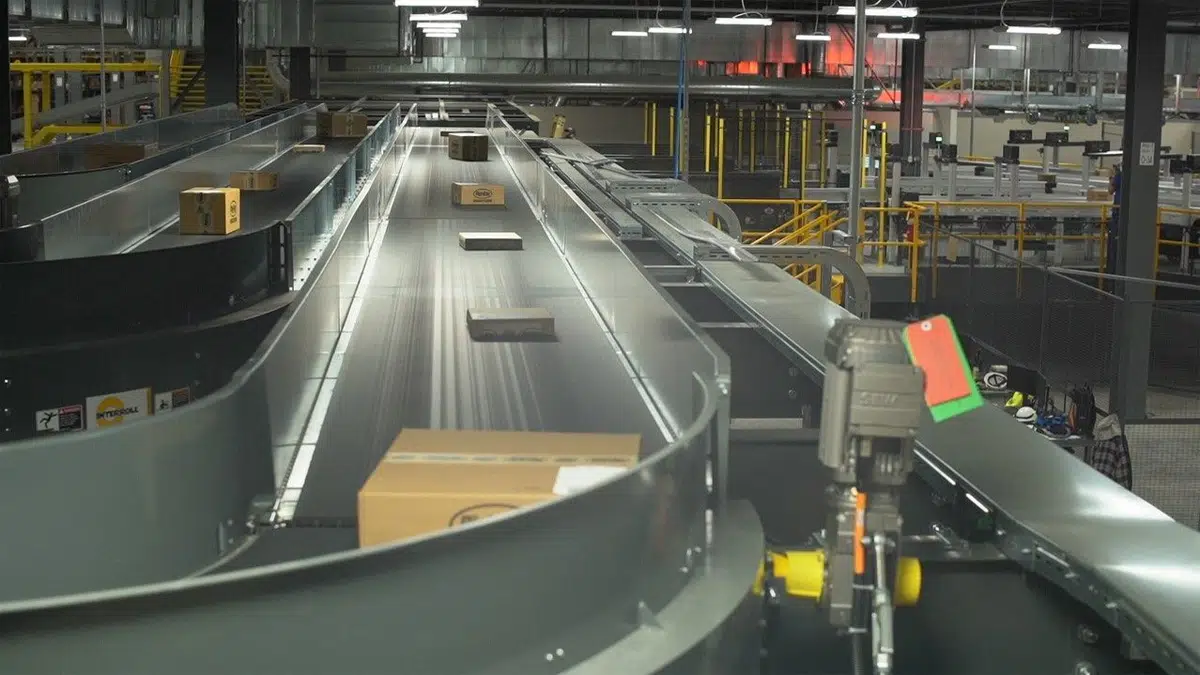
The biggest capital investment Digi-Key has made in recent years is in warehouse infrastructure. Our new Product Distribution Center Expansion (PDCe) is close to quadrupling the footprint of what we currently have in Thief River Falls, Minnesota. It’ll give us 2.2 million square feet and allow us to serve close to three times the number of packages that we support today, out of a single site location.

This will continue to be our model, as it’s the best way to provide our customers with the broadest supply of inventory by aggregating global demand under one roof. We also continue to receive feedback from customers that they’d like to receive the majority of their build material from one place, all at the same time, and shipped to them wherever they are around the globe. Even as customers’ supply chains shift, we can quickly ship to different manufacturing locations as they convert from an NPI line to a production line, or even shift countries for their own strategic reasons, for example.

Although I don’t have a crystal ball that can predict the future, I think that the impact that these last couple years have had on Digi-Key, and the industry as a whole, have increased the amount of confidence and trust we have gained in each other and our ability to meet a crisis head-on — ultimately benefitting customers.

Jim Ricciardelli, executive vice president, digital business

At Digi-Key, we whole-heartedly believe in a digital-first approach, and that has served us well in 2021.

Over the past 12 months – and into 2022 – we’re continuing to invest in more “behind-the-scenes” infrastructures that allow for scaling, including our website search features. We recently launched a major change in our search engine, and probably the greatest customer feedback we could receive about it is that we haven’t received any – users have not noticed any changes or issues with the new system. Our previous search engine was designed to support millions of components, but we kept stretching and stretching that capacity as we grew – today we offer over 12.6 million parts globally, so we needed to put into place some new infrastructure that would scale up well beyond that.

Digi-Key is always developing new ways to make it easier for our customers to digitally engage with us, including localizing their experience in markets around the world with local language, currency and support hours, as well as fast shipping times, in order to remove barriers for global customers.

For many U.S.-based companies, it can be easy to take for granted the ability to conduct business in a single language, using a single currency. However, as a global company, Digi-Key is committed to supporting customers worldwide with a seamless experience. Today, we support 26 local currencies and do business in 21 local languages – something that will continue to grow along with the business.

David Stein, vice president of global supplier management

2021 has brought nearly every possible type of challenge to the electronic components industry: decreased production due to the COVID-19 pandemic, extended shipping times due to delays at ports, natural disasters, difficulty accessing raw resources and everything in between – all throughout a period of time where customer demand for parts has never been higher.

We all know how difficult it has been this year for customers to get their hands on some of the high-demand parts that they need, and in some cases that has led to increased order volume. I believe that although there may still be some challenges ahead of us, orders will start to revert back to more realistic levels in 2022 as customers find more breathing room.

Today, Digi-Key offers 12.6 million parts from 2,000 suppliers, and since January 2021, we have added 500 new suppliers and 1.1 million parts. In addition to our core stock, we also offer 1.1 million parts from 847 suppliers through the Digi-Key Marketplace, augmenting the types of products that we don’t currently offer in our existing model.

All of us at Digi-Key are proud to work with suppliers who truly understand the importance of their products to the engineers and makers around the world who are creating innovative projects every day. Throughout my many years in the industry, I’ve seen a continued dedication from suppliers to overachieve and find new, creative ways to increase their supply.

Knowing that, I’m hopeful that in 2022 we will start to see an uptick in supply as a result, and trust that our partners are doing everything in their power to ensure they can meet demand.

The industry has taken many lessons from the last year, and it’s clear that the industry is cyclical. What we’ve experienced this year, we’ll to some degree experience again in the future, and hopefully will be better prepared with new building blocks we’ve put in place. Digi-Key is looking forward to the innovation that will come in 2022, and are excited to enable the world’s ideas.


Related

Source: DigiKey

Recent Posts

TrendForce: CSP in‑house AI ASIC Boom Reshapes Capacitor Demand

18.6.2026
83

DMASS: European Components Distribution Returns To Growth In Q1 2026

16.6.2026
50

German Component Distribution Market Rebounds in Q1 2026 According to FBDi

16.6.2026
34

Bourns Completes Rakon Acquisition, Enters Timing Market

12.6.2026
62

CapXon Earns EcoVadis Bronze Medal for Sustainability Performance

10.6.2026
31

Power Converter Dossier: Passive Components Design and Selection Guide 2026

5.6.2026
74

Evans Group Unifies Four High-Rel Capacitor Leaders

5.6.2026
54

Murata and Xona Partner on LEO Satellite Navigation for Industrial Applications

3.6.2026
48

Nvidia Vera Rubin: Why One AI Rack Needs So Many More MLCC Capacitors

15.6.2026
454

Upcoming Events

Jun 30
17:00 - 18:00 CEST

PSMA Capacitor Committee Webinar: High Voltage Pulse Capacitors

Jul 14
16:00 - 17:00 CEST

EMC Design Essentials: Mastering Varistors and Common Mode Chokes

Jul 21
16:00 - 17:00 CEST

Safety by design: X and Y Interference suppression capacitors for power line filters

View Calendar

Popular Posts

  • Boost Converter Design and Calculation

    0 shares
    Share 0 Tweet 0
  • Buck Converter Design and Calculation

    0 shares
    Share 0 Tweet 0
  • Flyback Converter Design and Calculation

    0 shares
    Share 0 Tweet 0
  • LLC Resonant Converter Design and Calculation

    0 shares
    Share 0 Tweet 0
  • MLCC and Ceramic Capacitors

    0 shares
    Share 0 Tweet 0
  • Earthing Systems and IEC Classification Explained

    0 shares
    Share 0 Tweet 0
  • Dual Active Bridge (DAB) Topology

    0 shares
    Share 0 Tweet 0
  • SEPIC Converter Design and Calculation

    0 shares
    Share 0 Tweet 0
  • Nvidia Vera Rubin: Why One AI Rack Needs So Many More MLCC Capacitors

    0 shares
    Share 0 Tweet 0
  • MLCC Case Sizes Standards Explained

    0 shares
    Share 0 Tweet 0

Newsletter Subscription


Passive Components Blog

© EPCI - Leading Passive Components Educational and Information Site

  • Home
  • Privacy Policy
  • EPCI Membership & Advertisement
  • About

No Result
View All Result
  • Home
  • Knowledge Blog
  • Dossiers
  • PCNS

© EPCI - Leading Passive Components Educational and Information Site

This website uses cookies. By continuing to use this website you are giving consent to cookies being used. Visit our Privacy and Cookie Policy.
Go to mobile version